
Perfect Fish Habitat: A Beginner’s Step-By-Step Guide
Master the essentials of designing a thriving aquarium environment for healthy fish with expert setup tips and maintenance strategies.
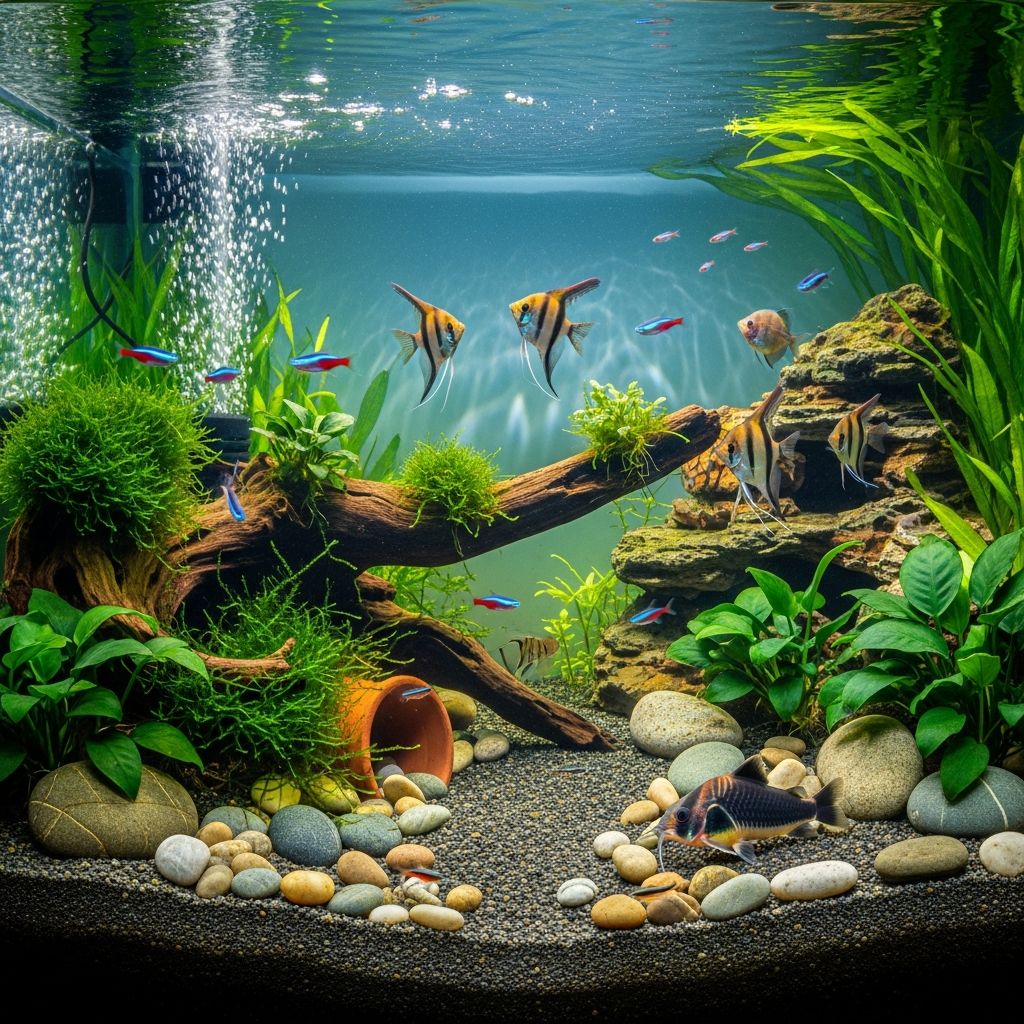
Setting up a successful aquarium requires careful planning to mimic natural aquatic environments, ensuring fish thrive with stable conditions and minimal stress. This guide covers everything from initial equipment choices to long-term care routines, helping beginners avoid common pitfalls while achieving a balanced ecosystem.
Choosing the Right Tank Size and Location
The foundation of any fish habitat starts with the tank itself. Larger tanks, ideally 20 gallons or more, provide greater stability in water parameters like temperature and chemistry, making them forgiving for novices. Small tanks under 10 gallons fluctuate rapidly, posing risks to inhabitants.
- Size considerations: Match tank volume to the adult size and number of fish; overstocking leads to poor water quality.
- Shape matters: Wider tanks support better swimming space and surface area for gas exchange than tall, narrow ones.
- Material options: Glass offers durability and clarity; acrylic is lighter but scratches easier.
Placement is crucial: position away from direct sunlight to prevent algae blooms, drafts, or heat sources. Ensure the stand can support the full weight—about 10 pounds per gallon when filled. A sturdy surface prevents cracks and leaks.
Essential Equipment for a Stable Environment
Key gear maintains life-support functions. Prioritize quality over quantity to avoid frequent replacements.
| Equipment | Purpose | Beginner Recommendations |
|---|---|---|
| Filter | Removes waste, circulates water | Hang-on-back or sponge for gentle flow |
| Heater | Maintains consistent temperature | Adjustable thermostat, 5W per gallon |
| Lights | Supports plant growth, simulates day/night | LED full-spectrum, 8-10 hours daily |
| Lid/Cover | Prevents jumps, reduces evaporation | Screen top for air exchange |
Filters are non-negotiable unless running a heavily planted, fishless setup. Sponge filters suit shrimp or fry with low flow needs. Heaters should include safeguards against overheating.
Substrate and Hardscape Fundamentals
Substrate forms the tank floor, influencing biology and aesthetics. Rinse all materials thoroughly to remove dust.
- Inert gravels/sands: Stable pH, easy cleaning; pair with root tabs for plants.
- Nutrient-rich soils: Boost plant growth but may cloud water initially; cap with gravel.
- Hardscape elements: Rocks and driftwood create territories, but boil wood to sterilize and test for leaching.
Layer substrate 1-2 inches deep, sloping for depth illusion. Avoid sharp edges that could injure fish.
Illumination and Plant Integration
Proper lighting fuels photosynthesis in live plants, which oxygenate water and compete with algae. Start with low-tech plants for ease.
- Easy species: Java fern, Anubias, Vallisneria—attach to decor, minimal roots.
- Medium needs: Amazon sword, Cryptocoryne—require moderate light and fertilizers.
Use timers for 8-10 hour cycles. CO2 injection is optional for advanced setups. Plants absorb nitrates, stabilizing the system naturally.
Water Conditioning and Cycling Process
Pure tap water harms fish; always treat with dechlorinator. Cycling establishes beneficial bacteria to break down ammonia from waste.
- Fill slowly: Over days to avoid shock.
- Add bacteria source: Mature filter media or commercial starters.
- Test parameters: Ammonia 0 ppm, nitrite 0 ppm, nitrate <20 ppm before stocking.
Ideal range: pH 6.5-7.5, temperature 75-82°F (24-28°C), hardness 5-15 dGH. Test kits are essential weekly.
Selecting Compatible Fish Species
Introduce hardy, beginner-friendly fish post-cycling. Start with 1-2 inexpensive testers to monitor stability.
- Top choices: Neon tetras (schooling), guppies (livebearers), corydoras (bottom dwellers).
- Stocking rule: 1 inch of fish per gallon, accounting for adults.
- Compatibility: Avoid mixing aggressive cichlids with fin-nippers.
Quarantine new arrivals 2-4 weeks to prevent disease spread.
Daily and Weekly Maintenance Routines
Consistency prevents crises. Feed sparingly— what they eat in 2 minutes daily.
- Daily: Check temperature, feed, observe behavior.
- Weekly: 25-50% water changes with matched parameters; vacuum substrate.
- Monthly: Clean filter media gently in tank water.
Overfeeding causes ammonia spikes; use sinking foods for bottom feeders.
Common Challenges and Solutions
Issues arise but are fixable with prompt action.
| Problem | Symptoms | Solution |
|---|---|---|
| Algae Bloom | Green slime, cloudy water | Reduce light, add algae eaters, increase changes |
| Ammonia Spike | Fish gasping, red gills | Water change, check filter |
| Ich Parasites | White spots, lethargy | Raise temp to 86°F, meds like Ich-X |
Frequently Asked Questions (FAQs)
What is the minimum tank size for beginners?
At least 20 gallons for stability and variety.
Do I need live plants right away?
No, plastic plants work initially; transition to live for benefits.
How often should I perform water changes?
25-50% weekly, adjusted by bioload.
Can I use tap water directly?
Always dechlorinate first.
What if my fish are dying suddenly?
Test water; common culprits are ammonia or temperature swings.
Mastering these elements creates a self-sustaining habitat where fish display natural behaviors. Patience during cycling pays off in years of enjoyment.
References
- Aquarium Science: Beginner Guide — AquariumScience.org. 2023. https://aquariumscience.org/1-1-aquarium-beginner-guide/
- Tetra Fish: A Beginners Guide — Tetra-Fish.com. 2024. https://www.tetra-fish.com/learning-center/getting-started/a-beginners-guide
- Dustin’s Fish Tanks: Planted Tank Setup — DustinsFishtanks.com. 2023-10-15. https://dustinsfishtanks.com/blogs/dustins-blog/planted-tank-setup
Similar Articles








Read full bio of medha deb


