

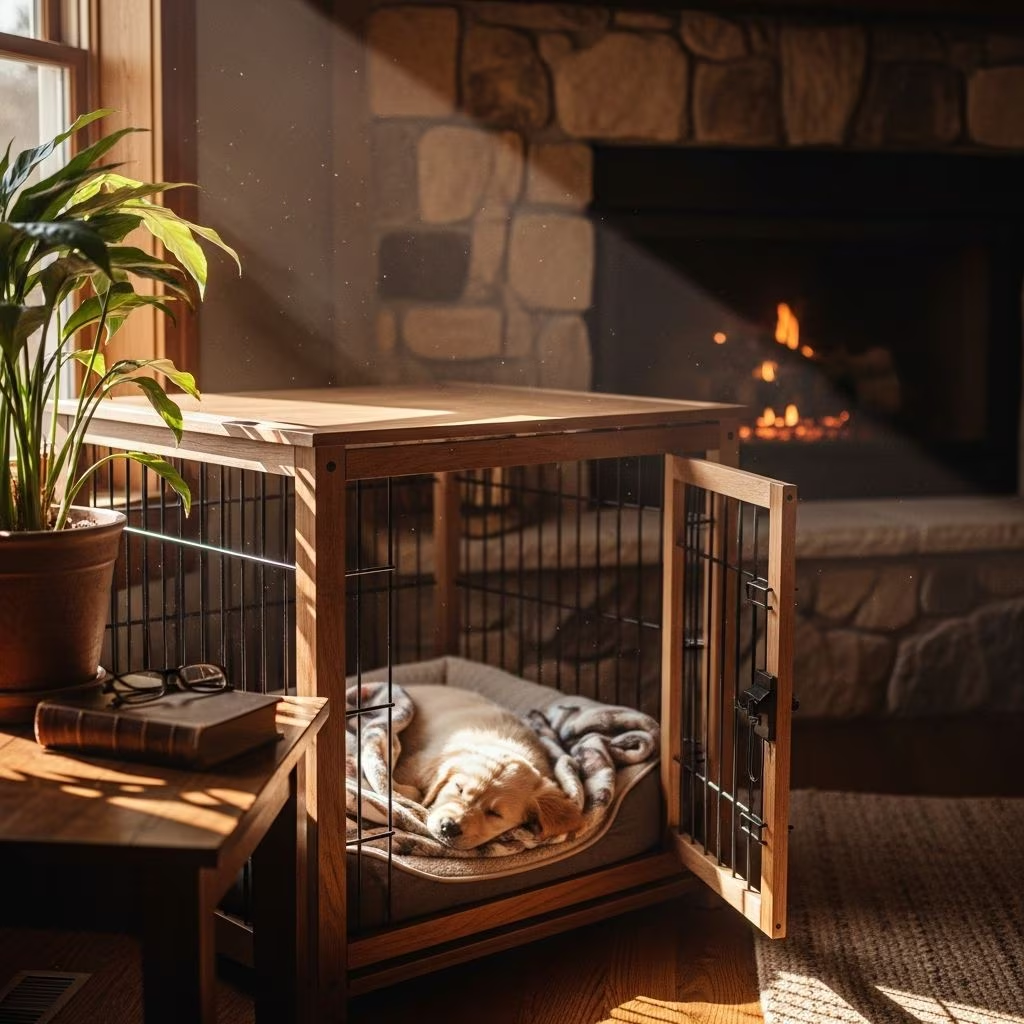
Crates serve as vital tools in dog care, offering secure spaces that mimic natural dens and support effective training without causing distress. When introduced properly, they enhance a dog’s sense of security and aid in housebreaking and behavior management.
Why Dogs Thrive in Crate Environments
Dogs possess an innate instinct to seek enclosed, den-like areas for rest and safety, a trait inherited from their wild ancestors who used caves or burrows for protection. Crates replicate this natural preference, providing a personal retreat where dogs feel protected from household chaos or external noises.
Research in animal behavior highlights that confined spaces reduce anxiety in canines by limiting overwhelming stimuli, allowing them to relax fully. Positive reinforcement training methods, which reward calm crate entry with treats or praise, reinforce this as a positive experience rather than isolation.
- Instinctual appeal: Dogs naturally choose cozy, enclosed spots for sleeping.
- Stress reduction: Limits exposure to distractions, promoting deeper rest.
- Behavioral foundation: Builds habits for alone time and potty training success.
Overcoming the ‘Prison’ Misconception
Many view crates as punitive enclosures, but this stems from misuse rather than the tool itself. Prolonged crating without breaks or as punishment creates negative associations, yet ethical use focuses on short durations aligned with a puppy’s bladder capacity—typically one hour per month of age.
Science-based approaches emphasize crates as voluntary sanctuaries. Dogs often enter willingly for naps, signaling comfort. Trainers using operant conditioning pair crate time with rewards, ensuring the space becomes synonymous with positivity, not confinement.
Selecting the Perfect Crate for Your Dog
Choosing the right crate size is crucial; it should allow standing, turning, and lying down comfortably without excess room that encourages accidents. Wire crates offer visibility and airflow, while plastic ones provide more den-like seclusion.
| Crate Type | Best For | Pros | Cons |
|---|---|---|---|
| Wire | Playful adults | Breathable, foldable, affordable | Less cozy for anxious dogs |
| Plastic | Puppies, shy dogs | Secure feel, portable | Heavier, pricier |
| Fabric | Travel, apartments | Lightweight, soft-sided | Not chew-proof |
Placement matters too—near family areas initially to foster security, then transitioning to quieter spots for nighttime use.
Step-by-Step Introduction to Crating
Begin with short, rewarding sessions to build positive associations. Toss treats inside an open crate, praising entry. Gradually close the door for seconds, extending time as tolerance grows.
- Day 1-3: Lure with high-value treats; door open.
- Week 1: Brief closures (5-10 minutes) with toys inside.
- Ongoing: Incorporate into routine, feeding meals in crate.
Monitor body language: relaxed ears and tail indicate comfort; whining from boredom versus distress requires differentiation—ignore attention-seeking, soothe true anxiety.
Integrating Crates into Daily Routines
Use crates for naps, mealtimes, and pre-walk settling to prevent overstimulation. Puppies benefit from scheduled crate time post-play, aligning with their natural sleep cycles of 18-20 hours daily.
For adult dogs, crates aid separation anxiety management by practicing brief absences, rewarding calm returns. Combine with relationship-based training for consistent feedback, ensuring fun elements like puzzle toys keep sessions engaging.
Common Challenges and Solutions
Resistance often arises from prior negative experiences. Counter with model-rival techniques: let the dog observe calm crate use by others, fostering imitation without force.
- Whining: Wait for quiet before release; reward silence.
- Escaping: Secure latches; consider divider panels for growth.
- Fear: Desensitize slowly with blankets for familiarity.
Avoid over-crating; maximum four hours for adults, less for pups, with ample exercise breaks.
Advanced Crate Training Techniques
Incorporate clicker training for precision: mark desired behaviors like entering on cue with a click, followed by rewards. This builds reliable responses, ideal for travel or vet visits.
For working dogs, crates double as transport for scent work, using LIMA principles—least intrusive, minimally aversive—to prioritize welfare while achieving goals.
Long-Term Benefits for Dog and Owner
Well-crated dogs exhibit fewer destructive behaviors, faster housebreaking, and better adaptability to changes like moves or travel. Owners gain peace of mind, knowing their pet has a safe haven.
Studies confirm reward-based methods like these yield higher efficacy than aversive ones, with dogs showing sustained compliance and enthusiasm for learning.
Frequently Asked Questions
How long can I crate my puppy?
Follow the one-hour-per-month-of-age rule, plus one, with frequent potty breaks. Overnight crating is generally acceptable up to 8 hours for housebroken adults.
Is crating cruel?
No, when used humanely with positive methods. It’s endorsed by veterinary behaviorists as a welfare-enhancing tool.
What if my adult dog hates the crate?
Revert to basics: high-reward luring, short sessions, and patience. Consult a certified trainer if anxiety persists.
Can crates help with separation anxiety?
Yes, by gradually increasing alone time in a comforting space, paired with counter-conditioning.
Should I cover the crate?
Yes, especially at night, to enhance the den effect and block light distractions.
References
- Improving dog training methods: Efficacy and efficiency of reward… — PMC/NCBI. 2021-02-17. https://pmc.ncbi.nlm.nih.gov/articles/PMC7895348/
- 12 Dog Training Methods Explained: A Science-Backed Guide — QC Pet Studies. 2025-10-12. https://www.qcpetstudies.com/blog/2025/10/12-dog-training-methods-explained-science-backed-guide
- Common Dog Training Methods and Their Pros and Cons — Astro Loyalty. N/A. https://www.astroloyalty.com/common-dog-training-methods-and-their-pros-and-cons/
- Dog Training Methods and Beliefs- What are the differences — DeMarinis Dog Training. N/A. https://www.demarinisdogtraining.com/blog/dog-training-methods-and-beliefs-what-are-the-differences
- Understanding the different methods of training dogs — Noel Hoffmann. N/A. https://noelhoffmann.com/understanding-the-different-methods-of-training-dogs/



