Crate Training Timeline For Dogs: 6-Phase Guide
Discover realistic timelines and proven steps to successfully crate train your dog, from puppies to adults, using positive methods.
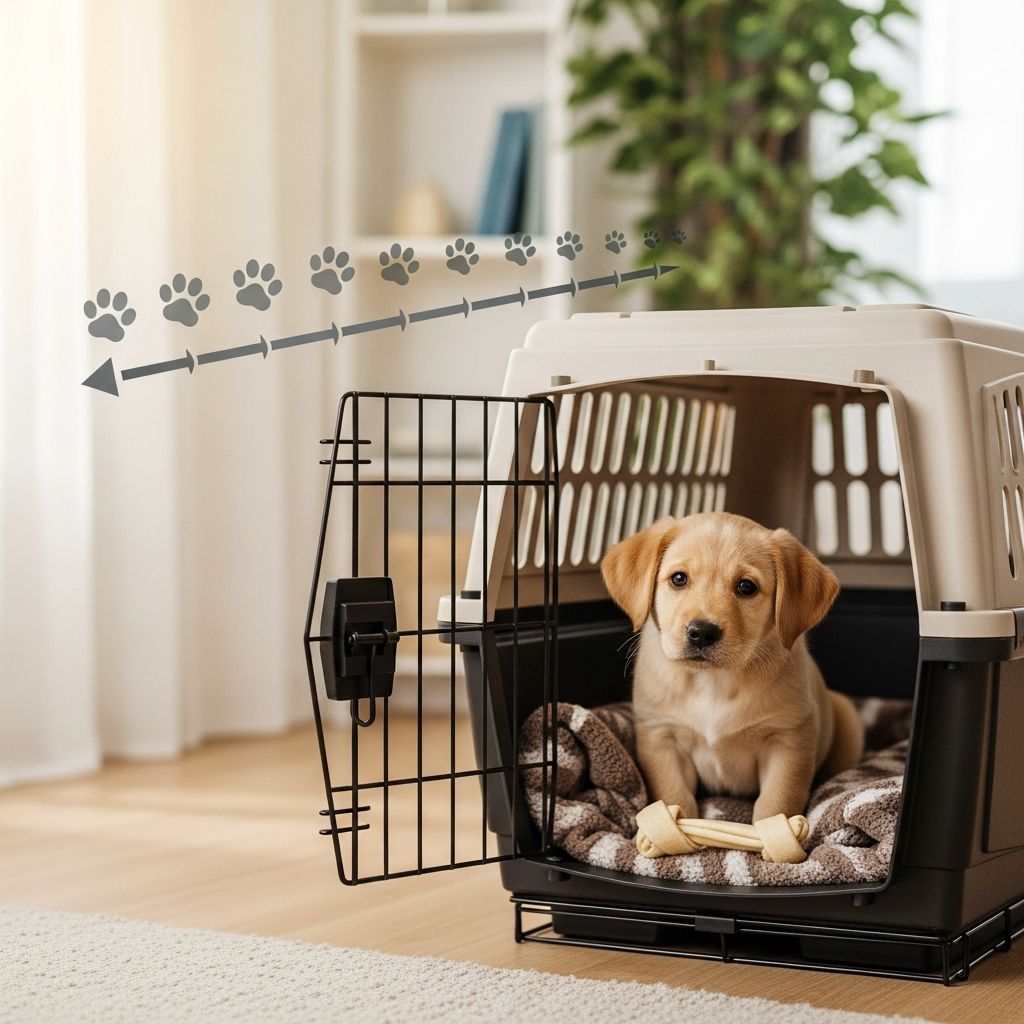
Crate Training Timeline for Dogs
Crate training typically takes 2-6 weeks for most dogs when using consistent positive reinforcement, though puppies may adapt in 1-4 weeks and adults with prior negative experiences could need 4-8 weeks or more.
Understanding Crate Training Basics
Crate training involves teaching dogs to view their crate as a safe, comfortable den rather than a punishment. This method leverages dogs’ natural instincts to seek enclosed spaces for rest and security. Proper training prevents destructive behavior, aids housebreaking, and eases travel or alone time.
Key benefits include faster potty training since dogs avoid soiling their sleeping area, reduced separation anxiety, and safer management during emergencies. Start with the right crate size: large enough for standing, turning, and lying down comfortably, but not so spacious they can potty in one corner.
Factors Influencing Crate Training Duration
Several variables determine how quickly your dog masters crate training:
- Age: Puppies under 6 months often learn fastest due to their adaptability.
- Past Experiences: Rescue dogs with crate trauma require gradual desensitization.
- Temperament: Confident dogs progress quicker than anxious ones.
- Consistency: Daily short sessions yield better results than sporadic long ones.
- Training Method: Positive reinforcement shortens timelines compared to force-based approaches.
For average puppies, expect 1-2 weeks for basic acceptance and 3-4 weeks for overnight crating. Adults average 3-6 weeks, per trainer insights from established programs.
Step-by-Step Crate Training Guide
Follow this progressive 6-phase approach, inspired by professional canine behaviorists, adapting pace to your dog’s comfort.
Phase 1: Introduce the Crate as a Neutral Space
Place the open crate in a high-traffic family area with a cozy bed and toys inside. Allow free exploration without coaxing. Toss high-value treats like beef lung pieces inside sporadically to spark interest. Repeat for 3-5 days until your dog enters voluntarily multiple times daily.
This builds curiosity without pressure, crucial for rescues wary of confinement.
Phase 2: Build Positive Associations with Entry
Use a cue like “crate” in an upbeat tone while luring with treats or a stuffed marrow bone. Praise lavishly upon entry, but let them exit freely. Practice 5-10 short sessions daily, aiming for calm settling inside for 1-2 minutes before release. Transition to waiting for self-entry before rewarding.
Phase 3: Practice Short Stays with Door Closed
Once entering eagerly, close the door for 1-5 seconds, then open and treat. Gradually extend to 10-30 seconds, staying nearby. Use a release cue like “okay” to signal exit. Sessions should end on a positive note, never mid-whine. Most dogs master this in 4-7 days.
Phase 4: Extend Alone Time Gradually
With door proficiency, feed meals inside and leave for 5-10 minutes while you step to another room. Increase duration by 5 minutes per successful session, up to 30-60 minutes. Incorporate frozen Kongs with peanut butter for mental stimulation during absences.
Phase 5: Overnight Crating
Introduce bedtime crating after daytime success. Start with crate beside your bed if needed for security. Puppies may need midnight potty breaks until 12 weeks old. Adults often sleep through nights sooner. Full comfort typically arrives in 1-2 weeks.
Phase 6: Independence and Commands
Teach reliable entry from distance with your cue. Practice during low-supervision times like showers. Enforce calm exits—no barreling—to set boundaries. At this stage, crate becomes a reliable tool for travel or visitors.
Crate Training Timelines by Dog Type
| Dog Type | Basic Acceptance | Short Sessions (1hr) | Overnight/Full Days |
|---|---|---|---|
| Puppy (8-16 weeks) | 3-7 days | 1-2 weeks | 2-4 weeks |
| Adult Confident | 5-10 days | 2-3 weeks | 3-5 weeks |
| Adult Anxious/Rescue | 1-2 weeks | 3-6 weeks | 6-12 weeks |
These timelines assume 20-30 minutes of daily practice. Adjust based on progress; rushing causes setbacks.
Common Mistakes and How to Avoid Them
- Using crate as punishment: Always associate with rewards to prevent fear.
- Inconsistent schedule: Stick to routine for faster learning.
- Too rapid progression: Watch body language—lip licking or pacing signals stress.
- Wrong crate location: Keep it central initially, not isolated.
- Ignoring exercise needs: Tire dogs with walks before sessions.
Tips for Puppies vs. Adult Dogs
Puppies: Leverage playfulness with games like luring back-and-forth between crate and another bed. Limit crating to 1 hour per month of age initially. Incorporate down-stay commands for relaxation.
Adults: Focus on desensitization if resistant. Use elevated crates bedside for nighttime security, gradually relocating. High-value chews like marrow bones extend calm periods.
Addressing Crate Anxiety and Whining
Whining during training is common. Ignore attention-seeking cries but release preemptively before fussing. For severe anxiety, regress phases and consult vets to rule out medical issues. Positive methods from certified trainers emphasize patience over correction.
Advanced Crate Training Techniques
Once basics are solid:
- Wheel crate to different rooms for versatility.
- Practice with door open down-stays supervised.
- Incorporate crate in multi-dog homes for peaceful mealtimes.
FAQs
How long does it take to crate train a puppy overnight?
Most puppies accept overnight crating in 2-4 weeks with consistent daytime practice and potty breaks.
Can you crate train an older dog?
Yes, adults train successfully in 3-8 weeks using slow, reward-based steps, even with prior bad experiences.
What if my dog cries in the crate?
Wait for quiet moments to release, gradually building tolerance. Ensure needs like exercise and bathroom are met first.
Is crate training cruel?
No, when done positively, it mimics natural dens and improves behavior and safety.
How often should I crate my dog?
Puppies: 4-6 hours max daytime; adults up to 8 hours with exercise breaks.
Tools and Essentials for Success
Stock up on:
- High-value treats (beef lung, cheese).
- Long-lasting chews (marrow bones, frozen Kongs).
- Comfortable, washable bedding.
- Clicker for precise timing.
Track progress in a journal to stay motivated.
References
- 6 Steps to Crate Train Your Dog – Leash and Learn — Leash and Learn NYC. 2019. https://leashandlearnnyc.com/step-by-step-crate-training/
- How to Crate Train an Adult Dog: A Step-by-Step Guide — K9 Connoisseur. N/A. https://k9connoisseur.com/blogs/news/how-to-crate-train-an-adult-dog
- How To Crate Train Your Dog — PAWS. N/A. https://www.paws.org/resources/how-to-crate-train-your-dog/
- How to Crate Train Your Dog in Nine Easy Steps — American Kennel Club (AKC). N/A. https://www.akc.org/expert-advice/training/how-to-crate-train-your-dog-in-9-easy-steps/
- Positive Crate Training Guide — Karen Pryor Academy. 2018-05. https://karenpryoracademy.com/wp-content/uploads/2018/05/Karen_Pryor_Academy_Crate_Training_Guide-PDF.pdf
Similar Articles








Read full bio of Sneha Tete