

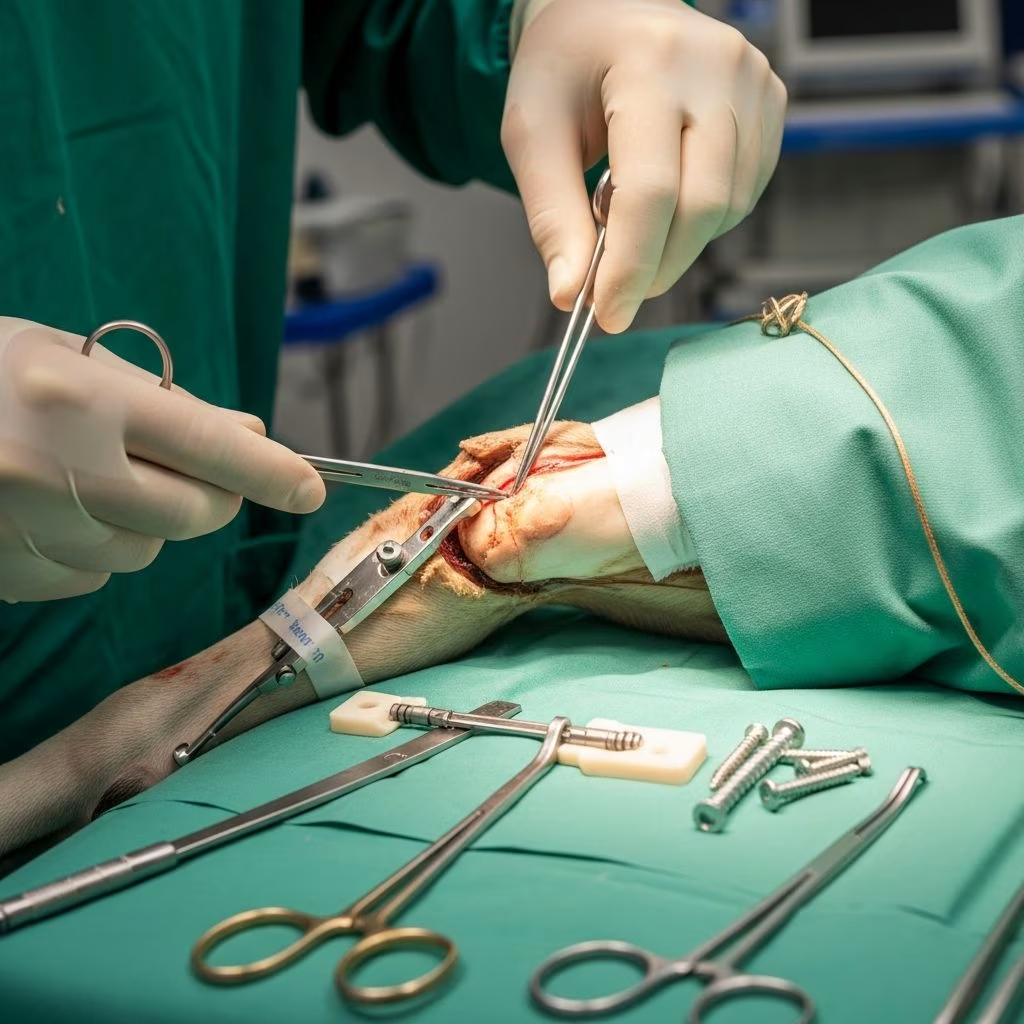
Understanding Cranial Cruciate Ligament Repair and TPLO Surgery
Cranial cruciate ligament (CCL) rupture is one of the most common orthopedic conditions affecting dogs today. When your veterinarian suggests surgically addressing this injury through a tibial plateau leveling osteotomy (TPLO), understanding the procedure is essential to making informed decisions about your dog’s health and recovery. TPLO surgery has emerged as the preferred treatment option for CCL rupture, offering exceptional outcomes and rapid functional recovery compared to alternative surgical approaches.
What Is the Cranial Cruciate Ligament?
The cranial cruciate ligament is a crucial stabilizing structure within the dog’s knee joint, or stifle. This ligament works to prevent the tibia (shin bone) from sliding forward relative to the femur (thigh bone) during movement. When the CCL ruptures, either partially or completely, the tibia loses its primary restraint and begins to slide forward with each step. This instability leads to progressive joint damage, cartilage deterioration, and the development of arthritis.
The Evolution of TPLO Surgery
The development of tibial plateau leveling osteotomy represented a major advancement in canine orthopedic surgery. Unlike traditional surgical approaches that attempt to replace or repair the damaged ligament, TPLO surgery takes a fundamentally different approach by altering the geometry and biomechanics of the knee joint itself. This innovative procedure, developed over two decades ago, has consistently demonstrated superior long-term outcomes and exceptional owner satisfaction rates.
How TPLO Surgery Works: The Wagon on a Hill Analogy
To understand the purpose and function of TPLO surgery, veterinarians often use a helpful analogy: imagine a wagon tied to a post on the slope of a hill. If the rope holding the wagon is strong, the wagon remains secure. However, if you add excessive weight or downward force to the wagon, the rope may break and the wagon will roll down the hill. Conversely, if that same wagon is placed on level ground, it will not roll even if the rope breaks, regardless of the force applied.
In this analogy, the femur represents the wagon, and the tibial plateau represents the hillside. When the CCL ruptures, the femur slides down the slope of the tibia (like the wagon rolling downhill), causing the instability and joint damage. TPLO surgery levels the tibial plateau, preventing the femur from sliding forward and maintaining joint stability even without the CCL present. This biomechanical correction is what makes TPLO surgery so effective.
The TPLO Surgical Procedure: Step-by-Step
Pre-Operative Evaluation
Before TPLO surgery, your veterinarian will perform radiographic evaluation of the affected knee. X-rays allow the surgeon to measure the tibial plateau angle (TPA), assess for any concurrent bone or joint diseases, and perform precise surgical planning. The normal tibial plateau angle in dogs ranges from 24 to 25 degrees. The goal of TPLO surgery is to reduce this angle to between 5 and 6 degrees, with 5 degrees being considered the ideal angle for optimal biomechanical stability.
Joint Assessment
The surgeon begins the procedure by opening the joint capsule to examine the internal structures of the knee. This assessment allows visualization of the menisci (shock-absorbing cartilage pads), articular cartilage, and other joint structures. If meniscal damage is present, the damaged portions must be removed to allow the dog to regain normal, pain-free function. This exploration may be performed through an open approach or arthroscopically using a specialized camera.
Bone Cutting and Rotation
The surgeon then creates a semicircular cut through the top of the tibia using a specialized curved saw blade. This cut creates two segments of bone at the proximal tibia. The top section is then carefully rotated backward until the angle between the tibia and femur reaches the predetermined optimal angle, typically 5 to 6 degrees. The rotation is guided by measurements obtained from the pre-operative radiographs and fluoroscopic imaging during surgery.
Stabilization with Bone Plate
Once the tibia is rotated to the desired position, a specialized metal bone plate and screws are used to hold the bone segments in their new alignment. The plate is secured with stainless steel screws that penetrate both bone segments, creating a stable construct that allows the bone to heal in its new position. Post-operative radiographs are taken to ensure proper plate positioning and confirm that the new angle is appropriately level.
How TPLO Surgery Eliminates Tibial Thrust
The primary mechanism by which TPLO surgery restores knee stability involves neutralizing tibial thrust. Tibial thrust is the forward sliding motion of the tibia that occurs when weight is placed on a CCL-deficient knee. By leveling the tibial plateau, TPLO surgery eliminates this abnormal forward thrust entirely. The femur no longer slides backward relative to the tibia, and the remaining ligaments in the knee work together to maintain joint stability.
Unlike procedures that attempt to replace or reconstruct the damaged CCL, TPLO surgery works with the remaining joint structures rather than against them. The other ligaments present in the knee, such as the caudal cruciate ligament and collateral ligaments, continue to provide support and stability alongside the biomechanical correction provided by the leveled tibial plateau.
Key Advantages of TPLO Surgery
Superior Surgical Outcomes
TPLO surgery has consistently demonstrated exceptional and repeatable clinical outcomes when compared to alternative surgical procedures. The procedure provides superior functional recovery, with dogs returning to near-normal activity levels more rapidly than with other surgical techniques.
Rapid Weight-Bearing Recovery
One of the most significant practical advantages of TPLO surgery is the speed at which dogs return to weight-bearing on the operated limb. Most dogs begin bearing weight on the surgical leg within 1 to 3 days following surgery. This rapid functional recovery reflects the efficient healing capacity of bone compared to the slower healing of ligamentous tissue, making bone-based corrections inherently more robust than ligament replacement procedures.
Effective in Dogs of All Sizes
TPLO surgery has proven to be an excellent treatment option for dogs of all sizes, including small breed dogs. While some alternative procedures may be less effective in small dogs, TPLO consistently delivers outstanding results regardless of the patient’s size or body weight.
Long-Term Stability
By fundamentally altering the biomechanics of the knee joint, TPLO surgery provides durable, long-term stability. The procedure reduces mechanical stress on the joint and helps minimize future joint inflammation and the development of osteoarthritis.
Post-Operative Care and Recovery
Activity Restrictions
Following TPLO surgery, strict activity restriction is essential during the healing phase. Dogs must be kept confined to prevent excessive forces through the surgical site, which could compromise bone healing or cause fracture of the tibial tuberosity (the insertion site of the patellar tendon). Your veterinarian will provide specific guidelines regarding exercise limitations and activity progression.
Pain Management
Appropriate pain control is crucial to facilitate healing and enable dogs to participate in physical rehabilitation. Your veterinarian will prescribe pain medications and may recommend additional therapies such as cold laser therapy, therapeutic ultrasound, or other modalities.
Physical Rehabilitation
Controlled physical rehabilitation exercises help restore normal limb function and muscle strength. As healing progresses, your veterinarian will guide you through a program of gradually increasing activity and therapeutic exercises tailored to your dog’s individual recovery needs.
Follow-Up Radiographs
Post-operative radiographs are taken to confirm proper bone healing and validate the position of the bone plate and screws. Follow-up examinations allow your veterinarian to monitor healing progress and adjust your dog’s care plan as needed.
Potential Complications and Considerations
Tibial Tuberosity Fracture
The rotation of the tibial plateau during TPLO surgery slightly weakens the tibial tuberosity, the insertion point of the patellar tendon. Excessive forces through the joint during the early post-operative period can result in fracture of this bony landmark, which would require surgical intervention. Strict activity restriction during healing helps prevent this complication.
Plate-Related Issues
While complications related to plate failure or loosening are uncommon, they can occur. Proper surgical technique and strict post-operative activity restriction minimize these risks.
Infection
As with any surgical procedure, infection is a potential complication. Following your veterinarian’s post-operative instructions regarding wound care and activity restriction helps prevent infection.
Comparing TPLO to Other CCL Treatment Options
| Treatment Option | Mechanism | Recovery Time | Long-Term Success | Ideal Candidate |
|---|---|---|---|---|
| TPLO Surgery | Alters tibia geometry to neutralize tibial thrust | 1-3 days to bearing weight; 8-12 weeks full recovery | Excellent; superior outcomes | All sizes; most CCL ruptures |
| Tibial Tuberosity Advancement (TTA) | Advances tibial tuberosity to reduce tibial thrust | Similar to TPLO | Good; excellent alternative | Alternative to TPLO |
| Extracapsular Repair | Attempts to replace or reinforce CCL | Longer; slower functional recovery | Fair to good; less durable | Small dogs; partial tears |
| Conservative Management | No surgery; rest and activity restriction | Variable; ongoing inflammation | Poor; high rupture rate in opposite leg | Very small dogs; partial tears only |
Long-Term Outcomes and Quality of Life
Dogs treated with TPLO surgery typically experience dramatic improvements in function and quality of life. Most dogs return to normal or near-normal activity levels within 8 to 12 weeks following surgery. The procedure’s ability to provide immediate joint stability, combined with rapid weight-bearing recovery and excellent long-term outcomes, makes TPLO the preferred surgical choice for treating CCL rupture in dogs.
The investment in TPLO surgery often pays dividends through years of improved mobility, reduced pain, and better overall quality of life for affected dogs.
Frequently Asked Questions About TPLO Surgery
Q: Will my dog need surgery on both knees?
A: Many dogs develop CCL rupture in both knees over time. If only one knee is currently affected, your veterinarian will examine both knees carefully. If the opposite knee shows signs of instability, your veterinarian may recommend bilateral surgery or monitoring the opposite knee closely for future rupture. The timing of any second surgery will depend on your dog’s individual condition and clinical presentation.
Q: How long does TPLO surgery take?
A: TPLO surgery typically requires 60 to 90 minutes, though this can vary depending on the dog’s size, anatomy, and any concurrent joint pathology requiring additional treatment such as meniscal repair.
Q: When can my dog return to normal activity?
A: While dogs begin bearing weight within days, full return to normal activity typically requires 8 to 12 weeks. Your veterinarian will provide specific guidelines for gradual activity progression based on your dog’s healing progress.
Q: What is the success rate of TPLO surgery?
A: TPLO surgery has an excellent success rate, with the vast majority of dogs achieving pain relief and functional improvement. Long-term owner satisfaction rates are consistently high, making it the preferred surgical option for CCL rupture in dogs.
Q: Is TPLO surgery appropriate for older dogs?
A: Yes, TPLO surgery can be performed in older dogs. Age alone is not a contraindication. Your veterinarian will evaluate your dog’s overall health status and ability to tolerate surgery to determine if TPLO is appropriate.
Q: Will my dog develop arthritis after TPLO surgery?
A: While some degree of osteoarthritis may develop over time, TPLO surgery significantly reduces the risk and severity of post-traumatic arthritis by restoring joint stability and reducing abnormal joint mechanics. This makes TPLO superior to conservative management in preventing arthritis progression.
References
- Tibial Plateau Leveling Osteotomy (TPLO) – VCA Animal Hospitals — VCA Animal Hospitals. 2025. https://vcahospitals.com/know-your-pet/cranial-cruciate-ligament-repair-tibial-plateau-leveling-osteotomy-tplo
- Tibial Plateau Leveling Osteotomy for Cranial Cruciate Ligament Rupture in Dogs — National Center for Biotechnology Information (NCBI/PubMed Central). 2020. https://pmc.ncbi.nlm.nih.gov/articles/PMC6938195/
- Tibial Plateau Levelling Osteotomy (TPLO) — Canine Cruciate Registry, Royal College of Veterinary Surgeons Knowledge Base. 2025. https://ccr.rcvsknowledge.org/dog-owners/common-surgical-procedures/tibial-plateau-levelling-osteotomy-tplo/
- What Dog Owners Should Know About Tibial Plateau Leveling Osteotomy — Midwest Veterinary Specialists. 2025. https://midwestveterinaryspecialists.com/what-dog-owners-should-know-about-tibial-plateau-leveling-osteotomy/
- TPLO Surgery in Boulder, CO — Pet Menders Animal Hospital. 2025. https://petmenders.com/tplo-surgery/



