

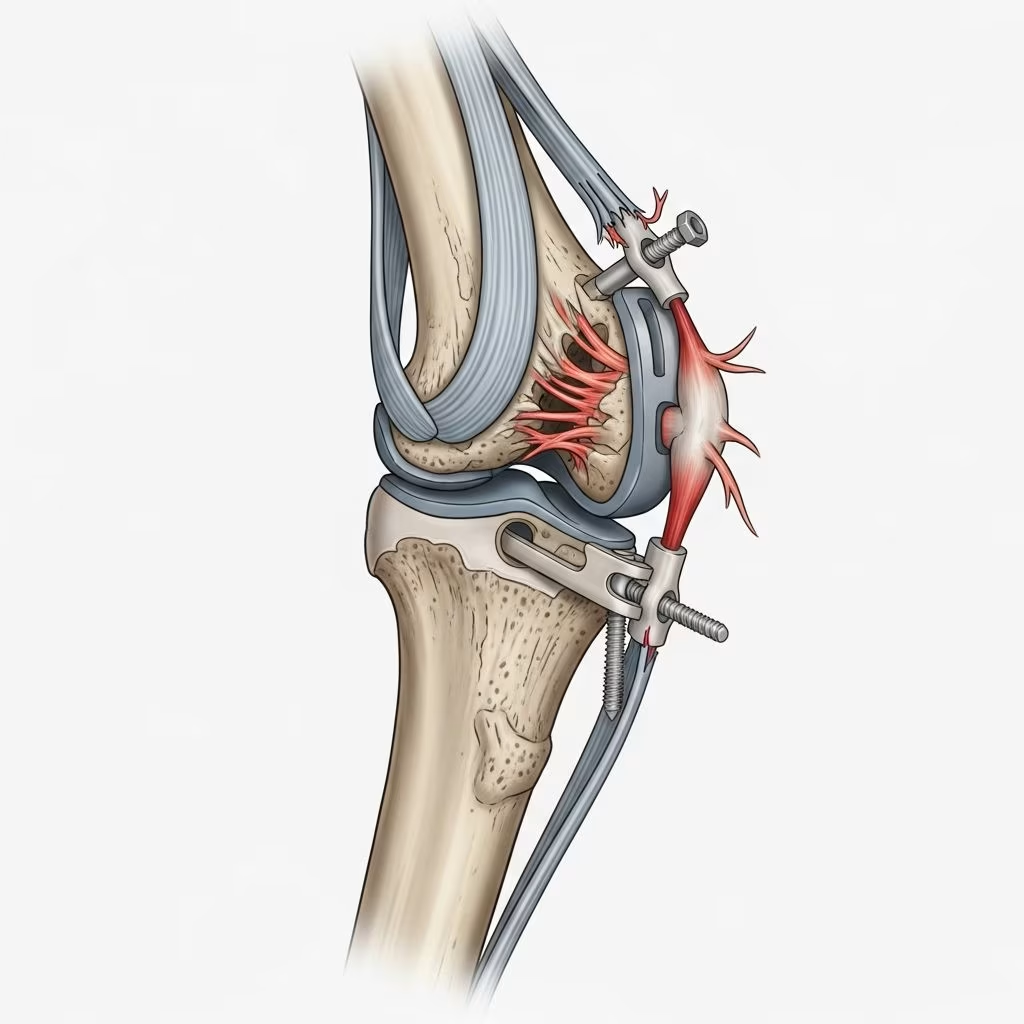
Cranial Cruciate Ligament Repair: Tibial Tuberosity Advancement (TTA)
The cranial cruciate ligament (CCL) is one of the most critical stabilizers of the knee joint in dogs, often referred to as the stifle joint. When this ligament ruptures or tears, it can cause significant pain, lameness, and progressive joint instability. Tibial Tuberosity Advancement (TTA) has emerged as a highly effective surgical technique to restore knee stability and function in dogs suffering from CCL injuries. This comprehensive guide explores the TTA procedure, its benefits, potential complications, and the recovery process that pet owners should expect.
Understanding Cranial Cruciate Ligament Injuries
The cranial cruciate ligament is a critical anatomical structure that prevents excessive forward movement of the tibia (shin bone) relative to the femur (thighbone). When this ligament tears, the tibia shifts forward abnormally during weight-bearing, a phenomenon known as tibial thrust. This instability leads to pain, swelling, and the development of osteoarthritis if left untreated. CCL surgery is the most common surgical procedure performed in dogs, accounting for approximately 85% of all orthopedic surgeries performed annually. Surgical intervention is typically the best treatment option since it is the only way to permanently control the instability present in the knee joint.
What Is Tibial Tuberosity Advancement?
Tibial Tuberosity Advancement (TTA) is an osteotomy procedure, meaning it involves surgically cutting and repositioning bone to alter the forces and geometry of the knee joint. The primary goal of TTA is to eliminate tibial thrust by advancing the tibial tuberosity, which is the bony prominence on the front of the tibia where the patellar tendon attaches.
During the TTA procedure, the surgeon makes a surgical cut in the tibia and advances the tibial tuberosity forward. This advancement changes the angle of the patellar tendon relative to the knee joint, creating a biomechanical environment that stabilizes the knee without requiring the cranial cruciate ligament. A specialized plate and screws are used to hold the advanced tuberosity in its new position while the bone heals and fuses together.
How TTA Works Biomechanically
The fundamental principle behind TTA surgery is the elimination of tibial thrust. Tibial thrust is the transmission of weight up the tibia and across the knee, which causes the tibia to thrust forward relative to the femur in the absence of a functioning cranial cruciate ligament. By advancing the tibial tuberosity, the angle of the patellar tendon is altered in such a way that the normal weight-bearing forces create a compression effect across the knee joint rather than a destabilizing forward thrust.
This biomechanical advantage distinguishes TTA from other surgical techniques. Unlike extracapsular repairs that rely on sutures to stabilize the joint externally, TTA achieves stability through anatomical repositioning. This approach provides more durable long-term stability and may reduce the risk of postoperative complications associated with suture-based repairs.
Surgical Technique and Procedure Details
The TTA surgical procedure is performed by veterinary surgeons with specialized training in orthopedic surgery. The procedure typically follows these steps:
Step 1: Surgical Exposure
The surgeon makes an incision on the inner surface of the tibia to gain access to the surgical site. This approach minimizes damage to surrounding soft tissues and blood vessels.
Step 2: Bone Cutting
A precise surgical cut is made in the tibia just below the knee joint, specifically below the tibial tuberosity. The surgeon uses specialized orthopedic equipment to ensure the cut is made at the correct angle and depth.
Step 3: Tuberosity Advancement
The tibial tuberosity is then advanced forward to the desired position. The amount of advancement is carefully calculated based on the dog’s tibial plateau angle and other anatomical measurements.
Step 4: Stabilization
A specialized titanium plate and screws are used to hold the advanced tuberosity in its new position. The plate is secured to the tibia both above and below the surgical cut site, providing rigid stabilization during the healing process.
Step 5: Closure
After confirming proper positioning and stability, the surgical site is closed in multiple layers to ensure proper healing and minimize infection risk.
Benefits of TTA Surgery
Tibial Tuberosity Advancement offers numerous advantages for dogs with cranial cruciate ligament injuries:
Effective Tibial Thrust Elimination
TTA directly addresses the biomechanical problem caused by CCL rupture by eliminating tibial thrust through anatomical repositioning. This approach provides more physiologic stability than external suture repairs.
Long-Term Durability
Because TTA relies on bone healing and anatomical repositioning rather than synthetic materials, the benefits are typically more durable and long-lasting. Once the bone heals, the correction is permanent.
Suitable for Large and Active Dogs
TTA is considered the gold standard for large, active dogs with CCL injuries. The procedure provides robust stability that can withstand the demands of active lifestyles.
Lower Complication Rates Compared to Suture-Based Repairs
While extracapsular repairs have success rates of 85-90% in smaller dogs with complication rates between 5% and 8%, TTA offers excellent outcomes with potentially fewer long-term complications.
Ability to Address Underlying Conditions
During TTA surgery, the surgeon can assess the knee joint for other conditions such as meniscal injuries and address them simultaneously, providing comprehensive treatment.
Candidate Selection for TTA Surgery
While TTA is an excellent option for many dogs with CCL injuries, certain factors help determine whether TTA is the best choice for an individual patient. Your veterinarian will consider the following:
Tibial Plateau Angle
The angle of the tibia relative to the femur affects which surgical technique is most appropriate. Dogs with certain tibial plateau angles may be better candidates for TTA.
Tibial Shape and Size
The anatomical structure of the tibia influences surgical selection. Larger breeds and those with specific tibial conformations are often excellent candidates for TTA.
Patient Size and Age
While TTA can be performed on dogs of various sizes, it is particularly beneficial for large and giant breed dogs. Age is generally not a limiting factor; TTA can be performed on senior dogs when they are in reasonable health.
Degree of CCL Rupture
Both partial and complete CCL ruptures can be treated with TTA. The extent of the rupture may influence the surgical approach but does not typically contraindicate the procedure.
Overall Health Status
Your veterinarian will assess your dog’s overall health to ensure they are an appropriate candidate for general anesthesia and surgery.
TTA Versus Other Surgical Options
Several surgical techniques are available for treating CCL injuries in dogs. Understanding how TTA compares to other options can help inform your decision:
| Surgical Technique | Best For | Mechanism | Recovery Time |
|---|---|---|---|
| Tibial Tuberosity Advancement (TTA) | Large, active dogs | Advances tibial tuberosity to eliminate tibial thrust | 12-16 weeks |
| Tibial Plateau Leveling Osteotomy (TPLO) | Large, active dogs; alternative to TTA | Rotates tibia 90° relative to patellar ligament | 12-16 weeks |
| Extracapsular Lateral Suture (ECLS) | Small to medium dogs | Suture placed outside joint to stabilize | 8-12 weeks |
| TightRope Procedure | Small to medium dogs | Modified suture anchoring system | 8-12 weeks |
During your initial consultation, your veterinarian will discuss these options in detail and recommend the procedure best suited to your dog’s specific needs, anatomy, and lifestyle.
Pre-Operative Preparation
Before undergoing TTA surgery, your dog will need to be thoroughly evaluated to ensure they are ready for the procedure. Pre-operative preparation typically includes:
Physical Examination
Your veterinarian will perform a comprehensive physical examination to assess your dog’s overall health status and identify any potential concerns that may affect surgery or recovery.
Diagnostic Imaging
X-rays of the affected knee will be taken to evaluate the extent of joint damage and measure important anatomical angles that help guide surgical planning. Additional imaging may be recommended to assess other structures within the joint.
Blood Work
Pre-operative laboratory tests will be performed to ensure your dog’s organs are functioning properly and to identify any conditions that may complicate anesthesia or recovery.
Anesthesia Assessment
Your veterinarian will review your dog’s anesthesia history and current medications to ensure safe anesthesia administration during surgery.
Activity Restriction
You will be advised to restrict your dog’s activity in the days leading up to surgery to minimize discomfort and prevent further injury to the affected joint.
Post-Operative Care and Recovery
Successful recovery after TTA surgery depends significantly on proper post-operative care. The recovery process typically spans 12 to 16 weeks as the bone heals and fuses at the surgical site.
Immediate Post-Operative Period (0-2 Weeks)
Immediately after surgery, your dog will require close monitoring for pain and complications. Pain management is a critical component of recovery and typically involves multiple medications. Your veterinarian may prescribe oral pain medications, and in some cases, pain-relieving injections or nerve blocks may be administered. Strict cage rest is essential during this period to allow the surgical site to begin healing and to prevent disruption of the surgical repair.
Early Recovery Phase (2-8 Weeks)
During this phase, your dog will gradually begin to place more weight on the surgical leg. Physical therapy and controlled exercise become increasingly important. Your veterinarian may recommend specific exercises and activities to promote healing and restore normal function. Leash walks are typically increased in duration and frequency under veterinary guidance.
Advanced Recovery Phase (8-16 Weeks)
As bone healing progresses and demonstrated by follow-up X-rays, your dog’s activity level can be gradually increased. Most dogs return to normal function around 12 to 16 weeks post-operatively, though complete bone healing and remodeling may take several additional months.
Long-Term Management
Even after your dog has returned to normal activity, ongoing care is important. Weight management is particularly crucial, as excess weight places additional stress on the surgical knee and may compromise long-term outcomes. Regular exercise should be maintained to preserve muscle mass and joint mobility. Your veterinarian may recommend periodic check-ups and follow-up X-rays to monitor the healing process and ensure optimal outcomes.
Potential Complications
While TTA is generally a safe and effective procedure, all surgeries carry some risk of complications. Potential complications may include:
Infection
Surgical site infection is possible following any surgical procedure. Signs include swelling, redness, warmth, or discharge from the incision site. Infection is typically managed with antibiotics and additional care.
Implant Failure
Although uncommon, the surgical plate or screws may loosen or break, compromising the stability of the repair. This may require revision surgery.
Delayed Bone Healing
In some cases, the surgical cut may heal more slowly than expected. Factors such as age, nutrition, and overall health can influence healing rates.
Lameness Persistence
While most dogs show significant improvement in lameness after TTA, some may experience persistent or residual lameness related to pre-existing arthritis or other joint conditions.
Subsequent CCL Rupture in the Other Leg
Dogs that rupture one CCL have an increased risk of rupturing the CCL in the other leg at some point in the future. This is not a complication of surgery but rather a consequence of the underlying condition and predisposition to ligament disease.
Expected Outcomes and Success Rates
TTA surgery has demonstrated excellent outcomes in dogs with cranial cruciate ligament injuries. Most dogs experience significant improvement in pain, lameness, and joint stability following the procedure. The success of TTA is reflected in its widespread use as the gold standard surgical technique for large, active dogs with CCL ruptures.
Dogs typically return to near-normal function within 12 to 16 weeks of surgery, with continued improvement possible for up to one year post-operatively. The biomechanical advantages of TTA contribute to durable long-term outcomes, with many dogs maintaining improved joint stability and function for years after surgery.
Cost Considerations
TTA surgery is more complex than extracapsular repair techniques and typically represents a significant investment. Costs vary based on geographic location, the specific surgical facility, and individual patient factors. Discussion of financial aspects with your veterinarian before surgery is important to understand the total cost of treatment, including pre-operative diagnostics, surgery, post-operative medications, and follow-up care.
Frequently Asked Questions About TTA Surgery
Q: Is my dog a good candidate for TTA surgery?
A: TTA is particularly beneficial for large, active dogs with cranial cruciate ligament injuries. Your veterinarian will assess your dog’s tibial plateau angle, size, age, and overall health to determine if TTA is the best option for your pet.
Q: How long does the TTA procedure take?
A: TTA surgery typically requires 45 minutes to 1.5 hours to complete, depending on the surgeon’s experience and individual patient factors.
Q: What is the success rate for TTA surgery?
A: TTA has excellent success rates, with most dogs experiencing significant improvement in lameness and joint stability. The procedure is considered the gold standard for large, active dogs with CCL injuries.
Q: Can both knees be treated at the same time?
A: While some surgeons may perform bilateral TTA in specific cases, most typically recommend staging the surgeries several weeks apart to allow proper recovery and rehabilitation between procedures.
Q: When can my dog return to normal activity after TTA?
A: Most dogs return to normal activity levels around 12 to 16 weeks after surgery, though the timeline varies depending on individual healing rates and rehabilitation adherence.
Q: Will my dog develop arthritis after TTA surgery?
A: Some degree of arthritis development is common in knees that have experienced CCL rupture, as the injury causes joint damage. However, TTA stabilizes the joint and may slow the progression of arthritis compared to non-surgical management.
Q: Are there any activity restrictions after recovery?
A: While most dogs can return to normal activity after full recovery, high-impact activities such as jumping from heights or intense running should be managed carefully to protect the surgical joint long-term.
Q: What if my dog has a CCL injury in the other leg after TTA?
A: Dogs with one CCL rupture have an increased risk of rupturing the ligament in the other leg. If this occurs, TTA or another appropriate surgical technique can be performed on the second leg following the same protocol.
References
- A novel surgical technique for cranial cruciate ligament repair in dogs using autologous lateral digital extensor muscle tendon graft combined with platelet-rich plasma: A preliminary experimental study — Mousa H Daradka, National Center for Biotechnology Information. 2024. https://pmc.ncbi.nlm.nih.gov/articles/PMC11873380/
- Cranial Cruciate Ligament Repair: Extracapsular Repair — VCA Hospitals. 2025. https://vcahospitals.com/know-your-pet/cranial-cruciate-ligament-repair-extracapsular-repair-and-tightrope-procedure
- Cranial Cruciate Ligament Repair (Torn ACL Surgery) in Dogs — Canton Animal Hospital. 2025. https://cantonvets.com/resources/cruciate-ligament-repair-in-dogs/
- Ruptured Cranial Cruciate Ligament (CrCL) Repair in Dogs — MedVet. 2025. https://www.medvet.com/ruptured-cranial-cruciate-ligament-crcl-repair-dogs/
- Cranial Cruciate Ligament Disease — American College of Veterinary Surgeons. 2025. https://www.acvs.org/small-animal/cranial-cruciate-ligament-disease/
- Cranial Cruciate Ligament (CCL) Surgery for Dogs — Pet Doctors of America. 2024. https://www.petdoctorsofamerica.com/site/blog/2024/01/15/ccl-surgery-dog



