

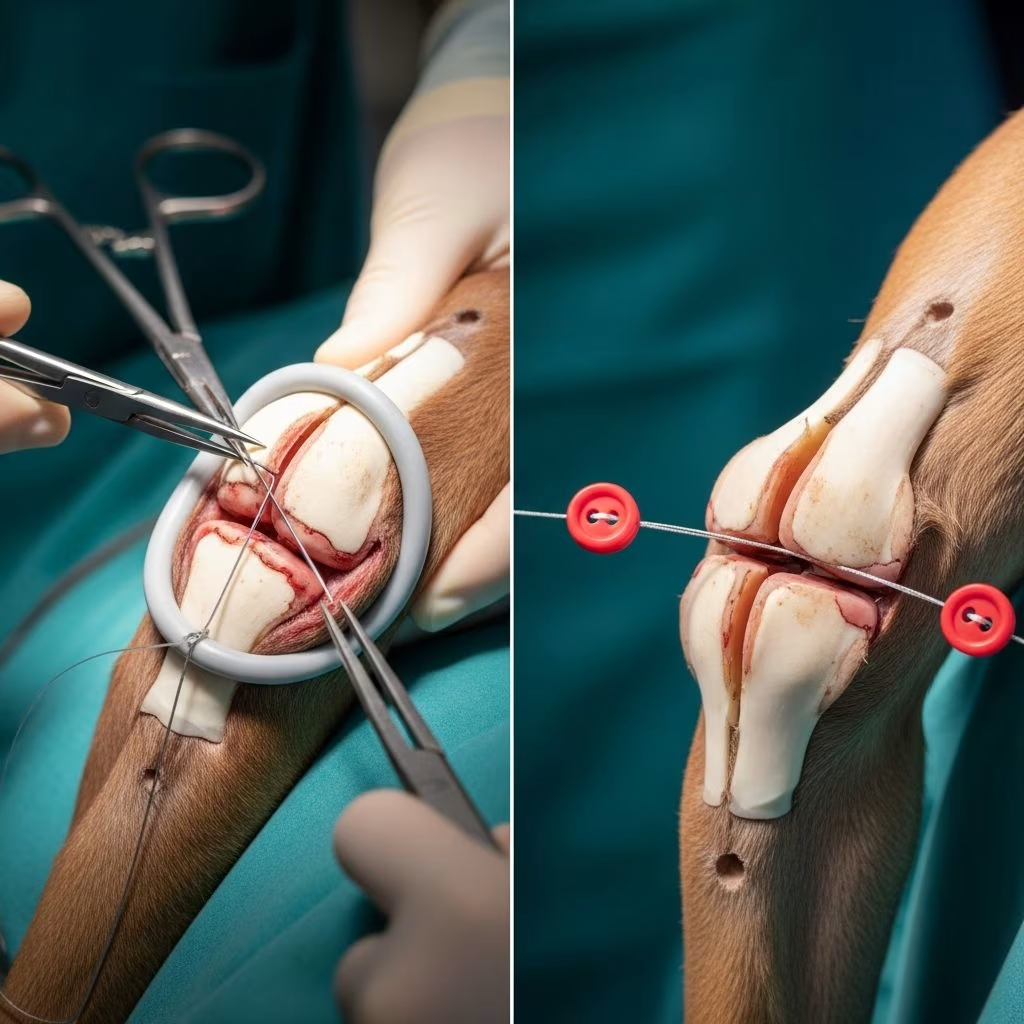
Understanding Cranial Cruciate Ligament Injuries in Dogs
One of the most common injuries affecting dogs is a tear of the cranial cruciate ligament (CCL), which is functionally equivalent to the anterior cruciate ligament (ACL) in humans. The knee joint, also called the stifle, contains two cruciate ligaments that cross over each other in the middle of the joint: the cranial cruciate ligament and the caudal cruciate ligament. These ligaments are named “cruciate” because of their characteristic crossing pattern within the knee joint. The cranial cruciate ligament serves as one of the most critical stabilizers of the knee joint, and when it tears, the resulting instability can cause significant pain and lameness in affected dogs.
When a CCL injury occurs, it often leads to progressive joint damage and cartilage deterioration if left untreated. The pain and functional limitation resulting from a torn CCL can severely impact a dog’s quality of life and mobility. For detailed information about how these ligaments become damaged and the circumstances leading to injury, veterinary resources provide comprehensive background on cranial ligament rupture in dogs.
Surgical Options for CCL Repair
When the cranial cruciate ligament is torn, surgical stabilization of the knee joint is frequently necessary, particularly in larger or more active dogs. Surgery is generally recommended as soon as possible following diagnosis to prevent permanent and irreversible joint damage and to relieve pain. Several distinct surgical techniques have been developed over the years to address CCL ruptures, and each procedure offers unique advantages and potential drawbacks.
The choice of surgical technique depends on multiple factors including the size and age of the dog, the tibial plateau angle, tibial shape and size, and the degree of the cruciate ligament rupture. Your veterinarian will guide you through the decision-making process and advise you on the most appropriate surgical option for your specific pet’s needs.
Extracapsular Lateral Suture (ECLS) Stabilization
The traditional extracapsular lateral suture (ECLS) technique represents the oldest surgical correction for cruciate ligament injury in dogs. The name of this procedure originates from the fact that the joint is stabilized outside the joint capsule, rather than within it. This external approach has been refined and improved significantly over the decades.
One of the most significant advancements in ECLS surgery has been in how suture material is joined together. Historically, veterinarians relied on bulky knots that could potentially come undone or irritate surrounding tissues. Modern ECLS procedures utilize a variety of specialized suture connectors that are considerably more reliable, effective, and less likely to cause tissue irritation. Additionally, improvements have been made in bone anchor technology, with modified bone drills and bits now available for varying dog sizes, making the surgery simpler, more effective, and less risky than previous iterations.
The development of strong, specialized knee suture materials has further enhanced the safety and efficacy of this procedure. These modern materials and techniques have transformed ECLS from a procedure with higher complication rates into one with consistently reliable outcomes.
The TightRope® Procedure
The TightRope® procedure represents a modern advancement in extracapsular CCL repair techniques. Like traditional ECLS, this procedure is categorized as an extracapsular or external repair of CCL injury. The TightRope system utilizes specialized connectors and techniques designed to provide secure joint stabilization while minimizing tissue trauma and irritation.
This procedure has gained popularity because it addresses some of the limitations of traditional ECLS techniques, particularly regarding the reliability of suture fixation and the reduction of tissue irritation associated with bulky knots.
Comparing ECLS and TightRope Procedures
Similarities and Outcomes
Both the traditional ECLS and the TightRope® procedure are classified as extracapsular or external repairs of CCL injury, and both yield remarkably similar results with comparable low-risk profiles. The primary risks associated with extracapsular surgical repairs remain consistent between the two techniques and include infection and surgical failure.
Success rates for extracapsular repairs demonstrate impressive outcomes in smaller dogs, with success rates reported to be at least 85-90% in these patients. Overall complication rates are reported to be between 5% and 8%, which represents a favorable safety profile for either procedure.
Choosing Between Procedures
Since both the traditional ECLS and the TightRope® procedure are considered extracapsular repairs with nearly identical potential risks, the determination of which procedure to use often depends on the surgeon’s confidence and experience with each technique. Your veterinarian will select the procedure they believe will give your dog the best chance of full recovery based on their expertise and your individual pet’s circumstances.
Suitability by Dog Size
Both the ECLS and TightRope® procedures are considered adequate for most small- to medium-sized dogs and for cats. However, larger dogs may benefit more from alternative procedures such as tibial plateau leveling osteotomy (TPLO) or tibial tuberosity advancement (TTA) surgery, which may provide superior long-term stability for heavier animals.
Comparison Table: ECLS vs. TightRope Procedures
| Feature | ECLS (Traditional) | TightRope® Procedure |
|---|---|---|
| Classification | Extracapsular/External Repair | Extracapsular/External Repair |
| Approach | Stabilization outside joint capsule | Stabilization outside joint capsule |
| Suture Connectors | Modern specialized connectors | Modern specialized system |
| Success Rate (Small Dogs) | 85-90% | 85-90% |
| Complication Rate | 5-8% | 5-8% |
| Primary Risks | Infection, Failure | Infection, Failure |
| Ideal Patient Size | Small to Medium | Small to Medium |
| Recovery Considerations | Similar to TightRope | Similar to ECLS |
Alternative Surgical Procedures
While ECLS and TightRope represent two popular options for CCL repair, other surgical techniques are also available. For comprehensive information about alternative procedures, veterinarians often reference additional surgical options including tibial plateau leveling osteotomy (TPLO) and tibial tuberosity advancement (TTA). These alternative procedures work through different biomechanical principles and may be better suited for specific patient populations, particularly larger breed dogs.
Making the Right Decision for Your Dog
In most cases, any CCL surgery is better than no surgery at all, especially in medium- to large-breed dogs. Your veterinarian will discuss your dog’s specific condition and which procedure is most likely to achieve the desired outcome for your pet.
There is no inherently “right” or “wrong” surgery; rather, the choice depends on finding the procedure most likely to achieve the best results for your individual dog’s situation. Factors that influence this decision include your pet’s age, size, activity level, overall health status, and the specific characteristics of the injury.
Frequently Asked Questions About CCL Surgery
Q: What is the difference between the cranial cruciate ligament and the caudal cruciate ligament?
A: The cranial cruciate ligament and caudal cruciate ligament are two distinct ligaments that cross each other in the middle of the knee joint. The cranial cruciate ligament is the most commonly injured and serves as the primary stabilizer of the knee joint. The caudal cruciate ligament provides secondary support.
Q: How long does recovery take after CCL surgery?
A: Full recovery from CCL surgery typically takes 12-16 weeks. This period includes strict rest and activity restriction, followed by gradual rehabilitation. The exact timeline may vary depending on your dog’s age, size, and overall health.
Q: Are extracapsular repairs suitable for all dog sizes?
A: Extracapsular repairs such as ECLS and TightRope are most suitable for small to medium-sized dogs and cats. Larger breed dogs may benefit more from procedures like TPLO or TTA, which may provide superior long-term stability.
Q: What are the main risks associated with CCL surgery?
A: The primary risks of extracapsular surgical repairs are infection and surgical failure. Overall complication rates are reported to be between 5% and 8%, which represents a favorable safety profile.
Q: Will my dog need surgery on both knees if both cruciate ligaments are injured?
A: Many dogs will eventually have bilateral CCL injuries, meaning both hind legs may require surgical repair. Your veterinarian will develop a surgical plan that addresses the severity and timing of injuries in each leg.
Q: How successful are modern CCL repair techniques?
A: Modern extracapsular repair techniques have success rates of at least 85-90% in smaller dogs, with similarly favorable outcomes reported in medium-sized dogs. These high success rates reflect significant improvements in surgical technique and materials over the past several decades.
Q: What post-operative care is required after CCL surgery?
A: Post-operative care typically includes strict rest and activity restriction, pain management, physical therapy, and regular veterinary check-ups. Your veterinarian will provide specific instructions tailored to your dog’s individual case.
Key Takeaways About CCL Surgery
Cranial cruciate ligament injury is one of the most common orthopedic problems in dogs, but modern surgical techniques offer excellent outcomes for affected pets. Both extracapsular lateral suture stabilization and the TightRope® procedure provide reliable, effective solutions with success rates of 85-90% and low complication rates. The choice between these two procedures often depends on your surgeon’s preference and expertise, as both offer comparable results.
Modern advancements in suture materials, bone anchors, and surgical techniques have significantly improved the safety and effectiveness of these procedures compared to historical approaches. Whether you choose ECLS or TightRope, your veterinarian will select the option most likely to provide your dog the best chance of full recovery and return to normal mobility and quality of life.
References
- A novel surgical technique for cranial cruciate ligament repair in dogs using autologous lateral digital extensor muscle tendon graft combined with platelet-rich plasma: A preliminary experimental study — National Center for Biotechnology Information (NCBI). 2024-12. https://pmc.ncbi.nlm.nih.gov/articles/PMC11873380/
- Ruptured Cranial Cruciate Ligament (CrCL) Repair in Dogs — MedVet. 2025. https://www.medvet.com/ruptured-cranial-cruciate-ligament-crcl-repair-dogs/
- Cranial Cruciate Ligament Repair: Extracapsular Repair and TightRope Procedure — VCA Animal Hospitals. 2025. https://vcahospitals.com/know-your-pet/cranial-cruciate-ligament-repair-extracapsular-repair-and-tightrope-procedure
- Cranial Cruciate Ligament (CCL) Surgery for Dogs — Pet Doctors of America. 2024-01-15. https://www.petdoctorsofamerica.com/site/blog/2024/01/15/ccl-surgery-dog
- Canine Cruciate Ligament Injury — Colorado State University Veterinary Teaching Hospital. 2025. https://vetmedbiosci.colostate.edu/vth/services/orthopedic-medicine/canine-cruciate-ligament-injury/



