

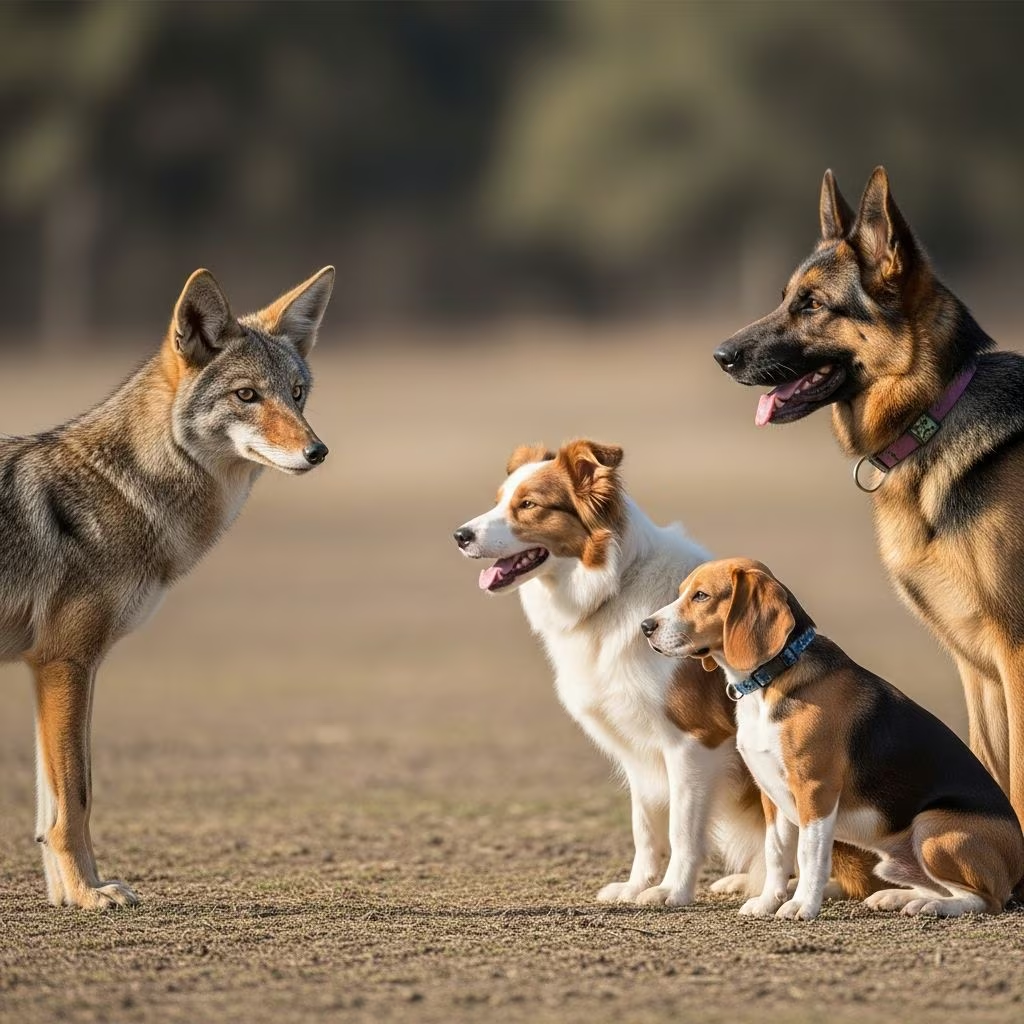
Coyotes, known scientifically as Canis latrans, typically weigh 25–40 pounds and stand 18–23 inches at the shoulder, making them comparable in size to many medium-sized dog breeds but smaller than large ones.
Understanding Coyote Physical Dimensions
Coyotes exhibit a range of sizes influenced by subspecies and regional factors. Eastern subspecies like Canis latrans thamnos can reach up to 40 pounds, while smaller western ones average around 25 pounds. Their body length from nose to tail spans 3.5–4.5 feet, with shoulder heights of 20–26 inches.
This adaptability allows coyotes to thrive across North America, from deserts to cities. Unlike dogs, bred for specific roles, coyotes maintain a lean, athletic build suited for survival.
Dog Breed Size Spectrum
Domestic dogs show immense variety due to selective breeding. Small breeds like Dachshunds weigh 16–32 pounds and stand 8–9 inches tall, falling below average coyote size. Medium breeds such as Whippets (25–40 pounds, 18–22 inches) closely match coyotes, while giants like Newfoundlands (100–150 pounds, 25–28 inches) far exceed them.
| Breed/Subspecies | Average Weight (lbs) | Average Shoulder Height (inches) |
|---|---|---|
| Coyote (Average) | 25–40 | 18–23 |
| Dachshund | 16–32 | 8–9 |
| Whippet | 25–40 | 18–22 |
| Labrador Retriever | 55–80 | 21–25 |
| German Shepherd | 49–71 | 22–26 |
| Rottweiler | 80–135 | 22–27 |
| Great Pyrenees | 85–120 | 25–32 |
This table highlights how coyotes align with medium breeds but are outmatched by larger guardians like Great Pyrenees, often used to deter wildlife.
Direct Size Matchups: Coyotes Against Popular Breeds
Against small dogs like Finnish Spitz (20–33 pounds, 15–20 inches), coyotes hold a size advantage. They match Whippets or American Water Spaniels (25–45 pounds) closely but are lighter and leaner than German Shepherds, despite similar heights.
- Small Breeds: Coyotes dwarf Chihuahuas or Miniature Poodles, posing risks in encounters.
- Medium Breeds: Similar to English Setters or Standard Poodles, with coyotes often leaner.
- Large Breeds: Rottweilers and Newfoundlands overpower coyotes in mass and stature.
Large guardian breeds like Great Pyrenees (over 100 pounds) serve as effective deterrents against coyotes due to their superior bulk.
Beyond Size: Key Physical Distinctions
While size overlaps exist, other traits set coyotes apart. Their snouts are narrower and more pointed than most dogs’ broader muzzles. Coyote paws appear elongated and oval, unlike the rounder dog prints, aiding track identification.
Coyotes possess larger ears relative to head size compared to wolves, and their legs are proportionately longer for agile movement. Dogs vary widely—floppy ears, deep chests, diverse coats—but lack the wild canid’s uniform survival-oriented physique.
| Feature | Coyote | Domestic Dog (Typical) |
|---|---|---|
| Snout Shape | Pointed, narrow | Broader, varied |
| Paw Print | Oval, elongated | Rounder, wider |
| Ear Proportion | Large relative to head | Varied, often smaller |
| Chest Depth | Shallower | Deeper in many breeds |
| Tail Carriage | Straight or low | Often curled or raised |
These differences help distinguish them in the field, crucial for hikers or pet owners.
Coyotes in the Broader Canid Family
Coyotes slot between foxes (5–30 pounds, 9–12 inches) and wolves (50–180 pounds, 26–32 inches). They surpass red foxes and jackals but fall short of wolves, even largest Eastern coyotes maxing at 50 pounds versus wolves’ 145.
- Foxes: Much smaller, shorter legs.
- Wolves: Bulkier, longer strides.
- Dogs: Extreme size range from 2-pound Chihuahuas to 175-pound Great Danes.
Hybridization occurs rarely, with coydogs (coyote-dog mixes) showing blended traits, but pure coyotes remain distinct.
Habitat Overlap and Behavioral Insights
Coyotes’ expansion into urban areas increases dog encounters. They adapt to suburbs, scavenging human food, unlike dogs bred for companionship. Coyotes avoid humans but may view small pets as prey.
Dogs display social bonding; coyotes prioritize pack survival. Stride length—longer in coyotes—reveals them in snow tracks.
Safety Tips for Pet Owners
To minimize risks:
- Supervise small dogs outdoors, especially dawn/dusk.
- Use leash laws in coyote-prone areas.
- Secure trash; remove pet food.
- Haze coyotes: Make noise, appear large.
- Opt for guardian breeds if livestock protection needed.
Large dogs can deter but never leave unattended with wildlife.
Ecological Role of Coyotes
Coyotes control rodent populations, benefiting ecosystems. Their intelligence aids survival amid habitat loss. Understanding size helps appreciate their niche without fear.
Frequently Asked Questions
Are coyotes bigger than medium dogs?
They match medium breeds like Labs in height but are lighter (25–40 lbs vs. 55–80 lbs).
Can coyotes and dogs interbreed?
Yes, producing coydogs, though rare and less fertile.
How do you tell coyote tracks from dog tracks?
Coyote tracks are narrower, more oval with longer strides.
Do coyotes pose a threat to large dogs?
Rarely; large breeds usually prevail, but avoid confrontations.
What’s the largest coyote subspecies?
Eastern ones up to 50 lbs, larger due to wolf intermixing.
References
- Iowa DNR Canid Identification: Wolves, Coyotes, and Dogs — Iowa Department of Natural Resources. 2019. https://www.iowadnr.gov/media/8734/download?inline
- Canine Confusion: Was That a Coyote, Fox, Wolf or Dog? — Wild Aware Utah. 2014. https://www.wildawareutah.org/wp-content/uploads/2014/05/CanidConfusion.pdf
- Wolves-Coyotes-Dogs — W.O.L.F Sanctuary. N/A. https://wolfsanctuary.co/wolves-coyotes-dogs/



