

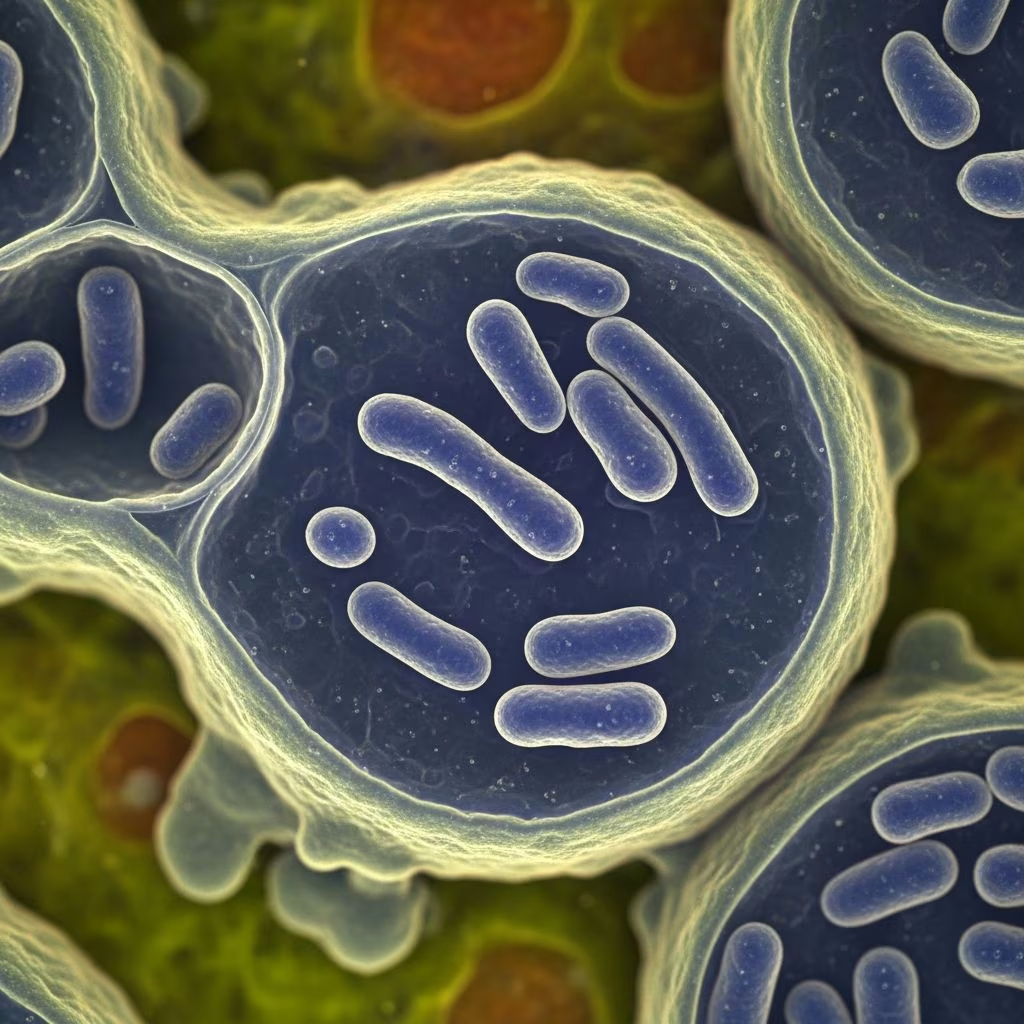
Coxiellosis represents a significant veterinary and public health concern due to its causative agent, the bacterium Coxiella burnetii, which triggers infections in a wide array of animals and can spill over to humans as Q fever. This disease thrives in environments contaminated by animal secretions, particularly during birthing events, making it highly transmissible via airborne particles.
The Pathogen Behind the Disease
Coxiella burnetii is a gram-negative, obligate intracellular bacterium that forms highly resistant spore-like structures, enabling long-term survival in dust, soil, and water. Unlike typical rickettsiae, genetic studies place it closer to pathogens like Legionella and Francisella, highlighting its unique evolutionary path. Its low infectious dose—potentially as few as one bacterium via inhalation—amplifies its risk as a potential bioterrorism agent due to environmental stability and aerosol dispersibility.
The bacterium exists in two antigenic phases: phase I, predominant in chronic animal infections and human cases, and phase II, seen in acute lab-adapted strains. This duality aids in diagnostic differentiation.
Hosts and Global Distribution
Ruminants such as sheep, goats, and cattle serve as primary reservoirs, with high seroprevalence in commercial dairy operations. However, the pathogen infects a broad spectrum: domestic cats, dogs, wildlife like rodents and rabbits, birds, reptiles, and arthropods including ticks. In cats, infection often stems from tick bites or farm animal contact, typically remaining subclinical but occasionally causing reproductive losses.
- Domestic Ruminants: Sheep and goats frequently abort late-term without other overt signs.
- Cattle: Dairy herds show elevated prevalence, shedding via milk and feces.
- Companion Animals: Cats pose risks during parturition.
- Wildlife and Vectors: Ticks facilitate transmission among wild hosts.
Geographically, coxiellosis is ubiquitous, with outbreaks noted worldwide. In the U.S., it’s a reportable disease in livestock, tracked by state authorities. Developing regions like Ethiopia face heightened challenges due to intensive herding practices.
Routes of Transmission
Transmission occurs primarily through inhalation of aerosols from birth products, placentas, urine, feces, or milk of infected animals. During abortions or normal deliveries, massive bacterial shedding contaminates environments, persisting for months. Ticks play a role in wildlife cycles, biting hosts and mechanically spreading bacteria. Human ingestion of unpasteurized dairy products contributes, though inhalation dominates occupational exposures.
In livestock, horizontal spread happens via contaminated bedding or feed, while vertical transmission from dam to offspring is possible. Infected but asymptomatic animals perpetuate silent epidemics in herds.
Clinical Manifestations Across Species
In ruminants, infections are mostly subclinical, but clinical cases feature late-term abortions, weak offspring, retained placentas, and metritis. Placentitis is severe, with necrosis and thickened cotyledons. Adult animals may exhibit fever, lethargy, or reduced milk yield, though many recover without intervention.
Cats and dogs rarely show signs beyond reproductive failures like stillbirths or infertility. Wildlife infections are underreported but implicated in sylvatic cycles.
| Species | Common Signs | Severity |
|---|---|---|
| Sheep/Goats | Abortion, placentitis | High outbreak potential |
| Cattle | Mastitis, infertility | Often subclinical |
| Cats | Reproductive loss | Usually mild |
| Humans (Q fever) | Flu-like, pneumonia, endocarditis | Variable, chronic risks |
Pathogenesis Insights
Upon entry via inhalation or ingestion, C. burnetii targets alveolar macrophages, evading destruction through acidic vacuole residence and LPS-mediated immunomodulation. Bacteremia follows, seeding reproductive organs. In pregnant animals, trophoblast invasion causes placentitis and fetal death. Chronic persistence in hosts enables ongoing shedding.
Diagnosis Methods
Veterinary diagnosis combines serology (ELISA for phase-specific antibodies), PCR on placentas/vaginal swabs, and culture (biosafety level 3 required). Histopathology reveals characteristic granulomas. In herds, bulk milk testing screens prevalence.
Management and Prevention Strategies
Vaccination is available in some regions (e.g., inactivated phase I vaccines for ruminants), reducing shedding and abortions. Core controls include:
- Rapid cleanup of aborted materials with PPE.
- Segregating pregnant from non-pregnant stock.
- Ventilation in barns to dilute aerosols.
- Pasteurization of milk.
- Tick control in endemic areas.
Antibiotics like tetracyclines treat clinical cases but don’t eliminate carriage. Biosecurity prevents introductions.
Zoonotic Implications and Human Health
Q fever in humans manifests acutely as fever, headache, myalgia, and pneumonia, resolving in most. Chronic forms (1-5%) include endocarditis, hepatitis, or vascular infections, fatal without therapy. High-risk groups: farmers, vets, abattoir workers, pregnant individuals. Outbreaks link to periparturient ruminants or cats.
Guillain-Barré syndrome and stillbirths occur rarely. Diagnosis mirrors animal methods; doxycycline is standard treatment.
Economic and Public Health Burden
In livestock, abortion storms erode productivity, costing millions in lost offspring and culls. Public health expenses arise from surveillance and outbreaks. Global surveillance gaps in wildlife hinder control.
Research Frontiers
Ongoing studies explore genomics for strain tracking, novel vaccines, and one-health interventions integrating animal-human monitoring. Tick vector dynamics warrant attention amid climate shifts.
Frequently Asked Questions (FAQs)
What animals are most affected by coxiellosis?
Sheep, goats, and cattle are primary hosts, with cats and wildlife also susceptible.
How does coxiellosis spread to humans?
Mainly via inhaling contaminated dust from animal births, but also unpasteurized milk.
Is there a vaccine for coxiellosis?
Yes, for ruminants in select countries, focusing on reducing bacterial shedding.
Can coxiellosis be treated in animals?
Antibiotics help symptomatic cases, but carriers persist.
Why is Q fever reportable?
To enable outbreak tracking and public health responses.
References
- Q Fever (Coxiellosis) — UC Davis Veterinary Medicine. 2023. https://healthtopics.vetmed.ucdavis.edu/health-topics/q-fever-coxiellosis
- Coxiellosis in Animals — Merck Veterinary Manual. 2023. https://www.merckvetmanual.com/infectious-diseases/coxiellosis/coxiellosis-in-animals
- Coxiellosis in Livestock: Epidemiology, Public Health — PMC (NCBI). 2023-08-15. https://pmc.ncbi.nlm.nih.gov/articles/PMC10443632/
- Coxiella Burnetii (Q Fever) — Colorado Department of Agriculture. 2024. https://ag.colorado.gov/animals/livestock-health/coxiella-burnetii-q-fever
- About Q fever — Centers for Disease Control and Prevention (CDC). 2024. https://www.cdc.gov/q-fever/about/index.html
- GUIDELINE for Coxiellosis – Q fever in cats — ABCD cats & vets. 2023. https://www.abcdcatsvets.org/guideline-for-coxiellosis-q-fever-in-cats/



