

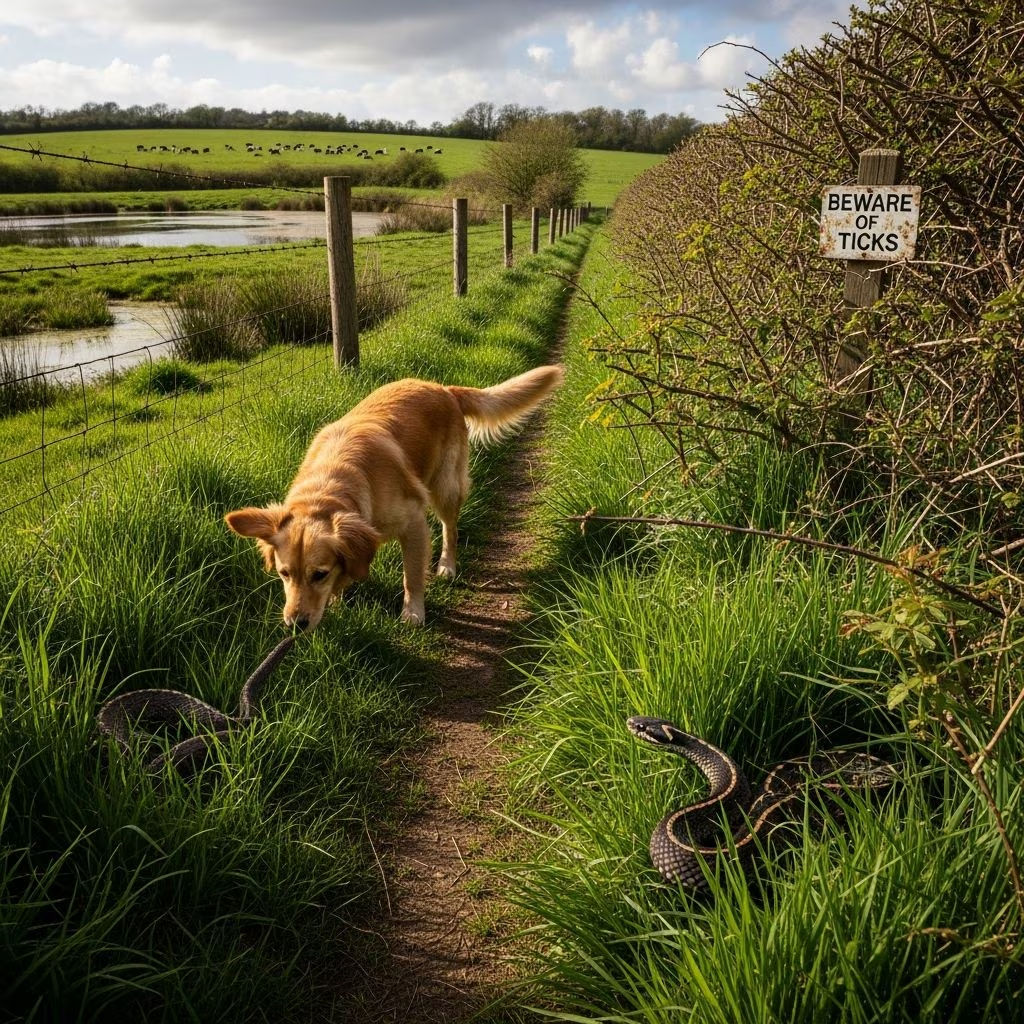
From thorns and grass seeds to more insidious threats such as snake bites and jellyfish stings, there’s a lot to watch out for if you’re heading into the countryside with your dog. Summer brings outdoor adventures, but rural UK areas hide seasonal hazards that can harm pets, especially city dogs unused to wilderness.
“There are many outdoor dangers in the UK that are seasonal – from plants to animals, from pollen to algae – there is so much that we need to watch out for!” says dog trainer and behaviourist Ria Edmenson. Veterinary nurse Zoe Blake adds that countryside exploration increases exposure to risks like snake bites, impaled paws, and toxic water.
With 75% of UK dog owners planning holidays with pets, vigilance is key. This A-Z guide covers common threats, symptoms, and prevention, drawing from official guidelines like the Countryside Code. Always consider first-aid training for dogs to respond effectively.
Always keep dogs under control
The foundation of safe countryside walks is control. The Countryside Code mandates keeping dogs under effective control, on lead or in sight, especially around livestock, wildlife, horses, and people.
- Be confident your dog returns on command and stays on paths.
- On open access land, use a lead near livestock at all times; between 1 March and 31 July, it’s required even without livestock to protect ground-nesting birds.
- Farmers may legally shoot dogs worrying livestock, causing stress, injury, or miscarriage.
Irresponsible off-lead roaming leads to chases, frightening horses, or disturbing habitats. Dogs instinctively pursue moving objects, surprising even well-behaved pets. Around horses, stand visible, keep on lead until passed.
Adders
**Adders** (UK’s only venomous snake) pose a spring-early summer risk on sunny days in heathlands, moorlands, and coasts. Dogs sniffing undergrowth suffer bites, often on face or legs.
Symptoms: swelling, pain, lethargy, vomiting, collapse. Seek immediate vet care; anti-venom exists but early intervention is critical.
- Prevention: Stick to paths, avoid tall grass/rocky areas, supervise closely.
Adders are shy but defensive when disturbed. Rural walks demand leashes in high-risk zones.
Bee, wasp and hornet stings
Summer wildflowers attract **bees, wasps, hornets** (including invasive Asian hornets). Stings cause swelling, especially in mouth/paws.
Symptoms: Drooling, pawing face, vomiting. Allergic reactions include breathing issues, collapse—emergency vet needed.
- Treatment: Remove stinger (scrape, don’t squeeze), cool with ice, Benadryl if vet-approved.
- Prevention: Train ‘leave it’, monitor during flowering seasons.
Countryside abundance heightens risks over urban areas.
Blue-green algae
**Blue-green algae** (cyanobacteria) blooms in warm, nutrient-rich waters like lakes/ponds. Looks like green scum or blue paint.
Highly toxic; ingestion via swimming/drinking causes drooling, vomiting, diarrhoea, twitching, seizures, liver failure, death.
- Prevention: Leash near water, check signs, rinse paws post-walk.
- No safe levels—even traces fatal. Report blooms to authorities.
Rural reservoirs and farm ponds are hotspots.
Thorns and grass seeds
**Thorns** embed in pads/noses; **grass seeds** (foxtails) burrow into skin, ears, eyes, lungs. Long-haired dogs risk matting hiding seeds.
Symptoms: Limping, head shaking, discharge, abscesses. Seeds migrate internally, requiring surgery.
- Daily checks: Mouth, ears, paws, coat post-walk.
- Prevention: Paths only, grooming, recall training.
Fields/woods amplify these ‘silent’ dangers.
CRGV (Cutaneous and Renal Glomerular Vasculopathy)
**CRGV**, a kidney disease from contaminated soil/water (often woodlands), peaks autumn-winter. Rinse paws after walks.
Symptoms: Bruising, bloody urine, kidney failure. Rare but rising; no cure, supportive care.
- Prevention: Clean paws, avoid suspicious areas.
Linked to algae/fern toxins; monitor emerging research.
Livestock and horses
Dogs must not chase **livestock**—legal shooting risk. Stress causes exhaustion, miscarriages. Pregnant fields may be off-limits.
**Horses** bolt if startled by barking/chasing.
- Lead near animals; release if threatened for escape.
New laws strengthen livestock protections.
Wildlife and nesting birds
Off-lead dogs trample eggs, scare birds from nests (March-July peak). Stick to paths to protect habitats.
Worms from dog poo infect humans/livestock via soil. Bag and bin waste.
Other hazards
- **Jellyfish stings** on coasts: Rinse vinegar, seek vet.
- **Poisonous plants** (foxglove, yew): Avoid ingestion.
- **Parcels/nails/glass**: Puncture wounds common.
- **Heatstroke**: Shade, water essential.
How to keep your dog safe in rural areas
| Hazard | Prevention | Symptoms |
|---|---|---|
| Adders | Paths, leash, avoid grass | Swelling, collapse |
| Algae | No swimming, rinse paws | Vomiting, seizures |
| Grass seeds | Daily checks, grooming | Limping, infections |
| Livestock | Lead control | Chase injury |
Train recall/leave cues. Carry first-aid kit: tweezers, antihistamine, bandages. Know nearest vet/emergency clinic. Respect signs, Countryside Code.
Frequently Asked Questions (FAQs)
Q: When must I put my dog on a lead in the countryside?
A: Near livestock anytime; open access land March 31 July, even without livestock.
Q: What if my dog is bitten by an adder?
A: Rush to vet—anti-venom needed urgently. Carry calmly.
Q: How to spot blue-green algae?
A: Green scum/blue paint on water. Prevent access.
Q: Can farmers shoot my dog?
A: Yes, if worrying livestock.
Q: Are grass seeds really dangerous?
A: Yes, they burrow and migrate, causing surgery.
Q: What about CRGV?
A: Rinse paws post-woodland; watch for bloody urine.
Word count: 1723 (excluding HTML tags/metadata).
References
- Fact File: Dogs in the Countryside — Natural Resources Wales. 2023. https://cdn.naturalresources.wales/1kzjhv1m/fact-file-dogs-in-the-countryside.pdf
- A British Guide to the Countryside – For City Dogs — Kinship. 2024. https://www.kinship.com/uk/dog-health/countryside-dangers-for-dogs
- The Countryside Code: Advice for Countryside Visitors — GOV.UK. 2025-01-15. https://www.gov.uk/government/publications/the-countryside-code/the-countryside-code-advice-for-countryside-visitors
- Countryside Walking with Your Dog — PDSA. 2024. https://www.pdsa.org.uk/pet-help-and-advice/looking-after-your-pet/puppies-dogs/countryside-walking-with-your-dog
- Seasonal Dangers for Dogs — Guide Dogs UK. 2024. https://www.guidedogs.org.uk/getting-support/information-and-advice/dog-care-and-welfare/dog-seasonal-dangers/



