

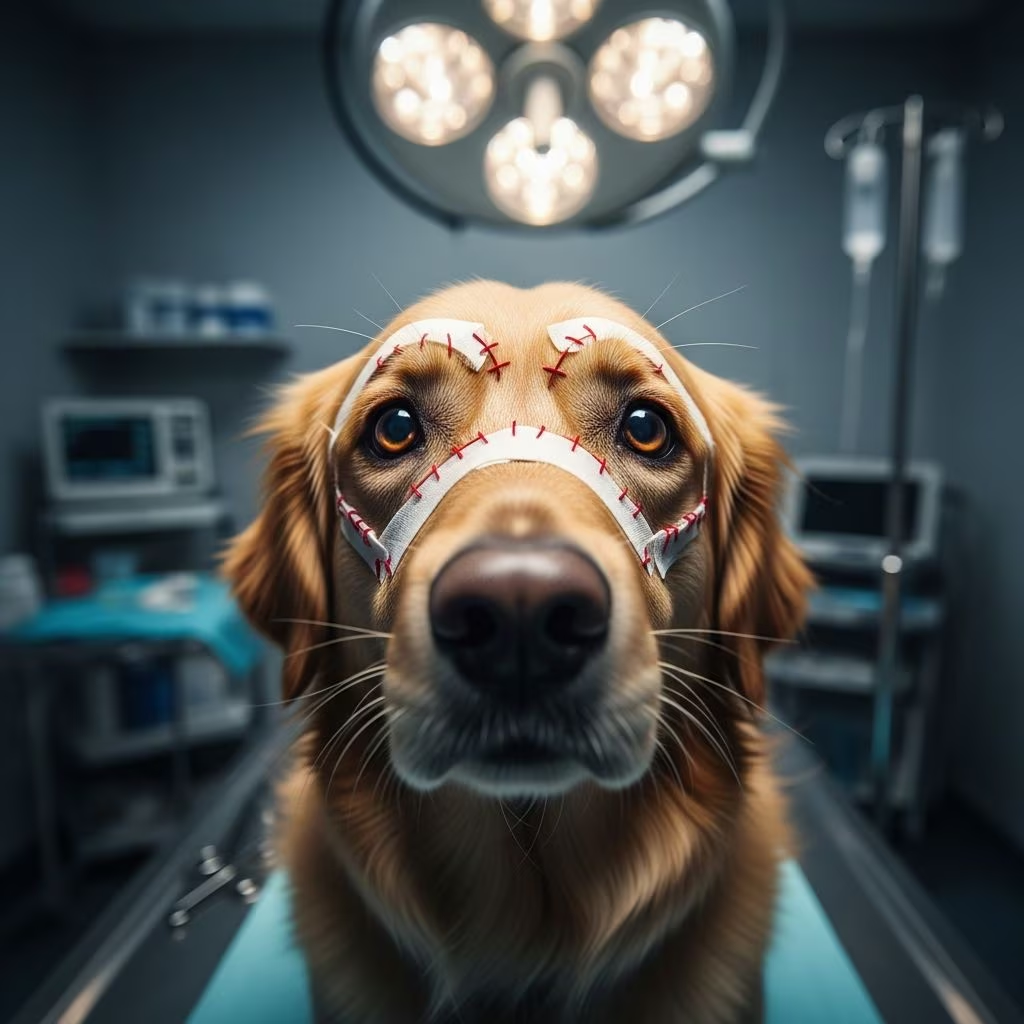
Pet owners often seek ways to improve their dogs’ appearance or address breed-specific issues through surgical interventions. These procedures range from purely aesthetic choices to those with potential medical benefits. While some enhance a dog’s look to match breed ideals, others alleviate health problems caused by genetics or anatomy. Understanding the distinctions helps owners make informed decisions.
Understanding Elective vs. Medically Necessary Procedures
Cosmetic surgeries for dogs fall into two main categories: elective, driven by owner preference, and therapeutic, aimed at resolving health concerns. Elective options like tail docking prioritize appearance, whereas medically necessary ones, such as airway corrections in brachycephalic breeds, improve quality of life. Veterinary associations often discourage purely cosmetic alterations due to risks like infection or pain.
Brachycephalic breeds, including Bulldogs and Pugs, frequently require interventions for breathing difficulties stemming from short snouts. These surgeries widen nasal passages or reshape soft tissues, reducing risks of heatstroke and exercise intolerance.
Popular Cosmetic Tail and Ear Alterations
Tail docking and ear cropping remain controversial yet common for certain breeds. Tail docking shortens the tail shortly after birth, typically for aesthetic alignment with standards in breeds like Dobermans or Boxers. Performed between days 2-5 of life, it minimizes bleeding but raises welfare concerns.
- Tail Docking: Aims for a compact look; no proven health benefits in most cases.
- Ear Cropping: Involves surgically erecting floppy ears, popular in breeds like Great Danes; requires post-op splinting.
These procedures face bans in several countries due to animal welfare issues, with experts advocating alternatives like natural breeding selections.
Reconstructive Options for Skin and Eyes
Dogs with excessive skin folds, such as Shar Peis or Bloodhounds, prone to infections in moist creases. Skin fold reduction surgery removes excess tissue from face, tail base, or vulva areas, preventing chronic dermatitis and improving hygiene.
Eyelid surgeries address entropion or ectropion, where lids roll inward or droop, irritating corneas. Blepharoplasty trims excess skin, repositioning lids for better eye protection. Common in breeds like Bulldogs, this procedure prevents ulcers and vision loss.
| Procedure | Target Breeds | Primary Benefit |
|---|---|---|
| Skin Fold Reduction | Shar Pei, Pug | Infection Prevention |
| Blepharoplasty | Bulldog, Hound | Eye Health |
| Nasal Airway Repair | Pug, Boston Terrier | Breathing Ease |
Neutering Enhancements and Novel Implants
Neuticles, silicone testicular implants, offer a cosmetic solution post-neutering. Inserted during the procedure, they maintain scrotal appearance, easing owner concerns about emasculation. Though harmless, they serve no functional purpose.
Oral surgeries extend beyond cosmetics, correcting elongated soft palates or everted laryngeal saccules in snub-nosed dogs. These restore airflow, vital for breeds with obstructed airways.
Addressing Breathing and Oral Challenges
Brachycephalic Obstructive Airway Syndrome (BOAS) affects flat-faced dogs profoundly. Symptoms include snoring, gagging, and collapse during activity. Surgical corrections—alarplasty (widening nostrils), staphylectomy (shortening palate), or laryngoplasty—alleviate obstructions.
Dental issues prompt oral interventions like tooth extractions for decay or periodontal disease. In severe cases, these surgeries prevent pain and systemic infections.
Risks, Recovery, and Ethical Considerations
All surgeries carry anesthesia risks, infection, and pain. Elective procedures amplify these without medical gain. Recovery involves e-collars, antibiotics, and restricted activity; sutures remove in 10-14 days.
Ethically, bodies like the Canadian Veterinary Medical Association oppose non-therapeutic alterations, prioritizing welfare over aesthetics. Owners should consult boarded surgeons and consider breed standards’ evolution toward natural traits.
Alternatives to Surgical Interventions
- Behavioral training over debarking for noise issues.
- Regular cleaning and laser therapy for skin folds.
- Selective breeding to reduce hereditary defects.
- Non-surgical options like Botox for minor wrinkle reduction.
FAQs on Dog Cosmetic Surgeries
Is tail docking painful for puppies?
When done neonatally, pain is minimal due to immature nervous systems, but long-term welfare impacts are debated.
Can cosmetic surgery improve my dog’s lifespan?
Medically indicated procedures like BOAS corrections often do, by preventing complications; purely cosmetic ones do not.
How much do these surgeries cost?
Costs vary: tail docking $100-300, airway surgery $1,500-5,000, eyelid correction $1,000-3,000, depending on location and complexity.
Are there breed bans on certain procedures?
Yes, many regions ban ear cropping and tail docking for non-medical reasons.
What post-op care is essential?
Monitor incisions, administer meds, prevent rubbing with cones, and schedule follow-ups.
When to Choose Surgery: Owner Guide
Evaluate if the procedure addresses a genuine health issue or mere preference. Consult AVMA guidelines and multiple vets. Prioritize minimally invasive options and long-term pet well-being over trends.
References
- Pet Reconstructive & Cosmetic Surgery In Toney, AL — Family Pet Care Inc. Accessed 2026. https://familypetcareinc.com/pet-reconstructive-and-cosmetic-surgery-toney-al/
- Overview of discretionary invasive procedures on animals — Wikipedia. Accessed 2026. https://en.wikipedia.org/wiki/Overview_of_discretionary_invasive_procedures_on_animals
- Pet Plastic & Reconstructive Surgery — Lido Animal Hospital. Accessed 2026. https://lidovet.com/service/plastic-reconstructive-surgery/
- Cosmetic Surgery — McCauley Animal Clinic. Accessed 2026. https://www.mccauleyanimalclinic.com/services/cosmetic-surgery
- Cosmetic Procedures For Pets — Texas A&M University College of Veterinary Medicine & Biomedical Sciences. 2026-02-27. https://vetmed.tamu.edu/news/pet-talk/cosmetic-procedures/
- Plastic Surgery for Pups? This Cosmetic Procedure for Dogs is Gaining Popularity — BluePearl Pet Hospital. Accessed 2026. https://bluepearlvet.com/pet-blog/plastic-surgery-for-pups-this-cosmetic-procedure-for-dogs-is-gaining-popularity/
- Elective and Non-Therapeutic Veterinary Procedures for Cosmetic or Competitive Purposes — Canadian Veterinary Medical Association. Accessed 2026. https://www.canadianveterinarians.net/policy-and-outreach/position-statements/statements/elective-and-non-therapeutic-veterinary-procedures-for-cosmetic-or-competitive-purposes-formerly-cosmetic-alteration/



