Corrosive Household Toxins in Pets
Protect your pets from dangerous household corrosives: recognize risks, symptoms, and life-saving treatments.
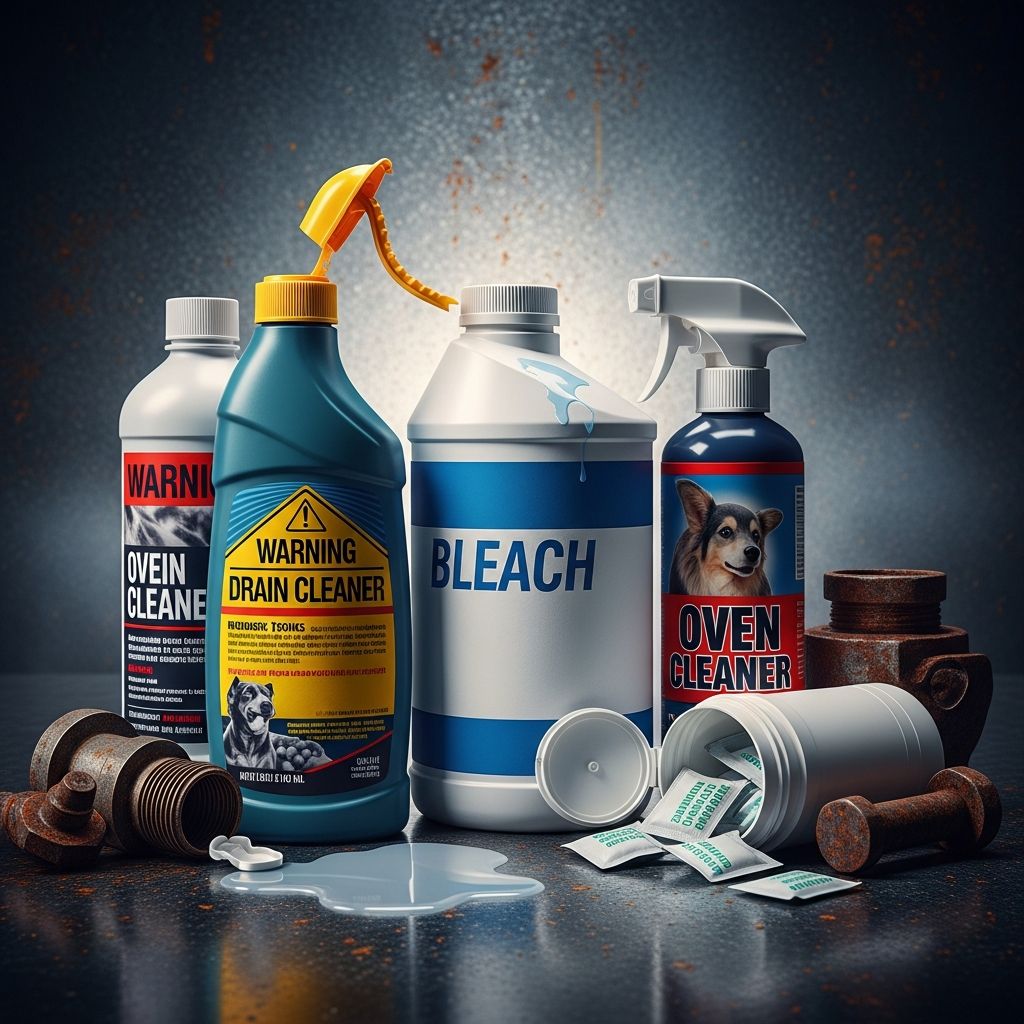
Household items such as cleaning products, batteries, and disinfectants pose serious risks to pets due to their corrosive properties. These substances, including acids and alkalis, can cause severe tissue damage upon contact with skin, eyes, mouth, or ingestion, leading to burns, ulcers, and potentially life-threatening complications. Understanding these threats enables pet owners and veterinarians to act swiftly, minimizing harm through prompt decontamination and supportive care.
Understanding Corrosive Substances
Corrosives are chemicals that rapidly destroy living tissue by chemical reaction. They fall into two main categories: acids and alkalis (bases). Acids typically have a pH below 2, causing immediate pain and coagulation of proteins on contact, which limits deeper penetration but still results in significant injury. Alkalis, with pH above 11.5, liquefy tissues, allowing deeper penetration and often more severe, less painful initial damage since animals may not immediately react to the burn.
Common household corrosives include:
- Bleach (sodium hypochlorite): pH 9-11, causes alkaline burns upon ingestion or inhalation.
- Drain cleaners: Strong alkalis like sodium hydroxide.
- Battery acid: Sulfuric acid, highly corrosive.
- Phenols and disinfectants: Corrosive at concentrations over 5%.
- Quaternary ammonium compounds: Found in cleaners, toxic to cats even at 1%.
Petroleum distillates, heavy metal salts, and cationic detergents like those in dryer sheets also act as corrosives, amplifying risks in everyday homes.
Risks and Exposure Routes in Animals
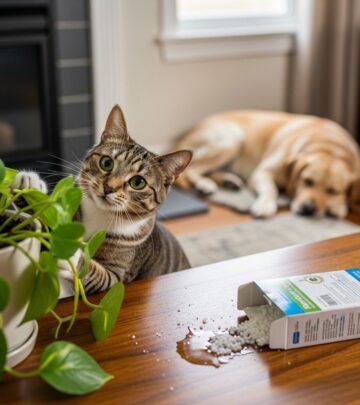
Pets encounter corrosives through ingestion, inhalation, dermal contact, or ocular exposure. Curious dogs may chew batteries or lick spilled cleaners, while cats are prone to grooming off skin-contacted substances. Inhalation occurs from bleach fumes or aerosol sprays, leading to respiratory distress.
| Exposure Route | Common Sources | Potential Damage |
|---|---|---|
| Ingestion | Cleaners, batteries, laundry pods | Mouth ulcers, esophageal burns, gastric perforation |
| Inhalation | Bleach vapors, sprays | Pneumonitis, pulmonary edema, dyspnea |
| Dermal | Spilled liquids, dryer sheets | Skin sloughing, inflammation, blisters |
| Ocular | Splashes from cleaners | Corneal ulcers, blindness risk |
Alkaline exposures are particularly insidious because the lack of initial pain encourages continued ingestion, worsening injury.
Recognizing Clinical Signs
Symptoms appear immediately or within 24 hours. Oral exposure shows hypersalivation, pawing at mouth, vomiting (often bloody), and reluctance to eat. Respiratory signs include coughing, rapid breathing, and blue gums from oxygen deprivation. Skin contact causes redness, swelling, and tissue death. Systemic effects like fever, dehydration, kidney failure, shock, or collapse signal severe cases.
- Immediate signs: Drooling, retching, distress vocalization.
- Delayed signs: Regurgitation from strictures (weeks later), weight loss.
- Species-specific: Cats hypersensitive to quaternary compounds; dogs more prone to chewing exposures.
Esophageal perforation, a grave complication, presents with fever, chest pain, and mediastinal air, requiring urgent imaging.
Immediate First Aid for Pet Owners
Do not induce vomiting with corrosives, as it risks further esophageal damage—unlike with other toxins where emesis is standard. Instead:
- Remove from source: Isolate pet from the area.
- Rinse externally: Flush skin or eyes with lukewarm water for 20-30 minutes.
- Dilute internally (if recent ingestion): Offer milk or water (3-4 ml/kg) to pet if alert and swallowing normally; avoid force-feeding.
- Seek vet care immediately: Contact poison hotline or emergency clinic.
Avoid neutralizing agents (e.g., vinegar for alkalis) as exothermic reactions generate heat, exacerbating burns.
Veterinary Diagnosis and Management
Vets confirm exposure via history, clinical exam, and diagnostics like endoscopy for mucosal visualization, radiographs for perforation, bloodwork for organ function, and pH testing of samples.
Treatment prioritizes decontamination, pain control, and support:
- Decontamination: Gastric lavage under anesthesia if within 1-2 hours; avoid in seizure-prone or unstable patients.
- Supportive care: IV fluids for hydration, antiemetics, sucralfate for GI protection, broad-spectrum antibiotics for secondary infection.
- Pain management: Opioids, local anesthetics; benzodiazepines for sedation if needed.
- Advanced interventions: Esophageal stenting or surgery for perforations; lipid emulsion for certain lipophilic toxins, though not primary for corrosives.
Activated charcoal is contraindicated as it may worsen GI injury with corrosives. Monitor for strictures with follow-up endoscopy.
Prognosis and Long-Term Complications
Minor exposures with prompt care yield good outcomes. Severe cases with perforation carry poor prognosis, often needing surgery. Strictures develop in 20-40% of survivors, causing chronic regurgitation treatable with balloon dilation. Kidney damage from systemic absorption or dehydration may persist.
Species differences: Dogs tolerate some exposures better due to rumen-like stomach capacity; cats face higher quaternary ammonium risks.
Prevention Strategies for Pet-Safe Homes
Proactive measures drastically reduce incidents:
- Store chemicals in locked cabinets, out of reach.
- Use pet-safe cleaners; dilute concentrates.
- Supervise around laundry rooms, garages.
- Opt for child-proof containers for batteries, detergents.
- Educate on poison hotlines (e.g., Pet Poison Helpline).
Regular home audits identify hazards, fostering safer environments.
FAQs
What should I do if my dog drinks bleach?
Dilute with milk/water if recent and pet is stable; rush to vet. Do not vomit. Expect endoscopy.
Can cats recover from phenol exposure?
Possible with aggressive care, but cats are highly sensitive; prognosis guarded.
Is activated charcoal safe for corrosive ingestion?
No, it risks further abrasion; use only for non-corrosive toxins.
How long do symptoms last?
Acute: hours to days; strictures: weeks-months.
Preventing battery chewing in puppies?
Secure remotes, toys; bitter sprays on cords.
Key Takeaways
- Act fast: Rinse, dilute, vet immediately.
- No emesis or neutralization at home.
- Prevention beats cure in pet toxicology.
References
- Common Corrosives | Pet Poison Helpline® — Pet Poison Helpline. 2023. https://www.petpoisonhelpline.com/veterinarian-blog/common-corrosives/
- The essential guide to toxicology part five — Veterinary Internal Medicine Nursing. 2023. https://www.veterinaryinternalmedicinenursing.com/medical-nursing-podcast/the-essential-guide-to-toxicology-part-five
- Principles of Toxicosis Treatment in Animals — Merck Veterinary Manual. 2023. https://www.merckvetmanual.com/toxicology/toxicology-introduction/principles-of-toxicosis-treatment-in-animals
- How to Be Prepared for Most Toxic Exposures in Dogs and Cats — Today’s Veterinary Practice. 2023. https://todaysveterinarypractice.com/toxicology/prepared-toxic-exposures-dogs-cats/
- The solution to pollution: Top veterinary toxicity tips — dvm360. 2023. https://www.dvm360.com/view/the-solution-to-pollution-top-veterinary-toxicity-tips
Similar Articles




Read full bio of medha deb