

Cornish Rex Cat Breed: A Complete Guide
The Cornish Rex is one of the most distinctive and captivating cat breeds in existence today. With their signature wavy coat, graceful body structure, and dynamic personality, these cats have become increasingly popular among feline enthusiasts and families alike. Often described as the “Greyhound of cats,” the Cornish Rex combines elegance with athleticism in a remarkably compact package. Whether you’re considering adding one to your family or simply curious about this unique breed, this comprehensive guide will explore everything you need to know about Cornish Rex cats.
What Makes the Cornish Rex Unique?
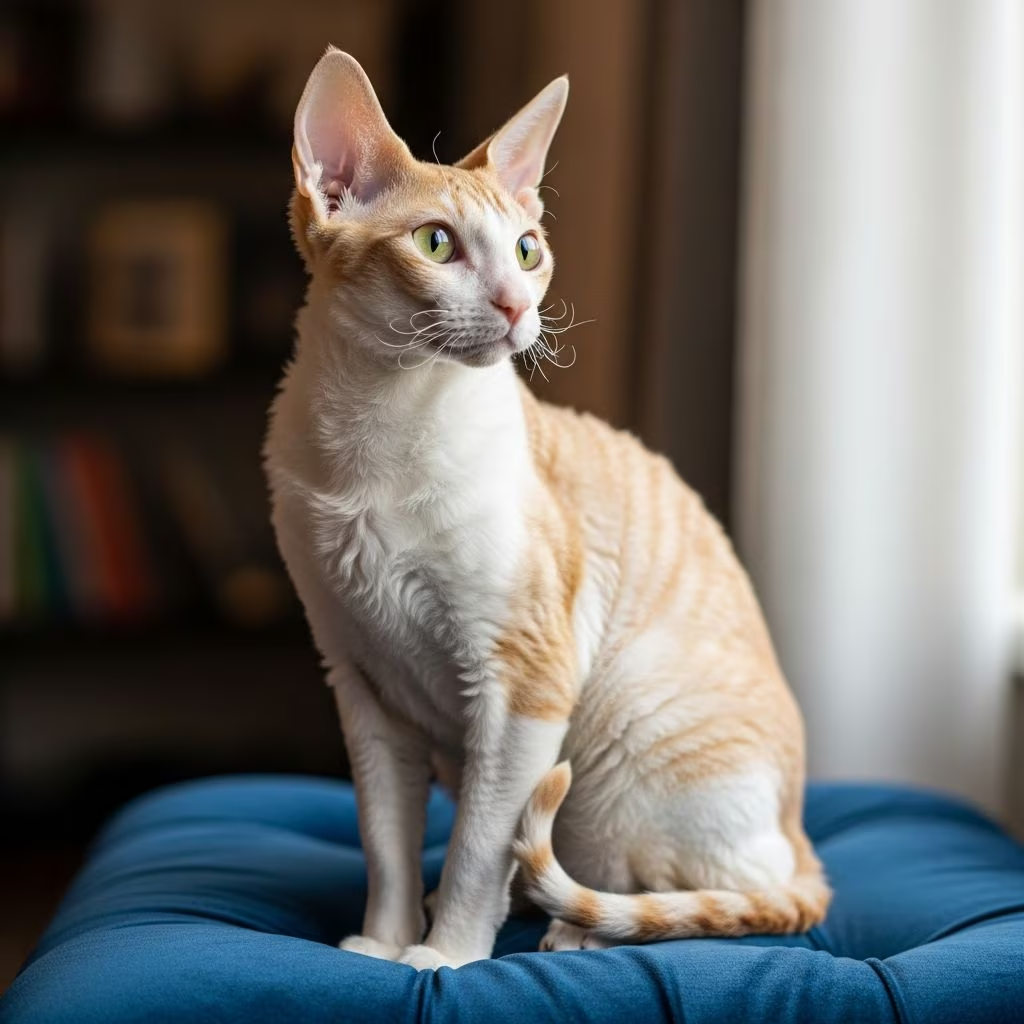
The Cornish Rex stands apart from all other cat breeds primarily due to its extraordinarily soft, wavy coat. Unlike typical cat fur that consists of three layers—guard hairs, awn hairs, and undercoat—the Cornish Rex possesses only the fine undercoat, lacking guard hairs entirely. This creates the distinctive rippled or wavy appearance that resembles cornrows and gives the breed its unmistakable silky texture. The coat is short, dense, and lies close to the body in uniform waves that extend from the head across the back, sides, hips, and down to the tip of the tail. Interestingly, even the whiskers of a Cornish Rex are curled and foreshortened, adding to the breed’s unique charm.
Beyond their remarkable coat, Cornish Rexes possess several other distinguishing physical characteristics. They have extremely fine and delicate bones, creating a lean and statuesque appearance. However, despite their slender build, these cats are surprisingly heavy and warm to the touch, with bodies that actually maintain a slightly higher than normal temperature. This warmth-seeking nature makes them drawn to heat vents, sunny spots, and warm laps, making them excellent lap cats during cooler months.
Physical Characteristics and Appearance
The Cornish Rex presents a striking visual profile that makes it instantly recognizable among cat aficionados. The breed’s physical structure embodies elegance combined with athletic prowess.
Head and Facial Features
The Cornish Rex has a comparatively small, egg-shaped head that is slightly longer than it is wide. The forehead is rounded, and the nose features a distinctive high prominent bridge characteristic of a Roman nose profile. The muzzle is strong and refined with a definite whisker break, and the chin is well-developed. The large, high-set ears are mussel shell-shaped with rounded tips, positioned almost like a bat’s ears on the head. These prominent ears contribute significantly to the breed’s alert and intelligent expression.
The eyes are huge and luminous with an oval shape and slight upward slant, contributing to an expression of perpetual curiosity and intelligence. Cornish Rexes can have eyes of virtually any color, adding to the breed’s diverse visual appeal.
Body Structure
The Cornish Rex exhibits a distinctly racy and slender body type. The breed stands high on long, fine-boned legs that appear almost dainty but support an athletic and muscular frame. All contours of the Cornish Rex are gently curved, including a naturally arched back that is evident when the cat stands naturally. This characteristic arch, combined with a prominent tuck-up at the waist that creates a tucked-up appearance, gives the breed its distinctive greyhound-like silhouette. The deep ribcage and muscular hips and thighs provide a surprisingly sturdy foundation despite the delicate appearance.
The tail is long, slender, and extremely flexible, tapering toward the end. The neck is long and slender, further contributing to the breed’s graceful appearance. Small, dainty, and oval-shaped paws complete the picture. Cornish Rexes typically weigh between 5 and 10 pounds, with females averaging 5-7 pounds and males 8-10 pounds, making them small to medium-sized cats that appear larger than they actually are due to their tall, slender stance.
Coat Colors and Patterns
One advantage of the Cornish Rex breed is that cats can appear in virtually any color, pattern, and combination. They come in solid colors, pointed patterns, tabbies, and bi-colors, offering significant diversity within the breed. Regardless of color, the coat quality and texture remain the defining feature—soft, silky, and naturally wavy.
Personality and Temperament
If the Cornish Rex’s appearance doesn’t capture your heart, their extraordinary personality certainly will. These cats are renowned for their exuberant, intelligent, and deeply affectionate nature, making them stand out behaviorally as much as they do physically.
Social and Affectionate Nature
Cornish Rexes are often called “Velcro kitties” because of their intense need to maintain physical contact with their beloved humans. These cats are devoted to their people and thrive on constant companionship. They are extremely social and love to be right in the middle of everything their families are doing, whether it’s watching television, working, or cooking. Many Cornish Rexes will do anything to be with their owners, including learning to walk on a leash to accompany their families on outdoor adventures. They are not aloof or independent like some cat breeds; instead, they demand and expect regular interaction and affection.
Playfulness and Energy
The Cornish Rex is an exceptionally athletic and playful cat with seemingly limitless energy. They love running, jumping, and playing with the same enthusiasm regardless of their age. These cats retain their kitten-like personalities throughout their entire adult lives, meaning they never truly “grow up” or become less active. Their antics will amuse both children and adults alike, and they often entertain themselves for hours with interactive games. Cornish Rexes particularly enjoy playing fetch and have been known to toss toys for themselves when no one else will participate. They are agile and acrobatic, using their athletic build to perform impressive feats of jumping and running.
Intelligence and Communication
The Cornish Rex is remarkably intelligent, alert, and curious. They are quick learners and can be trained to walk on a leash, play fetch, or perform other tricks. While they will engage in conversation with their humans, they are not typically given to excessive or loud vocalizing. As one breed standard notes, “Why talk when there are things to be played with?” This measured approach to communication makes them pleasant household companions that won’t drive you to distraction with constant meowing.
Living with a Cornish Rex
Space and Exercise Requirements
Cornish Rexes require adequate space to accommodate their active lifestyle. These athletic cats need room to run, jump, and play to maintain their ideal weight and mental stimulation. Interactive exercise is particularly important, as these cats thrive when engaging with their owners rather than entertaining themselves alone. Providing climbing structures, toys, and interactive games will help keep a Cornish Rex mentally and physically engaged.
Appetite and Feeding
Despite their slim builds and delicate appearance, Cornish Rexes have enormous appetites and will eat significantly more than many other cats. These cats often consume not only traditional cat food but also vegetables, fruits, and other edibles unlikely to appeal to most cats. Their food-seeking behavior can rival their play drive, so owners should be prepared for a cat with voracious appetites. High-quality nutrition is important to support their high energy levels and active lifestyle.
Grooming and Coat Maintenance
One of the practical advantages of owning a Cornish Rex is that their coat is relatively low maintenance. The short, wavy coat requires minimal grooming compared to long-haired breeds. However, these cats do have a tendency to develop greasy ears and toes, which may require occasional cleaning. The close-lying nature of the coat makes it easy to monitor the cat’s weight and condition visually.
Temperature Sensitivity
Because of their fine coat lacking guard hairs, Cornish Rexes are sensitive to cold temperatures and are best suited for indoor living in warm and dry conditions. Their natural tendency to seek warm places—heat vents, sunspots, warm laps, and under blankets—reflects their need for environmental warmth. This breed is not recommended for outdoor living or exposure to harsh weather conditions.
Cornish Rex and Family Life
Compatibility with Children
Cornish Rexes are excellent companions for families with children. Their playful nature, durability, and patience make them well-suited for households with kids. The breed’s love of play and interaction aligns perfectly with children’s energy and enthusiasm. However, as with any cat, adult supervision is important, and children should be taught to handle and respect the cat appropriately.
Compatibility with Other Pets
These social cats generally get along well with other pets. Dogs will find them ready playmates, and they typically coexist peacefully with other cats. The Cornish Rex’s friendly and outgoing nature extends to most animals in the household, making them adaptable to multi-pet environments.
Home Preparation
Given their exuberant nature and high activity levels, Cornish Rexes require homes that are thoroughly child-proofed in a sense—kept safe from their own curiosity and playfulness. These cats are in constant search of new things to play with, which may not always be appropriate. Fragile objects should be secured behind closed doors, and potential hazards should be minimized. Their intelligence and athleticism mean they can access spaces other cats might not, requiring extra attention to home safety.
Health and Lifespan
Cornish Rexes typically have a lifespan of 15-20 years when provided with proper care and nutrition. Like all breeds, they can be prone to certain genetic health conditions, though responsible breeders work to minimize these risks. Regular veterinary check-ups, appropriate nutrition, and exercise are essential components of maintaining a Cornish Rex’s health and longevity.
Is a Cornish Rex Right for You?
The Cornish Rex is an excellent choice for:
- Families with children who can handle their high energy and playfulness
- People seeking an interactive, affectionate companion cat
- Households with other pets looking for a social, friendly feline
- Active individuals who enjoy playing with and engaging their cats
- Those who appreciate unique and distinctive appearances
- Homes with adequate space for an athletic, active cat
The breed may be less suitable for:
- People seeking an independent, aloof cat
- Individuals unable to provide regular interaction and attention
- Those with cold home environments or inability to maintain warmth
- Households unable to accommodate a cat with high activity levels
Frequently Asked Questions About Cornish Rex Cats
Q: What makes the Cornish Rex coat different from other cats?
A: The Cornish Rex lacks guard hairs and has only a fine undercoat, creating a unique soft, silky, wavy texture. This distinguishes them from all other cat breeds and requires minimal grooming.
Q: Are Cornish Rexes good for people with cat allergies?
A: While some people with allergies report fewer reactions to Cornish Rexes due to their minimal shedding, they are not truly hypoallergenic. Individual reactions vary, and those with allergies should spend time with the breed before committing.
Q: How much attention do Cornish Rexes need?
A: These cats need significant daily interaction and attention. They are “Velcro kitties” that thrive on constant companionship and will become unhappy if left alone for extended periods.
Q: Can Cornish Rexes live outdoors?
A: No. Their sensitivity to cold and lack of guard hairs make them unsuitable for outdoor living. They should be indoor cats in warm, controlled environments.
Q: What is the average lifespan of a Cornish Rex?
A: Cornish Rexes typically live 15-20 years with proper care, making them long-term companions for committed owners.
Q: Do Cornish Rexes require special nutrition?
A: While they don’t require special diets, high-quality nutrition is important given their high metabolism and activity levels. Owners should monitor portion sizes as these cats have large appetites.
References
- Cornish Rex Breed Standard — The Cat Fanciers’ Association (CFA). 2025. https://cfa.org/breed/cornish-rex/
- Cornish Rex Breed Profile — The International Cat Association (TICA). 2025. https://tica.org/breed/cornish-rex/
- Cornish Rex Cat Breed Information — Hill’s Pet Nutrition. 2025. https://www.hillspet.com/cat-care/cat-breeds/cornish-rex
- Cornish Rex Cats: What to Know — WebMD Pets. 2025. https://www.webmd.com/pets/cats/what-to-know-about-a-cornish-rex



