

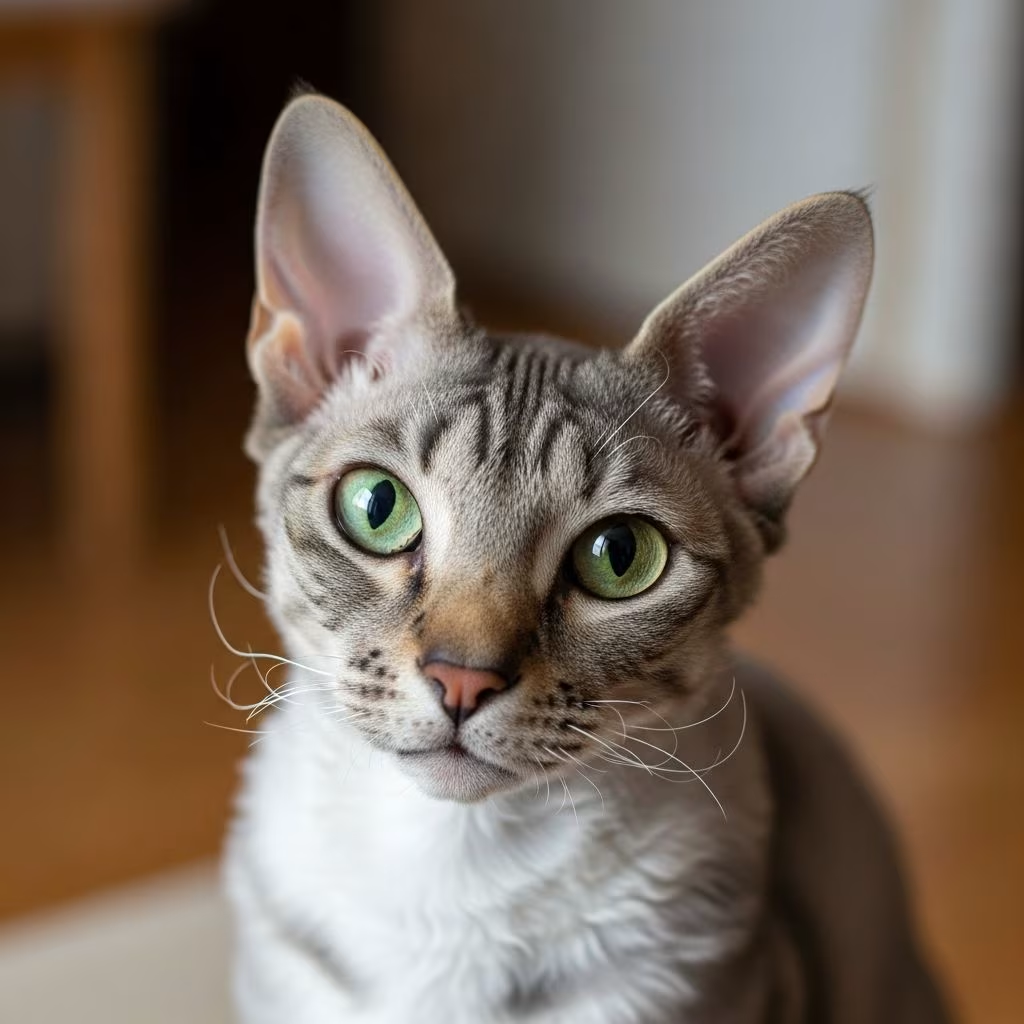
The Cornish Rex breed stands as one of the most visually striking and instantly recognizable feline varieties in the domestic cat world. While many people associate these elegant cats with their signature wavy, soft coat, there exists far more diversity within the breed than most enthusiasts realize. Understanding the various color combinations, pattern types, and coat characteristics can help potential owners appreciate the full range of beauty these remarkable cats display. This comprehensive guide explores the multifaceted world of Cornish Rex varieties, celebrating the distinct characteristics that make each individual cat unique.
Understanding the Foundation: The Cornish Rex Coat
Before exploring color variations and patterns, it’s essential to understand what makes a Cornish Rex coat fundamentally different from other cat breeds. The Cornish Rex possesses a distinctive short, soft, silky coat that forms naturally occurring waves or ripples across the entire body. This remarkable coat lacks the guard hairs found in most cat breeds, creating a texture that feels warm and luxurious to the touch.
The coat development process unfolds gradually over time. While young Cornish Rex kittens may display initial waves, it typically takes up to three years for the coat to reach full maturity and develop the dense, perfectly rippled appearance that characterizes the breed. This extended development period means that a young cat’s coat appearance may change significantly as it matures, making coat assessment challenging in young animals.
One fascinating aspect of the Cornish Rex coat involves the extension of the wave pattern to seemingly unexpected places. The curling extends even to the cat’s whiskers and eyebrows, which appear distinctly foreshortened and curled compared to other feline breeds. This attention to detail in the wave pattern extends from the top of the head, across the back, sides, hips, and all the way to the tip of the tail, creating a unified appearance of gentle undulation throughout the entire body.
The Complete Spectrum of Color Possibilities
One of the most liberating aspects of the Cornish Rex breed standard is its inclusivity regarding color. According to breeding standards, the Cornish Rex’s color is essentially irrelevant, meaning these cats can display virtually any color combination found in the feline world. This openness allows for an extraordinary diversity of appearances within a single breed.
Cornish Rex cats appear in the following color categories:
- Solid Colors: Including black, white, blue (gray), cream, red, and brown variations. Solid-colored Cornish Rex cats present a sleek, uniform appearance that emphasizes their elegant body structure and distinctive facial features.
- Tabby Patterns: Classic, mackerel, spotted, and ticked tabby variations create distinctive striping and marking patterns across the body, adding visual complexity and interest to the wavy coat.
- Pointed Patterns: Similar to Siamese coloring, pointed Cornish Rex cats display darker coloration on the face, ears, legs, and tail while maintaining lighter coloring on the body.
- Calico and Tortoiseshell: These multicolored patterns blend multiple colors throughout the coat, creating intricate and unique combinations in individual cats.
- Bicolor and Tricolor: Cornish Rex cats can display combinations of two or three distinct colors, including white paired with any other color or pattern variation.
Solid Color Cornish Rex Cats
Solid-colored Cornish Rex cats showcase the breed’s elegant proportions with particular clarity. When a single color covers the entire body without pattern interruption, the wavy coat texture becomes especially apparent. The undulating waves catch light differently across the colored surface, creating visual depth and movement even when the cat sits perfectly still.
Black Cornish Rex cats display striking contrast with their large, luminous eyes and prominent Roman nose. The black coloring emphasizes their statuesque bearing and alert expression. White Cornish Rex cats present an ethereal appearance, though they require attentive grooming to maintain their pristine coat appearance. Blue (gray) variations offer a sophisticated middle ground, creating a cohesive, monochromatic look that many find visually appealing. Cream and red Cornish Rex cats bring warmth to the palette, often paired with lighter eye colors that create striking contrast.
Pattern Variations in Cornish Rex Coats
Tabby patterns express themselves beautifully across the Cornish Rex’s wavy coat. The wave structure can either enhance or create interesting visual effects with tabby markings, as the undulating surface interacts with the pattern in unique ways. Classic tabby patterns create bold, swirling markings, while mackerel tabbies display narrow stripes that follow the body’s contours. Spotted tabbies present individual spots or broken stripe patterns, and ticked tabbies show barely perceptible striping, creating an almost solid appearance with subtle texture.
Pointed Cornish Rex cats bring to mind the elegance of Siamese cats but with the breed’s distinctive body type and coat characteristics. These cats display darker coloration concentrated on the cooler areas of the body—the face, ears, legs, and tail—while maintaining a light cream or ivory body color. The contrast between the pointed areas and body creates a striking visual effect that emphasizes the cat’s facial features and long, slender legs.
Calico and tortoiseshell Cornish Rex cats display remarkable complexity, with patches of different colors distributed throughout their wavy coats. These patterns, almost exclusively appearing in female cats, create truly unique individuals. The interplay between the color patches and wave pattern creates visual richness that makes each calico or tortoiseshell cat distinctive.
Physical Characteristics Beyond Color
While coat color and pattern contribute to visual diversity, the Cornish Rex breed also displays remarkable consistency in body structure that defines the variety. These cats are lean and athletic, with a distinctive arched back and elegant posture that leads many to compare them to Greyhound dogs. Their body structure emphasizes grace and agility rather than bulk or heaviness.
The head shape provides another distinctive characteristic, often described as resembling an egg positioned on its side. Large, high-set ears sit prominently on the head, creating an alert and intelligent expression. Their eyes are characteristically oval or oblong in shape, medium in size, and available in all color variations. Notably, these eyes often display an upward slant and convey an expression of alertness and curiosity.
The body weight of Cornish Rex cats remains consistent across color variations. Female cats typically weigh between 5 and 7 pounds, while males generally range from 8 to 10 pounds. Despite their slender appearance, these cats are surprisingly muscular and surprisingly heavy for their size, feeling warm and solid when held. Their legs are notably long and slender, allowing them to stand high and move with characteristic grace and agility.
Eye Color and Facial Features
A distinctive aspect of Cornish Rex variation involves the relationship between coat color and eye color. Because the breed standard accepts all eye colors regardless of coat color, significant variation exists in eye coloring across individuals. Some Cornish Rex cats display blue or aqua eyes, while others possess green, amber, or copper-colored eyes. This flexibility in eye color standards adds another dimension to the breed’s visual diversity.
The facial structure remains consistent across color variations, featuring a prominent Roman nose with a strong chin, high cheekbones, and an overall wedge-shaped head. The distinctive facial features create an intelligent, slightly aristocratic expression that captures the attention of everyone who encounters these cats.
Temperature Sensitivity and Color Considerations
Regardless of color or pattern, all Cornish Rex cats share a fascinating physiological characteristic: they maintain a slightly higher than normal body temperature. Combined with their light coat and lack of guard hairs, this characteristic makes them significantly more sensitive to cold temperatures than most cat breeds. This temperature sensitivity means Cornish Rex cats thrive best in warm, dry indoor environments with access to warm spots including sunny windowsills, heat vents, and cozy blankets.
The light coat also means that weight changes become immediately visible—a practical consideration for managing the breed’s hearty appetite and ensuring they maintain appropriate weight for their small frame.
Coat Maintenance Across Color Variations
An interesting characteristic across all Cornish Rex color varieties involves grooming requirements. Despite their distinctive appearance, these cats require minimal grooming compared to long-haired breeds. However, specific areas require regular attention regardless of coat color. The cats have a tendency to develop greasy ears and toes, necessitating periodic cleaning to maintain coat and skin health. Weekly grooming sessions help address these concerns while also providing bonding time between cats and their human companions.
Personality Consistency Across Varieties
While color and pattern variations create visual diversity, Cornish Rex cats display remarkably consistent personality traits regardless of appearance. These cats are highly social, intelligent, and energetic, retaining kitten-like playfulness throughout their lives. They thrive on human attention and prefer constant contact with their favorite people, earning the nickname “Velcro kitties” due to their need for physical proximity.
All Cornish Rex varieties, regardless of color, share an enthusiastic, curious nature and love interactive play. They often enjoy playing fetch, are highly acrobatic, and can appear almost clownish in their antics. Their exceptional intelligence means they benefit from environmental enrichment including interactive toys, puzzle feeders, and climbing structures that encourage their natural athletic abilities.
Choosing a Cornish Rex Variety for Your Home
Selecting a Cornish Rex cat based on color or pattern is ultimately a matter of personal preference, as personality and health characteristics remain consistent across all varieties. Some potential owners gravitate toward the dramatic contrast of pointed patterns, while others prefer the sleek elegance of solid colors or the visual interest of tabby markings and patterns. The key consideration involves choosing a Cornish Rex that appeals to your aesthetic preferences while understanding that all varieties share the breed’s distinctive characteristics including high energy levels, strong people-orientation, and minimal grooming requirements beyond regular ear and toe cleaning.
Health Considerations for All Color Varieties
Color and pattern have no bearing on the health characteristics or predispositions of Cornish Rex cats. All varieties share similar health profiles, typical lifespans of 15 to 20 years, and identical care requirements. Regular veterinary care, appropriate diet, and environmental enrichment benefit all Cornish Rex cats equally, regardless of their specific coloring or pattern type.
Frequently Asked Questions
Are certain Cornish Rex colors more common than others?
While the breed standard accepts all colors, some variations appear more frequently than others in breeding programs. However, responsible breeders focus on health and temperament rather than pursuing specific colors, so availability varies by breeder and region.
Do pointed Cornish Rex cats have Siamese ancestry?
The Cornish Rex breed originated in Cornwall, England, and developed independently from Siamese cats. However, pointed coloring can appear in any breed due to naturally occurring genetic variation, so some Cornish Rex cats display pointed patterns without intentional Siamese crosses.
Will my Cornish Rex kitten’s color change as it grows?
Solid-colored Cornish Rex kittens typically maintain their color, though the appearance may shift as the coat develops its full wave pattern over three years. Pointed cats and some tabby patterns may show subtle changes in color intensity and contrast as the coat matures.
Do eye color and coat color correlate in Cornish Rex cats?
The breed standard allows any eye color regardless of coat color, providing independent variation. This means a solid blue Cornish Rex might have copper, green, or blue eyes, offering additional diversity within each color category.
References
- Cornish Rex Breed Standard — The Cat Fanciers’ Association. https://cfa.org/breed/cornish-rex/
- Cornish Rex — Wikipedia. https://en.wikipedia.org/wiki/Cornish_Rex
- Cornish Rex Cat Breed Information — Purina UK. https://www.purina.co.uk/find-a-pet/cat-breeds/cornish-rex
- Cornish Rex Breed Information — The International Cat Association (TICA). https://tica.org/breed/cornish-rex/
- Cornish Rex Cat Breed — Hill’s Pet Nutrition. https://www.hillspet.com/cat-care/cat-breeds/cornish-rex
- Cornish Rex Cats: What to Know — WebMD. https://www.webmd.com/pets/cats/what-to-know-about-a-cornish-rex



