

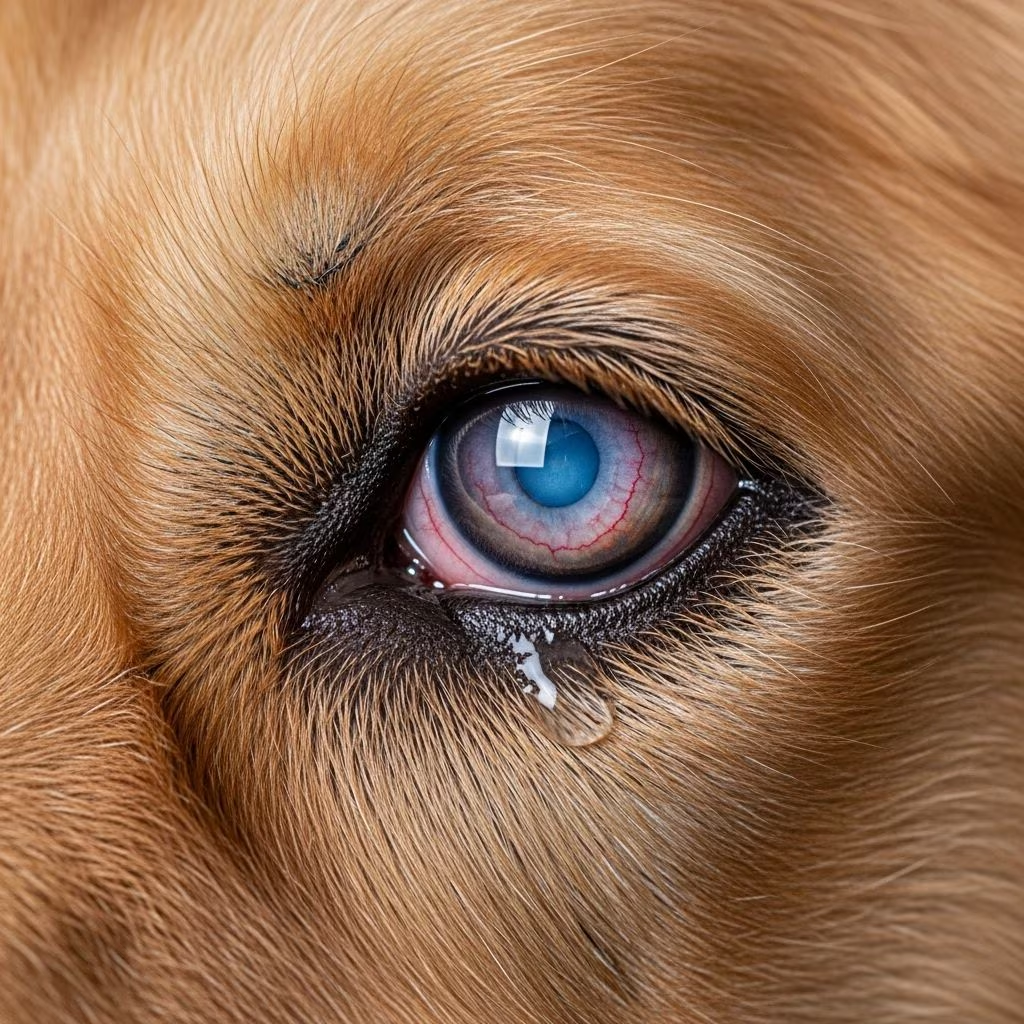
Corneal ulcers represent a serious threat to a dog’s vision, manifesting as painful erosions on the eye’s clear outer layer. These injuries demand prompt veterinary care to prevent infection, scarring, or vision loss. This guide explores the underlying mechanisms, clinical presentations, therapeutic approaches, and proactive measures for dog owners.
Understanding the Cornea and Ulcer Formation
The cornea serves as the eye’s transparent dome, protecting internal structures while refracting light for sharp vision. Composed of five layers—epithelium, Bowman’s layer, stroma, Descemet’s membrane, and endothelium—it maintains clarity through constant renewal. Damage to this structure, particularly the epithelium, leads to ulcers where exposed tissue risks bacterial invasion and enzymatic breakdown.
Superficial ulcers affect only the epithelium, often healing swiftly with support. Deeper ones penetrate the stroma, heightening risks of perforation. Indolent ulcers, common in middle-aged dogs like Boxers, feature loose epithelial edges that resist attachment, prolonging recovery.
Primary Causes of Corneal Damage in Dogs
Trauma tops the list of culprits, stemming from scratches by cats, rough play with other pets, sharp objects, or rubbing against carpets and foliage. Environmental irritants like dust or chemicals exacerbate these injuries.
Underlying conditions contribute significantly:
- Dry eye (keratoconjunctivitis sicca): Reduced tear production leaves the cornea vulnerable, common in breeds like Bulldogs.
- Eyelid abnormalities: Entropion curls lids inward, causing lash friction; distichiae or ectopic cilia add aberrant hairs.
- Systemic diseases: Diabetes, Cushing’s, or thyroid issues weaken corneal integrity.
- Infections: Bacterial or viral agents, including feline herpesvirus in cats but relevant for mixed exposures in dogs.
- Other factors: Glaucoma, exophthalmos, foreign bodies, or crystalline deposits in breeds like Shetland Sheepdogs.
Recognizing the Warning Signs
Dogs mask pain, but corneal ulcers provoke distinct behaviors. Early indicators include redness, excessive tearing, frequent blinking, or mild squinting. Affected dogs may paw at the eye or rub their face on surfaces.
Severe cases escalate to:
- Cloudy or blue-white cornea
- Eye closure or persistent squinting
- Thick yellow/green discharge signaling infection
- Visible corneal depression or bulge (risk of rupture)
These demand immediate veterinary evaluation, as untreated ulcers progress rapidly.
| Symptom Severity | Common Signs | Urgency Level |
|---|---|---|
| Mild/Superficial | Redness, tearing, blinking | See vet within 24 hours |
| Moderate | Squinting, pawing, cloudiness | Urgent vet visit same day |
| Severe/Deep | Discharge, eye shut, bulge | Emergency immediately |
Diagnostic Approaches by Veterinarians
Vets employ fluorescein staining: a dye highlights defects under cobalt blue light, outlining ulcer depth and size. Schirmer tear tests assess dry eye, while tonometry measures intraocular pressure to rule out glaucoma. Slit-lamp exams reveal subtle issues like uveitis or hypopyon (pus in the anterior chamber), indicating infection.
Cultures guide antibiotic selection for infected cases. Imaging or referral to ophthalmologists aids complex diagnostics.
Treatment Strategies: From Medications to Surgery
Treatment targets infection prevention, pain relief, healing promotion, and self-trauma avoidance. Superficial ulcers often resolve in 3-10 days with conservative care.
Medical Management
- Antibiotics: Topical drops/ointments like ofloxacin, neopolybac, or aminoglycosides, applied 2-4 times daily.
- Pain control: Atropine drops dilate pupils and relieve spasms; oral NSAIDs, tramadol, or gabapentin for comfort.
- Healing promoters: Serum from the dog’s blood inhibits collagenases; tacrolimus/cyclosporine for dry eye.
- Lubricants: Artificial tears maintain moisture.
Elizabethan collars (e-collars) are mandatory to block rubbing.
Surgical Interventions
Non-responsive or deep ulcers require procedures:
- Keratotomy: Grid or punctate patterns debride loose epithelium for reattachment, ideal for indolent ulcers.
- Debridement: Removal of necrotic tissue.
- Grafts: Corneal or conjunctival transplants for perforations.
Post-op care mirrors medical therapy, with frequent rechecks.
Special Considerations for Challenging Ulcers
Indolent or Non-Healing Ulcers
Prevalent in Boxers and older dogs, these persist due to stromal degeneration. Treatments include debridement plus topical tetracaine, followed by pressure patching or bandages. Healing takes 1-2 weeks.
Dry Eye-Associated Ulcers
Tacrolimus ointment (0.03%, 2-3x daily) stimulates tears while lubricating. Severe cases need lifelong therapy.
Infected or Perforating Ulcers
Hypopyon signals surface bacteria. Intensive antibiotics and serum every 2-4 hours, plus surgery if needed.
Recovery Timeline and Home Care Tips
Monitor progress with weekly vet visits. Simple ulcers heal in 7 days; complex ones may take weeks. Signs of improvement: reduced pain, clear cornea, normal blink.
At home:
- Administer meds precisely; clean eye gently.
- Enforce e-collar use.
- Avoid irritants; keep environment dust-free.
- Watch for worsening: seek help immediately.
Preventing Future Corneal Ulcers
Proactive steps minimize risks:
- Regular eye exams, especially for predisposed breeds (Boxers, Bulldogs, Shelties).
- Manage dry eye early with vet-recommended drops.
- Correct eyelid issues surgically if present.
- Supervise play; trim nails in multi-pet homes.
- Maintain health: control diabetes, monitor seniors for deposits.
Frequently Asked Questions (FAQs)
What happens if a corneal ulcer goes untreated?
Infection, deepening, rupture, or blindness can occur rapidly.
Can dogs still see with a corneal ulcer?
Yes, mildly; severe ones cloud vision significantly.
How much does treatment cost?
Varies: $200-500 for meds; $1000+ for surgery (location-dependent).
Are certain breeds more prone?
Yes: Boxers (indolent), Pugs (entropion), Shelties (dystrophy).
Is surgery always needed?
No, most heal medically; reserved for non-healing/deep cases.
Long-Term Prognosis and Vision Preservation
With timely intervention, 90%+ recover fully without scarring. Delays risk permanent haze or loss. Routine follow-ups ensure health.
Owners play a key role: vigilance saves sight. Consult vets promptly at first signs.
References
- Dog Eye Ulcer: Symptoms, Treatment, and Prevention — PetMD. 2023. https://www.petmd.com/dog/conditions/eyes/c_dg_Keratitis_Ulcerative
- Dog Eye Ulcer: Causes, Symptoms and Treatment Options — CareCredit Well-U. 2023. https://www.carecredit.com/well-u/pet-care/corneal-ulcer-in-dogs/
- Corneal ulceration in dogs and cats: Diagnosis and treatment — VetBloom. 2024. https://vetbloom.com/corneal-ulceration-in-dogs-and-cats/
- Eye ulcers (corneal ulcers) in dogs — PDSA. 2023. https://www.pdsa.org.uk/pet-help-and-advice/pet-health-hub/conditions/eye-ulcers-corneal-ulcers-in-dogs
- Corneal Ulcers in Dogs — Premier Veterinary Group. 2023. https://www.premiervets.net/blog/corneal-ulcers-in-dogs



