

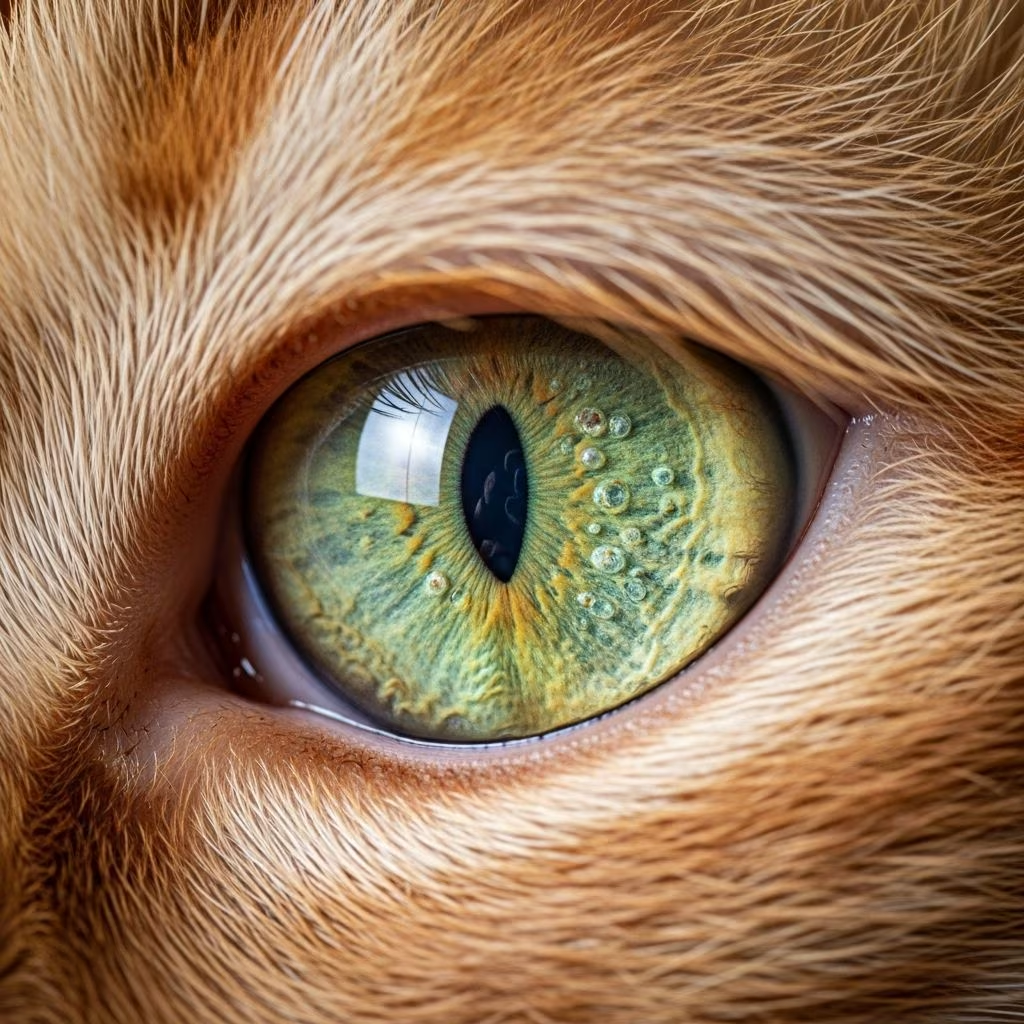
Corneal dystrophy represents a group of inherited disorders affecting the transparency of the cornea, the clear front window of a pet’s eye. In dogs and cats, these conditions lead to deposits of abnormal materials in various corneal layers, often resulting in hazy vision, discomfort, and potential blindness if untreated. Unlike common age-related changes, dystrophies stem from genetic mutations and typically appear bilaterally, emphasizing early veterinary intervention for breeds predisposed to these issues.
The Cornea’s Vital Role in Pet Vision
The cornea comprises five distinct layers: epithelium, Bowman’s membrane, stroma, Descemet’s membrane, and endothelium. Each layer maintains optical clarity by regulating fluid balance and structural integrity. In healthy pets, endothelial cells pump excess fluid from the stroma to prevent swelling, while the epithelium shields against environmental threats. Disruptions in any layer from dystrophy cause light scattering, blurred sight, and secondary complications like erosions or edema.
Pets rely on sharp vision for daily activities, from hunting to navigating homes. Corneal clouding impairs depth perception and glare tolerance, particularly in low-light conditions common for nocturnal cats or active dogs. Understanding this anatomy aids owners in spotting subtle changes during routine checks.
Common Types Affecting Dogs and Cats
Veterinary ophthalmologists classify corneal dystrophies by the primary layer involved, with variations in presentation across species.
- Epithelial Dystrophies: Rare in pets, these involve the outermost layer, leading to map-like opacities or microcysts. Affected dogs may suffer recurrent erosions, causing sharp pain upon waking due to overnight dryness.
- Stromal Dystrophies: Prevalent in breeds like Siberian Huskies and Akitas, white or crystalline deposits accumulate in the central stroma. Vision loss progresses slowly, often without pain until advanced stages.
- Endothelial Dystrophies: Including Fuchs-like conditions, these mirror human forms where endothelial failure causes stromal swelling. Boston Terriers and Chihuahuas show diffuse haze and edema, worsening with age.
In cats, stromal forms dominate, presenting as symmetric lipid deposits without inflammation. These rarely progress to erosions but can mimic other corneal diseases.
Breeds at Highest Risk
Genetic predispositions make certain breeds vulnerable. Dogs like Boxers, Pembroke Welsh Corgis, and Samoyeds frequently develop stromal opacities by middle age. Manchester Terriers exhibit endothelial types with guttae formations akin to human Fuchs dystrophy. Cats of breeds like Siamese occasionally show similar stromal changes, though less documented.
| Breed | Common Type | Typical Onset |
|---|---|---|
| Siberian Husky | Stromal | 2-5 years |
| Boston Terrier | Endothelial | 5-8 years |
| Airedale Terrier | Stromal | 3-6 years |
| Siamese Cat | Stromal | 4-7 years |
These patterns underscore breeding history’s role, with purebreds overrepresented due to limited gene pools.
Recognizing Early Warning Signs
Symptoms vary by type but share vision impacts. Owners often notice a central blue-white haze, resembling a film over the eye. Blurred sight manifests as bumping into objects, hesitation on stairs, or reluctance to play fetch.
- Photophobia: Squinting or avoiding bright lights, common in epithelial and endothelial forms.
- Morning discomfort: Sticky eyes or pawing at face due to overnight edema.
- Excess tearing or dryness: Imbalanced lubrication from nerve irritation.
- Corneal erosions: Acute pain, blinking issues, or cloudier patches in advanced cases.
Early detection hinges on annual eye exams, as changes progress insidiously. Puppies may show signs by 6 months in severe hereditary cases.
Diagnostic Approaches in Veterinary Practice
Vets employ slit-lamp biomicroscopy to visualize layer-specific deposits, distinguishing dystrophy from ulcers or cataracts. Fluorescein staining reveals erosions, while pachymetry measures corneal thickness for endothelial involvement. Genetic testing emerges for at-risk breeds, confirming mutations like those in keratin genes for epithelial types. Specular microscopy counts endothelial cells, predicting progression. Differential diagnoses include infections or trauma, ruled out via cultures if needed.
Conservative Management Strategies
Many pets thrive with non-invasive care. Hypertonic saline ointments draw fluid from edematous corneas overnight, reducing morning blur. Lubricating drops combat dryness, especially post-erosion. Bandage contact lenses protect healing epithelium, minimizing pain. Anti-inflammatory drops like topical NSAIDs curb minor swelling without steroids’ risks.
Environmental tweaks help: dim lighting reduces glare, elevated food bowls aid navigation. Owners monitor progression quarterly, adjusting as needed.
Surgical Interventions for Advanced Cases
When vision drops below 20/50 equivalent or pain persists, surgery restores clarity. Superficial keratectomy scrapes stromal deposits in early stromal dystrophy, preserving deeper layers. For endothelial failure, Descemet’s stripping endothelial keratoplasty (DSEK) replaces the inner layer selectively, faster recovery than full transplants. Penetrating keratoplasty suits severe bilateral disease, though rejection risks higher in pets.
Post-op care involves strict e-collars, topical antibiotics, and check-ups. Success rates exceed 80% in uncomplicated cases, with many pets regaining functional sight.
Preventive Measures and Genetic Screening
Breeding programs integrate ocular exams per OFA standards, curbing inheritance. Pet owners of predisposed breeds pursue early screening, informing spay/neuter decisions. Nutrition with omega-3s supports corneal health, though unproven for dystrophy reversal. Regular grooming prevents trauma exacerbating deposits.
Prognosis and Long-Term Outlook
Stromal types offer best prognosis, often cosmetic without intervention. Endothelial forms progress variably; half require surgery by age 10. With management, most pets maintain quality life, adapting via other senses. Complications like secondary glaucoma demand vigilant monitoring.
FAQs on Corneal Dystrophy in Pets
What causes corneal dystrophy in my dog?
Primarily genetic mutations disrupting corneal protein production, leading to material buildup.
Is it painful for cats with this condition?
Usually not, unless erosions occur; most experience only vision changes.
Can diet help manage symptoms?
Supportive via anti-inflammatory nutrients, but not curative.
How quickly does it worsen?
Over years; endothelial types accelerate post-50s human equivalent.
Is surgery always necessary?
No, many stabilize with drops; reserve for vision-threatening cases.
References
- Corneal Dystrophy – StatPearls – NCBI Bookshelf — National Center for Biotechnology Information. 2023-07-17. https://www.ncbi.nlm.nih.gov/books/NBK557865/
- Corneal dystrophy: what it is, symptoms and treatment — Top Doctors. 2024. https://www.topdoctors.co.uk/medical-dictionary/corneal-dystrophy/
- Fuchs’ Corneal Dystrophy: Symptoms and Treatment — Eye Doctor Wendy. 2023. https://www.eyedoctorwendy.com/eye-care-services/low-vision-optometrist/fuchs-corneal-dystrophy/
- Meesmann corneal dystrophy — MedlinePlus Genetics (NIH). 2024-01-15. https://medlineplus.gov/genetics/condition/meesmann-corneal-dystrophy/
- Corneal Dystrophies — John A. Moran Eye Center, University of Utah. 2023. https://healthcare.utah.edu/moran/ophthalmology/corneal-disease/dystrophies
- Corneal Dystrophy: What Is It, Diagnosis, Treatment, and More — Osmosis. 2024. https://www.osmosis.org/answers/corneal-dystrophy



