

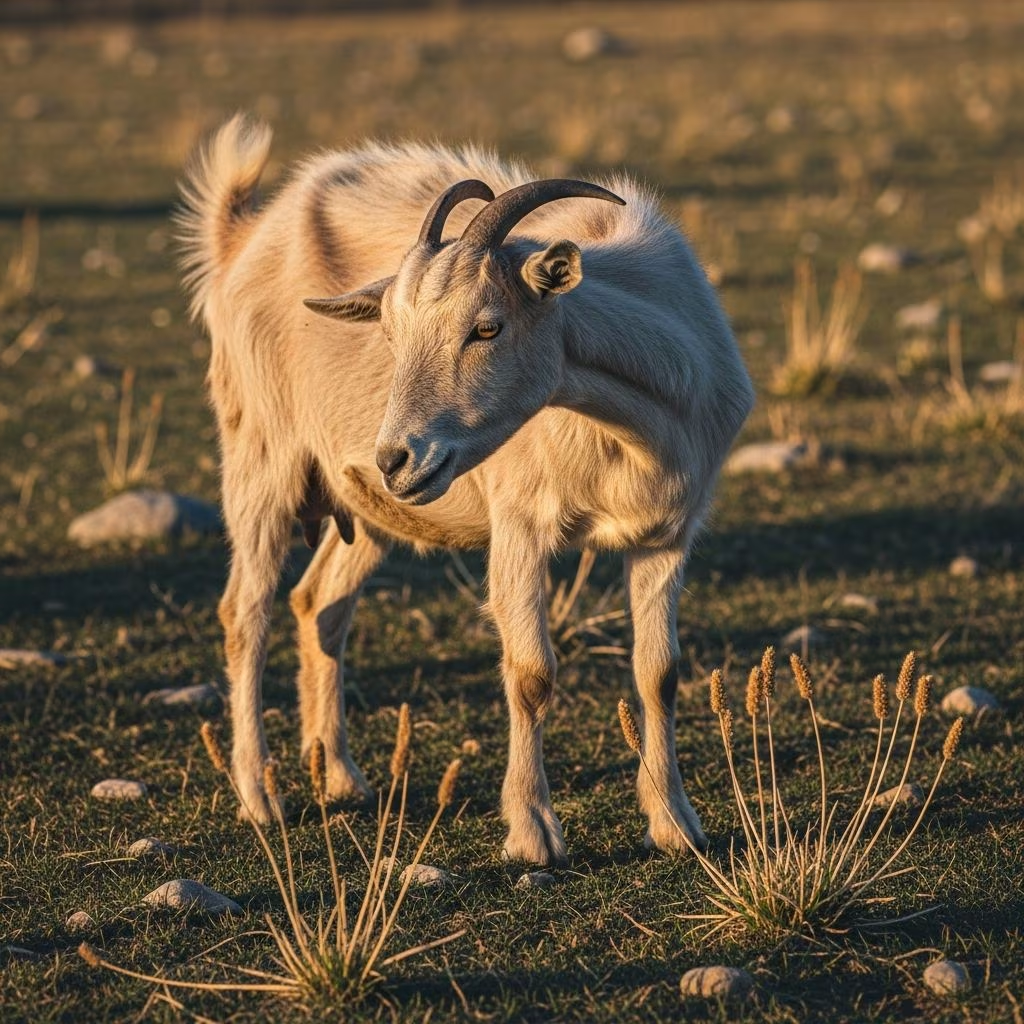
Copper deficiency poses a significant risk to goat health, leading to issues like weakened bones, poor coat quality, and neurological problems. This condition arises primarily from inadequate dietary intake or soil-related factors and can be managed through targeted supplementation.
Why Copper is Essential for Goats
Goats require copper as a vital trace mineral for numerous physiological processes. It supports enzyme function, iron metabolism for red blood cell production, connective tissue formation, and melanin synthesis for coat pigmentation. Without sufficient copper, goats experience impaired growth, immune suppression, and skeletal abnormalities.
In natural settings, copper levels in forage depend on soil composition. Regions with low copper soils, common in parts of the US and Australia, predispose herds to deficiency. Goats have higher copper needs than sheep or cattle due to their browsing habits and faster metabolism.
Common Causes of Copper Shortage
Copper deficiency in goats stems from two main categories: primary and secondary.
- Primary deficiency: Direct result of low copper in the diet from poor-quality hay, pasture, or grains lacking supplementation.
- Secondary deficiency: Occurs when antagonists like high molybdenum, sulfur, calcium, or iron in feed bind copper, reducing its absorption. Pastures with elevated molybdenum levels are notorious for this.
Other factors include high-grain diets without balanced minerals or using cattle minerals unsuitable for goats, which often exclude added copper to prevent toxicity in those species.
Recognizing the Signs Early
Early detection prevents severe outcomes. Visible symptoms often appear first in the coat and progress to mobility and reproductive issues.
| Symptom | Description | Stage |
|---|---|---|
| Faded Coat | Dark goats turn rusty; light ones bleach further. Back and face fade first. | Early |
| Fishtail | Balding or kinking at tail tip. | Early |
| Rough Coat | Brittle, hooked hairs; delayed shedding. | Early-Moderate |
| Anemia/Parasite Susceptibility | Pale mucous membranes; poor worm resistance. | Moderate |
| Lameness/Fragile Bones | Abnormal bone growth, fractures post-neonatal. | Advanced |
| Neurological Issues (Enzootic Ataxia) | Incoordination, swayback in kids; irreversible spinal damage. | Severe |
Kids born to deficient does may show normal birth but develop progressive paralysis resembling viral infections. Reproductive failures, like does failing to conceive, also signal problems.
Accurate Diagnosis Methods
Visual signs guide suspicion, but confirmation requires lab analysis. Liver biopsies or postmortem samples provide the gold standard, measuring copper at 25-150 ppm as normal. Blood and hair tests are unreliable due to fluctuating levels.
Consult a veterinarian for soil/forage testing in endemic areas. Track herd symptoms and diet history to correlate with regional soil maps showing low copper zones.
Effective Prevention Strategies
Proactive management ensures adequate copper intake without overload risks.
- Provide Loose Minerals: Offer free-choice mixes with at least 1700 ppm copper sulfate. Avoid blocks, as goats’ tongues struggle to extract enough.
- Select Balanced Feeds: Choose goat-specific grains with 35-45 ppm copper. Avoid horse or cattle feeds.
- Routine Copper Oxide Wire Particles (COWP): Administer boluses every 4-6 months at 1g per 20-25 lbs body weight. Effective for maintenance and barber pole worm control.
Monitor antagonists by balancing diets; add molybdenum only if needed for other deficiencies.
Treatment Protocols for Affected Goats
Treatment mirrors prevention but requires urgency for advanced cases. COWP boluses are preferred over injections, which risk toxicity.
- COWP Administration: Use a bolus gun to deliver capsules deep into the throat. Improvements in coat color and vigor appear within weeks.
- Injectable Copper: Veterinary-supervised only; personal accounts report fatalities from overdose.
- Dietary Boosts: Top-dress feed with copper-rich supplements alongside minerals.
For kids with ataxia, supplement pregnant does early; affected offspring face permanent damage. Combine with deworming if parasites exacerbate anemia.
Potential Risks and Monitoring
Over-supplementation causes toxicity: symptoms include jaundice, hemoglobinuria, and liver damage. Goats tolerate higher levels than sheep but require precision. Test liver levels periodically in high-risk herds.
Farmers report success with COWP, noting normalized liver values and no losses, versus injection failures. Adjust based on breed, age, and lactation status—does need more during pregnancy.
Regional and Soil Considerations
Deficiency prevalence ties to geography. Australian livestock, including goats, suffer from low soil copper and high molybdenum/sulfur. US extension maps highlight deficient zones; test local forage annually.
Organic or pasture-based systems amplify risks without vigilant supplementation.
Case Studies from Goat Keepers
Homesteaders describe faded faces resolving post-COWP, with anemia vanishing and weight gain resuming. One herd showed parasite resistance improving alongside coat restoration. Veterinary resources confirm bone fragility and swayback in untreated cases.
FAQs
What is the best way to give COWP to goats?
Use a bolus gun for 1g per 20 lbs, placing past the regurgitation point. Repeat every 4-6 months.
Can copper deficiency cause lameness?
Yes, post-neonatal copper lack leads to fragile bones and lameness.
Are blood tests reliable for diagnosis?
No; liver samples are essential for accuracy.
How often should I supplement healthy goats?
Every 6 months with COWP, plus daily loose minerals.
Is copper bolus safe for pregnant does?
Yes, it prevents enzootic ataxia in kids when given timely.
Implementing these strategies maintains robust herds. Regular observation and veterinary input optimize outcomes.
References
- What to Do About Copper Deficiency in Goats — Mama on the Homestead. 2023. https://mamaonthehomestead.com/copper-deficiency-in-goats/
- Goats and Copper Deficiency — Thrifty Homesteader. 2023. https://thriftyhomesteader.com/goats-and-copper-deficiency/
- Copper Deficiency in Goats (& How to Correct It) — Roots and Refuge. 2023. https://rootsandrefuge.com/copper-deficiency-in-goats/
- Copper Deficiency – Veterinary Handbook — Veterinary Handbook Australia. 2024-02-01. https://www.veterinaryhandbook.com.au/Diseases.aspx?diseasenameid=56
- Goat health – copper deficiency — NSW Department of Primary Industries (.gov). 2020. https://www.dpi.nsw.gov.au/__data/assets/pdf_file/0010/178381/Goat-health-copper-deficiency.pdf
- Copper Deficiency in Goats – Musculoskeletal System — Merck Veterinary Manual. 2023. https://www.merckvetmanual.com/musculoskeletal-system/lameness-in-goats/copper-deficiency-in-goats



