

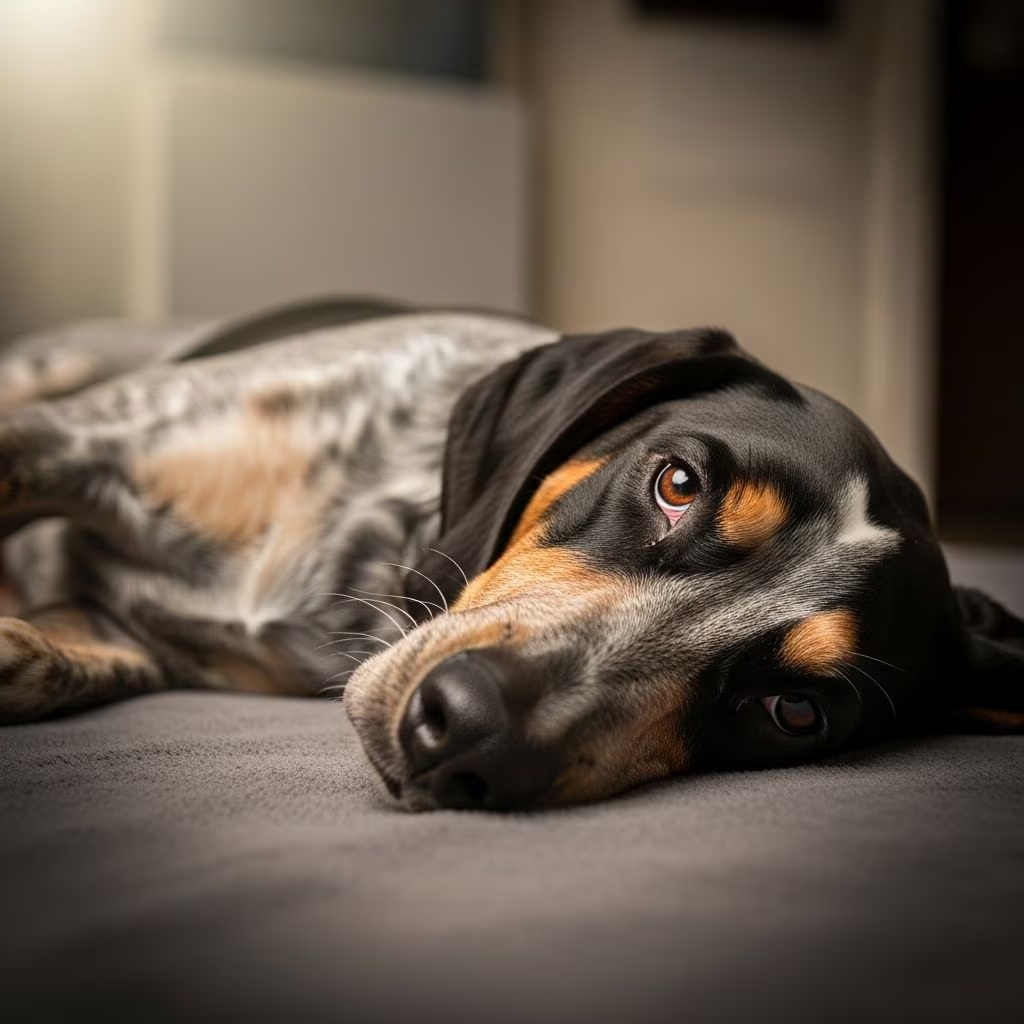
What is Coonhound Paralysis?
Coonhound paralysis describes a sudden, progressive paralysis in dogs and occasionally cats. The condition results from acute inflammation of multiple nerve roots (nerves that exit the spinal cord) as well as peripheral nerves (nerves located outside the spinal cord and brain that communicate between the nervous system and the tissues in the body, including the muscles). This neurological disorder is also known as acute idiopathic polyradiculoneuritis (ACIP).
Coonhound paralysis is a rare but serious condition that can develop rapidly in affected dogs. The inflammation affects the nerve roots and peripheral nerves, disrupting the communication between the spinal cord and muscles throughout the body. While the condition is uncommon, its potential severity warrants immediate veterinary attention and comprehensive understanding by dog owners.
What Causes Coonhound Paralysis?
The exact cause of coonhound paralysis remains incompletely understood by veterinarians and researchers. However, several potential triggers have been identified through clinical observation and scientific study.
Raccoon Exposure
The most well-established connection involves exposure to raccoon saliva. Dogs that come into contact with raccoons or their saliva may develop an immune reaction that triggers the condition. This exposure is believed to be the primary cause in many cases, particularly in hunting dogs and dogs living in areas with active raccoon populations. The immune system appears to overreact to proteins in raccoon saliva, initiating an inflammatory cascade affecting nerve tissues.
Infectious Agents
Viral and bacterial infections are suspected to play a role in developing coonhound paralysis. Specific pathogens associated with the condition include Campylobacter bacteria from consuming raw poultry and parasitic diseases such as Toxoplasmosis. Other documented infections linked to polyradiculoneuritis include Lyme disease, Ehrlichiosis, and Rocky Mountain spotted fever. These infections may trigger an autoimmune response where white blood cells attack the nerves, causing inflammation and nerve damage.
Environmental and Genetic Factors
Exposure to environmental contaminants such as pesticides and heavy metals has been proposed as potential contributing factors. Additionally, genetic predisposition may influence which dogs develop the condition when exposed to triggering factors. While all dogs exposed to these triggers do not develop coonhound paralysis, certain genetic factors may increase susceptibility in vulnerable individuals.
Other Potential Causes
In some rare cases, vaccine reactions have been suspected, though the association has not been definitively proven. Additionally, some cases of polyradiculoneuritis have no identifiable inciting cause, making diagnosis and prevention particularly challenging. Chronic forms of polyradiculoneuritis have also been identified, characterized by repeated episodes of weakness or paralysis.
Symptoms and Signs of Coonhound Paralysis
Symptoms typically appear 7-14 days after contact with a triggering agent, such as raccoon saliva. The condition presents with characteristic signs that progress over several days:
Progressive Weakness and Paralysis
Dogs with coonhound paralysis begin with a stiff-legged gait that rapidly progresses to paralysis of all four legs. The rear legs are typically affected first, with weakness and paralysis developing before progressing to the front legs. In severe cases, the condition advances to affect the neck muscles and chest muscles, causing labored breathing. Symptoms typically progress over 4-5 days, although maximum symptoms may take up to 10 days to fully develop.
Neurological Changes
Affected dogs exhibit decreased reflexes and decreased muscle tone throughout their body. Muscle mass loss becomes apparent as the condition progresses. The rear legs are sometimes more severely affected than the front legs. In dogs with severe disease, muscle atrophy becomes pronounced, and their physical appearance changes noticeably.
Respiratory and Facial Involvement
In severe cases, chest muscles may be affected, causing labored breathing or respiratory distress. The facial muscles may be affected, preventing the dog from blinking normally and leading to “dry eye” with the need for artificial tear treatment. The dog’s bark may become altered or lost entirely. Interestingly, most dogs with polyradiculoneuritis can still wag their tails despite their paralysis, which distinguishes this condition from some other neurological disorders.
Associated Symptoms
Additional symptoms may include fever, generalized slow reflexes, and low muscle tone. Most dogs do not experience bowel or bladder incontinence, as these nerves are typically not affected by the condition. However, the inability to move normally may complicate toileting and hygiene management.
Diagnosis of Coonhound Paralysis
Diagnosing coonhound paralysis involves a comprehensive veterinary assessment using multiple diagnostic tools and techniques:
Physical and Neurological Examination
Veterinarians begin with a thorough physical examination, assessing the dog’s overall health, vital signs, and body condition. A detailed neurological examination evaluates nerve function, reflexes, muscle tone, and movement capabilities. This examination helps determine the extent and distribution of neurological involvement.
Advanced Diagnostic Testing
Several specialized tests support the diagnosis:
- Electromyography (EMG): This test measures electrical activity in muscles to identify denervation patterns consistent with polyradiculoneuritis
- Nerve Stimulation Testing: Evaluates nerve conduction velocity and function to assess peripheral nerve damage
- Spinal Tap (Cerebrospinal Fluid Analysis): Examines fluid surrounding the spinal cord for signs of inflammation and elevated protein levels
- Bloodwork: Laboratory tests may reveal systemic infection or immune system abnormalities
Imaging Studies
Magnetic resonance imaging (MRI) or other advanced imaging may be performed to rule out other spinal cord diseases or structural abnormalities that could mimic coonhound paralysis symptoms.
Treatment and Management Options
While there is no specific cure for coonhound paralysis, comprehensive supportive care and medical interventions can significantly improve outcomes and promote recovery. Treatment focuses on managing symptoms and supporting the dog’s body systems while the immune-mediated inflammation resolves.
Supportive Care
Intensive supportive care forms the foundation of treatment:
- Hospitalization: In severe cases, hospitalization provides round-the-clock monitoring and interventions such as intravenous (IV) fluid therapy, oxygen therapy, and urinary catheterization
- Fluid Therapy: IV fluids prevent dehydration and maintain electrolyte balance, particularly important for dogs unable to drink water independently
- Nutritional Support: Dogs with paralysis may require special diets or assisted feeding to maintain weight and prevent muscle loss
- Assisted Toileting: Regular assistance with urination and defecation maintains hygiene and prevents urinary tract infections
Respiratory Support
Dogs experiencing respiratory distress require oxygen therapy or ventilator-assisted breathing. In severe cases with respiratory muscle paralysis, mechanical ventilation may be necessary until the respiratory system recovers sufficiently for independent breathing. Close monitoring of breathing patterns and oxygen saturation guides respiratory interventions.
Medication Management
Immunosuppressive drugs are used to decrease inflammation and inhibit the autoimmune response. Common medications include corticosteroids such as Prednisone and immunosuppressive agents like Cyclosporine. However, corticosteroids have not proven universally effective in all cases. Some patients may benefit from immunoglobulin therapy, though specific treatment efficacy remains variable.
Physical Rehabilitation and Therapy
Intensive physical therapy is crucial for promoting recovery and preventing complications:
- Regular Movement and Positioning: Frequent rotation or movement of recumbent dogs prevents pressure sores and maintains circulation
- Massage and Muscle Stimulation: Therapeutic massage reduces muscle atrophy and maintains muscle tone during paralysis
- Physical Therapy Exercises: Passive range-of-motion exercises and physical therapy help preserve muscular strength and prevent muscle loss
- Skin Care: Frequent bathing reduces urine scalding and fecal contamination in recumbent dogs
- Bedding Management: Well-padded bedding reduces pressure sore development and improves comfort
Additional Supportive Measures
Artificial tear treatment prevents “dry eye” if facial nerve involvement prevents normal blinking. Eye lubricants and protective measures maintain corneal health. Pain management may be required to keep affected dogs comfortable during recovery. Close monitoring identifies complications early, such as urinary tract infections or pressure sore development.
Recovery and Prognosis
Recovery from coonhound paralysis is typically a slow process requiring patience and consistent care. Most cases begin to improve within 3 weeks following initial presentation, with recovery typically occurring within 2-4 months. However, individual timelines vary significantly.
Dogs with rapidly progressing symptoms have a poorer prognosis due to increased risk of respiratory muscle paralysis. With appropriate intensive care and supportive therapy, most dogs recover well. However, some cases may result in incomplete recovery with ongoing muscle atrophy and weakness. Recurrence is possible but rare. Notably, hunting dogs that contract coonhound paralysis should be retired from hunting to prevent potential re-exposure and recurrence.
Prevention Strategies
While the precise etiology of coonhound paralysis makes prevention challenging, several measures can help minimize risk:
- Limit exposure to raccoons and avoid contact with raccoon saliva when possible
- Provide immediate medical attention for tick-borne illnesses and infections
- Maintain proper food handling practices to prevent bacterial contamination
- Keep vaccinations current as recommended by your veterinarian
- Maintain a clean, safe environment to minimize exposure to environmental toxins
Frequently Asked Questions
Q: How quickly does coonhound paralysis develop?
A: Symptoms typically appear 7-14 days after exposure to a triggering agent. Once symptoms begin, they typically progress over 4-5 days, though maximum symptoms may take up to 10 days to fully develop.
Q: Is coonhound paralysis fatal?
A: While coonhound paralysis can be serious, most cases recover with appropriate care. However, severe cases involving respiratory muscle paralysis can be life-threatening and require ventilator support.
Q: How long does recovery take?
A: Most dogs begin improving within 3 weeks and typically recover within 2-4 months, though some cases may take longer for complete recovery.
Q: Can coonhound paralysis recur?
A: Recurrence is possible but rare. Dogs that have recovered should be kept away from raccoons to prevent potential re-exposure.
Q: What is the long-term outlook for dogs with coonhound paralysis?
A: With appropriate intensive care and supportive therapy, the long-term prognosis is generally good. Most dogs recover function, though some may have residual weakness or muscle atrophy.
Q: Do dogs with coonhound paralysis lose bowel or bladder control?
A: Most dogs do not experience bowel or bladder incontinence, as these nerves are typically not affected by the condition. However, they may require assistance with toileting due to their inability to move.
References
- Polyradiculoneuritis in Dogs — VCA Animal Hospitals. https://vcahospitals.com/know-your-pet/coonhound-paralysis
- Coonhound Paralysis (Polyradiculoneuritis) in Dogs — Vetster. https://vetster.com/en/conditions/dog/coonhound-paralysis-polyradiculoneuritis
- Coonhound Paralysis in Dogs: A Closer Look — PetCareRx. https://www.petcarerx.com/article/coonhound-paralysis-in-dogs-a-closer-look/6807
- Coonhound Paralysis In Dogs — PetMD. https://www.petmd.com/dog/conditions/neurological/c_dg_coonhound_paralysis
- Inflammatory Disorders of the Peripheral Nerves and Neuromuscular Junction in Animals — Merck Veterinary Manual. https://www.merckvetmanual.com/nervous-system/diseases-of-the-peripheral-nerves-and-neuromuscular-junction/inflammatory-disorders-of-the-peripheral-nerves-and-neuromuscular-junction-in-animals
- Acute Idiopathic Polyradiculoneuritis — Southfields Veterinary Specialists. https://southfields.co.uk/factsheet/acute-idiopathic-polyradiculoneuritis
- Coonhound Paralysis Fortunately Rare — Veterinary Medicine at Illinois. https://vetmed.illinois.edu/pet-health-columns/coonhound-paralysis-dogs/



