

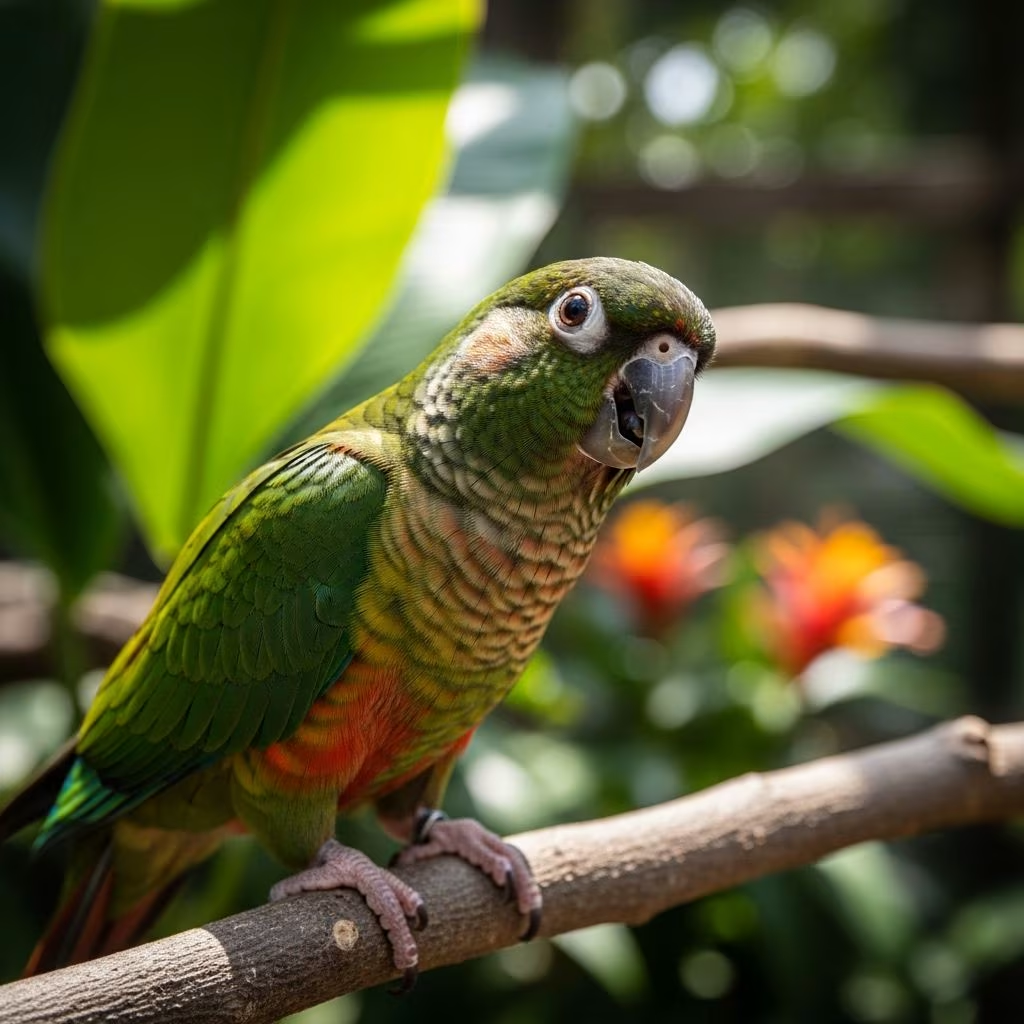
Understanding Conure Talking Ability
Conures are playful and expressive birds with big personalities that capture the hearts of bird enthusiasts everywhere. While vocal mimicry can be a fun bonus when living with these vibrant companions, it’s far from the only reason people love conures. Understanding the talking ability of conures helps set realistic expectations and allows you to appreciate your bird for all the wonderful qualities they bring to your home.
Conures, while not the most skilled talkers in the parrot world, are indeed capable of learning a few words or phrases. Some individuals develop decent vocabularies, though their speech patterns differ significantly from larger parrot species like African Greys. Their unique speaking style remains clearly birdlike, maintaining a distinctive character that reflects their avian nature.
How Conures Produce Speech
Understanding how conures produce sound is essential to appreciating their talking abilities. Unlike humans, birds do not possess lips to help them form words properly. Instead, birds depend on a different anatomical structure: the syrinx, also called the voice box or vocal organ of birds.
The syrinx is located at the base of a bird’s trachea and functions as the primary sound-producing organ. Birds vibrate the outer membranes of their syrinx to create a wide variety of vocalizations. What makes parrots, including conures, particularly adept at mimicry is their ability to vibrate these membranes in precise ways. The two sides of the syrinx in a bird can be controlled independently, allowing conures to produce more than one sound at the same time. This sophisticated vocal apparatus enables conures to mimic complex sounds, phrases, and words with remarkable accuracy, even though they lack the physical structures humans use for speech.
The Unique Speaking Style of Conures
Conures have developed a distinctive communication style that sets them apart from other parrot species. While their speech may not always be recognizable to unfamiliar ears, their personality-filled chatter and sound effect mimicry add tremendous charm and entertainment value to their presence in your home.
Unlike African Greys, which often mimic human voices with uncanny accuracy, conures maintain a more clearly birdlike quality to their speech. This doesn’t diminish their appeal; rather, it adds to their unique personality. Conures excel at mimicking a variety of sounds beyond just words, including:
- Laughter and giggles
- Sneezes and coughs
- Conversational babbling
- Sound effects and noises from their environment
- Musical tones and whistles
These sound imitations often prove more entertaining than their word learning, as owners discover their conures have picked up unexpected vocalizations from their daily lives.
Factors That Influence Conure Talking Ability
Several key factors determine whether and how well your conure will develop talking abilities. Understanding these elements helps you create an optimal environment for speech development in your feathered companion.
1. Time and Interaction
The amount of time spent with your conure plays a crucial role in developing their talking abilities. Conures thrive on social interaction, and consistent engagement fosters their inclination to mimic sounds and words. Birds that receive regular interaction with their owners demonstrate a much higher propensity for learning vocalizations. Regular, dedicated time together creates a conducive environment for learning and significantly impacts their talking abilities. The more frequently you interact with your conure, the more opportunities they have to observe, learn, and practice new sounds and phrases.
2. Repetition and Reinforcement
Repetition is absolutely key in teaching conures to talk. Consistently repeating specific phrases or words establishes familiarity, aiding these birds in grasping and imitating the sounds. Through repetition, conures begin to recognize patterns in human speech and develop the ability to replicate them. This repetition helps reinforce the association between specific sounds and their meanings, enhancing the likelihood of verbal replication. The more times your conure hears a particular word or phrase, the more likely they are to eventually mimic it.
3. Age and Species Considerations
The size and age of conures significantly affect their speech capabilities. Younger conures often display a higher propensity to learn and mimic sounds compared to older ones. If possible, starting speech training with a younger bird generally yields better results. Additionally, the specific species of conure matters considerably. Larger conure species tend to be better talkers than smaller varieties, though individual personality plays an equally important role. Some conures naturally exhibit a more vocal and imitative nature, while others might be quieter or less inclined to mimic human speech regardless of training efforts.
4. Individual Personality and Temperament
Just like humans, each conure possesses a unique personality that influences their willingness and ability to learn speech. Some conures are naturally more vocal and expressive, making them eager learners of human words and phrases. Others may be content to communicate primarily through their own natural vocalizations and body language. These individual differences mean that not all conures will necessarily develop extensive vocabularies, even with consistent training and ideal conditions. Recognizing and respecting your individual bird’s personality is important for maintaining a healthy, happy relationship.
Conure Species and Their Talking Ability
Different conure species demonstrate varying levels of talking ability. Understanding these differences can help set appropriate expectations for your specific bird.
| Conure Species | Talking Ability | Notable Characteristics |
|---|---|---|
| Green-cheeked Conure | Moderate | Intelligent learners; can mimic words and phrases; maintain birdlike quality in speech |
| Blue-crowned Conure | Good | Larger species; generally better talkers than smaller varieties; clear vocalization |
| Sun Conure | Moderate | Loud and expressive; capable of learning words; vibrant personalities |
| Jenday Conure | Moderate | Social and playful; can learn phrases; less consistent talkers |
| Pied Conure | Lower | Quieter species; better suited for apartments; fewer talking abilities |
How to Encourage Your Conure to Talk
If you want to encourage your conure to develop talking abilities, engaging with your bird through everyday conversation is the best approach. Unlike training that feels forced or artificial, natural conversation creates the most effective learning environment for your feathered friend.
Practical Tips for Teaching Your Conure to Talk
- Use Simple, Repetitive Phrases: Begin with short, simple words or phrases rather than complex sentences. Words like “hello,” “bye-bye,” or your conure’s name are excellent starting points.
- Repeat Consistently: Say the same phrases regularly throughout your daily interactions. The more exposure your conure has to specific words, the more likely they are to learn them.
- Create Context: Pair words with specific actions or situations. Say “hello” when greeting your conure, or “goodnight” during evening routines. Conures understand context and are more likely to learn words associated with meaningful interactions.
- Engage in Conversation: Talk to your conure throughout the day, explaining what you’re doing and narrating your activities. This natural exposure helps birds pick up on language patterns and vocabulary.
- Reward Mimicry: When your conure attempts to mimic sounds or successfully says a word, respond enthusiastically with praise or treats. Positive reinforcement encourages them to continue vocalizing.
- Be Patient and Realistic: Remember that not every conure will become a talker, and that’s perfectly acceptable. Some may learn a few words, while others might never mimic human speech, preferring their own vocalizations instead.
What to Expect From Your Talking Conure
Conures often pick up phrases you did not even realize you were teaching them. This spontaneous learning can lead to amusing or surprising moments when your bird reproduces sounds or phrases from your environment. People with talking conures often observe their birds changing things up when repeating learned words and phrases, adding their own variations and creative interpretations.
The clarity of conure speech varies among individuals. Some conures produce relatively clear, understandable words, while others maintain a more garbled or birdlike quality that may require interpretation from those unfamiliar with the particular bird. This doesn’t mean the conure hasn’t learned the word; it simply reflects their unique speaking style and the limitations of their vocal apparatus.
Beyond Speech: Why Conures Are Beloved Companions
While talking ability can be an entertaining feature of conure ownership, it’s important to remember that these birds are loved for many reasons beyond their verbal abilities. Conures demonstrate remarkable qualities that make them exceptional companions regardless of whether they ever say a word.
Conures are known for their affectionate, playful, and energetic nature. They form strong bonds with their owners and enjoy interactive play, mental stimulation, and physical affection. Their personality-filled chatter, even without human-mimicked words, provides constant entertainment and emotional connection. These traits shine brightly whether or not your conure ever develops a vocabulary of human words.
Creating an Optimal Environment for Speech Development
Understanding the factors that influence talking ability allows you to create the best possible environment for your conure to develop speech skills if they are inclined to do so. Consistency in interaction, clear and repetitive communication, and respect for your individual bird’s personality are the foundations of encouraging vocalization development.
Remember that age matters—younger conures typically learn more readily than older birds, though learning can occur at any age. The species of conure you own influences their natural inclination toward mimicking human speech. Larger conures generally develop better talking abilities than smaller varieties, though individual personalities can override these general tendencies.
Frequently Asked Questions About Conure Talking Ability
Q: Can all conures learn to talk?
A: Not all conures will learn to talk. While conures possess the physical and cognitive ability to mimic human speech, their clarity and propensity vary significantly across different individuals. Some conures may never mimic human words, preferring their own natural vocalizations instead.
Q: At what age should I start teaching my conure to talk?
A: Younger conures typically learn faster than older birds, so starting early provides the best opportunity for speech development. However, conures can learn new vocalizations at any age with consistent practice and interaction.
Q: How many words can a conure learn?
A: The number of words a conure can learn varies by individual. Some conures may learn just a few words, while others develop more extensive vocabularies. Most conures learn between 5 and 20 words, though some exceptional individuals may learn more.
Q: Is it possible to teach an older conure to talk?
A: While younger conures are typically better learners, older conures can still learn new sounds and phrases with patient, consistent training. However, the success rate may be lower than with younger birds.
Q: Why does my conure’s speech sound unclear?
A: Conures maintain a distinctive birdlike quality to their speech due to their unique vocal anatomy. Their lack of lips and different syrinx structure means they produce sounds differently than humans, resulting in speech that may sound garbled or unclear to unfamiliar ears.
Q: Should I be concerned if my conure doesn’t talk?
A: No, there is no need for concern. Conures are wonderful companions whether or not they develop talking abilities. Many owners find their conures equally delightful for their playful personalities, affectionate nature, and entertaining vocalizations beyond human speech.
Q: Do louder conures make better talkers?
A: Generally speaking, louder conure species tend to be better at picking up and reproducing human speech than quieter species. However, this is not a universal rule, and individual personality remains a significant factor in determining talking ability.
References
- A Look At How Parrots Talk — Lafeber Co. 2024. https://lafeber.com/pet-birds/a-look-at-how-parrots-talk/
- Conure Parrots Talking: 3 Factors That Determine Abilities — Parrot Bliss. 2023-12-08. https://www.youtube.com/watch?v=eEP67LwAqn0
- 10 Fun Facts About Green Cheeked Conures: The Playful Parrots — Kook Shop. 2024. https://www.kookshop.com/10-fun-facts-about-green-cheeked-conures-the-playful-parrots-you-ll-love-to-know
- Can Conures Talk? — Parrot234. 2024. https://www.parrot234.com/can-conures-talk/
- Conures Talking Ability — Whiskers, Paws and Love. 2024. https://whiskerspawslove.org/article/conures-talking-ability/



