

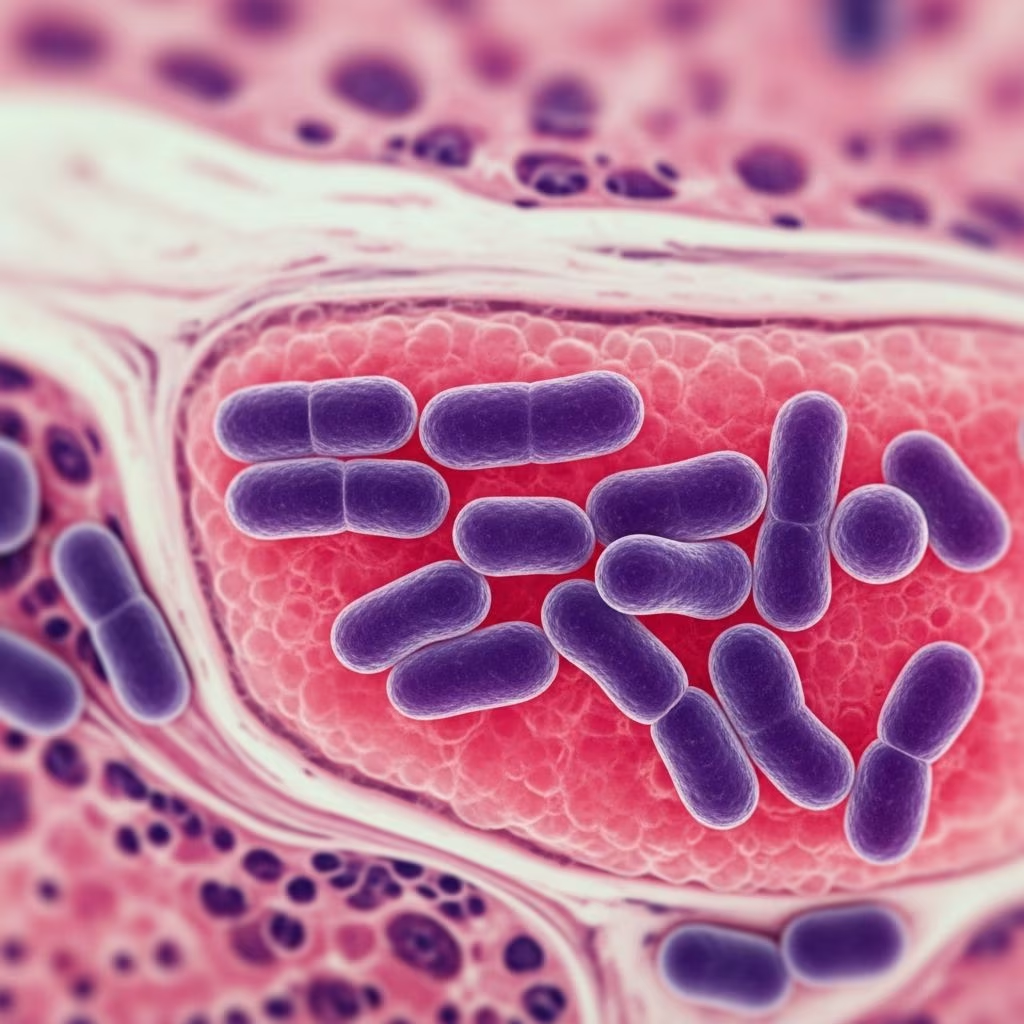
Contagious Equine Metritis (CEM) represents a significant challenge in equine reproductive health, primarily affecting breeding horses through sexual transmission. Caused by the bacterium Taylorella equigenitalis, this disease leads to short-term infertility in mares and establishes long-term carrier states in both sexes, complicating detection and control efforts.
The Nature and Impact of CEM on Equine Reproduction
CEM is classified as a venereal infection, meaning it spreads predominantly during natural mating or artificial insemination. First identified in the 1970s, it has persisted as a reportable disease in many countries due to its high transmissibility and potential to disrupt breeding operations. Stallions rarely exhibit clinical signs, serving as asymptomatic reservoirs on their external genitalia, while mares may experience mild endometritis resulting in temporary barrenness. The economic implications are profound, as affected herds require quarantine, testing, and treatment, delaying foal production and increasing veterinary costs.
In practical terms, a single infected stallion can transmit the pathogen to nearly every mare it breeds, underscoring the urgency of vigilance in stud farms and import scenarios. Unlike systemic illnesses, CEM confines itself to the urogenital tract, evading routine health checks and allowing silent proliferation.
Recognizing Clinical Signs in Affected Mares
Mares typically manifest symptoms 10 to 14 days post-exposure, though up to 40% may remain subclinical. The hallmark indicator is a mucopurulent vaginal discharge, often thick and milky, signaling uterine inflammation. This discharge persists for 2-3 weeks in acute cases but can be subtler in chronic infections.
- Primary symptom: Vulvar or vaginal discharge, observed in a minority of cases but highly indicative when present.
- Infertility: Failure to conceive or early embryonic loss due to endometrial disruption.
- Abortion: Rare, but possible in late gestation if infection persists.
- Shortened estrus cycles: Mares returning to heat prematurely, disrupting normal breeding timing.
Stallions, conversely, show no outward signs, harboring the bacteria in the prepuce, urethra, or penile surface for months or years. Foals from infected mares can also become carriers, perpetuating the cycle. Early recognition hinges on vigilant monitoring post-breeding, especially in high-risk environments like international imports.
Transmission Pathways and Risk Factors
The bacterium thrives in contaminated environments, spreading via multiple vectors beyond direct coitus. Key transmission routes include:
| Transmission Method | Description | Risk Level |
|---|---|---|
| Live cover breeding | Direct genital contact with infected stallion | Very High |
| Artificial insemination | Contaminated semen or equipment | High |
| Fomite contact | Shared tools, buckets, or hands during cleaning/handling | Moderate |
| Indirect via personnel | Unwashed hands or instruments between horses | Moderate |
High-risk scenarios encompass importing horses from endemic regions, communal stallion collections, or lax hygiene in breeding sheds. The organism’s fastidious nature—requiring microaerophilic conditions—limits environmental survival but amplifies direct contact efficiency. No vaccine exists, placing prevention squarely on biosecurity.
Diagnostic Approaches for Accurate Detection
Confirming CEM demands specialized testing due to the bacterium’s slow growth and carrier potential. Gold-standard methods involve:
- Bacterial culture: Swabs from urogenital sites (clitoral fossa in mares, urethra/prepuce in stallions) cultured over several days; multiple samples enhance yield.
- Complement fixation (CF) test: Serological assay detecting antibodies in mares, though not foolproof for carriers.
- PCR assays: Emerging molecular tools for rapid identification, supplementing culture.
Testing protocols span 2-4 weeks for mares and up to a month for stallions, often requiring quarantine. Interruptions from unrelated antibiotics can prolong this, emphasizing coordinated veterinary oversight. Positive results trigger immediate regulatory involvement as a foreign animal disease in the US.
Effective Treatment Protocols Under Quarantine
Treatment mandates strict quarantine supervised by state or federal veterinarians to curb spread. The regimen focuses on topical antimicrobials following thorough cleansing:
- Clean external genitalia with 2% chlorhexidine or equivalent disinfectant soap, rinsing completely.
- Apply antibiotic ointment (e.g., nitrofurazone, silver sulfadiazine) daily for 5 consecutive days.
- Retest post-treatment; repeat if necessary, though most respond to one course.
Mares may receive intrauterine infusions in some protocols. Fertility typically restores post-clearance, but carrier identification remains crucial to prevent recurrence. Personnel hygiene—gloves, dedicated tools—is non-negotiable during administration.
Prevention Strategies for Breeding Operations
Proactive measures form the cornerstone of CEM control:
- Pre-breeding cultures and CF tests for all horses, especially imports.
- Quarantine new arrivals for full testing cycles.
- Disinfect all breeding equipment between uses; avoid sharing.
- Maintain separate handling protocols for stallions and mares.
- Report suspicions promptly to authorities for traceback.
Regulatory frameworks, like USDA/APHIS guidelines, enforce these in outbreak scenarios, ensuring herd-level containment. Breeders should prioritize accredited CEM-free status for marketability.
Frequently Asked Questions (FAQs)
What is the most common symptom of CEM in mares?
The most frequent sign is mucopurulent vaginal discharge appearing 10-14 days after infection.
Do stallions show symptoms of CEM?
No, stallions are typically asymptomatic carriers, harboring bacteria on external genitalia.
How long does CEM treatment take?
Standard topical treatment lasts 5 days, followed by retesting; full clearance may extend quarantine.
Is there a vaccine for CEM?
No vaccine is available; prevention relies on testing and biosecurity.
Can CEM cause permanent infertility?
No, it causes short-term infertility; recovered horses regain normal fertility.
Long-Term Management and Global Perspectives
Globally, CEM persists in pockets despite eradication efforts, with the US maintaining low incidence through vigilant imports testing. Historical outbreaks, like those in the 1970s, informed current protocols, emphasizing carrier tracing. Breeders must integrate CEM screening into annual health plans, balancing costs against outbreak risks. Ongoing research into faster diagnostics promises enhanced control, but hygiene remains paramount. In endemic areas, annual stallion cultures prevent silent spread, safeguarding genetic lines and economic viability.
Equine health experts stress education: even minor lapses, like shared bucket handles, enable transmission. Collaborative reporting via bodies like AAEP accelerates responses, minimizing disruptions. For mare owners, post-foaling checks mitigate foal carrier risks, ensuring generational health.
References
- Contagious Equine Metritis: Symptoms and Treatment — PetMD. 2023. https://www.petmd.com/horse/conditions/reproductive/contagious-equine-metritis
- Contagious Equine Metritis – Resources & Guidance — USDA APHIS. 2024-02-01. https://www.aphis.usda.gov/livestock-poultry-disease/equine/contagious-equine-metritis
- Contagious Equine Metritis (CEM) — UC Davis School of Veterinary Medicine. 2023. https://ceh.vetmed.ucdavis.edu/health-topics/contagious-equine-metritis-cem
- Disease Du Jour: Contagious Equine Metritis (CEM) — EquiManagement. 2023. https://equimanagement.com/podcasts/disease-du-jour-podcast/disease-du-jour-contagious-equine-metritis-cem/
- AHFSS – AHB – Contagious Equine Metritis — California Department of Food and Agriculture. 2023. https://www.cdfa.ca.gov/ahfss/Animal_Health/Contagious_Equine_Metritis.html
- Contagious Equine Metritis — Merck Veterinary Manual. 2024. https://www.merckvetmanual.com/horse-owners/reproductive-disorders-of-horses/contagious-equine-metritis



