

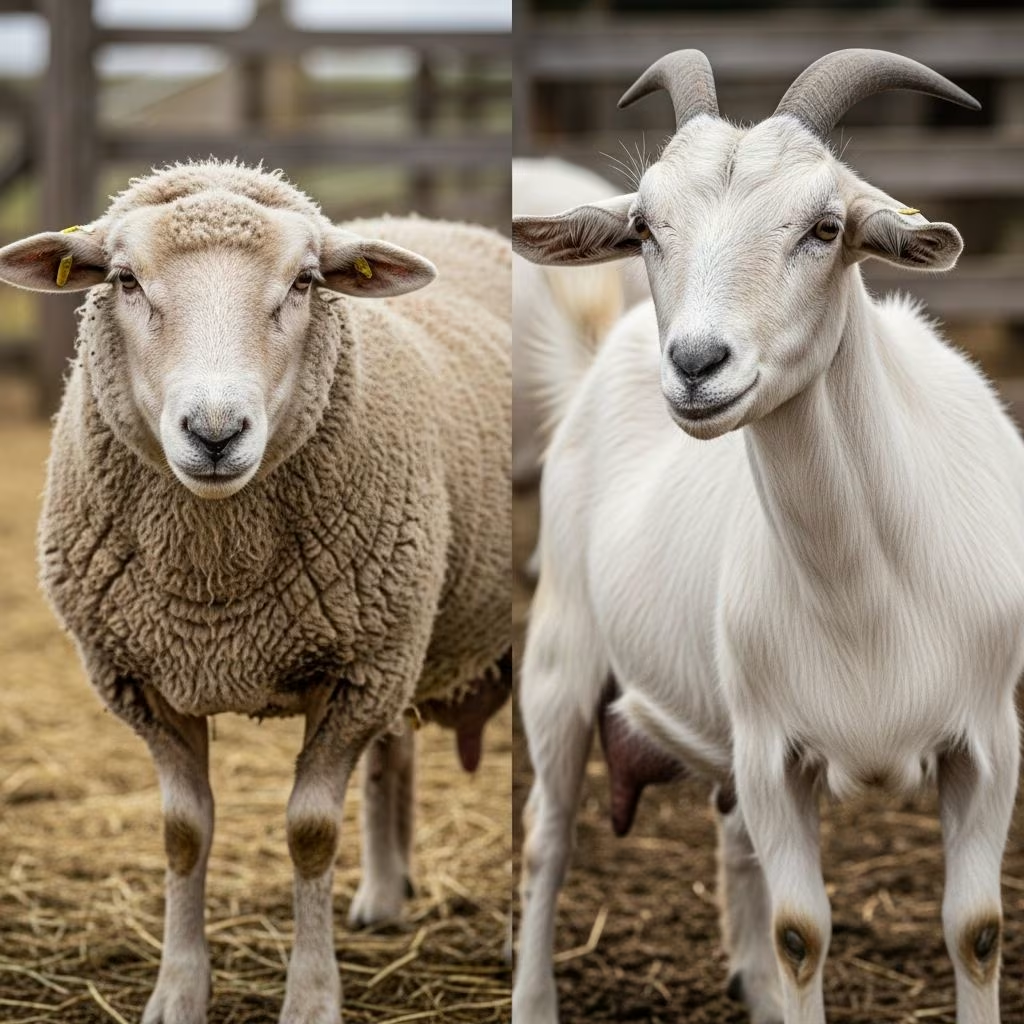
Contagious agalactia represents a significant health challenge for sheep and goat producers worldwide, primarily driven by Mycoplasma agalactiae and related species. This bacterial infection targets multiple systems, leading to reduced productivity and economic losses through diminished milk yield, lameness, and occasional mortality.
The Pathogens Behind the Disease
At the core of contagious agalactia is Mycoplasma agalactiae, a wall-less bacterium that thrives in the mucous membranes of small ruminants. In sheep, this species dominates, while goats face threats from additional mycoplasmas such as Mycoplasma mycoides subsp. capri, Mycoplasma capricolum subsp. capricolum, and Mycoplasma putrefaciens. These organisms exhibit genetic plasticity, enabling them to evade immune responses and persist in hosts, complicating eradication efforts.
Mycoplasmas lack a cell wall, making them resistant to certain antibiotics like beta-lactams, and their small genome allows rapid adaptation to host environments. Infected animals often become chronic carriers, shedding the bacteria asymptomatically via milk, nasal secretions, or ear canals, particularly in goats where auricular carriage is prevalent.
How the Infection Spreads in Herds
Transmission occurs through multiple routes, amplifying the disease’s contagious nature. Primary spread in young animals happens via suckling contaminated colostrum or milk from infected dams. In adult flocks, milking equipment serves as a key vector, transferring bacteria between teats during routine procedures.
Aerosol droplets from respiratory secretions, direct nose-to-nose contact, and contaminated environmental surfaces like feeders, water troughs, and bedding further facilitate dissemination. Venereal transmission is suspected in rams and bucks, with bacteria detected in semen. Introducing carrier animals from external sources, such as during transhumance or market sales, often sparks outbreaks, leading to high morbidity in naive herds.
- Oronasal route: Nasal and ocular discharges from sick animals.
- Mammary route: Milking parlors and handler contact.
- Vertical transmission: Colostrum and milk to offspring.
- Indirect: Fomites and shared housing.
Recognizing Clinical Manifestations
The disease presents variably, rarely affecting all systems in one animal. Incubation typically lasts 1-3 weeks, followed by acute or subacute phases. Systemic signs include fever (up to 106°F), lethargy, anorexia, and weight loss.
Mammary Gland Involvement
Mastitis is the hallmark, starting as interstitial inflammation with a hot, swollen udder. Milk production plummets suddenly, becoming watery, yellowish, clotted, or purulent, often blocking teats. Chronic cases lead to glandular atrophy, fibrosis, and permanent agalactia, with udder shrinkage and enlarged retromammary lymph nodes.
Joint and Locomotion Issues
Arthritis affects kids, lambs, ewes, and does, causing unilateral or bilateral lameness. Swollen, hot joints—especially carpal and tarsal—prompt animals to recumbency. Erosions, fibrin deposits, and ankylosis occur pathologically, impairing mobility in meat breeds.
Ocular and Respiratory Effects
Keratoconjunctivitis begins with serous discharge, progressing to corneal opacity, purulent exudates, ulceration, and blindness, sometimes exacerbated by co-infections like Moraxella ovis. Pneumonia, more common in kids, features respiratory distress.
Reproductive and Systemic Complications
Abortions stem from bacteremia, alongside orchitis in males. Septicemia can prove fatal in youngstock, though mortality is generally low. Recrudescence follows stress, underscoring carrier status.
| System Affected | Key Signs | Common in |
|---|---|---|
| Mammary | Swelling, agalactia, clotted milk | Adults |
| Joints | Lameness, swelling | All ages |
| Eyes | Discharge, keratitis | All ages |
| Respiratory | Pneumonia | Young |
| Reproductive | Abortion, orchitis | Breeding adults |
Pathological Changes in Affected Tissues
Grossly, mastitic udders appear atrophic with abscesses. Microscopically, fibrosis replaces acini, reducing secretory tissue. Joints show edema, fibrin synovitis, and cartilage erosion. Ocular lesions feature leukocyte infiltration and purulent infiltrates. Chronic infections may involve subtle changes in lungs, nerves, and other organs.
Differential diagnoses include staphylococcal/ streptococcal mastitis, lentivirus-induced arthritis, and chlamydial pinkeye. Laboratory confirmation is essential.
Diagnostic Approaches
Diagnosis relies on clinical suspicion plus lab tests. Culture from milk, joint fluid, conjunctival swabs, or ear cerumen isolates mycoplasmas, though fastidious growth requires special media. PCR detects DNA rapidly with high sensitivity. Serology via ELISA identifies antibodies, but carriers may test negative.
Histopathology reveals characteristic lesions, aiding confirmation. In outbreaks, testing milk bulk tanks screens herds efficiently.
Treatment Strategies and Limitations
Antimicrobials like tetracyclines, macrolides (tylosin, erythromycin), and fluoroquinolones target mycoplasmas, administered systemically or intramammary. Early intervention curbs acute cases, but chronic infections persist due to biofilms and intracellular hiding.
Treatment during lactation risks residues; cull severely affected animals. Supportive care includes anti-inflammatories for joints and eyes.
Prevention and Control Measures
Vaccines exist but show variable efficacy, unsuitable during outbreaks. Core strategies emphasize biosecurity:
- Quarantine new introductions; test ear swabs in goats.
- Disinfect milking equipment rigorously.
- Segregate kids from dams post-colostrum.
- Avoid overcrowding and stress.
- Slaughter test-and-remove positives in high-value herds.
In endemic areas, culling carriers and all-in-all-out systems help. Regulatory reporting is mandatory in regions like Scotland.
Economic and Welfare Implications
Contagious agalactia slashes milk yields by 50-100%, devalues meat animals via lameness, and incurs vet costs. Welfare suffers from pain, blindness, and mobility loss. Global enzootic status demands vigilant management.
Frequently Asked Questions (FAQs)
What causes contagious agalactia?
Primarily Mycoplasma agalactiae in sheep and goats, with other mycoplasmas in goats.
Is it fatal?
Rarely; most cases are subacute, but septicemia affects neonates.
How do I prevent spread in my herd?
Implement biosecurity, test carriers, and sanitize equipment.
Can vaccines fully protect?
Efficacy varies; use preventively, not in active outbreaks.
Is it notifiable?
Yes, in many countries—report suspicions immediately.
References
- Contagious Agalactia in Small Ruminants — Merck Veterinary Manual. 2023. https://www.merckvetmanual.com/reproductive-system/contagious-agalactia/contagious-agalactia-in-small-ruminants
- Contagious agalactia: characteristics of the disease — About Small Ruminants (Extension Service). 2022. https://aboutsmallruminants.com/contagious-agalactia-udder/
- Contagious agalactia of small ruminants — PubMed (Peer-reviewed). 1998-04-01. https://pubmed.ncbi.nlm.nih.gov/9567311/
- Contagious Agalactia — Sheep Extension (Alabama Cooperative Extension). 2018. https://www.aces.edu/wp-content/uploads/2018/10/UNP-2129-Contagious-Agalactia-in-Sheep-and-Goats.pdf
- Contagious agalactia: how to spot and report — Scottish Government (.gov). 2023. https://www.gov.scot/publications/contagious-agalactia/
- Contagious Agalactia In Sheep And Goats: Current Perspectives — PubMed (Peer-reviewed). 2020-01-03. https://pubmed.ncbi.nlm.nih.gov/31921613/
- Contagious agalactia — World Organisation for Animal Health (WOAH). 2024. https://www.woah.org/en/disease/contagious-agalactia/



