
Conjunctival Issues In Horses: A Complete Guide For Owners
Essential guide for horse owners on recognizing, treating, and preventing conjunctival disorders to safeguard equine vision.
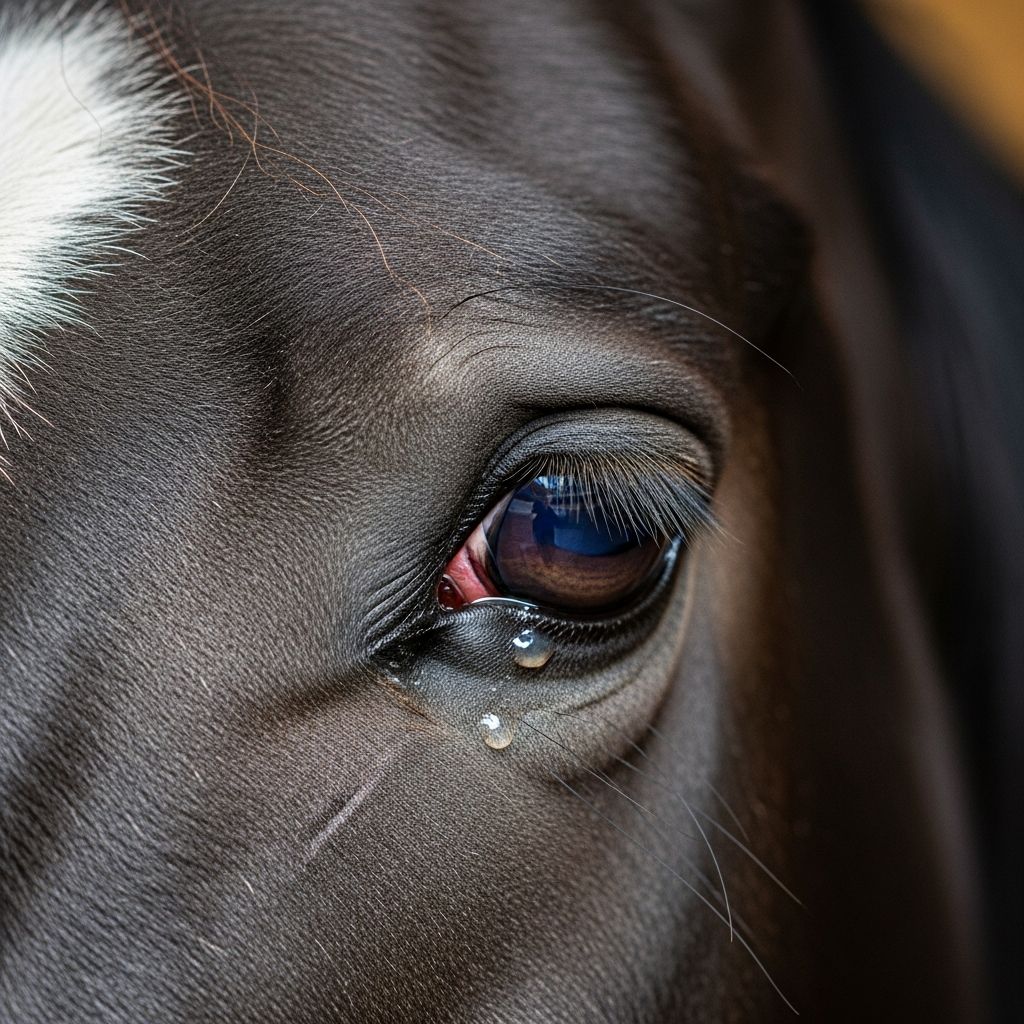
The conjunctiva serves as a vital protective layer in the equine eye, lining the eyelids and covering the sclera. Understanding its role and common disorders helps horse owners maintain their animals’ visual health and overall well-being. This article delves into anatomy, prevalent conditions, diagnostic approaches, management strategies, and preventive measures.
Understanding the Equine Conjunctiva
The conjunctiva is a thin, transparent mucous membrane essential for eye protection and lubrication. It comprises three main parts: the palpebral conjunctiva lining the inner eyelids, the bulbar conjunctiva overlaying the eyeball’s white surface, and the nictitans conjunctiva on the third eyelid. Composed of stratified squamous epithelium with goblet cells, it produces mucus for the tear film, preventing dryness and aiding eyelid movement while acting as a microbial barrier.
This structure is richly vascularized, especially the bulbar portion, with visible branching vessels that shift with eye movement. Deeper vessels appear straighter and darker. Sensory innervation comes from the trigeminal nerve, ensuring rapid responses to irritation. The conjunctiva’s mobility, except at the limbus and lid margins, facilitates tear distribution and debris removal.
- Palpebral conjunctiva: Covers eyelid interiors, continuous with skin.
- Bulbar conjunctiva: Protects sclera up to the cornea’s edge.
- Nictitans conjunctiva: Shields the third eyelid, crucial for lower eye coverage.
Goblet cells secrete mucin, binding tears to the ocular surface, while underlying lymphoid tissue supports immune defense. Disruptions here can lead to discomfort, vision impairment, or secondary infections.
Common Signs of Conjunctival Problems
Horses with conjunctival issues often exhibit noticeable symptoms. Ocular discharge, ranging from clear to purulent, is frequent, alongside eyelid swelling and excessive blinking or squinting (blepharospasm). Conjunctival hyperemia—reddening due to vessel dilation—appears prominent, particularly in the bulbar region.
| Symptom | Description | Associated Conditions |
|---|---|---|
| Redness | Bright red, branching vessels | Conjunctivitis, trauma |
| Discharge | Mucoid, purulent, or watery | Infection, foreign bodies |
| Swelling | Eyelid edema, chemosis | Allergic reactions, inflammation |
| Squinting | Painful closure | Ulceration, severe irritation |
| Corneal haze | Secondary opacity | Chronic cases |
Chemosis, conjunctival thickening and protrusion, signals significant inflammation. Pigs or follicles—small raised lymphoid aggregates—indicate chronic irritation. Horses may rub eyes against surfaces, worsening damage.
Primary Causes of Conjunctival Disorders
Infectious Agents
Bacterial infections, often from Streptococcus or Staphylococcus, cause acute conjunctivitis with thick discharge. Viral culprits like equine herpesvirus lead to milder, self-limiting cases. Fungal issues are rarer, typically in dusty environments.
Trauma and Foreign Bodies
Plant awns, dust, or branch scratches embed in the conjunctiva, sparking inflammation. Eyelid lacerations expose the area, inviting secondary infections. Hay or bedding particles commonly provoke foreign body reactions.
Environmental and Allergic Triggers
UV exposure, wind, or pollen induces photokeratitis or allergic conjunctivitis. Smoke and chemicals exacerbate issues in stabled horses. Seasonal flares correlate with high allergen counts.
Neoplastic Growths
Squamous cell carcinoma (SCC) frequently affects the conjunctiva, especially in lightly pigmented horses. These tumors appear as proliferative masses, potentially invading bone and causing facial swelling.
Diagnostic Approaches for Equine Conjunctiva
Veterinary evaluation starts with a thorough history and ocular exam using focal illumination. Fluorescein staining detects corneal involvement. Schirmer tear tests measure aqueous production from lacrimal and nictitans glands.
- Tonometry: Checks intraocular pressure to rule out uveitis.
- Cytology: Scrapings identify infectious agents.
- Biopsy: Confirms neoplasia.
- Culture: Guides antibiotic selection.
Ultrasound aids deep tissue assessment, while endoscopy views fornices. Differentiating primary conjunctivitis from uveitis or keratitis is critical, as treatments vary.
Treatment Strategies
Management targets underlying causes while alleviating symptoms. Topical antibiotics like triple sulfa or fluoroquinolones combat bacteria. Anti-inflammatories such as corticosteroids (with ulcer caution) or NSAIDs reduce swelling.
For foreign bodies, flushing with saline removes debris; subconjunctival injections deliver rapid drugs. Surgical debridement suits masses or lacerations. SCC may require excision, cryotherapy, or radiation; prognosis improves with early intervention.
| Condition | First-Line Treatment | Duration |
|---|---|---|
| Bacterial conjunctivitis | Topical antibiotics | 7-14 days |
| Foreign body | Irrigation, removal | Immediate |
| Allergic | Antihistamines, steroids | Until resolved |
| SCC | Surgical excision | Follow-up monitoring |
Supportive care includes fly masks, stall rest, and cleaning. Systemic antibiotics aid severe cases. Monitor for complications like corneal ulcers.
Prevention Tips for Healthy Equine Eyes
Proactive measures minimize risks. Provide shaded turnout to curb UV damage, especially for Appaloosas prone to SCC. Regular grooming removes debris; clean environments reduce irritants.
- Apply UV-protective fly masks daily.
- Flush eyes weekly with sterile saline.
- Vaccinate against herpesvirus.
- Inspect eyes during grooming for early signs.
- Use hypoallergenic bedding.
Annual veterinary ophthalmology checks catch subclinical issues. Nutrition with antioxidants supports ocular immunity.
Advanced Topics: Systemic Links and Chronic Cases
Conjunctivitis can signal systemic diseases like tetanus or colic-related endotoxemia. Recurrent episodes may tie to equine recurrent uveitis (ERU), demanding holistic management.
Chronic fibrosis scars the conjunctiva, impairing function. Pigmentary keratitis develops from prolonged exposure. Immunosuppressants like cyclosporine aid refractory allergies.
Frequently Asked Questions (FAQs)
What does red conjunctiva in my horse mean?
Redness typically indicates inflammation from infection, allergy, or trauma. Consult a vet promptly to prevent escalation.
Can conjunctivitis resolve without treatment?
Mild cases may self-limit, but most benefit from intervention to avoid corneal damage or vision loss.
Is squamous cell carcinoma preventable?
Limit UV exposure with masks and shade; early detection via exams improves outcomes.
How do I clean my horse’s eyes safely?
Use saline or vet-approved solutions; avoid tap water or human products.
When is emergency care needed for eye issues?
Seek immediate help for cloudiness, deep ulcers, prolapse, or severe pain.
References
- Equine Eye – Horse Anatomy — WikiVet English. 2023. https://en.wikivet.net/Equine_Eye_-_Horse_Anatomy
- Conjunctiva – introduction — Veterian Key. 2022-01-15. https://veteriankey.com/conjunctiva-introduction/
- Eye Structure and Function in Horses — Merck Veterinary Manual. 2025-06-20. https://www.merckvetmanual.com/horse-owners/eye-disorders-of-horses/eye-structure-and-function-in-horses
- Common Eye Conditions in the Horse — Nouvelle Research. 2024-03-10. https://nouvelleresearch.com/index.php/articles/235-common-eye-conditions-in-the-horse
- Basic Horse Anatomy: The Eye — The Open Sanctuary Project. 2023-11-05. https://opensanctuary.org/horse-anatomy-the-eye/
- The Equine Eye — Iron Gate Equine. 2024. https://www.irongateequine.com/education/the-equine-eye
Similar Articles








Read full bio of medha deb


