

Introduction
The African Grey parrot is one of the most popular and intelligent pet birds in the world. Within this species, there are two main subspecies: the Congo African Grey and the Timneh African Grey. While they share many similarities, there are distinct differences in size, color, temperament, and care requirements that potential owners should consider. This article will provide a comprehensive comparison of Congo and Timneh African Greys, helping you decide which might be the best fit for your home and lifestyle.
Species Overview
The African Grey parrot (Psittacus erithacus) is native to the equatorial region of Africa. Until recently, the Congo and Timneh African Greys were considered subspecies of the same species. However, in 2012, they were officially designated as two separate species: Psittacus erithacus (Congo African Grey) and Psittacus timneh (Timneh African Grey). Both species are known for their intelligence, strong personalities, and ability to mimic human speech.
Size and Appearance
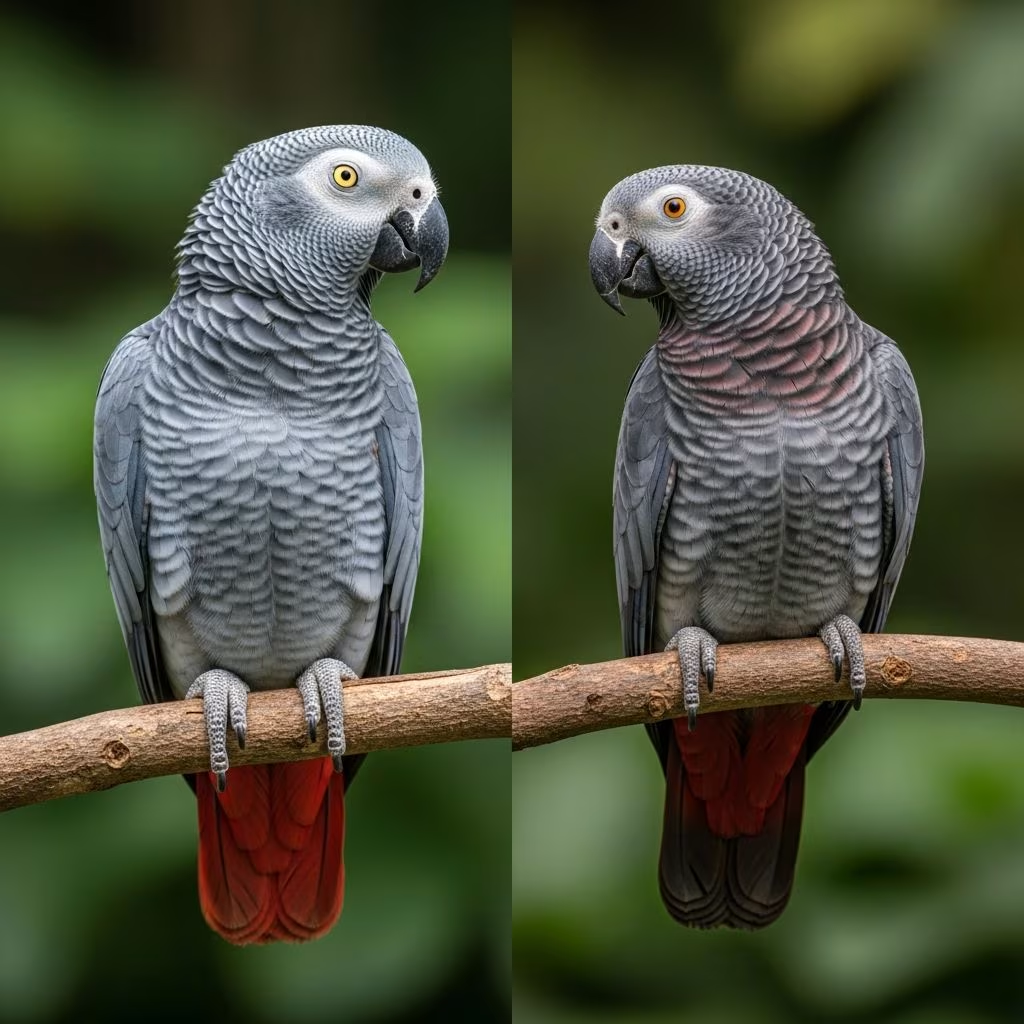
One of the most noticeable differences between Congo and Timneh African Greys is their size and appearance.
Congo African Grey
- Size: The Congo African Grey is the larger of the two, typically measuring 12 to 14 inches from beak to tail and weighing between 400 to 650 grams.
- Color: The Congo has lighter gray feathers, with a bright red tail. The feathers on the head are darker and gradually lighten toward the chest and legs. The wings are darker, and the primary coverts are almost black. The eye area is a bright white patch of skin, which can turn pink when the bird is excited or stressed (known as “blushing”). The beak and toenails are solid black.
Timneh African Grey
- Size: The Timneh African Grey is smaller, usually measuring 9 to 11 inches from beak to tail and weighing between 250 to 375 grams.
- Color: The Timneh has a deeper shade of gray, with a distinct “V” shape of dark feathers over a lighter shade on the abdomen. The under tail-coverts are tinged with dark red or maroon, and the tail feathers are dark red to brown or maroon. The beak is a pink-horn color with blackish sides on the maxilla, while the mandible is black.
Temperament and Personality
Both Congo and Timneh African Greys are known for their intelligence and strong personalities, but there are some differences in temperament.
Congo African Grey
- Temperament: Congos are generally more outgoing and can be more demanding of attention. They are known for their strong personalities and can be more prone to mood swings if not properly socialized.
- Maturity: Congos have a slower maturation rate, which means they may take longer to develop stable personalities and extensive vocabularies.
Timneh African Grey
- Temperament: Timnehs are often described as having a more stable and even-tempered personality. They tend to be less demanding and more adaptable to changes in their environment.
- Maturity: Timnehs have a faster maturation rate, which means they often start speaking sooner and develop stable personalities at a younger age.
Talking Ability
Both Congo and Timneh African Greys are renowned for their ability to mimic human speech, but there are some differences in their talking abilities.
Congo African Grey
- Vocabulary: Congos can develop extensive vocabularies and are known for their clear and articulate speech.
- Development: They may take longer to start speaking, but once they do, they can learn a wide range of words and phrases.
Timneh African Grey
- Vocabulary: Timnehs also have excellent talking abilities and can learn a wide range of words and phrases.
- Development: They often start speaking sooner than Congos and can develop stable vocabularies at a younger age.
Care Requirements
Both Congo and Timneh African Greys require a lot of interaction, patience, and care. They are social birds that thrive on attention and mental stimulation.
Diet
- Both Species: African Greys should be fed a balanced diet that includes a variety of fruits, vegetables, grains, and high-quality pellets. Fresh water should always be available.
Housing
- Both Species: African Greys need a spacious cage with plenty of room to move around and play. The cage should be placed in a quiet area of the home, away from drafts and direct sunlight.
Enrichment
- Both Species: African Greys are intelligent birds that require mental stimulation. Provide a variety of toys, puzzles, and activities to keep them engaged and prevent boredom.
Socialization
- Both Species: African Greys are social birds that need regular interaction with their owners. Spend time each day talking, playing, and training your bird to build a strong bond.
Lifespan
Both Congo and Timneh African Greys have long lifespans, often living for 40 to 60 years in captivity. With proper care and attention, they can be lifelong companions.
FAQs
Q: Are Congo and Timneh African Greys the same species?
A: No, they are now considered two separate species: Psittacus erithacus (Congo African Grey) and Psittacus timneh (Timneh African Grey).
Q: Which African Grey is better for beginners?
A: Timneh African Greys are often considered better for beginners due to their more stable and even-tempered personality.
Q: How much do African Greys cost?
A: The cost of African Greys can vary widely depending on the breeder, location, and individual bird. Expect to pay anywhere from $1,000 to $3,000 or more for a well-bred African Grey.
Q: Do African Greys need a lot of attention?
A: Yes, African Greys are social birds that require a lot of interaction and mental stimulation. They thrive on attention and can become bored or depressed if left alone for long periods.
Q: Can African Greys be kept with other birds?
A: African Greys can be kept with other birds, but they are generally best kept as single pets due to their strong personalities and need for attention.
Conclusion
Both Congo and Timneh African Greys are intelligent, social, and long-lived birds that make wonderful companions. While they share many similarities, there are distinct differences in size, color, temperament, and care requirements that potential owners should consider. By understanding these differences, you can choose the African Grey that best fits your home and lifestyle.
References
- The African Grey Parrot: Data and Deliberations — Pamela Clark, CPBC. 2019-09-26. https://pamelaclarkonline.com/2019/09/26/the-african-grey-parrot-data-and-deliberations/
- Africa’s Parrots — Africa Geographic. https://africageographic.com/stories/africas-parrots/
- Grey parrot — Wikipedia. https://en.wikipedia.org/wiki/Grey_parrot



