

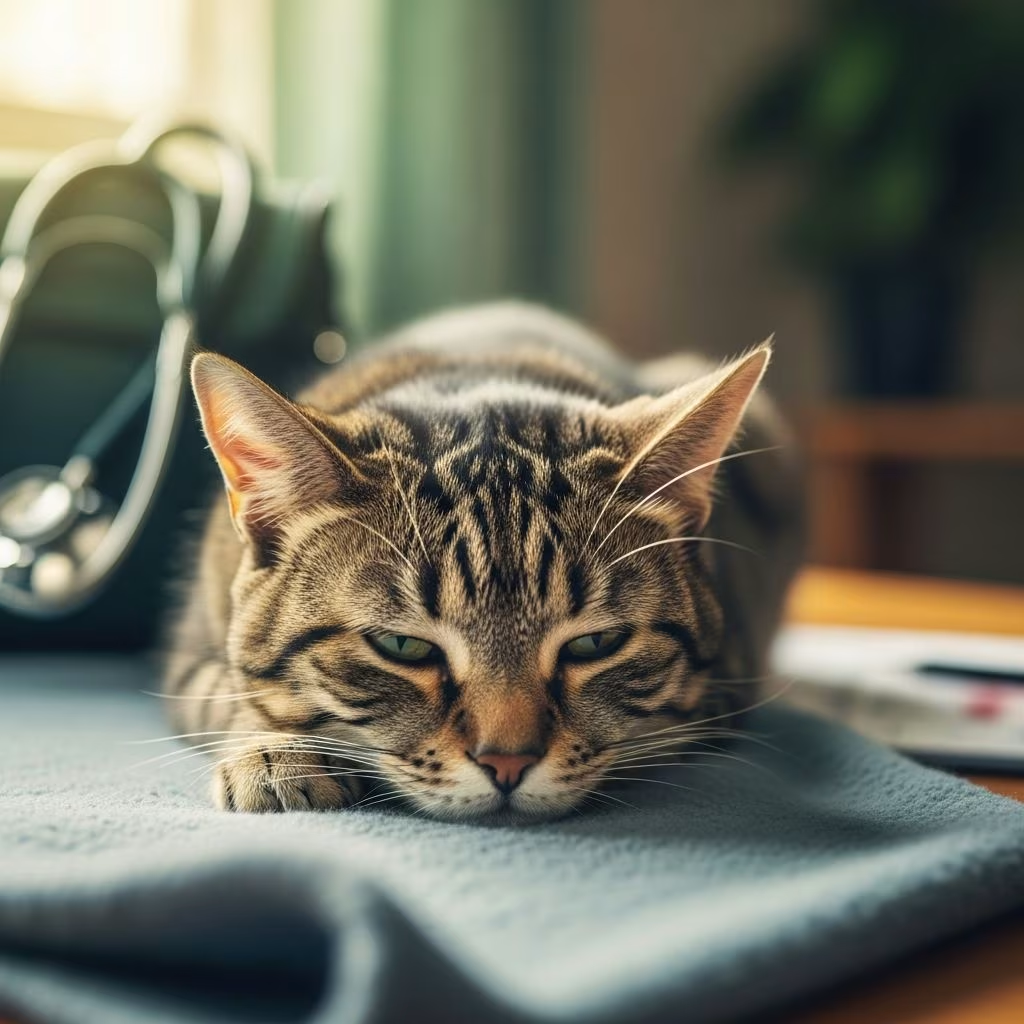
Understanding Congestive Heart Failure in Cats
Congestive heart failure (CHF) is a serious cardiovascular condition that affects many cats, particularly as they age. This condition develops when the heart cannot pump blood efficiently throughout the body, leading to fluid accumulation in the lungs and other tissues. Understanding this disease is crucial for cat owners, as early detection and proper management can significantly improve a cat’s quality of life and extend their lifespan.
The heart consists of four chambers and functions as a pump to circulate blood throughout the body. When disease or dysfunction occurs, the heart’s ability to contract and relax properly becomes compromised. This inefficiency causes blood to back up into the lungs and other organs, leading to fluid accumulation—the hallmark of congestive heart failure in felines.
Causes and Risk Factors
Several underlying heart conditions can lead to the development of congestive heart failure in cats. The most common cause is hypertrophic cardiomyopathy (HCM), a condition characterized by abnormal thickening of the heart muscle walls. This thickening reduces the heart’s ability to fill with blood and pump efficiently.
Other potential causes include:
- Valvular disease, where heart valves deteriorate and fail to close properly
- Congenital heart defects present from birth
- Thyroid disease, which can put additional stress on the heart
- High blood pressure (hypertension)
- Arrhythmias or irregular heartbeats
- Cardiomyopathy related to nutritional deficiencies
Senior cats face higher risks, with CHF becoming increasingly common after age 10. However, the condition can develop in cats of any age if underlying heart disease exists.
Recognizing Symptoms and Warning Signs
Recognizing the early signs of congestive heart failure is essential for prompt treatment. Symptoms may develop gradually or appear suddenly, depending on the severity and progression of the disease.
Early Symptoms
In its early stages, CHF may not produce obvious symptoms, making regular veterinary checkups particularly important for early detection. However, cat owners should watch for:
- Persistent coughing or wheezing without an apparent cause
- Shortness of breath or rapid breathing, especially at rest
- Decreased exercise tolerance and reluctance to play
- Lethargy and unusual inactivity
- Loss of appetite
Advanced Symptoms
As the condition progresses, more severe symptoms emerge:
- Difficulty breathing or labored respiration
- Weakness in hind legs or temporary paralysis
- Swollen abdomen due to fluid accumulation
- Vomiting or nausea
- Rapid or irregular heartbeat
- Fainting or loss of consciousness
- Restlessness and anxiety
- Sleeping difficulties
Emergency Symptoms
Cats experiencing loss of consciousness or collapse require immediate emergency care. Additionally, any cat showing severe difficulty breathing should be taken to an emergency veterinary clinic without delay.
Diagnosis of Congestive Heart Failure
A comprehensive diagnostic approach helps veterinarians confirm CHF and assess its severity. The diagnostic process typically includes:
- Physical examination and auscultation (listening to the heart)
- Blood pressure monitoring to detect hypertension
- Blood tests and laboratory work
- Chest X-rays to visualize fluid accumulation in the lungs
- Echocardiograms (ultrasound of the heart) to evaluate cardiac structure and function
The echocardiogram is particularly valuable as it allows veterinarians to measure the thickness of the heart walls, assess chamber size, and evaluate how well the heart is pumping. This imaging helps determine whether the cat has left-sided or right-sided heart disease, which influences treatment decisions.
Treatment Options for Congestive Heart Failure
Treatment for feline CHF focuses on managing symptoms, improving quality of life, and extending survival time. There is currently no cure for this condition, but modern medications have significantly improved outcomes. Treatment typically involves two main approaches: emergency stabilization and long-term maintenance therapy.
Emergency Treatment
When a cat is in acute distress from congestive heart failure, immediate intervention becomes necessary:
Hospitalization and Oxygen Therapy: Severely affected cats require hospitalization and oxygen therapy to help them breathe adequately. Oxygen is administered through various methods depending on the cat’s condition and tolerance level.
Sedation: If your cat is distressed, your veterinarian may administer sedation, as anxiety and stress can exacerbate breathing difficulties and worsen the condition.
Fluid Removal: For cats with left-sided heart disease, fluid accumulation in the lungs (pulmonary edema) may be addressed. In cats with right-sided heart disease, fluid around the lungs (pleural effusion) or in the abdomen may be drained using procedures called thoracocentesis or abdominocentesis.
Maintenance Therapy and Medications
Once your cat is stabilized, a combination of medications helps manage the condition long-term.
| Medication Class | Purpose | Examples |
|---|---|---|
| Diuretics | Remove excess fluid from lungs and body | Furosemide, Spironolactone |
| ACE Inhibitors | Lower blood pressure and reduce heart workload | Benazepril, Enalapril |
| Inotropic Agents | Improve heart muscle contraction | Pimobendan (Vetmedin®) |
| Beta-Blockers | Control heart rate and rhythm | Atenolol, Metoprolol |
| Calcium Channel Blockers | Regulate heart rate and rhythm | Diltiazem |
| Anticoagulants | Prevent blood clots in the heart | Clopidogrel (Plavix®) |
| Vasodilators | Relax blood vessels and improve blood flow | Hydralazine, Nitrates |
Medication Administration
Medications for feline CHF come in various forms to accommodate different cats and situations.
- Pill form for cats that readily accept tablets
- Liquid formulations for easier administration
- Transdermal gels applied to the ears for cats difficult to pill
Medication choices and dosages are tailored specifically for each cat’s needs and may be adjusted as the condition progresses. Regular monitoring helps veterinarians optimize the treatment plan.
Ongoing Monitoring
Managing congestive heart failure requires consistent monitoring:
- Periodic chest X-rays to assess fluid levels
- Echocardiograms to monitor cardiac function
- Blood pressure monitoring
- Resting breathing rate assessment as an indicator of medication effectiveness
- Regular veterinary checkups to adjust treatment as needed
An increased resting breathing rate may indicate worsening condition and require treatment reassessment.
Home Care and Lifestyle Management
While medications are central to CHF management, home care and lifestyle modifications also play important roles in improving outcomes.
Diet Considerations: A low-sodium diet can help reduce fluid retention. Your veterinarian may recommend specific therapeutic diets formulated for cats with heart disease.
Activity Level: While moderate activity is beneficial, cats with CHF should avoid excessive exertion. High altitudes may exacerbate symptoms and should be avoided when possible.
Stress Reduction: Minimize environmental stressors, as stress can worsen symptoms. Provide a calm, comfortable resting area for your cat.
Medication Compliance: Administering medications as prescribed is crucial. Some cats require medications multiple times daily, which requires commitment from pet owners.
Prognosis and Long-Term Outlook
The prognosis for cats with congestive heart failure varies based on several factors including the severity of the disease, underlying causes, treatment response, and owner commitment to management. Medication advances have vastly improved the overall prognosis for this condition.
With proper treatment and management, many cats with CHF can live for months to years beyond their diagnosis. Early detection and prompt treatment initiation significantly improve survival times. Regular monitoring and medication adjustments help maintain quality of life as the condition progresses.
Special Considerations
Anesthetic Risk
Cats with congestive heart failure are at greater risk of complications or death when under anesthesia. If surgery is necessary, inform your veterinarian about the CHF diagnosis so appropriate precautions can be taken.
Aortic Thromboembolism
Some cats with CHF are at risk for aortic thromboembolism (ATE), where blood clots form in the heart and lodge in blood vessels, causing sudden hind leg paralysis. This is extremely painful and represents a serious complication requiring immediate emergency care and possible anticoagulant therapy.
End-Stage Disease
Unfortunately, congestive heart failure is a progressive condition. As it advances, end-stage symptoms may develop including severe respiratory distress, complete loss of appetite, confusion, and inactivity. At this point, quality-of-life considerations become paramount, and euthanasia may become a compassionate option to prevent suffering.
Frequently Asked Questions About Feline Congestive Heart Failure
Q: What is the difference between left-sided and right-sided congestive heart failure in cats?
A: Left-sided CHF occurs when the left ventricle fails to pump blood effectively, causing fluid to accumulate in the lungs (pulmonary edema), leading to breathing difficulties and coughing. Right-sided CHF involves the right ventricle, causing fluid to accumulate around the lungs (pleural effusion) and in the abdomen (ascites).
Q: Can congestive heart failure in cats be cured?
A: No, there is currently no cure for congestive heart failure in cats. However, medications can help manage symptoms, improve quality of life, and extend survival time significantly.
Q: How often should my cat with CHF see a veterinarian?
A: Regular veterinary checkups are crucial, typically recommended every 2-4 weeks initially after diagnosis, then adjusted based on the cat’s response to treatment. Cats with advanced disease may require more frequent monitoring.
Q: What is the typical survival time for cats diagnosed with congestive heart failure?
A: With appropriate treatment and management, many cats survive for months to years after diagnosis. Early detection and prompt treatment initiation significantly improve survival times compared to untreated cases.
Q: Can I give my cat CHF medications at home?
A: Yes, most maintenance medications for CHF are given at home by pet owners. However, some cats require multiple doses daily, which can be challenging. Discuss medication administration options with your veterinarian, as various forms (pills, liquids, transdermal gels) are available.
Q: Are certain cat breeds more prone to congestive heart failure?
A: While any cat can develop CHF, certain breeds like Maine Coons, Bengals, and Ragdolls have higher incidences of hypertrophic cardiomyopathy, the most common cause of CHF in cats. However, domestic shorthairs are also frequently affected.
Q: What should I do if my cat suddenly has severe difficulty breathing?
A: This is a medical emergency. Take your cat to an emergency veterinary clinic immediately. Do not delay treatment, as acute respiratory distress can be life-threatening and requires immediate oxygen therapy and professional intervention.
Q: Can treating underlying conditions help manage my cat’s congestive heart failure?
A: Yes, if your cat has congestive heart failure secondary to other conditions like hyperthyroidism or high blood pressure, treating these underlying conditions may help improve CHF symptoms and outcomes.
References
- Congestive Heart Failure in Cats: Signs, Symptoms, & Prognosis — Barton Heights. 2023-10-30. https://www.bartonheights.com/site/blog/2023/10/30/congestive-heart-failure-cats
- Congestive Heart Failure in Cats — VCA Animal Hospitals. https://vcahospitals.com/know-your-pet/congestive-heart-failure-in-cats
- Congestive Heart Failure In Cats — Paws at Peace. https://pawsatpeace.com/congestive-heart-failure-cats/
- Congestive Heart Failure in Cats – Causes, Treatment and Prevention — Vetster. https://vetster.com/en/conditions/cat/congestive-heart-failure
- Congestive Heart Failure in Cats — South Seattle Veterinary Hospital. https://www.southseattlevet.com/congestive-heart-failure-in-cats
- Heart Failure in Cats — PetMD. https://www.petmd.com/cat/conditions/cardiovascular/heart-failure-cats



