

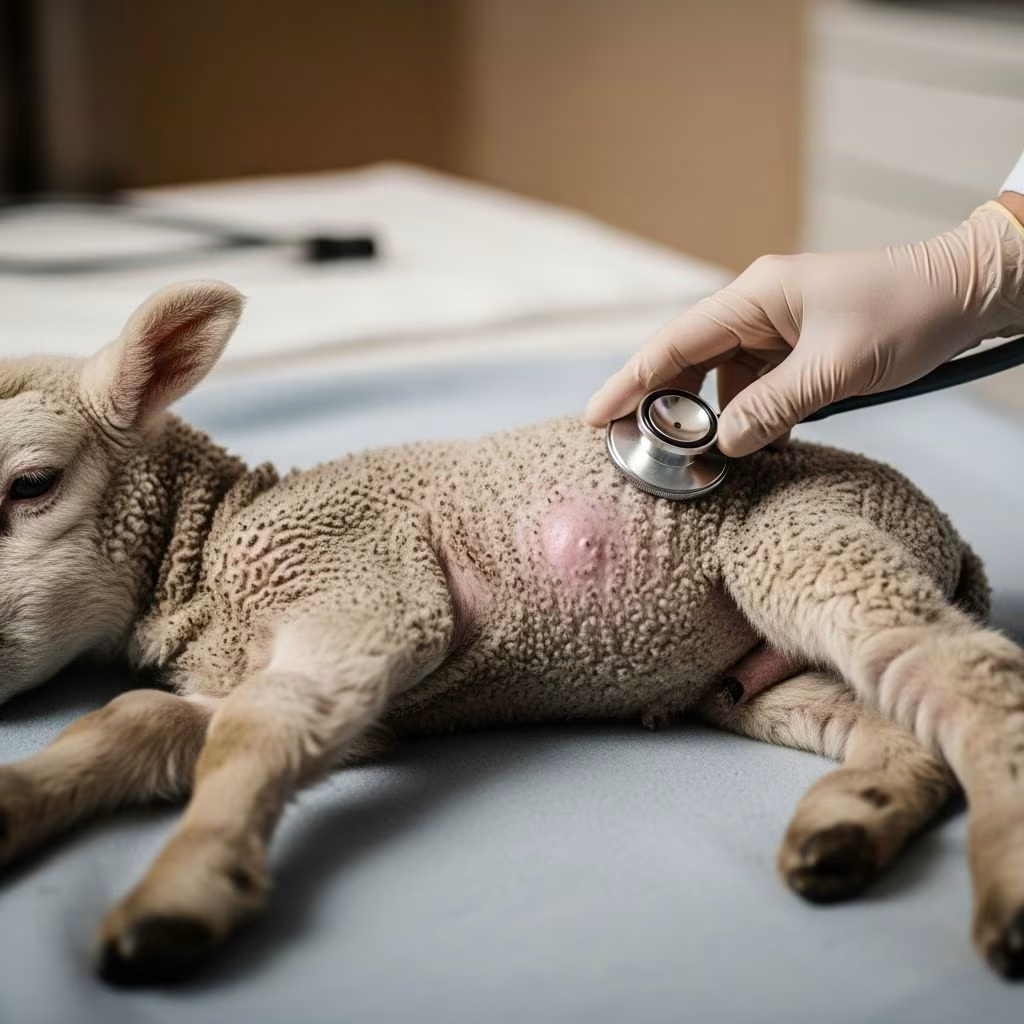
Congenital anomalies of the small and large intestines represent a diverse group of structural birth defects that can significantly impact the digestive health of various animal species, from companion animals like dogs and cats to livestock such as calves and foals. These conditions, often present at birth, arise from disruptions during embryonic development and may manifest as complete blockages, narrowings, or absences of intestinal segments. While some cases are detected neonatally through severe symptoms, others remain subclinical for years, complicating diagnosis and management.
Understanding the Developmental Origins
The gastrointestinal tract forms early in embryonic life through a complex process of folding, elongation, and vascularization. Anomalies occur when these processes falter, leading to malformations like atresia—where intestinal segments fail to connect—or stenosis, characterized by luminal narrowing. In ruminants and equines, jejunal and colonic atresias are more prevalent, whereas felines and canines often exhibit colonic variations. Genetic predispositions play a role in certain breeds, though environmental factors during gestation, such as maternal nutrition or toxins, may contribute.
Prevalent Types Across Species
Intestinal atresia dominates reports, classified into types based on morphology: type 1 involves a membranous diaphragm; type 2 features a fibrous cord connecting blind ends; and type 3 presents disjointed segments with possible mesentery defects. Stenosis, less common, mimics partial obstruction. In large animals, ileal and colonic forms prevail, while small intestines are affected in neonates of multiple species.
- Jejunal Atresia: Frequently documented in calves, leading to fluid distention proximal to the blockage.
- Colonic Agenesis: Rare partial absence, especially in cats, often linked to chronic issues.
- Ileal Stenosis: Seen in kittens and pups, causing intermittent distress.
Clinical Manifestations and Breed Susceptibilities
Symptoms vary by lesion location and severity. Neonates typically present with abdominal distension, vomiting (or regurgitation in non-ruminants), and failure to pass meconium. In older animals, chronic diarrhea, weight loss, and tenesmus emerge, as observed in cases of partial colonic agenesis where long asymptomatic phases precede overt signs.
Certain breeds show heightened risks. Brachycephalic dogs face pyloric issues extending to intestines, while Boxers suffer granulomatous colitis with congenital undertones. Calves from dairy herds report higher atresia incidences, suggesting heritable factors.
| Species | Common Anomaly | Breeds/Lines Affected | Typical Onset |
|---|---|---|---|
| Dogs | Intestinal duplication, atresia | Boxers, Shar-Peis | Neonatal to 4 years |
| Cats | Colonic agenesis, stenosis | Domestic shorthairs | Variable, often adult |
| Calves | Jejunal/Colonic atresia | Dairy breeds | Birth |
| Foals | Colonic atresia | Thoroughbreds | Neonatal |
Diagnostic Approaches: From Imaging to Endoscopy
Diagnosis hinges on a combination of history, imaging, and invasive confirmation. Abdominal ultrasound excels in detecting shortened colons or dilated loops, identifying agenesis in most feline cases. Radiography with contrast reveals filling defects or abrupt terminations, crucial for atresia typing.
Endoscopy provides definitive visualization, measuring segment lengths against norms and spotting complications like stenosis, reported in cases with persistent symptoms. Lymphadenopathy or concurrent inflammations often accompany findings, necessitating biopsies.
- Ultrasound Key Findings: Short colon, ileocolic anomalies, wall thickening.
- Endoscopic Insights: Gaping junctions, absent cecum, stenotic rings.
Complications and Secondary Conditions
Beyond primary defects, complications arise from stasis and inflammation. Colonic stenosis frequently develops in agenesis cases, possibly from fibrosis following chronic irritation. In ruminants, abomasal involvement worsens prognosis. Protein-losing enteropathies like lymphangiectasia compound issues in predisposed breeds.
Therapeutic Interventions and Prognosis
Surgical resection and anastomosis form the cornerstone for viable cases, with success depending on lesion site and animal age. Neonatal interventions carry higher risks due to sepsis and short gut syndrome. Medical management suits mild stenoses, using prokinetics and anti-inflammatories. In chronic diarrhea from agenesis, dietary modulation aids.
Prognosis ranges from guarded in extensive atresias to fair in partial defects post-surgery. Breeding affected lines should be discouraged to curb heritability.
Preventive Strategies and Genetic Counseling
Avoiding inbreeding and monitoring maternal health during pregnancy mitigate risks. Genetic testing, where available, guides breeding programs. Early screening in high-risk herds enhances outcomes.
Frequently Asked Questions (FAQs)
What causes intestinal atresia in animals?
These defects stem from vascular accidents or failed recanalization during embryogenesis, with genetic and environmental influences.
Can congenital intestinal defects be treated non-surgically?
Mild stenoses may respond to diet and medications, but atresias typically require surgery.
Are these anomalies hereditary?
Many show breed predispositions, indicating polygenic inheritance; pedigree analysis is recommended.
How is colonic agenesis diagnosed in cats?
Ultrasound often suspects it, confirmed by endoscopy measuring colon length.
What is the outlook for calves with jejunal atresia?
Surgical correction succeeds if addressed promptly, but complications lower survival.
References
- Congenital Partial Colonic Agenesis in Dogs and Cats — PMC – NIH. 2023-09-29. https://pmc.ncbi.nlm.nih.gov/articles/PMC10536647/
- Intestinal atresia and stenosis in animals: a report of 34 cases — PubMed. 1980. https://pubmed.ncbi.nlm.nih.gov/7404967/
- Congenital and Inherited Disorders of the Digestive System of Dogs — MSD Veterinary Manual. 2023. https://www.msdvetmanual.com/dog-owners/digestive-disorders-of-dogs/congenital-and-inherited-disorders-of-the-digestive-system-of-dogs
- Congenital and Inherited Anomalies of the Stomach in Animals — Merck Veterinary Manual. 2023. https://www.merckvetmanual.com/digestive-system/congenital-and-inherited-anomalies-involving-the-digestive-system/congenital-and-inherited-anomalies-of-the-stomach-in-animals
- Congenital segmental intestinal anomalies in calves — BVA Journals. 2020-10-10. https://bvajournals.onlinelibrary.wiley.com/doi/10.1136/vr.m4629
- Congenital Malformations in ruminants and its surgical management — Veterinary World. 2010-03. https://www.veterinaryworld.org/Vol.3/March/Congenital%20Malformations%20in%20ruminants%20and%20its%20surgical%20management.pdf



