

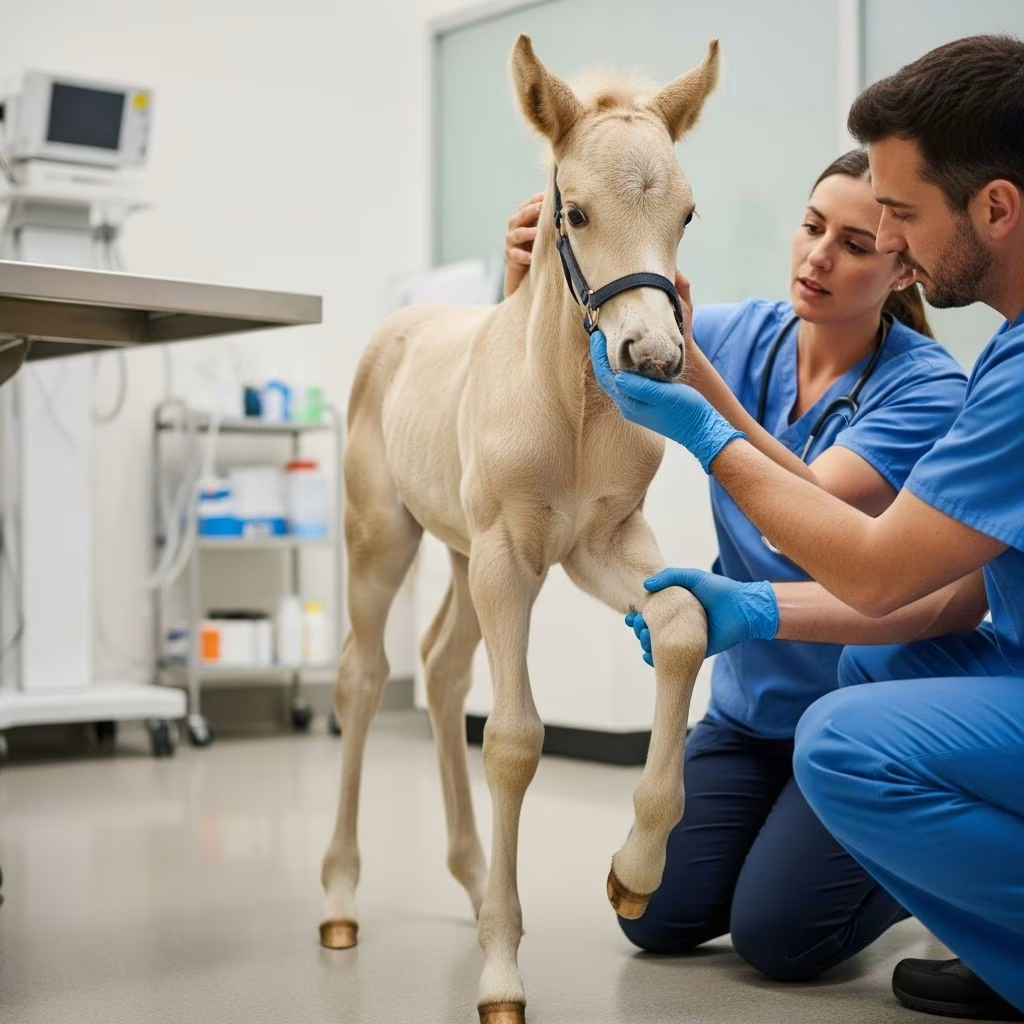
Birth-related disorders of the equine musculoskeletal system can significantly influence a young horse’s growth and future athletic potential. These conditions, often evident shortly after birth or during early development, stem from disruptions in cartilage, bone formation, and soft tissue growth. Understanding these issues empowers horse owners to intervene early, potentially mitigating long-term complications like chronic lameness or reduced performance.
Understanding the Roots of Musculoskeletal Birth Defects
Equine congenital skeletal problems arise during fetal development or rapid postnatal growth phases. Factors such as genetic predispositions, maternal nutrition during pregnancy, and environmental stressors play pivotal roles. For instance, imbalances in minerals like calcium, phosphorus, and copper can impair endochondral ossification—the process where cartilage transforms into bone.
Rapid growth in foals, often fueled by high-energy diets, exacerbates these vulnerabilities. Breeds like Warmbloods and Thoroughbreds show higher susceptibility due to selective breeding for size and speed, which strains immature skeletons. Trauma in utero or during delivery, including malpositioning, further contributes to deformities.
Key Types of Developmental Skeletal Abnormalities
Several distinct conditions fall under developmental orthopedic diseases (DODs), each targeting specific anatomical sites. Here’s an overview:
- Osteochondrosis: Involves faulty cartilage maturation at joint surfaces, leading to flaps or fragments (often called OCD chips).
- Physeal Dysplasia: Affects growth plates, causing irregular bone lengthening and joint enlargement.
- Angular Limb Deformities (ALDs): Result in crooked limbs from uneven growth.
- Flexor Tendon Laxity or Contracture: Alters limb posture, impacting mobility.
- Cuboidal Bone Malformations: Involves irregular development of small foot bones.
Osteochondrosis: A Prevalent Joint Cartilage Disorder
Osteochondrosis represents one of the most frequently encountered DODs, primarily striking joints like the hock, stifle, fetlock, and shoulder. It occurs when blood supply to growing cartilage falters, preventing proper mineralization. Fragments may detach, inciting inflammation and joint effusion.
In young foals under six months, subtle signs emerge: prolonged recumbency, mild stiffness, and reluctance to keep pace with herd mates. Swelling without heat or pain often appears in hocks (bog spavin) or stifles (gonitis). As training begins in yearlings, lameness, reduced flexion, and performance dips become evident, especially post-exercise.
Physeal Dysplasia and Growth Plate Disturbances
This condition targets the physes (growth plates) in long bones such as the radius, tibia, and cannon bones. Inflammation swells these areas, imparting a boxy radiographic appearance. Foals exhibit variable lameness, with angular changes if untreated. Nutritional excesses, particularly proteins and grains, correlate strongly with onset during peak growth spurts.
Angular and Flexor Limb Deformities
ALDs manifest as valgus (outward) or varus (inward) deviations, commonly in carpi or fetlocks. Causes include premature birth, placental issues, or lax joint capsules allowing bone wedges to form. Flexor deformities, conversely, present as upright toes or knuckling, stemming from in-utero positioning errors, pain-induced contracture, or mineral deficiencies.
| Deformity Type | Primary Sites | Common Causes | Early Signs |
|---|---|---|---|
| Angular (Valgus/Varus) | Knee, fetlock | Uneven growth, trauma | Crooked stance, mild lameness |
| Flexor Laxity | Fetlock, pastern | Weak ligaments, nutrition | Drooping fetlocks, dragging toes |
| Flexor Contracture | Deep flexor tendon | Pain, genetics | Tip-toe walking, knuckling |
Recognizing Clinical Manifestations
Symptoms vary by condition severity and location but often include joint distension, gait asymmetry, and behavioral shifts like increased lying time. Foals may stand base-narrow or base-wide, with limbs appearing upright due to accelerated long-bone growth outpacing soft tissues. In advanced cases, muscle atrophy or coordination loss signals vertebral involvement.
Performance horses under training unmask subclinical lesions through exacerbated lameness or stiffness. Owners should monitor for subtle cues: uneven wear on hooves, favoring one side, or resistance to flexion tests.
Diagnostic Approaches for Accurate Assessment
Veterinary evaluation starts with a thorough history and physical exam, assessing conformation, gait, and joint palpation. Imaging confirms suspicions:
- Radiography: Detects fragments, growth plate widening, or bone modeling errors.
- Ultrasonography: Evaluates soft tissues like tendons and ligaments.
- Arthroscopy: Allows direct visualization and fragment removal.
- Advanced Imaging: Scintigraphy or MRI for occult lesions in mature horses.
Bloodwork rules out systemic issues like mineral imbalances, while genetic testing applies for breed-specific risks.
Management and Therapeutic Interventions
Treatment hinges on age, severity, and lesion site. Conservative measures suit mild cases:
- Controlled exercise on soft footing to promote even growth.
- Dietary correction: balanced rations low in energy, rich in trace minerals.
- Restricted turnout initially, advancing to free exercise as alignment improves.
Surgical options include arthroscopic debridement for OCD fragments or osteotomy for severe ALDs. Splinting aids flexor issues, with serial evaluations guiding progression. Prognosis excels with early intervention; many horses return to full function.
Prevention Strategies for Horse Owners
Proactive husbandry minimizes risks. Breed from sound stock, avoiding carriers of known defects. Gestating mares require forages-based diets meeting NRC guidelines for minerals, eschewing lush pastures high in nitrogen.
Foals thrive on gradual growth: monitor weight daily, aiming for 0.9-1 kg/day gains. Provide ample turnout for natural exercise, limiting stall confinement. Regular farrier work corrects hoof imbalances early.
Long-Term Prognosis and Performance Implications
Untreated DODs predispose to osteoarthritis, yet many resolve with timely care. OCD in non-weight-bearing sites carries better outcomes than load-bearing stifles. Owners of affected horses should temper expectations for elite competition but anticipate solid recreational use.
Frequently Asked Questions (FAQs)
What causes most congenital joint problems in foals?
Combinations of genetics, rapid growth from overfeeding, and nutritional gaps in minerals like copper and zinc are primary culprits.
Can a foal with angular limb deformity fully recover?
Yes, with early diagnosis, conservative management, and growth modulation, most correct spontaneously by weaning.
Is osteochondrosis hereditary?
Partly; certain breeds show familial patterns, so pedigree review aids prevention.
How do I know if my foal needs X-rays?
Persistent swelling, lameness, or conformational changes warrant imaging around 1-3 months.
What’s the role of diet in preventing these disorders?
Avoid high-grain feeds; prioritize balanced minerals and controlled calories to curb excessive growth.
References
- Developmental Orthopedic Disease in Horses – Horse Owners — Merck Veterinary Manual. 2023. https://www.merckvetmanual.com/horse-owners/bone-joint-and-muscle-disorders-in-horses/developmental-orthopedic-disease-in-horses
- 6 Developmental Orthopedic Diseases in Horses — Mad Barn. 2023. https://madbarn.com/developmental-orthopedic-diseases-in-horses/
- Osteochondritis Dissecans (OCD) — UC Davis School of Veterinary Medicine. 2023. https://ceh.vetmed.ucdavis.edu/health-topics/osteochondritis-dissecans-ocd
- Congenital and Inherited Anomalies of the Musculoskeletal System — Auburn University College of Veterinary Medicine. 2015-01-15. https://www.vetmed.auburn.edu/wp-content/uploads/2015/01/C-15-Congenital-and-Inherited-Anomalies-of-the-Musculoskeletal-System-Merk-Manual-1997.pdf



