

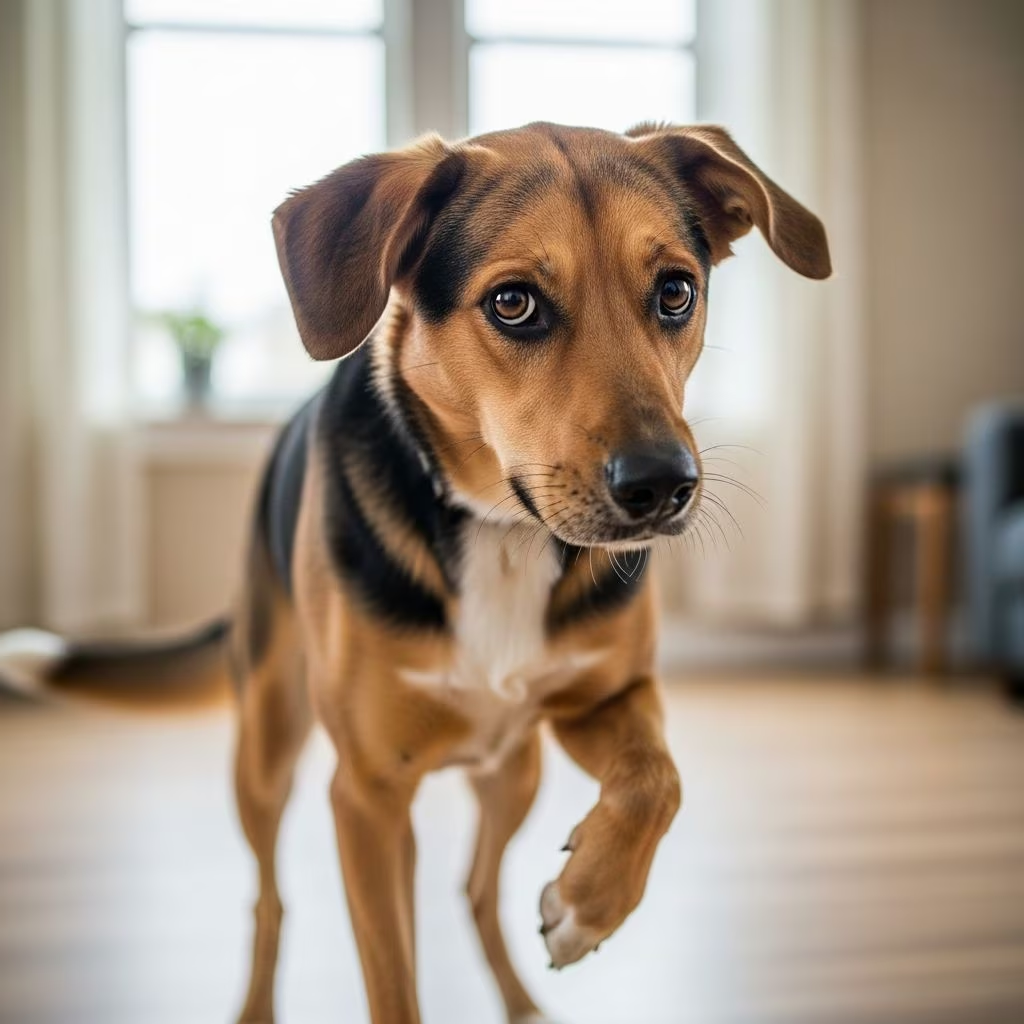
Conflicted dog behaviour in multi-dog households often stems from resource competition, social maturity changes, or unclear boundaries, leading to tension, growling, or fights. Understanding these dynamics allows owners to intervene effectively, promote safety, and restore peace using positive reinforcement and structured management.
What is Conflicted Dog Behaviour?
Conflicted dog behaviour refers to interactions where dogs display tension through agonistic signals like growling, standing over, or blocking access, without necessarily escalating to bites. These are natural conflict resolution attempts, as seen when one dog growls to stop mounting and the other submits with deferential postures, allowing play to resume. In multi-dog homes, this can arise from resource guarding, such as food, toys, or resting spots, or during social maturity when adolescents challenge elders.
Unlike outright aggression, conflicted behaviour often involves ritualised displays where dogs communicate boundaries. For instance, an older dog may block a younger one’s access to a couch, interpreting puppy-like play as challenges. Owners must distinguish this from dangerous escalation, intervening when arousal rises rapidly or vulnerabilities exist, like size disparities.
Signs of Conflicted Behaviour in Dogs
- Growling or stiffening: Warning signals to establish space, common in well-socialised pairs resolving minor disputes without harm.
- Blocking or standing over: Preventing access to resources like beds or doors, often linked to social maturity shifts.
- Resource stealing: Taking toys, treats, or food, provoking defensive responses from the other dog.
- Persistent harassment: Bullying via pinning, chasing, or denying rest, indicating imbalance needing management.
- Rapid arousal: Escalating tension without abatement signals, especially in unequal pairs like large vs. small dogs.
These signs reflect dogs negotiating relationships; suppressing warnings like growling via punishment risks silent bites, as dogs learn not to signal before acting. Veterinary behaviourist protocols emphasise observing context, such as neurochemical changes in maturing dogs.
Common Causes of Conflict in Multi-Dog Homes
Conflicts often emerge from adolescence, where younger dogs test boundaries, prompting older ones to discipline perceived challenges. Resource competition—over food, attention, or space—exacerbates this, particularly if household rules lack consistency.
| Cause | Description | Example |
|---|---|---|
| Social Maturity | Younger dogs adopt assertive behaviours, challenging elders | Stealing toys or blocking paths |
| Resource Guarding | Competition for high-value items | Food bowl standoffs |
| Inconsistent Rules | Family members vary in enforcement | One dog gets couch priority variably |
| Vulnerability Imbalance | Size, age, or health disparities | Large dog overwhelming small/elderly one |
PHRAT (Proactive Handling of Reactive Aggression Triggers) highlights antecedent arrangements, like structured door access, to preempt issues. Punishing reactions ignores root causes like uncertainty in relationships.
How to Safely Interrupt and Manage Conflicts
Never punish warnings; instead, use calm interruption like cheerful sounds (“Oops!”) or clapping to redirect before escalation. Body blocking creates space safely, avoiding collar grabs during active fights to prevent bites.
- Assess safety: Separate immediately if one dog is vulnerable; trial separations reveal if a dog “blossoms” alone.
- Redirect positively: Offer alternative activities, reinforcing calm behaviour.
- Management plan: Secure dogs at distances for calm interactions, gradually reintroducing under supervision.
For bullying, separate unsupervised, boost the victim’s confidence via individual training, and manage the aggressor. Positive leadership with consistent rules builds trust.
Building a Harmonious Multi-Dog Household
Daily management fosters peace: enforce clear rules across household members, provide individual attention to curb jealousy, and incorporate group activities like leashed walks.
- Individual time: One-on-one walks or training sessions strengthen bonds.
- Reinforcement order: Reward the most appropriate dog first, promoting calm over pushiness.
- Environmental control: Crate train comfortably, avoiding entrapment anxiety; structure access to resources.
Debunk myths: Don’t let dogs “work it out”—this risks injury and lasting trauma; provide structure instead. Professional guidance ensures tailored plans.
Treatment Protocols for Interdog Aggression
Focus on new social relationships relieving uncertainty: reinforce deference and calm, never the dominant. For evenly matched dogs, reinforce the younger if appropriate, monitoring recalibration. Avoid physical intervention in fights; prioritise safety.
Steps include visual separations, attention-neutral reintroductions, and rewarding non-threatening behaviours to shift dynamics fluidly.
Frequently Asked Questions (FAQs)
Q: Should I let dogs ‘work it out’ to establish hierarchy?
A: No, this myth is dangerous; intervene to prevent injury and provide structure for safe relationships.
Q: What if one dog bullies another?
A: Separate unsupervised, train individually, build victim confidence, and seek professional help.
Q: Is growling always bad?
A: No, it’s a vital warning; punishing it teaches silent escalation to bites.
Q: How do I handle resource guarding?
A: Structure access, reinforce calm deference, and manage environments preemptively.
Q: When to call a professional?
A: If tensions persist, fights occur, or imbalances exist; early intervention prevents worsening.
Long-Term Prevention Strategies
Sustain harmony through ongoing training: daily positive reinforcement, consistent leadership, and monitoring maturity changes. Group nose work or walks build bonds safely. Track progress, adjusting for triggers like family arguments where dogs side with victims.
Empower owners as fair guides, lifting decision burdens from dogs. With diligence, multi-dog homes thrive peacefully.
References
- Multi-Dog Homes: Charlotte’s Guide to Pack Peace — Dog Owners Academy. 2023. https://www.dogownersacademy.com/managing-multi-dog-households/
- Are Your Dogs Arguing With Each Other? Fighting Without Biting — Kinship. 2023. https://www.kinship.com/dog-behavior/non-aggressive-fights-between-dogs
- Multi-dog household conflicts — Shake On It Pet Training. 2019-02-22. https://shakeonitpettraining.com/dog-and-cat-behavior-tips/2019/2/22/multi-dog-household-conflicts
- Protocol for treating/understanding dogs with interdog aggression — Karen Overall, Manual of Clinical Behavioral Medicine. 2020-06. https://www.karenoverall.com/wp-content/uploads/2020/06/Protocol-for-treating-understanding-dogs-with-interdog-aggression_Overall.pdf
- Handling Dominance Aggression in Dogs — CattleDog Publishing. 2023. https://cattledogpublishing.com/blog/handling-dominance-aggression-in-dogs/



