

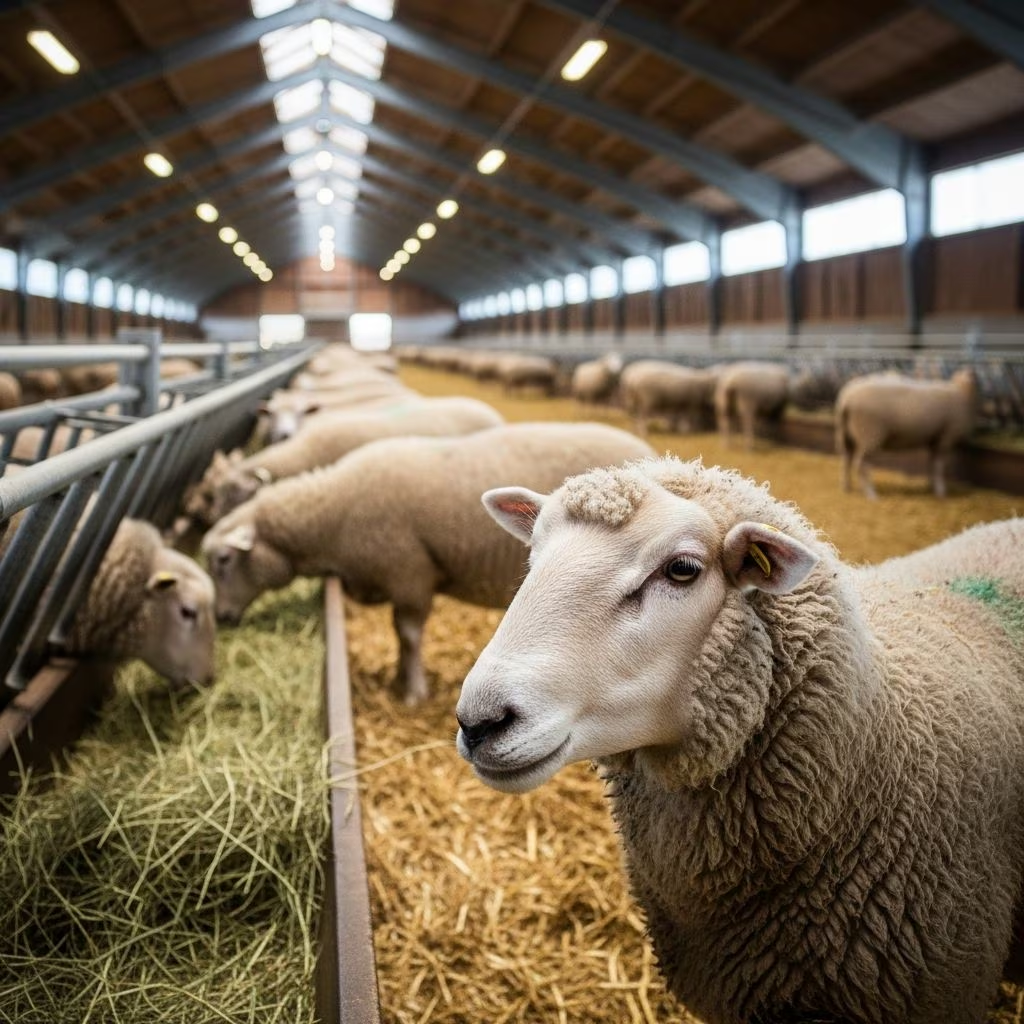
Successful sheep production depends on implementing sound management practices that address housing, nutrition, health prevention, and animal welfare. Whether operating under extensive rangeland systems or intensive confined operations, producers must establish protocols that prioritize flock health while maintaining economic viability. This comprehensive guide outlines evidence-based practices for managing sheep populations effectively.
Creating Optimal Housing Environments
Shelter infrastructure forms the foundation of proper sheep management across all production systems. Clean, uncrowded shelter that protects animals from extreme weather conditions is essential for maintaining health and productivity. The design and maintenance of housing structures directly influence disease incidence, animal comfort, and overall performance metrics.
Ventilation and Environmental Control
Adequate air circulation prevents multiple management challenges. In warm climates, proper ventilation prevents heat stress and reduces the risk of heat-related mortality. Conversely, in cold environments, ventilation must be balanced with insulation to prevent ammonia accumulation in tightly sealed structures. Ammonia buildup from urine and manure creates respiratory irritation and predisposes animals to respiratory infections.
Bedding management directly supports environmental quality. Clean, dry bedding should be maintained consistently and replaced whenever it becomes soiled. Wet, contaminated bedding promotes parasitic infections, fungal diseases, and foot problems. Maintaining dry shelter and paddock substrates represents a critical preventive strategy against infectious foot diseases that can compromise mobility and overall flock productivity.
Functional Space Planning
Structural design should accommodate different management needs within the facility. Separate areas should be established for the following purposes:
- Isolation facilities for sick or quarantined animals with minimal contact with the main flock
- Dedicated lambing and jugging areas that can be easily cleaned and sanitized
- Confinement systems providing adequate space for natural movement and rest behaviors
Grazing systems require attention to stocking density management. Maintaining animal populations below the land’s carrying capacity prevents overgrazing, environmental degradation, and the concentration of parasites that occurs in overstocked pastures.
Feeding System Design and Management
Nutrition represents both the largest operating expense and the greatest opportunity for production optimization. Feed delivery systems must align with natural sheep behavior while minimizing disease transmission.
Bunk Space and Access Requirements
Sheep exhibit natural crowding behaviors around feed sources, which can result in competitive feeding and unequal nutrient intake. Adequate bunk space of 20–50 cm per head allows all animals to feed without excessive competition. This spacing prevents dominant animals from monopolizing feed and ensures weaker or subordinate animals receive adequate nutrition.
Feeding infrastructure design significantly impacts health outcomes. Feeders should accommodate the natural head-down grazing posture of sheep, encouraging natural feeding behaviors and improving feed consumption efficiency. Conversely, feeding directly off the ground should be avoided in confinement systems, as this practice substantially increases disease transmission risk. Ground feeding exposes animals to fecal contamination, parasitic eggs, and pathogenic organisms present in soil and manure.
Feed Quality and Water Provision
Water availability must be continuous and reliable. Salt and mineral supplementation should be provided consistently to support metabolic functions and prevent deficiency diseases. Feed storage and delivery practices must maintain nutritional quality and prevent contamination from environmental sources or previous livestock residues.
Disease Prevention and Health Management
Implementing preventive health measures costs significantly less than treating established disease outbreaks. A comprehensive flock health plan addresses multiple dimensions of disease prevention and management.
Core Components of Health Planning
Producers should develop health protocols addressing these critical areas:
- Vaccination programs against endemic and regionally significant diseases
- Parasite control strategies including monitoring and targeted treatment
- Nutrition management supporting immune function and resistance
- Breeding selection criteria that incorporate disease resistance traits
- Diagnostic protocols for identifying emerging health problems
- Treatment protocols for managing identified disease conditions
Quarantine and Isolation Practices
Introducing new animals to an established flock presents significant disease transmission risk. Quarantine protocols should isolate incoming animals from the main flock, allowing observation for clinical signs of infectious disease before integration. Management practices such as conducting physical examinations and monitoring for clinical signs minimize disease introduction and spread.
Daily observation of the flock during quiet periods facilitates early detection of sick animals. Morning or evening observation when animals are naturally resting allows easier identification of behavioral changes, reduced feed intake, or physical abnormalities. Early detection and isolation of sick animals prevents disease amplification and improves treatment outcomes.
Parasite Management Strategies
Internal and external parasites reduce productivity through feed conversion losses, weight gain reduction, and increased disease susceptibility. Monitoring parasite levels through periodic fecal sampling guides treatment decisions. Strategic treatment timing, particularly at high-risk periods such as lambing, improves efficacy and reduces environmental contamination with parasite eggs.
Young sheep exhibit greater susceptibility to gastrointestinal parasites and require additional attention in parasite control programs. Pasture rotation reduces parasite exposure by preventing overgrazing and allowing pastures to recover between grazing cycles. This management practice breaks parasite lifecycle transmission and reduces infectious larval populations available to subsequent grazing animals.
Breeding Management and Reproductive Health
Reproductive success determines overall flock productivity and economic viability. Ram management directly influences breeding outcomes and must receive specific attention throughout the year.
Ram Preparation and Breeding Soundness
Rams should be maintained in good nutritional condition continuously, with intensified focus 30–45 days before the breeding season. Pre-breeding evaluations should include the following components:
- Shearing to assess body condition and skin health
- Assessment for internal and external parasites with appropriate treatment
- Veterinary evaluation of semen quality and viability
- Palpation of testicles to identify epididymitis or other abnormalities
- Comprehensive breeding soundness examination including feet, legs, prepuce, and dentition
Recording breeding dates through marking harnesses improves lambing management and identifies ewes cycling after initial breeding. Color-coded markers should be changed every 15–17 days on purebred rams, with marker color sequences of blue, red, and green recommended. Commercial rams should be rotated among ewe groups on similar intervals.
Ewe Nutrition and Flushing
Nutritional status around breeding significantly influences ovulation rates and lambing outcomes. Flushing—increasing nutrition two weeks before ram introduction—elevates energy availability and promotes higher ovulation rates early in the breeding season. Providing one-half to three-quarter pound of concentrate per head daily or ensuring access to high-quality pasture implements effective flushing protocols.
This nutritional strategy demonstrably increases lambing rates and improves reproductive efficiency. Timing and magnitude of nutritional increase influence ovulation patterns and fertilization success.
Lactation and Weaning Management
The transition from pregnancy through lactation requires significant nutritional adjustments to support milk production and maternal health.
Supporting Lactating Ewes
Lactating ewes require separation from non-lactating pregnant ewes to enable individualized nutrition. Lactating ewes require one to two pounds of grain daily plus all available high-quality forage. Ewes nursing twins or triplets require additional grain supplementation to meet milk production demands and prevent excessive weight loss.
Pre-weaning management should include removing grain from the ration two weeks prior to weaning to reduce milk flow and prepare mammary tissue for separation. Treatment for internal parasites at lambing time, preferably with products effective against larval stages, supports ewe health recovery during the metabolically demanding lactation period.
Weaning Protocols and Post-Weaning Care
Timing weaning at 60–80 days of age aligns with lamb digestive maturity and ewe reproductive recovery. Managing weaning stress requires careful attention to environmental transitions. Moving ewes from lambs rather than relocating lambs maintains the familiar environment and reduces stress-associated production losses.
Ewe nutrition management during weaning should include 36–48 hour removal of feed and water to reduce milk production and minimize udder stress. This management practice supports milk involution and reduces the incidence of mastitis during the transition period.
Management of Replacement Stock
Young ewes destined for breeding require distinct management protocols differing from mature flock ewes.
Ewe Lamb Separation and Nutrition
Ewe lambs should be maintained separately from mature ewes from weaning until their first lambs are weaned. This separation allows provision of rations maximizing growth and development without competition from mature animals. Adequate nutrition during this critical growth phase supports frame development and reproductive tract maturation.
Breeding Timeline Considerations
Breeding ewe lambs to lamb at different times than the mature flock reduces management intensity and allows focused attention during their first lambing experience. Modified vaccination protocols similar to those for mature ewes remain essential, with special emphasis on parasite control given the heightened susceptibility of young stock to gastrointestinal parasites.
Record Keeping and Decision Making
Systematic record maintenance enables evidence-based management decisions and continuous improvement of flock performance.
Essential Records for Flock Management
Producers should maintain detailed documentation including:
- Lambing records identifying birth dates, lamb identity, and dam information
- Breeding records with ram assignment and expected lambing dates
- Health treatment records documenting disease incidents and interventions
- Parasite monitoring data guiding treatment decisions
- Reproductive performance metrics for breeding selection
These records facilitate identification of replacement animals demonstrating superior performance, identification of genetic trends, and documentation of management intervention outcomes.
Key Management Principles Summary
Successful sheep production requires integrated management addressing multiple production systems and animal categories. Prevention through vaccination and proactive health management represents the most cost-effective approach to maintaining productive flocks. Daily observation during quiet periods facilitates early detection of health problems before they become widespread issues.
Pasture rotation supports parasite control, forage quality maintenance, and sustainability of grazing resources. Salt and mineral supplementation must be continuously available to support metabolic requirements. Quality forage represents the foundation of nutritional management, with supplemental grain provision calibrated to production stage and management intensity.
Consulting with veterinary professionals during development of individualized flock health plans ensures recommendations align with regional disease prevalence, production goals, and operational constraints. Implementation of these evidence-based practices supports animal welfare, environmental stewardship, and economic sustainability of sheep production operations.
References
- General Management of Sheep — MSD Veterinary Manual. Accessed 2026. https://www.msdvetmanual.com/management-and-nutrition/preventative-health-care-and-husbandry-of-sheep/general-management-of-sheep
- Sheep Health and Management — Oklahoma State University Extension. https://extension.okstate.edu/fact-sheets/sheep-health-and-management.html
- Sheep Management — North Florida Livestock Agents’ Group, University of Florida Institute of Food and Agricultural Sciences. https://extadmin.ifas.ufl.edu/nflag/livestock/sheep/sheep-management/
- Guide to Raising Healthy Sheep — Extension Sheboygan County, University of Wisconsin-Madison. https://sheboygan.extension.wisc.edu/files/2010/08/Guidetoraisinghealthysheep1.pdf



