

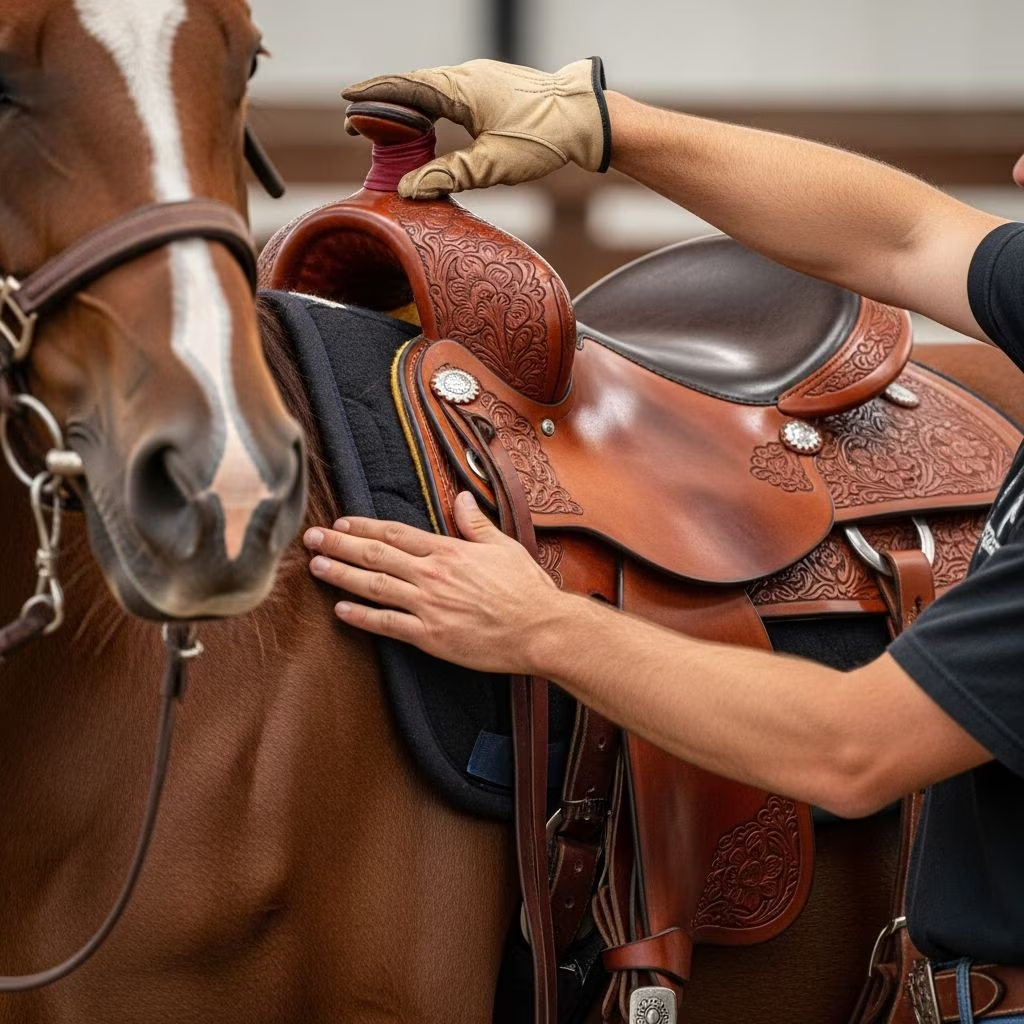
Saddling a horse is a fundamental skill that every equestrian must master, whether you ride for pleasure, competition, or ranch work. The process involves more than simply placing equipment on an animal’s back; it requires understanding anatomy, proper technique, and safety protocols to ensure both the horse’s comfort and the rider’s security. This comprehensive guide walks you through each stage of saddling, providing detailed instructions for achieving optimal results every time you prepare for a ride.
Creating the Right Environment and Mental State
Before you even touch a saddle, the foundation of successful saddling begins with your horse’s state of mind. A calm, cooperative horse makes the entire process safer and more efficient. Begin by securing your horse in a location where you have plenty of space to work comfortably. Many experienced riders recommend teaching your horse to ground tie, which means standing still without being tied to anything. This skill proves invaluable when you need to move around your horse during the saddling process.
Approach your horse with confidence and a positive attitude. Horses are highly attuned to human emotions and anxiety, so projecting calm assurance helps your horse remain relaxed. Speak to your horse in soothing tones and avoid sudden movements that might startle them. If your horse seems nervous or agitated, take time to settle them with gentle petting and quiet conversation before proceeding.
For safety, always use a properly fitted halter and lead rope if tying your horse. When securing your horse, use a slipknot rather than a quick-release knot. While this might seem counterintuitive, a slipknot allows your horse to feel they have an escape route, which actually reduces panic. In an emergency situation, if your horse becomes frightened or attempts to flee, they can break free without becoming injured or trapped, which could lead to dangerous behaviors.
Thorough Grooming: The Foundation for Comfort
Proper grooming accomplishes far more than making your horse look presentable. It removes dirt, dried sweat, and debris that could irritate your horse’s skin under the saddle and blanket. These materials, if left in place, can cause discomfort and potentially lead to saddle sores or other skin conditions.
Start with a curry comb, working in circular motions across the areas that will be covered by the saddle and a few inches beyond. This is particularly important along the horse’s back, shoulders, and barrel area. Apply firm but gentle pressure—your goal is to lift dirt to the surface of the coat rather than scrub aggressively. Pay special attention to the underside of your horse, but exercise extreme caution here. The sensitive skin on the belly means your face is positioned dangerously close to the horse’s hindquarters, where a hind leg kick could cause serious injury.
After using the curry comb, switch to a dandy brush to remove the loosened dirt. Use a flicking motion, starting at the base of the mane and working methodically toward the tail. Continue brushing until no visible dirt remains on your horse’s coat. This step ensures that your horse’s skin will be clean and comfortable under all the tack you’re about to place.
Throughout grooming, maintain proper body mechanics by bending at the waist rather than bending at the knees. This positioning makes it harder for your horse to knock you off balance if they lean against you. Additionally, it reduces strain on your own lower back, which is important when performing repetitive motions across a large animal’s body.
Inspecting Your Equipment Before Use
Before placing any equipment on your horse, conduct a thorough inspection to identify potential problems. Check your saddle for broken or cracked tree, torn leather, or damaged hardware. Examine the saddle pad or blanket for tears, matting, or areas where the padding has compressed. Inspect the cinch or girth for fraying, damage, or areas where the material has weakened.
Pay special attention to areas where equipment connects or bears weight. A single broken dee ring, a damaged cinch, or a compromised saddle tree can cause your saddle to slip, creating an unsafe riding situation. If you discover any damage, repair or replace the equipment before riding. Continuing to use damaged tack risks your safety and your horse’s wellbeing.
Positioning the Saddle Pad Correctly
The saddle pad serves multiple important functions: it provides additional cushioning for comfort, protects your horse’s withers and back from pressure, and helps distribute the saddle’s weight more evenly across your horse’s back. Many riders underestimate the importance of proper pad placement, but correct positioning significantly impacts your horse’s comfort.
When placing the pad, work from the left side of your horse and position the pad so that it sits directly on the withers—the prominent ridge at the top of your horse’s shoulder. Center the pad along your horse’s spine, ensuring equal coverage on both sides of the back. The pad should extend far enough back to provide protection throughout the saddle’s range but not so far that it extends beyond where the saddle will sit.
For blankets specifically, look for directional indicators. Many blankets include a notch at the neck area or a tag indicating which end should face toward the horse’s head. Slide the blanket back behind the base of the mane or along the hump that marks the end of the neck vertebrae. This positioning ensures the horse’s fur lies properly beneath the blanket and prevents wrinkles that could cause discomfort. The blanket should line up evenly with the back of the shoulder muscle and fall symmetrically on both sides of the rib cage.
Lifting and Positioning the Saddle
How you lift and place the saddle significantly affects both your safety and your horse’s response to saddling. Stand on the left side of your horse, facing toward their tail. Grab the pommel (front of the saddle) with your left hand and the skirt (side panel) with your right hand. Before lifting, make sure the right stirrup is placed on the horn and the girth strap is positioned across the seat. This prevents these components from getting caught under the saddle or striking your horse unexpectedly.
Lift the saddle smoothly and deliberately, raising it high enough to clear your horse’s back, then lower it gently onto the pad. Position the pommel above and just behind the withers. Many riders make the mistake of placing the saddle too far forward or back. Correct placement positions the saddle in the “pocket”—the natural depression behind your horse’s shoulder blades. This positioning ensures your horse can move freely without restriction and allows proper weight distribution.
Once the saddle is in position, gently shake it from side to side to help it settle naturally into place. Use your hand on the horn to make fine adjustments. Some saddles settle differently than others, so take a moment to ensure everything is aligned properly before moving to the next step.
Adjusting the Saddle Pad Under the Gullet
The gullet—the channel running along the underside of the saddle’s front—must clear your horse’s withers completely. After the saddle is in position, reach under the front and pull the saddle pad up into the gullet channel. You should be able to fit your cupped hand between the saddle and your horse’s back at the withers. This clearance is critical because pressure on the withers can cause significant pain and potentially lead to permanent injury.
Check both sides of the saddle to ensure even clearance. If one side has more space than the other, adjust the saddle pad until you achieve symmetry. This adjustment takes only a moment but provides essential protection for one of the most sensitive parts of your horse’s back.
Securing the Saddle with the Cinch
The cinch or girth holds the saddle in place and must be tightened securely, but excessive tightening causes discomfort and can lead to behavioral problems. Begin by loosely tightening the cinch, using enough pressure to keep the saddle from slipping but not so tight that your horse experiences discomfort. Many riders find the western cinch knot more versatile than buckles because it allows for quick and nuanced adjustments.
To tie a western cinch knot, take the latigo (tie strap) and go through the dee ring, bringing it up toward the saddle. Turn the latigo toward the front, bring it back toward the rear, slip it under the dee ring, and pull it up. Finally, slip it down through the loop you’ve created and tighten when ready. This knot provides secure fastening with the ability to make adjustments without dismounting.
Initially, tighten the cinch to a moderate level—tight enough to prevent saddle movement but not so tight that your horse feels restricted breathing. Your horse needs a chance to adjust to the saddle and release the air it initially held in. After you’ve hand-walked your horse for several minutes, you can gently tighten the cinch further in preparation for riding.
Warm-Up and Secondary Tightening
After saddling, don’t immediately mount and ride away. Instead, hand-walk your horse around for several minutes, allowing them to become accustomed to the saddle’s weight and movement. This warm-up period serves multiple purposes: it lets your horse relax and settle under the equipment, it provides you with an opportunity to evaluate how the saddle is fitting, and it builds a positive association with the saddling process.
During this hand-walk, watch for signs of distress or discomfort. Your horse should move naturally without stiffness or reluctance. After the warm-up period, gently tighten the cinch again. Your horse will have settled, and the cinch may have loosened slightly as the saddle adjusted to their body. This secondary tightening ensures the saddle remains secure during your ride.
For longer warm-ups, gradually increase the intensity. Move from hand-walking to trotting, then to cantering if appropriate. Watch your horse’s reactions throughout. If you notice any signs of concern—ear pinning, tail clamping, or general reluctance—stop and re-evaluate your saddle fit before continuing.
Safety Considerations and Body Mechanics
Several important safety protocols should guide your saddling process. When walking behind your horse, stay as close as possible while keeping a hand on them so they know you’re there, or maintain distance beyond their kick range. Staying close prevents your horse from building momentum for a full-force kick, while maintaining extreme distance gives them less opportunity to reach you. Never position yourself directly behind your horse’s hindquarters where a kick has maximum force and you have no protection.
Always bend at the waist when performing tasks at ground level rather than bending at the knees. This positioning prevents you from being knocked off balance if your horse leans against you. Maintain awareness of your horse’s position and movements at all times, and avoid working in enclosed spaces where escape routes are limited.
Troubleshooting Common Saddling Issues
Some horses develop anxiety around cinching, showing signs of worry when the girth tightens. If your horse exhibits a “cinchy” reaction—head raising, moving away, or general agitation—approach the situation with patience. Let the saddle slide off gently and reposition it. Rub the cinch area to desensitize it, then tighten and loosen the cinch repeatedly with rhythm and regularity. This repetition with consistent timing helps your horse understand that cinching is not a threat and gradually reduces anxiety responses.
If your saddle consistently slips forward or backward, reevaluate its placement. Ensure the saddle pad is centered on your horse’s spine and that the saddle’s pommel sits in the correct position. Some saddle shapes naturally fit certain horses better than others, so persistent slipping might indicate a need for a different saddle style or size.
Horses that display tension or worry during saddling sometimes benefit from a repetition routine where you practice saddling and unsaddling multiple times without riding. This desensitization process builds confidence and reduces anxiety surrounding the entire process.
Quick Reference Checklist
- Secure your horse safely using a properly fitted halter and lead rope with a slipknot
- Groom thoroughly with curry comb and dandy brush to remove all dirt and debris
- Inspect all equipment for damage before use
- Position the saddle pad centered on the withers and spine
- Place the saddle with the pommel above and just behind the withers
- Adjust the saddle pad into the gullet channel for withers clearance
- Tighten the cinch initially to a moderate level
- Hand-walk your horse for several minutes to allow settling
- Perform a secondary tightening before mounting
- Watch for signs of discomfort or unusual behavior throughout the process
FAQs About Horse Saddling
How tight should the cinch be?
The cinch should be tight enough to prevent the saddle from shifting during riding but not so tight that your horse experiences discomfort or has difficulty breathing. You should be able to fit approximately one finger between the cinch and your horse’s body. Tighten gradually in stages rather than pulling it very tight at once.
Can I use a saddle pad with a blanket?
Many riders use both, and this combination offers excellent cushioning and protection. Place the blanket first, then position the saddle pad on top, ensuring both are centered and properly aligned.
What’s the difference between English and Western saddling?
While the basic principles remain similar, Western saddles typically have a horn and different cinching systems, while English saddles use a girth instead of a cinch. The positioning and securing methods vary accordingly, though proper pad placement and equipment inspection apply to both.
How often should I inspect my saddle?
Inspect your saddle before every use, looking for new damage. Perform a thorough inspection at least monthly, checking for developing problems with leather, hardware, and padding.
What should I do if my horse refuses saddling?
Take time to understand the source of resistance. It may stem from past negative experiences, equipment that doesn’t fit properly, or sensitivity to tightening. Work slowly with desensitization techniques and consider consulting an experienced trainer if the behavior persists.
References
- Basic Saddling Technique (Western) — Instructables. https://www.instructables.com/Basic-Saddling-Technique-Western/
- How To Saddle a Horse (A Step-by-Step Guide for Beginners) — Jim Taylor Saddlery. https://jimtaylorsaddlery.com/how-to-saddle-a-horse/
- 3 Tips for Safe Saddling. Use Every Time! — Jonathan Field Horsemanship. https://learn.jonathanfieldhorsemanship.com/blog/3-tips-for-safe-saddling-every-time
- How to Saddle a Horse Easily: Rider-Friendly Tips — Durosset. https://www.durousset.com/blogs/news/how-to-saddle-a-horse
- Saddle Up! How to Bridle and Saddle a Horse — The Art of Manliness. https://www.artofmanliness.com/skills/manly-know-how/saddle-up-how-to-bridle-and-saddle-a-horse/



