

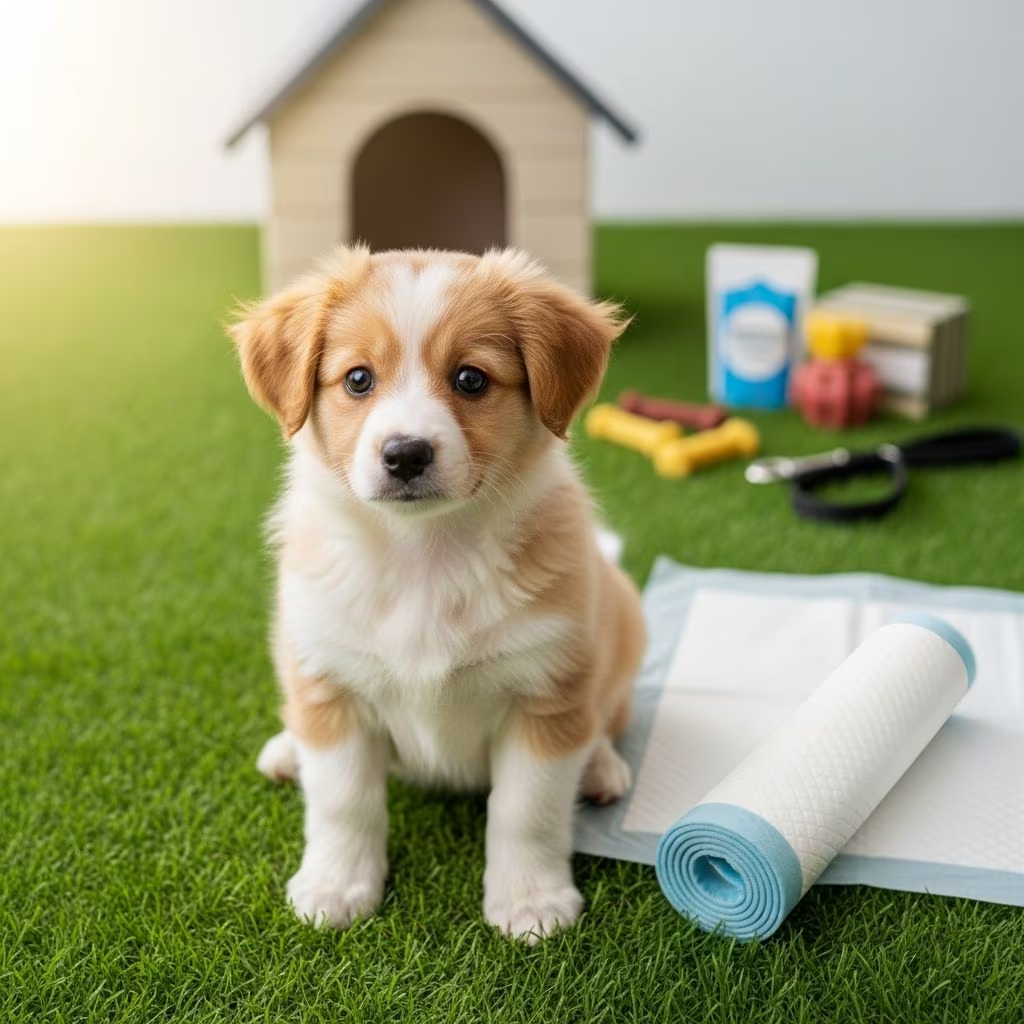
Teaching a dog or puppy to eliminate outdoors is one of the most fundamental aspects of pet ownership, yet it remains a challenge for many dog owners. The process requires patience, consistency, and a clear understanding of canine behavior and physiology. While housebreaking might seem straightforward in principle, successful implementation demands attention to detail and commitment to a structured approach. This comprehensive guide explores evidence-based methods that work for both young puppies and adult dogs, regardless of their previous training history.
Understanding Canine Physiology and Development
Before implementing any training strategy, it’s essential to understand how a puppy’s body develops and functions. Young puppies have limited bladder control due to their developing urinary systems. A useful guideline is that puppies can hold their bladder for approximately one hour per month of age, plus one additional hour. For example, a three-month-old puppy can typically hold their bladder for about four hours maximum. This biological reality shapes every aspect of a successful housebreaking program.
Puppies also experience predictable patterns regarding when they need to eliminate. After consuming food, most puppies will need to defecate within thirty minutes. Similarly, immediately after waking from sleep and following play sessions, elimination becomes necessary. Understanding these natural patterns allows owners to anticipate and manage bathroom breaks effectively, significantly increasing the likelihood of success.
Adult dogs, by contrast, have fully developed bladder control and can typically hold their waste for eight to ten hours. However, adult dogs may require retraining due to previous inconsistent housebreaking, changes in environment, or medical conditions. The fundamental principles of housebreaking apply to dogs of all ages, though the timeline for success may differ.
The Three-Pillar Foundation of Successful Training
Effective housebreaking relies on three interconnected components working in harmony. Understanding and implementing all three pillars simultaneously, rather than focusing on just one aspect, produces the most reliable and rapid results.
Pillar One: Environmental Management
Environmental management involves strategically controlling your dog’s access to spaces where accidents might occur. This preventative approach stops unwanted behavior before it happens, rather than attempting to correct mistakes after they occur. Several management tools prove particularly effective.
Crate training leverages the natural canine instinct to keep sleeping areas clean. Dogs naturally avoid eliminating where they sleep and rest. When selecting a crate, ensure it’s sized appropriately—large enough for the dog to turn around and lie down comfortably, but not so spacious that they can create a bathroom area in one corner while sleeping in another. Properly sized crates become invaluable tools during times when you cannot actively supervise your pet.
Tethering offers an alternative management strategy that maintains your dog’s proximity while containing them. By attaching a leash to a sturdy fixture such as a piece of furniture or installing an eye hook in a baseboard, you can keep your dog within sight while engaged in other activities. You can even tether your dog directly to yourself, enabling passive supervision during reading, television watching, or computer work. This method allows you to observe early warning signs of elimination needs, such as sniffing behavior or circling patterns.
Exercise pens provide contained spaces that work well for puppies, particularly those uncomfortable with crate confinement or prone to chewing through leashes. These portable barriers create a defined area while allowing visual supervision. Exercise pens also help manage the broader environment by controlling access to toys, chewable items, and other household dogs.
Baby gates offer another option for spatial management, though they work best when your dog cannot slip behind you unnoticed. Some dogs become remarkably quick at moving behind owners to potty without being detected, making continuous direct supervision necessary in such cases.
Pillar Two: Scheduling and Routine
Establishing a consistent schedule dramatically improves housebreaking success rates. Puppies thrive with predictability, and structured routines make elimination timing more foreseeable.
For young puppies, begin by taking them outside every hour during waking periods. Very young puppies and newly rescued adult dogs benefit from this frequent schedule. As your dog demonstrates consistent success, gradually extend the time between outdoor breaks based on observed patterns. Keep detailed records of when your dog eliminates, noting the time of day and circumstances surrounding successful outdoor bathroom visits. This documentation reveals natural patterns specific to your individual dog, allowing you to customize the schedule accordingly.
Structure extends beyond bathroom breaks. Establish consistent times for meals, playtime, walks, and naps. Since puppies typically need to eliminate shortly after eating and immediately upon waking, synchronized routines help predict necessary outdoor bathroom trips. The more consistent your overall schedule, the more predictable your dog’s elimination needs become.
For adult dogs undergoing retraining, a schedule of every one to two hours proves effective. If the dog doesn’t eliminate during a scheduled outdoor period, restrict their indoor access and retry fifteen minutes later. This consistent approach helps reset behavioral patterns.
Pillar Three: Reinforcement and Rewards
Dogs learn through association and consequence. Reinforcing outdoor elimination with immediate, valuable rewards creates powerful motivation for future correct behavior. This positive reinforcement approach builds enthusiasm for outdoor bathroom habits.
High-value food rewards work best for most dogs. Select treats your dog doesn’t regularly receive—premium options like bacon, ham, chicken, or steak prove far more motivating than everyday kibble. The reward should be something your dog genuinely becomes excited about obtaining. Some owners reduce regular meal portions slightly to accommodate training treats without creating nutritional imbalances.
Timing is critical. The moment your dog finishes eliminating outdoors, immediately provide rewards. Some trainers recommend giving three treats in rapid succession (one-two-three), creating a memorable positive association. This immediate pairing helps dogs understand that outdoor elimination produces wonderful consequences worth repeating.
Additionally, establish a verbal cue associated with the elimination behavior. As your dog begins to eliminate, say a consistent word or phrase such as “potty,” “outside,” or “hurry up.” After repeated pairings of this cue with successful elimination, the word itself becomes conditioned with the action, eventually prompting elimination when spoken. This proves particularly useful when you need your dog to go at specific times.
Praise and attention during outdoor bathroom visits reinforce the behavior, though the food reward serves as the primary motivator. Being present while your dog eliminates demonstrates your approval and strengthens the positive association with outdoor bathroom habits.
Recognizing Warning Signs and Body Language
Dogs communicate their elimination needs through distinctive body language patterns. Recognizing these signs allows proactive management before accidents occur. Common pre-elimination behaviors include sniffing the ground, walking in circles, hunching the back, and beginning to squat. Some dogs exhibit unique personal patterns worth learning. Once you recognize these signals, immediately move your dog to the designated outdoor bathroom area.
If you observe these signs beginning indoors, interrupt gently by saying “potty outside” and take your dog immediately to the correct location. If your dog has already begun eliminating indoors, do not scold or punish—simply take them outside to finish. Dogs don’t understand punishment for past actions; they only learn through immediate consequences.
Handling Accidents and Cleanup
Accidents happen during any housebreaking process, particularly with young puppies. How you respond to accidents significantly impacts the training timeline. Never scold, punish, or rub your dog’s nose in mistakes. Such responses confuse dogs and often backfire, teaching them to hide when eliminating rather than correcting the location issue.
Enzymatic cleaners specifically designed for pet accidents are essential for thorough cleanup. Regular household cleaners don’t eliminate the scent markers that attract dogs back to the same spots. Products containing enzymes break down the organic compounds in urine and feces, removing the scent entirely. Leaving odor residue almost guarantees repeated accidents in the same locations, as dogs are drawn to previously marked areas.
Some owners find it helpful to maintain a journal documenting all accidents, successful outdoor eliminations, and times dogs were taken outside. This record-keeping reveals patterns you might otherwise miss. If your dog consistently has accidents at specific times or situations, this information helps you adjust your management strategy accordingly.
Special Considerations for Different Ages
Young Puppies Under Four Months
Very young puppies have extremely limited bladder capacity and less predictable elimination patterns. Starting with hourly outdoor breaks ensures you capture successful eliminations. Keep careful records to identify when your puppy naturally eliminates, then gradually adjust the schedule based on these patterns. Young puppies typically succeed faster with crate training and exercise pens, as these tools provide clear environmental boundaries.
Older Puppies and Adolescent Dogs
Puppies maturing past four months develop greater bladder capacity and increasingly predictable patterns. You can begin extending the time between outdoor breaks as your puppy demonstrates consistent success. However, adolescent dogs sometimes experience a temporary regression in housebreaking as they navigate developmental changes. Consistency during this phase prevents setbacks.
Adult Dogs
Adult dogs often require different approaches depending on their prior training history. Dogs previously housetrained typically reacquire the skill quickly, while dogs with no prior training need the same systematic approach as puppies, though often progressing faster due to greater bladder capacity. Dogs with medical conditions affecting urinary control require veterinary evaluation before beginning behavioral training.
Common Mistakes to Avoid
Several common errors undermine housebreaking efforts. Using potty pads sends mixed messages, teaching dogs that eliminating indoors is acceptable—just on designated surfaces. This confuses the core goal of outdoor elimination. Similarly, leaving dogs unsupervised in large spaces before they’ve demonstrated reliable housebreaking invites accidents and teaches inappropriate habits.
Inconsistent schedules and management prevent dogs from learning clear patterns. If some family members enforce bathroom breaks while others ignore signs, progress stalls. Punishment or scolding, especially after the fact, damages trust and may teach dogs to hide when eliminating rather than correcting location choice.
Timeline Expectations
Realistic expectations help maintain patience through the training process. Most adult dogs figure out outdoor elimination within two weeks of consistent training. Young puppies take longer due to their developing bladders, but with diligent management and reinforcement, most puppies show significant progress within four to eight weeks. Consistent application of all three pillars accelerates progress considerably.
Frequently Asked Questions
How often should I take my puppy outside?
Take puppies outside at least every hour during waking periods, immediately after meals, upon waking from naps, and after play sessions. Young puppies under four months may need outdoor breaks even more frequently. Adjust frequency based on observed elimination patterns and your puppy’s age.
What’s the best reward for successful outdoor elimination?
High-value food treats your dog doesn’t regularly receive work best, such as small pieces of chicken, ham, or bacon. Provide rewards immediately upon completing elimination, often giving three treats in quick succession to create a strong positive association.
Should I use potty pads for housebreaking?
Potty pads are generally counterproductive, as they teach dogs that eliminating indoors is acceptable, contradicting your goal of outdoor-only elimination. They’re best avoided during the initial training phase.
How do I choose the right size crate?
Select a crate large enough for your dog to turn around and lie down comfortably, but not so large they can potty in one corner while sleeping in another. Properly sized crates leverage the natural instinct to keep sleeping areas clean.
What if my adult dog was never housetrained?
Adult dogs respond well to systematic housebreaking using the same three-pillar approach as puppies, though they typically progress faster due to greater bladder capacity. Take them out every one to two hours initially, restricting indoor access between outdoor breaks.
Success Factors and Long-Term Maintenance
Once your dog demonstrates consistent outdoor elimination for several weeks, you can gradually reduce supervision and extend the time between bathroom breaks. However, maintain the verbal cue and occasional rewards to sustain the behavior long-term. Unexpected regressions may occur during stressful situations or household changes; returning to stricter management immediately addresses such issues.
Successful housebreaking creates a foundation for numerous other training goals and strengthens your relationship with your dog. The patience and consistency required for toilet training build habits beneficial across all areas of dog training and ownership.
References
- Perfect Potty Training System — Onward Bound Dogs. Accessed January 2026. https://www.onwardbounddogs.com/blog/perfect-potty-training
- 9 Tips To Housetrain Your Puppy Or Adult Dog — Fear Free Happy Homes. Accessed January 2026. https://www.fearfreehappyhomes.com/9-tips-to-housetrain-your-puppy-or-adult-dog/
- Puppy Potty Training Tips from Expert Dog Trainers — American Kennel Club. Accessed January 2026. https://www.akc.org/expert-advice/training/potty-training-puppy-tips/
- How To Toilet Train Your Puppy or Dog — Royal Society for the Prevention of Cruelty to Animals (RSPCA). Accessed January 2026. https://www.rspca.org.uk/adviceandwelfare/pets/dogs/training/toilettraining
- Housetraining an Adult Dog — Dog Spring Training. Accessed January 2026. https://www.dogspringtraining.com/tips/housetraining-adult-dog/



