

Your Complete Guide to Horse Halters
A horse halter, also known as a headcollar, is one of the most fundamental pieces of equipment in equestrian care. It serves as the primary tool for leading, controlling, and communicating with your horse during everyday handling, training, and transport. Selecting the right halter involves understanding the various types available, determining the correct size for your horse, and considering the specific activities you’ll be using it for. Whether you’re a seasoned equestrian or new to horse ownership, this comprehensive guide will help you make an informed decision about which halter is best suited for your needs.
Understanding Horse Halter Sizes
One of the most critical aspects of halter selection is choosing the correct size. A halter that doesn’t fit properly can be uncomfortable for your horse, reduce your control, and potentially create safety hazards. Halters come in various sizes designed to accommodate horses based on age, size, and breed characteristics.
Halter Size Categories
Halters are available in the following standard sizes to suit different horses:
– Foal: Designed for newborn horses, these halters are the smallest available- Weanling: Suitable for horses approximately 6–12 months old- Yearling: Designed for horses approximately 12–24 months old- Miniature: For miniature horses weighing 50–150 pounds- Pony: For ponies weighing 200–300 pounds- Arabian/Cob: For horses with finer features weighing 500–800 pounds, such as Arabians and Quarter Horses- Horse: The average size for most mature horses weighing 800–1,100 pounds- Large Horse: For larger horses weighing 1,100–1,600 pounds- Draft: For draft horses and other large working breeds weighing 1,600–1,900 pounds
Horses with finer features, like an Arabian, may need a cob size despite their mature status, while larger working breeds require draft-size halters. Always measure your horse’s head carefully before purchasing to ensure the best fit.
Types of Horse Halters
Different halter types are designed with specific purposes in mind. Understanding the characteristics and best uses for each type will help you select the most appropriate option for your horse’s needs.
Leather Horse Halters
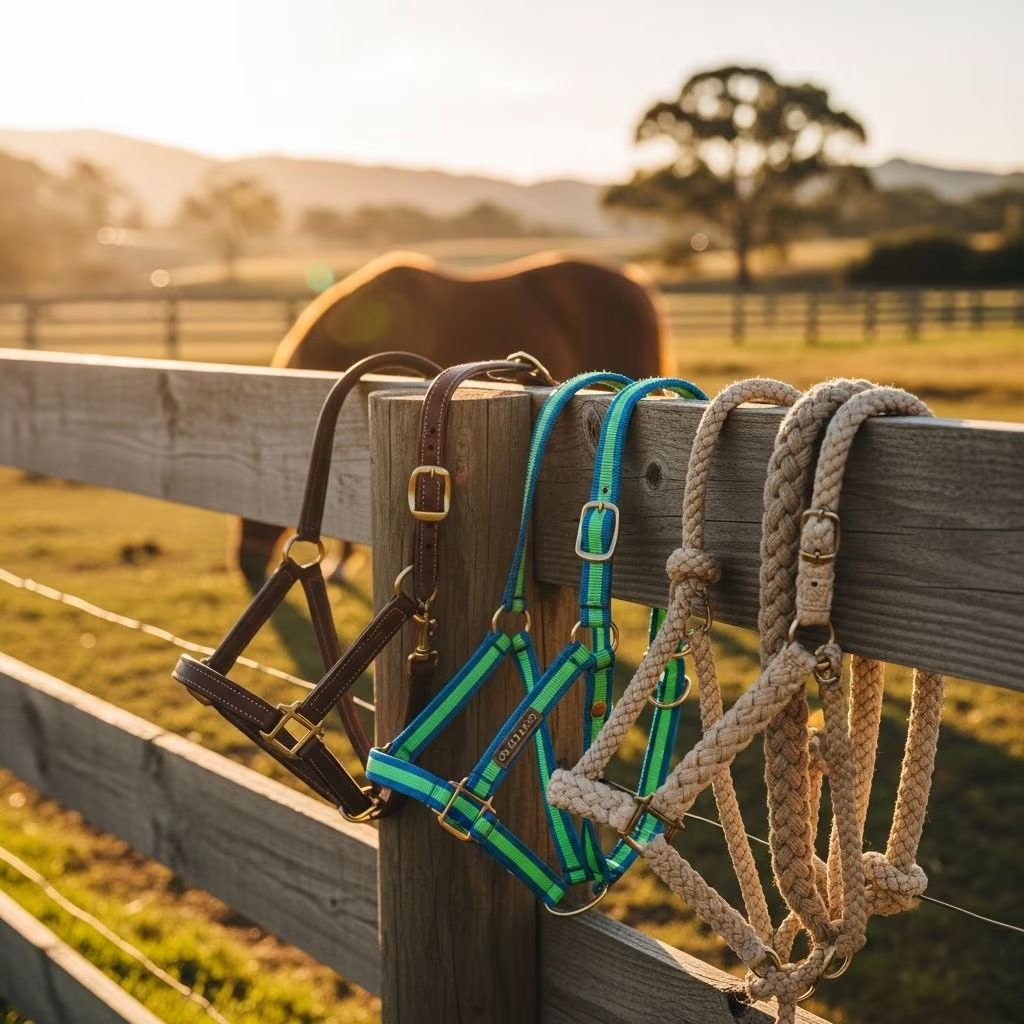
Leather halters represent a traditional choice that has remained popular for generations. These halters are crafted from quality leather, which develops character and patina over time. Leather halters are particularly valued for their elegant appearance and are often the preferred choice for showing and competitions. They offer a refined look that many equestrians appreciate, and they tend to become more supple and comfortable with age. Leather halters are considered safer for transport situations because they can break under excessive pressure, reducing the risk of injury if a horse becomes entangled. However, leather requires regular maintenance including cleaning and conditioning to keep it in good condition and prevent cracking. The initial cost of leather halters is typically higher than other materials, but their durability and timeless appeal make them a worthwhile investment for many horse owners.
Nylon Horse Halters
Nylon halters have become increasingly popular due to their practicality and affordability. These halters are made from synthetic materials such as straight nylon or nylon webbing, making them exceptionally durable and resistant to wear and tear. One of the primary advantages of nylon halters is their ease of maintenance—they can be quickly cleaned with soap and water and require no special conditioning. Nylon halters come in a wide variety of colors and designs, appealing to horse owners who want to add style to their equipment. They are ideal for everyday use and are particularly popular in stable environments where multiple halters are needed in different sizes. The lightweight nature of nylon makes it comfortable for extended wear, and the affordability means owners can purchase several halters without significant expense. However, nylon halters lack the breakability of leather and breakaway halters, which can be a safety concern if a horse becomes entangled or caught on a fence or other objects. For this reason, many owners reserve nylon halters for controlled situations where this risk is minimized.
Breakaway Horse Halters
Breakaway halters are specifically designed with safety as the primary consideration. These halters feature a breakable component, typically a leather crown piece, that releases under excessive pressure. This design ensures that if a horse becomes caught or entangled, the halter will break rather than causing injury. The breakaway mechanism is engineered to hold securely during normal use but to give way when significant force is applied, providing peace of mind for horse owners concerned about their animal’s safety. When selecting a breakaway halter, consider the material of the breakable component and ensure it is appropriately sized for your horse’s head. The breakaway feature adds an extra layer of security, particularly when horses are turned out in pastures or left in tied situations where entanglement is a possibility.
Horse Rope Halters
Rope halters are made from materials such as rolled nylon rope or cotton blend webbing and are favored for their simplicity and effectiveness in training applications. These halters apply gentle pressure on the horse’s nose and cheekbones, making them particularly effective for groundwork and training due to their thicker rope construction. Rope halters are valued for their ability to provide precise communication between handler and horse, allowing for subtle directional cues. They are lighter weight than many other halter options and offer superior control for experienced handlers who understand pressure-and-release training methods. However, rope halters may not be as comfortable for prolonged wear and are best suited for specific training sessions rather than extended periods of turnout or stalling.
Horse Show Halters
Show halters are specifically designed to showcase your horse’s features while maintaining a refined, elegant appearance suitable for competition environments. These halters typically feature high-quality construction and finishing, often made from premium leather or fine nylon. Show halters prioritize aesthetics alongside functionality, with attention paid to color coordination and overall presentation. They are commonly used for halter classes, breed shows, and other competitive events where appearance is judged alongside the horse’s conformation. Show halters maintain the functionality needed for control and communication while elevating the presentation to meet competition standards.
Specialized Halters
Beyond the main categories, several specialized halter types serve specific purposes:
– Grooming Halters: Often featuring removable sections, grooming halters allow easy access to the horse’s face, ears, and eyes, facilitating hassle-free grooming sessions without needing to remove the entire halter- Shipping Halters: Padded for extra comfort and designed to protect horses during transport, shipping halters often include additional padding around the nose and poll for enhanced safety during travel- Padded Halters: Provide extra cushioning, making them ideal for horses with sensitive skin or for situations requiring extended wear
Selecting the Right Halter Material
The material of your halter affects its durability, maintenance requirements, appearance, and performance. Understanding the characteristics of different materials helps match your halter to your intended use.
| Material | Benefits | Disadvantages |
|---|---|---|
| Leather | Elegant appearance, improves with age, breaks under pressure for safety, durable with care | Requires regular maintenance and conditioning, higher initial cost, can crack if not cared for properly |
| Nylon | Affordable, easy to clean, durable, variety of colors and designs, lightweight, low maintenance | Does not break under pressure, lacks breakability of leather, less elegant appearance for showing |
| Rope | Excellent control and communication, lightweight, effective for training, simple construction | May be uncomfortable for extended wear, less padding, not ideal for casual daily use |
Fit and Comfort Considerations
A proper fit is essential for any halter, regardless of type or material. An ill-fitting halter can cause discomfort, reduce control, and create safety concerns for both horse and handler.
Achieving the Correct Fit
The halter should sit snugly around your horse’s head without pressing uncomfortably on the nose, cheekbones, or behind the ears. You should be able to fit two fingers beneath the noseband comfortably—enough room for circulation and comfort, but not so loose that the halter shifts during handling. The halter should not interfere with your horse’s ability to chew or breathe naturally. When fitted correctly, the halter allows for effective communication through gentle pressure while maintaining your horse’s comfort. Always adjust straps carefully, and check the fit regularly as your horse may need different sizing as it grows or changes weight.
Choosing the Right Halter for Your Activity
The type of halter you choose should align with your intended use. Different activities require different halter characteristics to ensure both safety and effectiveness.
Daily Handling and Turnout
For everyday use around the barn and pasture, nylon halters offer excellent practicality. Their durability, low maintenance, and affordability make them ideal for daily tasks. Many stables maintain a supply of nylon halters in various sizes for this purpose.
Training and Groundwork
Rope halters are particularly well-suited for training and groundwork due to their superior control and communication capabilities. They provide precise pressure points that allow experienced handlers to give subtle directional cues, making them invaluable for developing a responsive, well-trained horse.
Transport and Travel
When transporting your horse, opt for a leather halter or specialized shipping halter, which is often considered safer because it can break in an emergency, reducing the risk of injury. Shipping halters feature extra padding around the nose and poll for added comfort and protection during the journey.
Showing and Competition
For halter classes and breed shows, choose a leather halter with a top-of-the-range finish, combining comfort and elegance for an impeccable appearance. Show halters are specifically designed to showcase your horse while maintaining the refined presentation judges expect.
Horses with Special Needs
Consider your horse’s behavior and any specific preferences or sensitivities it might have. Some horses respond better to the gentle pressure of a rope halter, while others may require the security of a padded nylon halter or the safety features of a breakaway halter. Horses with sensitive skin benefit from padded halters that reduce pressure points and prevent rubbing.
Halter Maintenance and Care
Proper maintenance extends the life of your halter and ensures it remains safe and functional. Different materials require different care approaches. Nylon halters can be cleaned with warm soapy water and dried thoroughly. Leather halters should be cleaned regularly and treated with leather conditioner to prevent cracking and maintain suppleness. Rope halters require simple rinsing and air drying. Inspect all halters regularly for signs of wear, damage, or deterioration, and replace any halter that shows significant damage or weakening.
Frequently Asked Questions
Q: What is the difference between a halter and a headcollar?
A: These terms are used interchangeably. A halter and a headcollar refer to the same piece of equipment used for leading and controlling horses.
Q: How do I measure my horse for the correct halter size?
A: Measure the circumference of your horse’s muzzle at its widest point and the length of the head from the poll to the muzzle. Compare these measurements to manufacturer sizing charts to determine the appropriate size for your horse.
Q: Are rope halters suitable for all horses?
A: Rope halters are best suited for training and groundwork with experienced handlers. They may not be comfortable for extended wear or casual use, particularly for horses new to this style of halter.
Q: Can I leave a halter on my horse while it’s in pasture?
A: It’s not recommended to leave any halter on a horse unattended in pasture due to the risk of entanglement. If necessary, use a breakaway halter specifically designed for this purpose, as it will release under pressure if the horse becomes caught.
Q: How often should I replace my halter?
A: Replace your halter when it shows significant wear, damage, or weakening. With proper care and maintenance, a quality halter can last several years. Inspect regularly and replace as needed to ensure your horse’s safety.
Q: What’s the best halter for a young horse or foal?
A: Young horses should wear appropriately sized halters designed for their age and size, such as foal or weanling halters. Nylon halters in the correct size are practical for training young horses due to their durability and ease of adjustment as the horse grows.
Q: How tight should a halter be?
A: A halter should fit snugly but allow room for two fingers beneath the noseband. It should not restrict breathing or chewing, and should not leave pressure marks or rubs on the horse’s head.
References
- Horse Halter Types: Leather, Rope, Nylon, Breakaway – Their Use — The Equestrian. 2024. https://www.theequestrian.com.au/blogs/news/horse-halter-types
- How to choose the ideal halter for your horse: size and material — Smart Wag. 2024. https://smartwag.com/en-gb/ideal-halter-for-your-horse/
- The Ultimate Guide to Choosing the Best Halter for Your Horse — Equestroom. 2024. https://www.equestroom.com/blogs/equestrian-tips/the-ultimate-guide-to-choosing-the-best-halter-for-your-horse
- Riders’ Guide to Horse Halters — Farm House Tack. 2024. https://www.farmhousetack.com/blogs/barn-blog/riders-guide-to-horse-halters
- Haltering and Tying Horses — University of Missouri Extension. 2024. https://extension.missouri.edu/sites/default/files/legacy_media/wysiwyg/Extensiondata/Pub/pdf/agguides/ansci/g02844.pdf
- The Complete Guide to Horse Halters — The Ashva. 2024. https://www.theashva.com/blogs/our-blogs/the-complete-guide-to-horse-halters-the-ashva



