

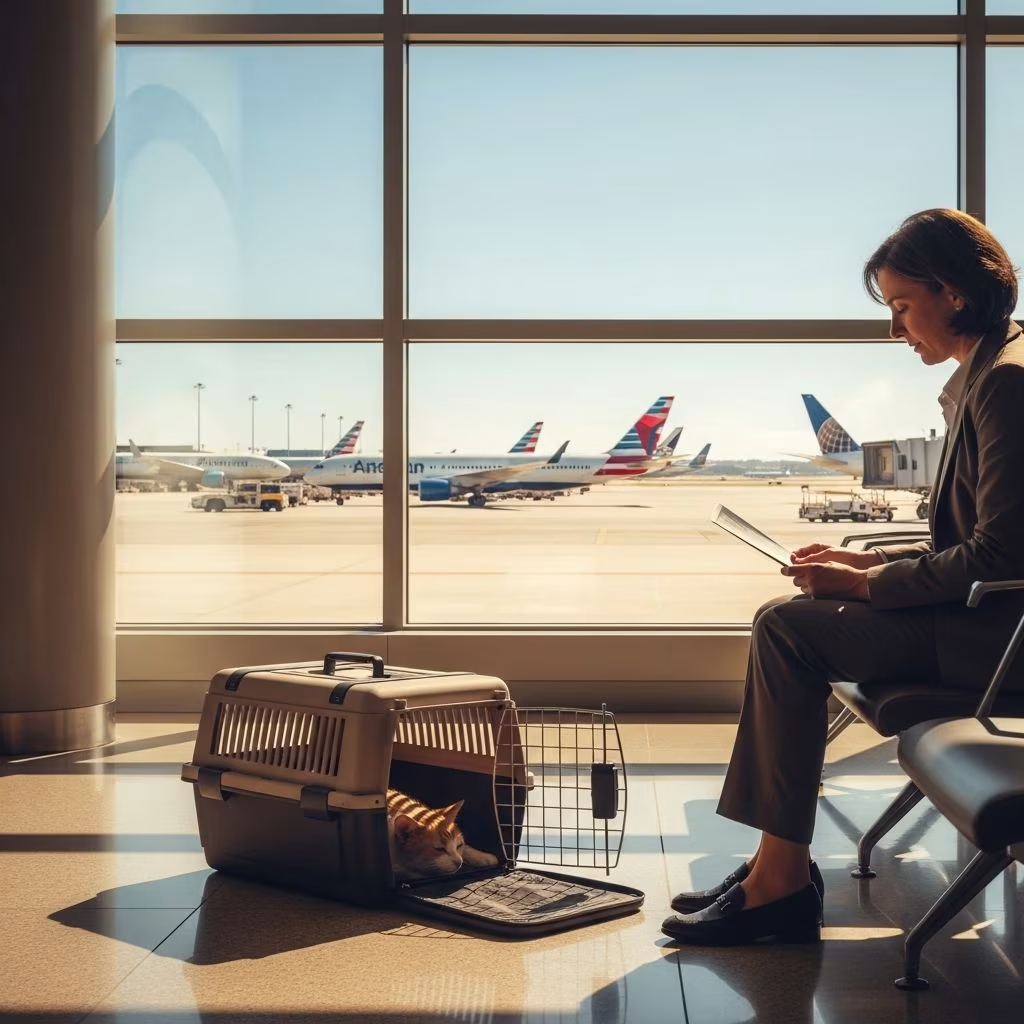
The Complete Airline Pet Policy Guide for U.S. Airlines
Planning to fly with your furry companion? Understanding airline pet policies is essential for a smooth and stress-free travel experience. Each U.S. airline has its own unique set of rules regarding pet travel, including specific restrictions on pet types, carrier dimensions, weight limits, and associated fees. This comprehensive guide covers everything you need to know before booking your pet’s flight, ensuring both you and your beloved dog can travel the friendly skies with confidence.
Understanding Airline Pet Policies: The Basics
Before you book your flight, it’s important to understand the fundamental differences between how airlines handle pet travel. Most major U.S. carriers allow pets to fly in the cabin as a carry-on item, though some restrictions apply. The most common allowed pets include dogs, cats, and household birds, though each airline maintains its own specific guidelines.
Key considerations when reviewing airline pet policies include:
– Pet type acceptance (dogs, cats, birds, rabbits, etc.)- Cabin versus cargo transport options- Carrier size and type requirements- Pet age and weight restrictions- Per-flight pet limits- Associated pet travel fees- Booking procedures and timing
Understanding these factors will help you select the right airline for your pet and prepare adequately for your journey.
Major U.S. Airlines Pet Policies
Alaska Airlines
Alaska Airlines stands out as one of the most comprehensive pet programs among U.S. carriers. The airline allows small dogs and cats to fly in the cabin, with some restrictions on rabbits and household birds. Soft carriers are required, measuring no larger than 17 x 11 x 9.5 inches, with no weight limit specified. Alaska permits up to three carriers in First Class and eight carriers in the main cabin per flight.
Pets are allowed on most flights up to 12 hours in length, including flights within the 48 contiguous United States and routes to Canada, Alaska, Mexico, Puerto Rico, St. Croix, and St. Thomas. However, trans-Atlantic flights do not permit cabin pets. The pet fee is $100 per pet. To book, contact Alaska Airlines reservations at 1-800-252-7522 after purchasing your initial flight ticket.
American Airlines
American Airlines accepts dogs and cats only for in-cabin travel, with trained service dogs allowed at no charge. The airline recently updated its policy so that your carry-on pet no longer replaces your carry-on item—you can now bring either a carry-on item or personal item in addition to your pet. Pets must remain in carriers that fit under the seat in front of you for the entire flight.
The pet fee is $125 one-way for domestic flights. Note that some aircraft and specific flights may not allow pets, and only military and State Department personnel can use cargo services for pet transport. Cargo pets are also restricted to/from Phoenix, Tucson, Las Vegas, and Palm Springs during May through September.
Delta Air Lines
Delta allows small cats, dogs, and birds to fly as carry-on pets. Pets must be at least eight weeks old for domestic travel and six months old if traveling to the U.S. from another country. Pets must fit comfortably in a soft-sided carrier measuring 18 x 11 x 11 inches and be able to fit under the seat in front of you.
One pet is allowed per carrier, though two pets of the same breed and size between eight weeks and six months old can travel together in one carrier if they fit comfortably. The pet carrier counts as your carry-on item, so you won’t be able to bring an overhead bag. Delta’s pet fee is $125 for each direction of travel on domestic flights.
United Airlines
United Airlines allows up to two pets per person on most flights, accepting cats and dogs only. However, if you’re bringing two pets, you must purchase two seats, with the second seat positioned adjacent to your assigned seat. There are no weight or breed limitations, but pets must remain in carriers that fit under the seat in front of you for the entire flight.
United does not allow cargo flights for pets unless you’re active duty military or a government employee. The pet fee is typically $150 per pet. When booking, purchase your ticket first, then select “Travel with a pet” during the booking process or add your pet via My Trips (note: the United app does not offer pet booking functionality).
Southwest Airlines
Southwest Airlines allows small pets to fly in the cabin for a $99 pet fee per direction. Up to five pets are permitted per flight, and it’s recommended to book your pet during your initial reservation at the Trip Extras page. Your pet counts as your carry-on item, so you can only bring an additional personal item onboard.
Notably, pets cannot fit under the Breeze Ascent section seats, so avoid booking in this seating area. Pet carriers must fit the airline’s specified dimensions and meet their soft-carrier requirements.
Frontier Airlines
Frontier Airlines allows small dogs, cats, rabbits, guinea pigs, hamsters, and small household birds on domestic flights only. The airline no longer accepts pets for international travel—only service animals are permitted on international routes.
For medium-to-large dogs too large for a carrier, you must purchase an adjacent seat by calling the airline’s call center. A weight limit of 79 lbs applies, and you’ll need to complete an Acceptance of Pet Liability Form at check-in. During the flight, your dog must be leashed, lay on the floor directly in front of the window seat while you occupy the aisle seat, and remain well-behaved.
Spirit Airlines
Spirit Airlines allows small domesticated pets, including cats, dogs, small household birds, and small domestic rabbits, to travel in the cabin on domestic flights and routes to Puerto Rico and St. Thomas in the U.S. Virgin Islands. Pets are not accepted in cargo, and a limit of six pets per flight applies.
Pets must travel in approved soft carriers no larger than 18 x 14 x 9 inches. Only one carrier per passenger is permitted, though two pets are allowed inside a single carrier. Notably, there is no weight limit for pets on Spirit Airlines.
Sun Country Airlines
Sun Country Airlines, an ultra-low-cost carrier, allows small cats and dogs on flights operating within the 48 continuous United States only. Pets are not permitted on flights to and from Alaska, Hawaii, Puerto Rico, or the U.S. Virgin Islands.
Pets must travel in approved carriers (soft or hard) measuring no larger than 16 x 10 x 8 inches and must fit under the seat in front of you. There is no weight limit. Sun Country charges $75 for advance pet bookings or $100 for walk-up requests, subject to availability. A limit of six pets per flight applies, with one pet per passenger maximum.
Comparing Airline Pet Policies
| Airline | Pet Carrier Size | Pet Fee | Pets Per Flight | International Flights |
|---|---|---|---|---|
| Alaska Airlines | 17 x 11 x 9.5 inches | $100 | 8-11 total | Select routes only |
| American Airlines | Under seat | $125 | Limited | No in-cabin |
| Delta Air Lines | 18 x 11 x 11 inches | $125 | Limited | No in-cabin |
| United Airlines | Under seat | $150 | 2 per person | No in-cabin |
| Southwest Airlines | Under seat | $99 | 5 total | No in-cabin |
| Frontier Airlines | Varies | Varies | Limited | No in-cabin |
| Spirit Airlines | 18 x 14 x 9 inches | Varies | 6 total | No in-cabin |
| Sun Country Airlines | 16 x 10 x 8 inches | $75-$100 | 6 total | No |
What to Pack When Flying With Your Pet
Preparing for air travel with your pet involves more than just booking a flight. You’ll need to gather and organize essential items to ensure your pet’s comfort and safety throughout the journey.
Essential items to pack include:
– Approved pet carrier (soft-sided for most airlines)- Current vaccination records and health certificate if required- Collar, leash, and ID tags with your contact information- Medications if your pet requires them- Water bowl and portable water bottle- Favorite toys or comfort items- Food and treats in appropriate quantities- Waste bags or portable litter box setup- Recent photos of your pet in case of loss- Airline-specific pet documentation forms
Additionally, consider your pet’s emotional and physical well-being. Some pets benefit from calming aids or anxiety wraps, though sedation is not recommended and is prohibited by many carriers. Arrive at the airport early to allow time for security screening and to ensure your pet remains calm before boarding.
Important Requirements and Restrictions
Age and Health Requirements
Most airlines require pets to meet minimum age requirements before flying. Delta requires pets to be at least eight weeks old for domestic flights and six months old if traveling to the U.S. from another country. Similar age restrictions apply across most major carriers.
Health certificates may be required, particularly for international travel or specific destinations. However, service animals with valid U.S. Department of Transportation forms do not require health certificates. Always verify specific health documentation requirements with your chosen airline before booking.
Service Animals vs. Emotional Support Animals
Service animals are treated differently from emotional support animals under airline policy. Trained service dogs are typically allowed in-cabin at no charge with valid documentation, including a DOT Service Animal Air Transportation Form. The service dog must fit in the space at your feet for the duration of the flight.
Emotional support animals must travel under regular pet policy, meaning they must fit in a carrier, are subject to pet fees, and count against the airline’s per-flight pet limit. This distinction is important for pet owners seeking to understand their travel options and associated costs.
Cargo and Checked Pet Options
Most airlines no longer accept checked pets or cargo pets for general travelers. Only active duty military personnel and government employees can typically use cargo services for pet transport. Some carriers maintain climate-controlled cargo programs specifically designed for pet safety, like Alaska Airlines. Always inquire about cargo options if in-cabin travel is not feasible for your pet.
Booking Your Pet’s Flight: Step-by-Step Guide
The process for booking pet travel varies by airline, but generally follows these steps:
– Purchase your airline ticket first- Contact the airline’s reservations department or use their website to add your pet- Specify your pet’s type, weight, and carrier dimensions- Pay the associated pet fee- Receive confirmation of your pet’s reservation- Arrive at the airport early on travel day- Present your pet and documentation at check-in
Some airlines require phone calls to complete pet bookings, while others allow online additions. Check your specific carrier’s website for their preferred booking method. It’s crucial to reserve your pet’s spot well in advance, as many airlines limit the number of pets per flight.
Frequently Asked Questions About Airline Pet Policies
Q: Can I bring my pet in the cabin without paying a fee?
A: Service animals with proper DOT documentation do not require payment. However, all other pets must pay the applicable pet fee, which ranges from $75 to $150 depending on the airline and travel direction.
Q: What happens if my pet doesn’t fit in the airline’s approved carrier?
A: If your pet is too large for an approved in-cabin carrier, some airlines like Frontier require you to purchase an adjacent seat. Alternatively, cargo shipping may be available for military or government employees. Contact your airline for specific options for larger pets.
Q: Are there breed or weight restrictions for flying pets?
A: Most airlines focus on carrier size rather than specific breeds. United Airlines explicitly states no breed restrictions, though carrier size and weight limits vary. Check your airline’s specific requirements, as some carriers may have restrictions based on safety or airline capacity.
Q: Can I fly internationally with my pet?
A: Most U.S. airlines do not allow pets in-cabin on international flights, with the exception of Alaska Airlines on select international routes. International pet travel typically requires cargo shipping or alternative transportation methods. Check with your airline about specific international routes and requirements.
Q: Should I sedate my pet before flying?
A: Sedation is generally not recommended for air travel and is prohibited by many carriers, including American Airlines. The Federal Aviation Administration and veterinary professionals advise against sedation due to potential complications at high altitudes. Consult with your veterinarian about safe alternatives for anxious pets.
Q: What documents do I need to bring for my pet’s flight?
A: Bring current vaccination records, health certificates if required by your destination, proof of pet age if under the minimum requirements, and any airline-specific pet documentation forms. Service animals require a valid DOT Service Animal Air Transportation Form.
Q: How early should I arrive at the airport when traveling with my pet?
A: Plan to arrive at least two to three hours before your flight. This provides time for security screening, pet check-in, and allows your pet to remain calm before boarding. Early arrival also ensures your pet is properly documented in the system.
Preparing for Your Pet’s Flight Experience
Beyond understanding airline policies and requirements, successful pet air travel depends on thorough preparation. Familiarize your pet with their carrier well before travel day by allowing them to spend time inside it and taking short trips. This reduces anxiety and ensures they’re comfortable during the flight.
Speak with your veterinarian about your pet’s fitness for air travel, particularly if your pet has health conditions or anxiety. Your vet may recommend specific preparation strategies or comfort measures to ensure a safe journey.
On travel day, keep your pet calm and avoid feeding a large meal immediately before departure. Bring portable water and a collapsible bowl to stay hydrated during the flight. After landing, allow your pet to stretch and use the bathroom before boarding your connecting flight or heading home.
Final Considerations for Pet Air Travel
Flying with pets requires careful planning and understanding of airline-specific policies. Each carrier maintains unique requirements regarding carrier dimensions, pet fees, per-flight limits, and booking procedures. Review your chosen airline’s complete pet policy before booking to ensure your pet meets all requirements.
Remember that pet travel is a shared responsibility between you, your airline, and your veterinarian. Proper preparation, accurate documentation, and adherence to airline guidelines will help ensure your pet arrives at your destination safe, healthy, and ready for your next adventure together.
References
- Traveling with pets — United Airlines. 2025. https://www.united.com/en/us/fly/travel/traveling-with-pets.html
- Pet Travel Overview — Delta Air Lines. 2025. https://www.delta.com/us/en/pet-travel/overview
- Pets − Travel information — American Airlines. 2025. https://www.aa.com/i18n/travel-info/special-assistance/pets.jsp
- Flying with Pets — Federal Aviation Administration. 2025. https://www.faa.gov/travelers/fly_pets
- Policies & Restrictions – Pets & Animals — American Airlines Cargo. 2025. https://www.aacargo.com/learn/animals-policy-and-restrictions.html



