

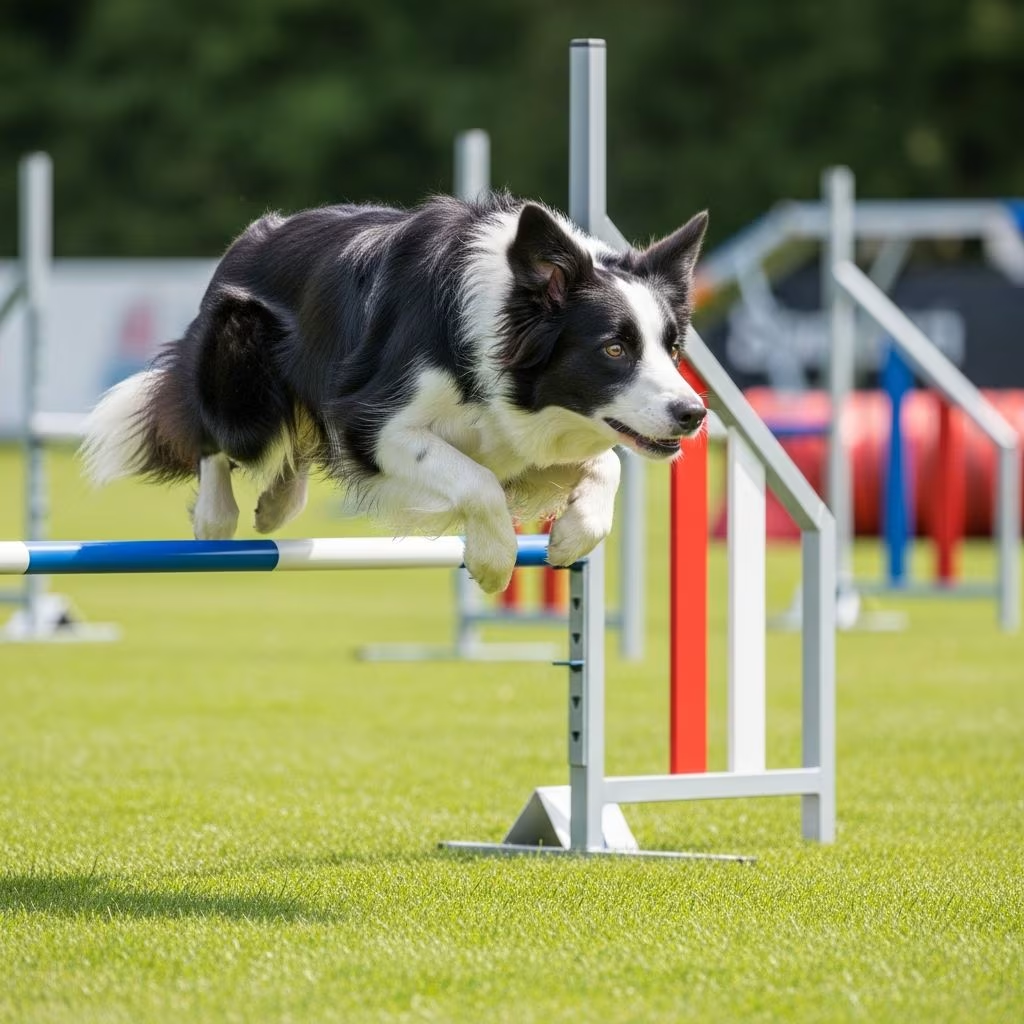
Competitive obedience represents one of the most engaging and rewarding dog sports available today. This discipline goes far beyond teaching basic commands; it encompasses a comprehensive training philosophy that strengthens the relationship between handler and canine while developing exceptional focus, precision, and responsiveness. Whether you’re a seasoned dog enthusiast or just beginning your journey into the world of canine athletics, understanding the fundamentals of competitive obedience can transform both your dog’s capabilities and your overall experience together.
Understanding the Fundamentals of Competitive Obedience
Competitive obedience is structured around specific exercises that demonstrate a dog’s ability to follow commands with accuracy and composure under pressure. This sport emerged as a formalized activity in the early twentieth century and has since grown into a globally recognized competition format with standardized rules and regulations. What distinguishes competitive obedience from casual training is the emphasis on precision, consistency, and performance quality across diverse environmental conditions.
The sport serves multiple purposes beyond simple command execution. It provides mental stimulation that keeps dogs engaged and challenged, establishes structure within training routines, and creates a framework for meaningful interaction between handlers and their companions. Many participants discover that the training process itself—rather than competition results—becomes the most fulfilling aspect of their involvement.
Unlike informal obedience training, competitive formats require understanding specific rulebooks and scoring systems. Each sanctioning organization maintains detailed guidelines about how exercises should be performed and what constitutes proper execution[10]. This standardization ensures fairness across competitions and allows handlers to prepare systematically for trials.
The Five Core Skill Categories in Obedience Training
Modern competitive obedience training integrates five fundamental skill categories that form the foundation of all exercises. Understanding these categories helps handlers organize their training progression and identify areas requiring additional focus.
- Heeling Skills: The ability to move in precise formation alongside the handler, maintaining consistent distance and pace whether on or off leash. This fundamental skill demonstrates the dog’s attentiveness and directional control.
- Recall Skills: The dog’s responsiveness to being called from a distance, including variations such as immediate returns, delayed recalls, and returns with specific positioning.
- Stationary Skills: The capacity to maintain positions such as sit, down, or stand for extended periods, often while the handler moves away or out of sight.
- Jumping Skills: Clearing obstacles at appropriate heights with controlled technique, demonstrating athleticism combined with obedience to directional cues.
- Retrieving Skills: Locating, carrying, and returning objects as directed, sometimes involving scent discrimination elements that add complexity to the exercise.
Competition Levels and Progression Pathways
Most competitive obedience structures incorporate multiple classification levels that allow handlers and dogs to progress as their skills develop. Beginning participants typically enter introductory or novice classes where fundamental exercises form the focus. As teams accumulate qualifying performances and demonstrate mastery, they advance through intermediate levels toward elite competition classes.
The Royal Kennel Club system, for example, organizes competitions across seven distinct levels, with all entrants beginning at the foundational introductory class. Dogs advance through the levels by consistently earning top placements, eventually reaching the most challenging classification where complex exercises demand absolute precision. This tiered approach prevents mismatched competition pairings and ensures that handlers progress at appropriate rates relative to their dog’s development.
Understanding this progression framework helps new competitors set realistic goals and maintain motivation throughout their training journey. Rather than attempting advanced exercises prematurely, handlers can celebrate incremental achievements while building skills systematically.
Essential Training Approaches and Methodologies
Early Foundation and Consistent Training Architecture
Successful obedience training begins during puppyhood when young dogs demonstrate natural learning agility and adaptability. Early exposure to basic commands creates neural pathways that facilitate faster learning as dogs mature. However, early training extends beyond teaching commands; it establishes the handler-dog relationship and introduces foundational concepts like focus, reward-seeking behavior, and routine adherence.
Consistency throughout the training process cannot be overstated. Dogs thrive within predictable environments where commands maintain identical meanings and training schedules remain stable. A training schedule that designates specific days for particular skill development—such as basic commands on Mondays, leash work on Wednesdays, and environmental socialization on Fridays—creates rhythm that dogs begin to anticipate and prepare for mentally.
Positive Reinforcement and Reward Timing
The timing of rewards represents one of the most critical variables in successful obedience training. Rewards delivered immediately following correct behavior create clear associations between the action and positive outcome. Delayed rewards lead to confusion about which behavior actually earned reinforcement, potentially undermining training progress.
Rewards should be varied and meaningful to individual dogs. While many dogs respond enthusiastically to food treats, others prefer play opportunities, toy access, or verbal praise. Pairing verbal markers like “yes” or “good job” with tangible rewards creates shortcuts that eventually allow handlers to prompt desired behaviors using voice cues alone, even without accompanying treats.
| Reinforcement Type | Application | Best Used For |
|---|---|---|
| Food Treats | Immediate reward after correct behavior | New skill introduction and basic obedience |
| Verbal Praise | Enthusiastic exclamations paired with treats | Building positive associations with handlers |
| Play Opportunities | Extra playtime after training sessions | Highly energetic dogs and motivation maintenance |
| Toy Access | Favorite toy presented after skill execution | Dogs with strong object drive |
Environmental Adaptation and Distraction Training
Dogs trained exclusively in quiet, distraction-free environments often struggle when asked to perform in stimulating competition settings. Systematic desensitization to environmental distractions improves focus maintenance across varying contexts. Training sessions should gradually introduce controlled distractions—other people, moving objects, ambient noise—while reinforcing attentive behavior.
Progressive exposure to competition environments, such as practicing near training venues or attending shows as observers, helps dogs acclimate to the sights, sounds, and energy typical of competitive events. This environmental familiarity reduces anxiety and allows dogs to concentrate on handler cues rather than surroundings.
Building and Strengthening the Handler-Dog Partnership
Competitive obedience ultimately rests upon a foundation of trust and mutual respect between handler and canine. This partnership extends beyond command execution to encompass genuine communication and emotional attunement. Handlers who develop the ability to read their dogs’ physical signals and emotional states can adjust training approaches accordingly, recognizing when dogs are fatigued, overwhelmed, or disengaged.
Activities that both handler and dog genuinely enjoy strengthen this bond significantly. Training need not be grim or solely performance-focused; incorporating play, exploration, and varied activities creates positive associations with training time. Dogs that view training sessions as opportunities for enjoyable interaction with their handler rather than obligations display greater enthusiasm and faster learning curves.
This relationship foundation becomes especially evident during competition, where handler confidence and calm demeanor directly influence canine performance. Dogs sensitive to handler tension or nervousness may respond with hesitation or distraction, while those trained within an atmosphere of trust and positivity maintain focus despite competition pressure.
Structured Practice Schedules and Progress Measurement
Session Duration and Frequency Optimization
Effective training rarely requires lengthy daily sessions. Research and competitive experience demonstrate that short, focused practice periods prove more effective than extended training marathons. Sessions lasting 15 to 30 minutes, conducted several times weekly, allow dogs to maintain concentration while preventing boredom or frustration.
Within these sessions, handlers should alternate between training and play, maintaining enthusiasm throughout the practice period. Dogs that associate training time primarily with work become less engaged over extended sessions, whereas those experiencing regular breaks and play opportunities sustain motivation indefinitely.
Progress Tracking and Milestone Recognition
Establishing measurable milestones allows handlers to recognize progress and maintain motivation throughout extended training timelines. Breaking large training objectives into manageable components creates opportunities for frequent success experiences. A handler might track progress through weekly assessments of specific skills, noting improvements in consistency, distance, or duration.
| Week | Skill Focus | Success Metric |
|---|---|---|
| 1-2 | Sit command reliability | 90% accuracy in varied locations |
| 3-4 | Down and stay duration | 3-minute stays with handler movement |
| 5-6 | Recall responsiveness | Reliable responses at 30+ feet distance |
| 7-8 | Heeling precision | Consistent positioning during directional changes |
Celebrating these intermediate achievements builds handler confidence and reinforces the dog’s positive associations with training. Each milestone represents genuine progress that compounds over time into competition-ready capability.
Accessing Professional Guidance and Training Resources
While self-directed training is possible, working with experienced obedience instructors accelerates progress and prevents the establishment of counterproductive habits. Reputable instructors possess competition experience themselves and understand breed-specific learning patterns and behavioral tendencies. They can diagnose problems quickly and adjust training approaches to match individual dog characteristics.
The American Kennel Club and other sanctioning organizations maintain lists of certified instructors and training clubs in most geographic areas. Group classes provide the additional benefits of environmental exposure and exposure to distractions in controlled settings. However, classes represent only the foundation; consistent home practice remains essential for genuine progress.
Patience, Individuality, and Long-Term Success
Dogs learn at varying rates, and patience remains one of the most valuable handler attributes throughout the training journey. Some dogs master fundamental commands within weeks, while others require months of repetition to achieve reliable response patterns. This variation reflects natural differences in cognitive processing, not deficiency or willfulness.
Maintaining consistent positive interactions despite frustration or slow progress builds the trust essential for long-term success. Handlers who treat training setbacks as learning opportunities rather than failures model resilience that encourages their dogs to persist through challenging exercises. This approach cultivates not merely obedience but genuine partnership built on mutual respect and shared achievement.
Frequently Asked Questions
At what age should dogs begin competitive obedience training?
Dogs can begin foundational training as early as 8 to 12 weeks of age, though formal competitive training typically commences around 6 months when attention span and physical maturity allow for more complex skill development. Early training establishes positive associations and basic behavioral patterns that facilitate faster advancement later.
How often should training sessions occur?
Most obedience trainers recommend multiple short sessions weekly rather than extended daily training. A typical schedule might include three to five sessions of 15 to 30 minutes each, allowing dogs to maintain focus while accumulating consistent practice repetitions.
Can mixed-breed dogs compete in obedience trials?
Many competitive obedience organizations welcome mixed-breed participants in addition to purebred dogs. Different organizations maintain varying eligibility requirements, so prospective competitors should verify specific rules with their local clubs.
What equipment is necessary for competitive obedience training?
Fundamental equipment includes appropriate collars or harnesses, leashes in regulation lengths, appropriate toys or treats for reinforcement, and potentially training props like jumps or retrieve articles. Specific requirements vary by competition level and sanctioning organization.
How long until dogs become competition-ready?
Timeline varies significantly based on individual dog characteristics, handler experience, and training intensity. Some teams require 18 to 24 months to reach competitive readiness, while others require additional time. Consistent training with proper guidance typically shows measurable progress within weeks, though competition-level proficiency develops gradually.
References
- Competitive Obedience Training for Dogs: 5 Key Tips — Off Leash K9 Oklahoma. 2024. https://offleashk9oklahoma.com/competitive-obedience-training-for-dogs/
- A Beginner’s Guide to Competition Obedience for Dogs — Joseph’s Dog Training. 2024. https://josephsdogtraining.com/a-beginners-guide-to-competition-obedience-for-dogs/
- New to competitive obedience? — The Royal Kennel Club. 2024. https://www.royalkennelclub.com/activities/other-activities/competitive-obedience/new-to-competitive-obedience/
- Competitive Obedience Training Guide: Improve Focus & Control — Top Tier Dog Gear. 2024. https://www.toptierdoggear.co.uk/blogs/training-tips-and-gear/competitive-obedience-training-guide
- Getting Started in Obedience — American Kennel Club. 2024. https://www.akc.org/sports/obedience/getting-started/
- Raising a Performance Puppy – 14-16 weeks — Obedience Road. 2024. https://www.obedienceroad.com/blog/raising-a-performance-puppy-14-16-weeks



