

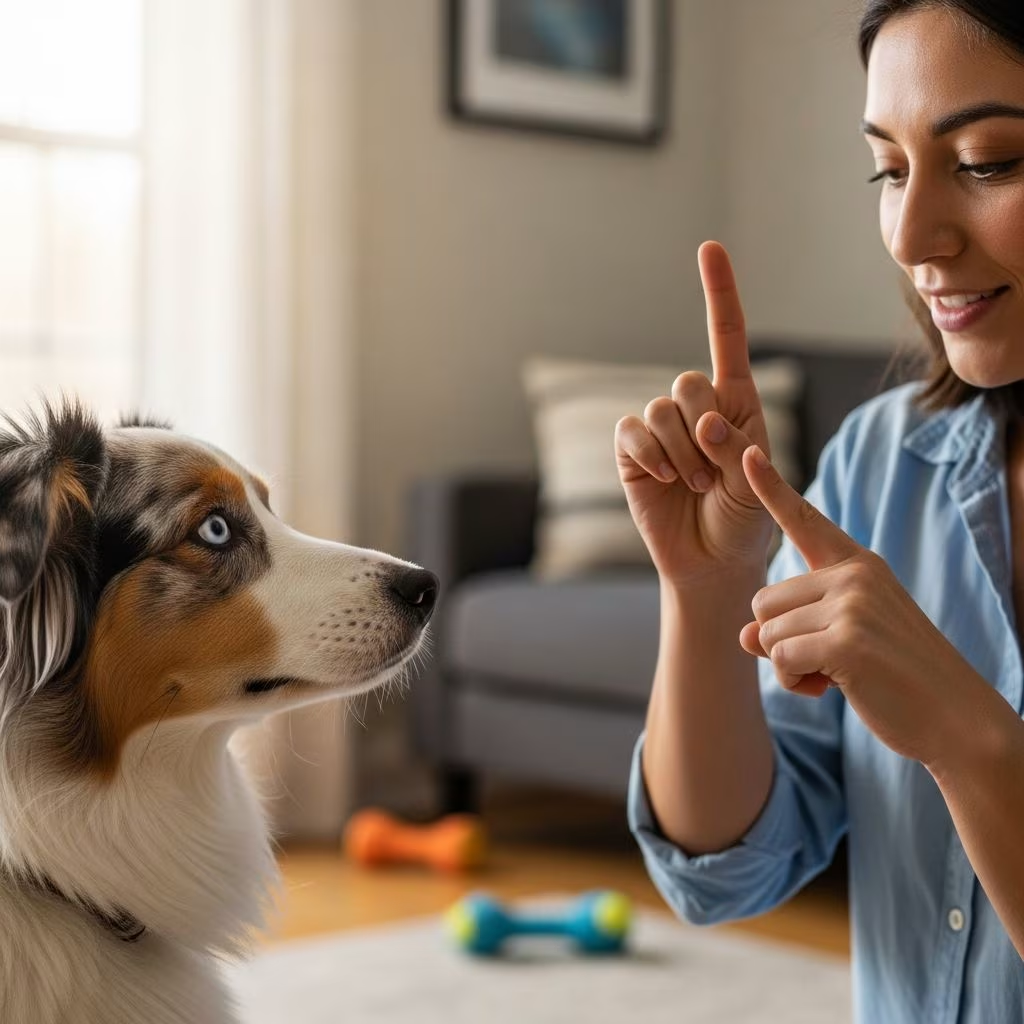
Deafness in dogs doesn’t diminish their ability to learn, bond, or thrive in a family setting. Many deaf dogs live happy, fulfilling lives alongside their owners who have adapted their training and communication methods. The key difference between training a hearing dog and a deaf dog lies not in the dog’s capacity to learn, but rather in how you convey instructions and feedback. Instead of relying on verbal commands, owners of deaf dogs must develop a visual language that their pets can easily recognize and respond to. This shift in approach opens up new possibilities for clear communication and can actually strengthen the bond between you and your canine companion.
Understanding How Deaf Dogs Perceive Their World
Deaf dogs navigate their environment through heightened reliance on vision, scent, and tactile sensation. Rather than listening to sounds, these dogs become exceptionally attuned to body language, facial expressions, and physical touch. This sensory adaptation means that your deaf dog is likely watching you more carefully than a hearing dog might, picking up on subtle gestures and movements you may not even realize you’re making.
The absence of auditory input actually creates an opportunity for owners to become more intentional communicators. Since your deaf dog cannot be distracted by sounds, they can focus entirely on visual signals and the physical cues you provide. This concentrated attention, when properly channeled through consistent training methods, often results in dogs that are remarkably responsive to their owners’ wishes.
Understanding this perceptual framework is the foundation for successful training. Your deaf dog isn’t limited by their hearing loss; they’re simply processing information through different sensory channels. By aligning your training methods with how your dog naturally perceives the world, you create an intuitive communication system that feels natural to both of you.
The Foundation of Visual Communication
Establishing a Clear Marking System
Before teaching specific commands, you must establish a visual marker that tells your dog exactly when they’ve done something right. This marker serves as a bridge between the desired behavior and the reward, creating a clear moment of understanding for your dog. The most common visual marker used with deaf dogs is the “thumbs up” signal, though you can adapt this to whatever feels most natural to you.
The process of establishing your marker is straightforward but requires consistency:
- Select a distinct hand signal (thumbs up, open hand flash, or a unique gesture you create)
- Show the signal to your dog immediately followed by a high-value treat
- Repeat this pairing multiple times in succession
- Practice in various locations throughout your home and outside
- Within a few repetitions, your dog will begin to associate the signal with reward
Once your dog reliably understands the marker, you can use it to communicate approval in the moment your dog performs any desired behavior. The marker essentially says “that’s exactly what I wanted, and a reward is coming.” This clarity accelerates learning and builds your dog’s confidence.
Creating Your Visual Signal System
Hand signals are the vocabulary of deaf dog training. Rather than speaking commands aloud, you’ll develop a set of hand signals that correspond to behaviors and expectations. The beauty of this system is its flexibility—while some trainers use standardized signals based on American Sign Language, you can create signals that are meaningful to you and your dog.
Effective hand signals share several characteristics:
- Distinctiveness: Each signal should look noticeably different from others so your dog can distinguish between commands
- Visibility: Signals should be large enough to see from a distance and performed at an angle your dog can clearly observe
- Consistency: Use the identical signal every single time you want to convey a specific command
- Clarity: Avoid signals that blur together or resemble other gestures in your repertoire
Common hand signals used in deaf dog training include palm-up movements for sit, flat palm facing the dog for stay, and an inward arm movement for come. However, the specific signals matter less than your commitment to using them consistently. Your dog will learn any signal you teach, provided you use it reliably across all training sessions and situations.
Building Strong Foundational Commands
Teaching “Sit”
The sit command is often the first behavior owners teach deaf dogs because it’s intuitive to lure and easy to mark. Begin by holding a high-value treat close to your dog’s nose, allowing them to smell and see it clearly. Slowly move the treat upward and slightly backward over your dog’s head. As your dog’s natural response is to follow the treat with their nose, their rear end will lower toward the ground. The instant their rear touches the floor, deliver your visual marker (thumbs up) followed immediately by the treat.
Repeat this luring sequence many times over several training sessions. Your dog will begin to anticipate that following the lure signal results in the marker and treat. Once your dog consistently sits when you show the lure signal, introduce your hand signal for sit (typically a palm-up gesture). Make the hand signal, then lure your dog into position, then mark and reward. Gradually fade the lure by making it smaller and less obvious until your dog responds to the hand signal alone.
For dogs who are both deaf and blind, you would use tactile signals instead of visual ones. For sit, this might involve two light taps on the hindquarters followed by the reward marker (two taps on the chest) and a treat. The principle remains identical—create a distinct signal, pair it consistently with the behavior and reward, then gradually rely on the signal alone.
Teaching “Stay”
The stay command requires your dog to remain in position until released. This is one of the more challenging commands to teach because it asks your dog to inhibit the impulse to move toward you or seek interaction. Success with stay relies heavily on patience and a systematic approach to gradually increasing duration and distance.
Start by positioning your dog in either a sit or down position. Give your stay signal (typically a flat palm facing your dog). If your dog remains in place for even half a second, immediately deliver your marker and reward. Your goal initially is not a long stay, but rather rewarding any moment your dog doesn’t move.
Build duration incrementally. If your dog maintains position for half a second, celebrate that success with markers and treats. Once half-second stays are reliable, increase your criterion to one second. Then move to two seconds, three seconds, and so on. Never rush this progression. If your dog struggles at a particular duration, return to shorter stays for a few sessions before attempting to extend again.
Once your dog masters stays at close range, begin introducing distance. Start by staying nearby while your dog holds position. Give your stay signal, count to one, deliver marker and reward. Then step back one small step, give the stay signal, wait one second, and return to your dog to deliver the marker and reward. The reward must come from you—your dog shouldn’t come to you for it. Gradually increase both distance and duration, always maintaining success so your dog’s confidence remains high.
Teaching “Come”
Reliable recall is essential for safety, especially with a deaf dog who cannot hear a warning call in potentially dangerous situations. Teaching come to a deaf dog requires starting in controlled environments and using highly motivating rewards. Begin in a confined space like a hallway or small room where your dog cannot wander far.
Hold a high-value treat where your dog can see it. Make eye contact or ensure your dog is looking in your direction. Use your come signal (typically an arm extended outward, then drawn inward toward your body). The moment your dog moves toward you, mark the movement and provide a reward. Repeat this many times, gradually increasing the distance by just a few inches at a time.
Once your dog reliably comes from short distances, practice in larger spaces while keeping your dog on a long leash for safety. Build distance gradually, always marking movement toward you and rewarding generously. Eventually, you can practice recalls in open areas, though safety-conscious owners should continue using long lines or fenced spaces until recall is absolutely reliable.
Advanced Training Techniques
The Touch Command for Navigation and Engagement
One of the most useful commands to teach a deaf dog—particularly one with vision loss—is a touch command. This behavior allows your dog to find your hand using scent and creates a bridge between you when distance or obstacles limit visual communication. Teaching touch involves luring your dog’s nose to your open hand using a treat.
Hold a treat in your closed fist close to your dog’s nose. Most dogs will naturally investigate with their nose, eventually finding and touching your hand. At that moment of contact, deliver your marker and open your hand to give the treat. Repeat this sequence dozens of times across multiple sessions until your dog actively seeks your hand when you present it.
Once your dog reliably touches your hand, you can use this command to redirect attention during walks, to help your dog navigate new spaces, and to maintain connection during training sessions. For blind and deaf dogs, the touch command becomes particularly valuable as it provides tactile confirmation of your presence and guidance.
The “Watch Me” Focus Command
Teaching your deaf dog to focus on your face ensures you have their attention before delivering commands or signals. This is especially important in group training settings or when other dogs or people are present. The watch me command is taught by placing a high-value treat directly under your dog’s nose, then slowly moving it toward your face as your dog follows it with their eyes.
When your dog makes direct eye contact with you, immediately deliver your marker (thumbs up) and reward. Repeat this many times throughout the day. Eventually, your dog will offer eye contact readily, and you can introduce a signal for watch me (such as pointing to your eyes or tapping your nose). Once reliable, this command becomes your gate-opener—you can use it to reset your dog’s focus whenever they become distracted.
Essential Training Tools and Equipment
While hand signals and positive reinforcement form the backbone of deaf dog training, certain tools can significantly enhance your communication and training effectiveness. Understanding which tools serve your training goals ensures you select equipment that supports your methods rather than detracts from them.
| Tool | Purpose | Usage Considerations |
|---|---|---|
| Vibration Collar | Attracts attention when your dog isn’t looking at you | Used only to gain attention; never as punishment. Test on yourself first to ensure it’s not startling. |
| Clicker with Flashlight | Provides a visual or tactile marker from greater distances | Useful for outdoor training or in bright environments where hand signals may be difficult to see |
| Long Training Leash | Maintains safety during recall practice in open areas | Essential for practicing distance work while preventing escape or injury |
| Treat Pouch | Keeps rewards immediately accessible during training | Enables rapid reinforcement within 3 seconds of desired behavior |
| High-Value Treats | Motivates learning and reinforces desired behaviors | Use special treats reserved only for training to maintain novelty and appeal |
The vibration collar deserves special mention because owners sometimes confuse it with shock collars. A vibration collar simply sends a subtle vibration to get your dog’s attention—it’s never used to punish or correct. Think of it as a silent notification system that says “look at me” without sound.
Creating an Effective Training Environment
Session Structure and Frequency
Successful deaf dog training relies on frequent, brief sessions rather than occasional lengthy ones. A deaf dog’s attention span during training isn’t fundamentally different from a hearing dog’s, but the visual focus required means sessions should typically last 10-15 minutes. Multiple short sessions throughout the day prove more effective than one long training block.
Begin each session with high-value treats readily available. Establish your training space as a dedicated area where your dog learns to expect focused interaction and rewards. As your dog progresses, you can gradually introduce training in new environments and add mild distractions, but always start learning in calm, controlled settings.
Building Confidence Through Success
Deaf dogs benefit enormously from a training philosophy that emphasizes setting them up for success. Never ask for a behavior your dog hasn’t learned or isn’t ready for. If your dog fails to respond to a command, it means the command isn’t yet solid enough or the environment contains too many distractions. In these moments, simplify the task to ensure success, then rebuild gradually.
Celebrate small victories enthusiastically. Every successful hand signal recognition, every brief moment of eye contact, every step toward you deserves recognition. This positive feedback builds your dog’s confidence and creates enthusiasm for training sessions. Over time, your deaf dog will eagerly anticipate training time because they’ve learned it’s consistently rewarding and fun.
Special Considerations for Deaf and Blind Dogs
Dogs who are both deaf and blind face additional communication challenges, but they absolutely can be trained and can live quality lives. Communication with these dogs relies heavily on tactile signals—gentle touches that correspond to different commands. For example, two light taps on the head might mean “good job,” while two taps on the hindquarters mean “sit.” Once your dog learns the tactile language, training proceeds similarly to deaf-only dogs, just with touch replacing vision.
Consistency becomes even more critical with deaf-blind dogs because they have fewer sensory pathways through which to receive information. Every training session must use identical tactile signals in identical contexts. Additionally, avoid moving furniture or creating environmental changes that could disorient your blind dog.
Nose work games are particularly enjoyable for deaf-blind dogs. Hide treats in your hand and let your dog use their superior sense of smell to locate and retrieve rewards. This engages their strengths and provides mental stimulation alongside training benefits.
Patience, Consistency, and Your Role as Communicator
Training a deaf dog fundamentally requires you to become a more conscious, deliberate communicator. You cannot rely on shouted commands to get your dog’s attention from across the room. Instead, you must ensure your dog is looking at you before delivering any signal. This actually creates a more attentive, focused relationship than many hearing dog owners experience.
Your demeanor during training profoundly influences your dog’s learning and enthusiasm. Remain calm, patient, and positive throughout training sessions. Your dog responds to your emotional energy, so frustration or impatience will dampen their learning. When training feels challenging, take a break and return to it later with fresh perspective and renewed patience.
Remember that training a deaf dog is not fundamentally harder than training any other dog—it’s simply different. The communication channel changes, but the principles of positive reinforcement, consistency, and clear messaging remain identical. Many owners find that training their deaf dog deepens their connection and teaches them to be more thoughtful, intentional pet owners.
Frequently Asked Questions
Can deaf dogs be reliably trained to come when called?
Yes, deaf dogs can develop excellent recall using visual signals and consistent training. However, this requires more controlled practice than hearing dogs, particularly during the early stages. Always use long leashes or fenced areas until recall is absolutely reliable. The key is starting at short distances and building gradually while maintaining high motivation through special treats and enthusiastic rewards.
What if my deaf dog won’t make eye contact during training?
Some dogs naturally make less eye contact than others. You can build this behavior using treats positioned at your face level and rewarding any moment your dog glances toward your eyes. Use the watch me command extensively. Additionally, ensure you’re standing or positioning yourself where your dog can easily see you during training sessions.
Are deaf dogs at a disadvantage compared to hearing dogs?
Deaf dogs face safety challenges in environments where auditory warnings would help, but they aren’t inherently disadvantaged in learning or behavior. Many deaf dogs live perfectly normal lives with owners who adapt their communication methods. Some owners report that their deaf dogs are exceptionally focused and responsive once proper visual communication is established.
How long does it typically take to train a deaf dog?
Timeline varies based on the individual dog, age, and prior training experience. Young puppies often learn new signals within a few days to weeks. Adult dogs may take longer, particularly if they’re transitioning from hearing to deafness. Consistency matters more than speed—it’s better to spend months building solid, reliable responses than rushing through training.
References
- Training Tips for Deaf or Deaf and Blind Dogs — Briargate Veterinary Hospital. Accessed March 2026. https://briargatevets.com/news/teach-dog-tricks
- Training a Deaf Dog: Hand Signals, Tools, and Patience — Unconditional Rescue. Accessed March 2026. https://www.unconditionalrescue.org/training-a-deaf-dog-hand-signals-tools-and-patience/
- Teaching and Training a Deaf Dog — VCA Animal Hospitals. Accessed March 2026. https://vcahospitals.com/know-your-pet/teaching-and-training-a-deaf-dog
- How to Communicate with a Deaf Dog — Karen Pryor Clicker Training. Accessed March 2026. https://clickertraining.com/how-to-communicate-with-a-deaf-dog/
- Teach Your Deaf Dog the “Watch Me” Cue — Deaf Dogs Rock. Accessed March 2026. https://deafdogsrock.com/teach-your-deaf-dog-the-watch-me-command



