

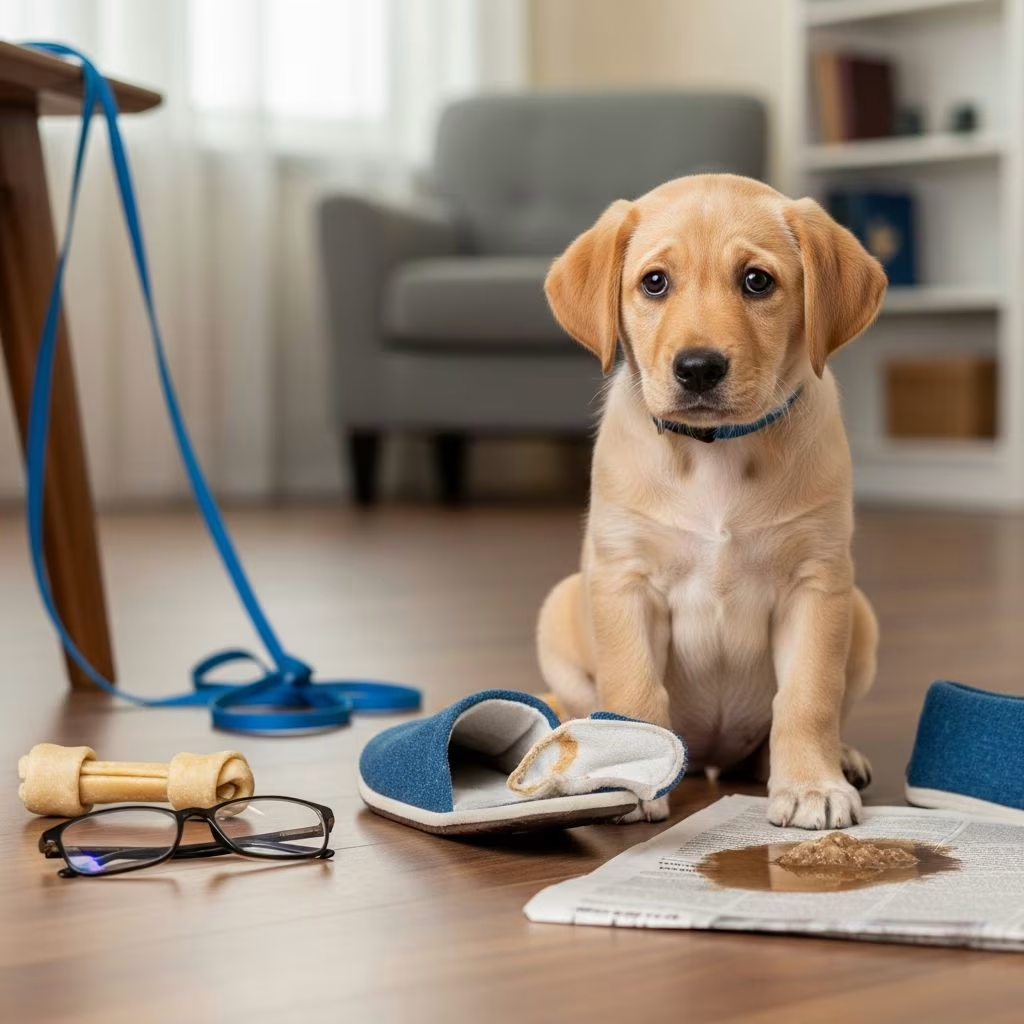
7 Common Puppy Training Mistakes to Avoid
Bringing a new puppy home is an exciting adventure, but it also comes with significant responsibility. One of the most important aspects of puppy parenthood is proper training. However, many well-intentioned dog owners inadvertently make critical mistakes during the training process that can hinder their puppy’s development and create behavioral problems down the line. Understanding these common pitfalls and learning how to avoid them is essential for raising a well-behaved, confident dog.
The good news is that most puppy training mistakes are easily correctable once you recognize them. By learning what not to do, you can set your puppy up for success from the very beginning. Let’s explore the seven most common puppy training mistakes and discover practical solutions for each one.
Mistake #1: Giving Your Puppy Too Much Freedom
The Problem
One of the most significant errors new puppy owners make is allowing their puppies unrestricted access to the entire house before they’re ready. Many people assume that puppies need freedom to explore and learn, but the opposite is actually true. Puppies thrive with structure and boundaries, much like children. Without proper management, puppies will inevitably get into trouble, have accidents inside the house, and develop unwanted behaviors.
Why It Happens
This mistake typically occurs because owners underestimate how much supervision and management a young puppy requires. After bringing home an adorable new family member, many people fall into the trap of treating the puppy like a full-fledged family member with adult capabilities. They may also want to avoid confining the puppy and mistakenly believe this is restrictive or unkind.
The Solution
Instead of giving your puppy free reign of the house, implement a structured management plan. Use baby gates to limit access to certain areas, establish designated play zones, and utilize crate training as a safe space for your puppy. When you cannot actively supervise your puppy, confine them to a small, puppy-proofed area. This containment prevents accidents, reduces destructive behavior, and helps with housebreaking. In their natural environment, puppies always have older, more experienced dogs guiding their behavior. Your job as an owner is to replicate this structure through thoughtful management. As your puppy demonstrates reliability and age-appropriate maturity, you can gradually expand their freedom.
Mistake #2: Not Paying Attention to Potty Signs
The Problem
Housebreaking challenges often stem from owners not recognizing or responding to their puppy’s potty signals. Many puppies display clear signs when they need to eliminate—sniffing the ground, circling, whining, or heading toward the door—but busy owners frequently miss these cues. This leads to indoor accidents that could have been easily prevented with proper attention and timing.
Why It Happens
Life gets hectic, and it’s easy to miss subtle behavioral signals, especially when you’re juggling work, family, and other responsibilities. Additionally, some breeds are simply easier to housetrain than others. Larger breeds, in particular, often have a natural instinct to keep their sleeping areas clean and are practically born housebroken if given the opportunity. Smaller breeds and certain individual dogs may require more vigilant monitoring and reinforcement.
The Solution
Develop a keen awareness of your puppy’s body language and behavior patterns. Learn to recognize the specific signs your individual puppy displays before needing to go outside. Establish a consistent potty schedule and take your puppy out frequently—typically after meals, after play sessions, after naps, and before bedtime. When you catch your puppy exhibiting potty signals, immediately take them outside and praise enthusiastically when they eliminate in the appropriate location. Keep a log of your puppy’s elimination patterns to predict when they’re most likely to need a bathroom break. This proactive approach significantly accelerates the housebreaking process and reduces frustrating indoor accidents.
Mistake #3: Calling Your Puppy with an Angry or Exasperated Tone
The Problem
Your tone of voice during training has a profound impact on your puppy’s behavior and willingness to obey. Many owners make the critical error of calling their puppy using an angry, frustrated, or exasperated tone, especially after the puppy has misbehaved. This creates a dangerous association where the puppy learns to fear or avoid the command rather than respond positively to it.
Why It Happens
This mistake typically occurs when owners are frustrated after chasing their puppy or dealing with misbehavior. When finally cornering or catching the puppy, they may scold or call out angrily. While this might seem like an appropriate punishment in the moment, it actually teaches the puppy to associate coming to you with negative consequences, making future recalls even more difficult.
The Solution
Always use a positive, upbeat tone when calling your puppy, regardless of the situation. Your puppy should stop a bad behavior because of your instructions, not out of fear. Fear-based training significantly increases the risk of aggression and biting as your puppy matures. Instead, create strong positive associations with commands like “come” by pairing them with wonderful rewards such as high-value treats, praise, or play. Even if your puppy has misbehaved, resist the urge to call them angrily. If you must address misbehavior, do so only if you can catch them in the act and deliver correction calmly and immediately. Otherwise, let the behavior go and focus on preventing it in the future through better management and supervision.
Mistake #4: Not Socializing with Older, Bigger Dogs
The Problem
Proper socialization is crucial for puppies, but many owners make the mistake of preventing their puppies from interacting with older, larger dogs. This well-intentioned but misguided approach actually hinders your puppy’s social development and communication skills. Puppies learn invaluable lessons from mature dogs about appropriate behavior, social boundaries, and conflict resolution.
Why It Happens
Owners often worry that older, bigger dogs might harm their small puppies or that the puppy will be overwhelmed by larger companions. While supervision is certainly necessary, completely isolating puppies from mature dogs deprives them of critical learning opportunities. The concern for safety sometimes overshadows the importance of natural socialization.
The Solution
Strategically expose your puppy to well-socialized, friendly adult dogs under controlled conditions. Supervise all interactions initially to ensure they remain positive and safe. Adult dogs naturally correct inappropriate puppy behavior in ways that teaching alone cannot replicate. They set boundaries and teach your puppy important canine social skills, such as bite inhibition and reading body language. Gradually increase the variety of dogs your puppy meets, including different sizes, ages, and temperaments. This exposure builds your puppy’s confidence and social competence, resulting in a more well-adjusted adult dog who navigates social situations with ease and appropriate behavior.
Mistake #5: Using Your Puppy’s Name as a Punishment
The Problem
This is one of the most pervasive and damaging training mistakes owners make. Using your puppy’s name in a negative context—yelling their name when they’re misbehaving, using it as part of a scolding, or associating it with punishment—fundamentally damages your puppy’s relationship with their own name. Over time, your puppy learns to avoid or ignore their name rather than respond to it with enthusiasm.
Why It Happens
This mistake is incredibly common because it feels natural and immediate. When your puppy is doing something wrong, your instinct is to call out their name to get their attention before correcting the behavior. Unfortunately, this well-intentioned impulse creates negative associations with what should be the most positive word in your puppy’s vocabulary.
The Solution
Make a firm commitment to never use your puppy’s name in a negative context. Your puppy’s name should be exclusively associated with positive experiences, rewards, and affection. Instead of saying “Buddy, no!” when your puppy is misbehaving, simply say “No” or redirect the behavior without using the name. When you do use your puppy’s name, always follow it with something wonderful—a treat, praise, attention, or play. This creates a powerful positive association where your puppy eagerly responds to their name because it predicts good things. Over time, your puppy’s name becomes a reliable attention-getter and a foundation for all future training commands.
Mistake #6: Ignoring Basic Training Fundamentals
The Problem
Many excited new puppy owners skip over foundational training and jump directly to teaching fancy tricks and complex behaviors. While teaching “sit” or “paw” isn’t inherently wrong, neglecting the most important skill—impulse control and calmness—sets puppies up for behavioral challenges. Basic obedience and self-control are the true foundation of all other training.
Why It Happens
The appeal of teaching tricks is understandable. It’s fun, impressive, and provides immediate gratification. New owners are often eager to showcase their puppy’s abilities and underestimate the importance of less flashy foundational skills like settling, waiting patiently, and responding to redirects.
The Solution
Before introducing advanced behaviors or impressive tricks, ensure your puppy has mastered essential basics: sitting on command, waiting, coming reliably, and maintaining calm behavior. Practice settling—teaching your puppy to relax on a mat or in a designated space. These foundational skills prevent most behavioral problems before they start. Once your puppy demonstrates solid understanding of these basics in various environments and situations, you can gradually introduce more advanced training. This methodical approach builds a confident, well-mannered dog rather than a trick-performing puppy with underlying behavioral issues.
Mistake #7: Inconsistency in Training Methods and Commands
The Problem
Inconsistency is perhaps the most underestimated factor in failed puppy training. When different family members use different commands, reward differently, or enforce rules inconsistently, puppies become confused about expectations. Dogs don’t generalize well; if “Sit” means one thing to mom but something different to dad, your puppy struggles to understand what’s actually expected.
Why It Happens
Family members often have different training philosophies, patience levels, and approaches. What one person considers appropriate, another might overlook. This inconsistency is compounded by the nuances of human language. Adults might say “Sit,” “Sit down,” “Take a seat,” or “Plant yourself,” assuming the puppy understands these variations mean the same thing. But to your puppy, these are completely different commands.
The Solution
Establish clear, consistent training protocols that all household members understand and follow. Choose specific verbal commands and hand signals for each behavior and use them identically every time. Create a written training guide that outlines expectations, commands, reward types, and consequences. Hold regular family meetings to ensure everyone is aligned on training approach and objectives. Use the same high-value treats for rewards, the same equipment, and the same reaction to both correct and incorrect responses. When all family members deliver consistent messages, your puppy quickly learns what’s expected and training progresses dramatically faster. Consistency isn’t just helpful—it’s absolutely essential for effective puppy training.
Additional Tips for Successful Puppy Training
Timing Is Everything
In puppy training, timing your rewards and corrections is absolutely critical. Puppies must receive immediate feedback—within 1-2 seconds—to associate your response with their behavior. Praising or correcting too late or too early creates confusion about what behavior earned the consequence. Practice your timing during training sessions so it becomes second nature.
Keep Sessions Short and Positive
Puppies have limited attention spans. Training sessions should typically last 5-10 minutes, with multiple short sessions throughout the day being more effective than one long session. Always end on a positive note, even if it means asking for a simple behavior your puppy definitely knows. This maintains your puppy’s enthusiasm for training and prevents the development of negative associations.
Choose Appropriate Rewards
Not all treats are created equal. Use high-value rewards—foods your individual puppy finds especially motivating—during new behavior training. Beef liver, small pieces of chicken, or commercial high-value training treats work well for most puppies. As behaviors become more reliable, you can transition to lower-value treats or non-food rewards like praise and play.
Frequently Asked Questions
Q: At what age should I start puppy training?
A: You can begin basic training as soon as your puppy comes home, typically around 8 weeks old. Early puppies are actually sponges for learning, so starting early provides significant advantages. Begin with simple commands and focus on socialization and house training initially.
Q: How long does it take to train a puppy?
A: Basic obedience training typically takes several weeks to a few months, depending on the puppy’s age, breed, and consistency of training. However, ongoing reinforcement throughout your dog’s life is necessary to maintain good behavior.
Q: Should I use punishment-based training methods?
A: No. Modern, evidence-based training emphasizes positive reinforcement over punishment. Punishment-based methods increase anxiety, fear, and aggression. Reward-based training is more effective, safer, and builds a stronger bond between you and your puppy.
Q: What should I do if my puppy isn’t responding to training?
A: First, evaluate your consistency, timing, and reward value. Ensure all family members are using identical commands and approaches. Consider whether your puppy is getting enough practice and reinforcement. If problems persist, consult a certified professional dog trainer for personalized guidance.
Q: Can I train my puppy without professional help?
A: Many owners successfully train puppies independently by educating themselves through reputable resources. However, professional trainers can accelerate the process and address specific behavioral issues more effectively. Consider professional help if training challenges arise.
References
- 5 Common Dog Training Mistakes to Avoid — American Kennel Club. Accessed 2025. https://www.akc.org/expert-advice/training/train-dog-common-mistakes-avoid/
- Common Puppy Training Mistakes New Owners Make — The Puppy Academy. 2020. https://www.thepuppyacademy.com/blog/2020/1/6/common-puppy-training-mistakes-new-owners-make
- 21 Dog Training Mistakes: Common Errors & How to Fix Them — Pupford. Accessed 2025. https://pupford.com/blogs/all/21-common-dog-training-mistakes
- Dog Training Mistakes — Pet Doctor. 2024-01-15. https://dogandcat.com/2024/01/15/dog-training-mistakes/
- 10 Common Mistakes That Make Puppy Behavior Worse — 3 Lost Dogs. Accessed 2025. https://www.3lostdogs.com/10-common-mistakes-that-make-puppy-behavior-worse/
- 8 Puppy Training Mistakes You’re Making — Country Living Magazine. Accessed 2025. https://www.countryliving.com/uk/wildlife/pets/a64556650/puppy-training-mistakes/



