

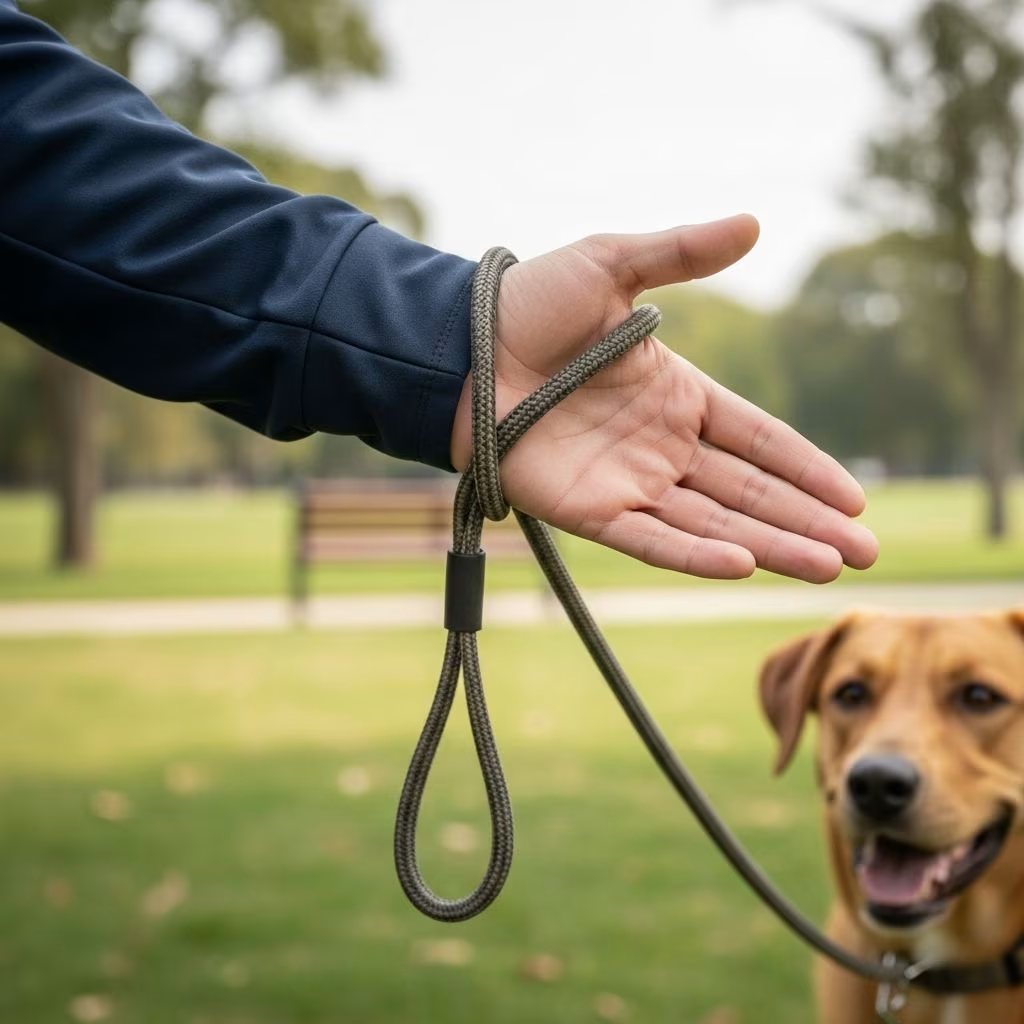
Training your dog should strengthen your bond and make life together smoother, but subtle mistakes can sabotage your efforts. Many owners unknowingly repeat commands, time rewards poorly, or miss key cues, leading to frustration for both dog and human. This guide breaks down 10 common pitfalls drawn from expert trainers, with actionable fixes to get back on track.
Calling Them Over and Over
One of the most frequent errors is repeating your dog’s name or ‘come’ command multiple times when calling them. This teaches your dog they don’t need to respond until the fourth or fifth repetition, diluting the cue’s effectiveness. Instead of a clear signal, it becomes nagging, and your dog learns to ignore initial calls.
To fix this, say the command once clearly and firmly. If they don’t respond, calmly walk toward them without repeating. Use a long leash in open areas for practice, rewarding immediate compliance with high-value treats. Consistency rebuilds the cue’s power quickly.
Using Only One Reinforcer
Relying solely on treats for every good behavior leads to dependency. When treats run out or excitement fades, your dog loses motivation. Variety keeps training dynamic and mimics real-life rewards.
- Praise and petting for calm sitting.
- Toys or play for fetch success.
- Walk continuation as a reward for heeling.
- Access to favorite spots for staying put.
Rotate reinforcers based on the behavior’s value. High-distraction scenarios need premium treats, while low-key moments suit verbal praise.
Giving Treats at the Wrong Time
Dogs associate rewards with their last action, not your intent. Handing a treat after 14 ignored ‘sit’ commands reinforces ignoring you, as they link the reward to finally complying on their timeline.
Time rewards precisely: Mark the desired behavior with a clicker or ‘yes!’ the instant it happens, then deliver the treat within seconds. Practice in low-distraction settings first to build the association.
Going on Autopilot on Walks
Daily walks are prime training opportunities, but distractions like phone calls mean missed chances to reinforce good behavior. Your dog equates unrewarded actions with extinction, blurring lines between wanted and unwanted habits.
Stay present: Reward loose-leash walking every few steps. Use walks for mini-sessions—ask for sits at corners, heel past distractions. Short, focused interactions trump autopilot routines.
Shushing Them
Saying ‘shh’ or ‘quiet’ to barking often backfires, as any attention reinforces the noise. Dogs thrive on feedback, positive or not.
Teach an alternative: Train ‘look at me’ by saying their name, treating when eyes meet yours. For barking, redirect to a quiet behavior like ‘place’ on a mat, rewarding silence. Practice daily in calm settings.
Saying “Down” When Inappropriate
Using ‘down’ for off-furniture or car spots confuses dogs, who learn it as lying flat. Mixed cues erode trust in commands.
Use specific words: ‘Off’ for furniture, ‘place’ for beds, ‘down’ only for lying down. Pair with hand signals—a flat palm for down, sweeping gesture for off. Clarity prevents mix-ups.
Not Using Hand Signals
Verbal cues alone limit success in noisy environments or with hearing-impaired dogs. Visual signals boost reliability by 50% in studies on multi-cue training.
Introduce signals alongside words: Raised hand for sit, flat palm for down. Practice in quiet, then distracting areas. Dogs process visuals faster than sound, enhancing response rates.
| Command | Verbal Cue | Hand Signal |
|---|---|---|
| Sit | “Sit” | Raised fist to chest |
| Down | “Down” | Flat palm descending |
| Stay | “Stay” | Open palm facing dog |
Not Being Direct
Vague instructions like ‘be good’ or ‘stop it’ leave dogs guessing, like telling a toddler ‘do nothing.’ Specific directions guide success.
Give clear tasks: ‘Go to bed’ with a point, demonstrate if needed, reward settling. Provide enrichment like stuffed Kongs to occupy them. Directness reduces anxiety and builds confidence.
Expecting Too Much
Dogs learn incrementally; assuming instant mastery ignores their perspective. Testing ‘stay’ by walking away too soon rewards breaking it.
Build gradually: Reward 1-second stays, add duration/distraction slowly. Every interaction counts—door sits, meal manners. Patience yields reliable behaviors.
Frequently Asked Questions (FAQs)
What if my dog ignores commands despite training?
Check consistency across household members and timing. Revisit basics with high-value rewards in low-distraction spots.
How long should training sessions last?
5-10 minutes, multiple times daily. Short bursts prevent fatigue and maintain focus.
Can older dogs unlearn bad habits?
Yes, with positive reinforcement and patience. Focus on rewarding alternatives to extinguish issues.
Is a clicker necessary?
No, but it precisely marks behavior. ‘Yes!’ works too.
What about punishment-based training?
Avoid it; it breeds fear and shutdown. Positive methods build trust faster.
Incorporate these fixes into daily routines for transformative results. Consistent, positive training turns mistakes into milestones, fostering a happier, more responsive dog.
References
- 10 Dog-Training Mistakes You Don’t Know You’re Making — Kinship. 2023. https://www.kinship.com/dog-behavior/dog-training-mistakes
- Common Dog Training Mistakes & How to Fix Them — Paw Oasis Pet Resort. 2024. https://pawoasispetresort.com/common-dog-training-mistakes-and-how-to-fix-them/
- 14 Common Dog Training Mistakes — Knoll Animal Hospital. 2024-01-15. https://knollanimalhospital.com/2024/01/15/14-common-dog-training-mistakes/
- 3 Puppy Training Mistakes New Owners Make — One Mind Dogs. 2023. https://www.oneminddogs.com/blog/3-puppy-training-mistakes-new-owners-make/
- 9 Common Mistakes to Beware of When Dog Training — Fido Behaviour. 2023. https://www.fidobehaviour.com/blog/9-common-mistakes-to-beware-of-when-dog-training



