
Colic In Horses: Site-By-Site Diagnosis And Treatment
Explore colic causes in horses organized by digestive tract areas, with symptoms, diagnostics, and targeted treatments for better equine care.
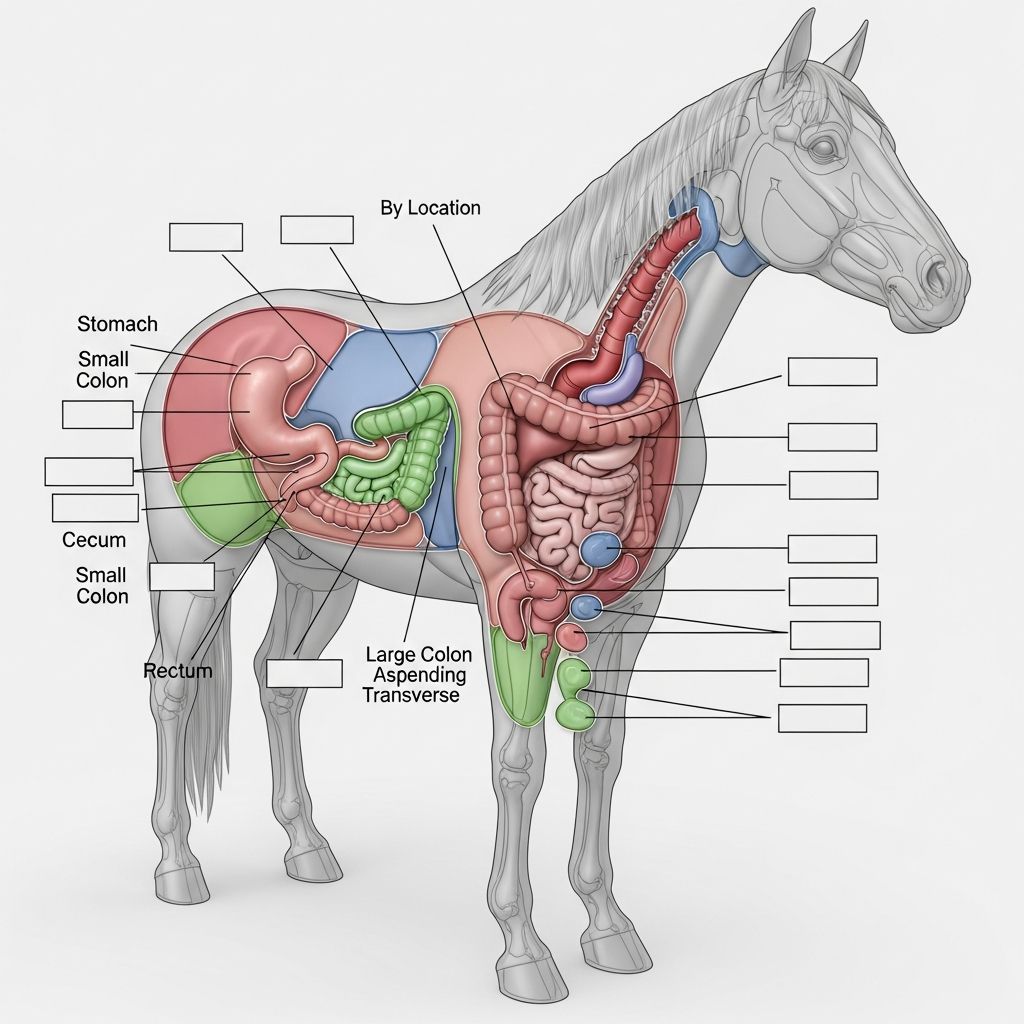
Colic represents a major health crisis in horses, manifesting as severe abdominal discomfort primarily from gastrointestinal disruptions. This condition arises from various issues across the digestive system, each tied to specific anatomic regions. Recognizing the location-specific causes enables faster diagnosis and intervention, potentially saving lives. This article examines colic disorders by organ or segment, detailing clinical presentations, diagnostic approaches, and therapeutic options grounded in veterinary science.
Understanding the Equine Digestive Anatomy
The horse’s gastrointestinal tract is uniquely adapted for continuous grazing, featuring a small stomach, extensive small intestine, and voluminous large intestine including cecum, large colon, and small colon. This design predisposes horses to colic from gas accumulation, displacements, impactions, or twists due to the gut’s mobility and length. Factors like diet shifts, parasites, dehydration, and stress exacerbate risks across sites.
Key vulnerabilities include the stomach’s limited capacity leading to overloads, the small intestine’s mesenteric suspension allowing twists, and the large intestine’s fermentation role fostering gas or blockages. Preventive strategies focus on consistent forage-based feeding, regular deworming, and monitoring water intake.
Stomach-Related Colic Disorders
Problems originating in the stomach often stem from overfilling or delayed emptying. Horses eating greedily or receiving large grain meals risk gastric distension, where excessive feed and fluid cause painful bloating. Clinical signs include restlessness, frequent yawning, and repeated flehmen response (upper lip curl). Veterinary assessment involves nasogastric intubation to decompress the stomach, relieving pressure and preventing rupture.
Another concern is gastric ulcers, eroding the stomach lining and provoking intermittent pain, especially post-feeding. Though not always classified as acute colic, they contribute to chronic discomfort. Diagnosis relies on gastroscopy, with management using proton pump inhibitors and protective mucosal agents. Owners note reduced performance or girthiness as early indicators.
Small Intestine Challenges
The small intestine, spanning 70 feet, is prone to proximal enteritis, an inflammatory condition triggered by bacterial toxins or carbohydrate overload. Affected horses exhibit profuse sweating, elevated heart rates above 60 bpm, and toxin-related endotoxemia signs like injected mucous membranes. Diarrhea often accompanies, distinguishing it from mechanical obstructions.
- Symptoms: Severe pain waves, dehydration, fever.
- Diagnosis: Abdominocentesis for fluid analysis, ultrasound for wall thickening.
- Treatment: IV fluids, anti-endotoxins, plasma transfusions if shock develops.
Small intestinal volvulus or strangulating lipomas represent surgical emergencies. Volvulus involves twisting around the mesenteric root, compromising blood flow. Lipomas, benign fat tumors in older horses, ensnare the intestine. Both demand exploratory laparotomy for resection and anastomosis. Survival rates hover around 50-70% with prompt action.
Cecum and Ventral Colon Impactions
Impingement in the cecum or ventral colon occurs when dehydrated ingesta accumulates, often from inadequate water, sand ingestion, or poor dental mastication. Horses in sandy pastures or on pelleted feeds face higher risks. Signs progress from mild unease to kicking at flanks and tenesmus (straining without feces).
| Factor | Risk Level | Prevention |
|---|---|---|
| Sand ingestion | High | Psyllium supplementation |
| Low water intake | High | Multiple water sources |
| Coarse hay in seniors | Moderate | Soaked feeds |
Treatment prioritizes rehydration via nasogastric mineral oil, dioctyl sodium sulfosuccinate (DSS), or magnesium sulfate, paired with IV polyionic fluids. Refractory cases necessitate cecal trocharization or surgery.
Large Colon Pathologies
The large colon’s dorsal-ventral flexures predispose to gas distension, displacements, and torsions. Gas colic arises from fermentation of lush pasture or grain, stretching colon walls. Horses appear bloated, paw repeatedly, and lie down frequently. Spasmodics mimic this with hypermotile contractions.
Left dorsal displacement (nephrosplenic entrapment) traps colon behind spleen ligaments, common post-exercise. Right dorsal displacement signals graver large colon torsion, halving survival odds without surgery. Torsion rotates 270-720 degrees, causing ischemia.
- Diagnostic clues: Reduced gut sounds left side, palpable spleen displacement on rectal exam.
- Management: Rolling under sedation for displacements; laparotomy for torsions.
Enteroliths, mineral concretions of ammonium magnesium phosphate, form in high-calcium, alkaline diets like alfalfa-beet pulp. Prevalent in California, they lodge at pelvic flexure, causing recurrent episodes. Radiographs confirm in endemic areas; surgery extracts them.
Small Colon and Rectal Issues
Small colon obstructions from feces, ascarid masses, or strictures post-healing yield firm feces absence and tail straining. Fecaliths in foals or meconium impactions demand enemas or clysis. Neoplasia like adenocarcinoma is rare but lethal, presenting as weight loss with colic.
Rectal tears from overzealous exams complicate matters, graded by wall penetration depth. Grade I-II heal medically; III-IV require surgical colostomy.
Peritoneal and Mesenteric Disorders
Mesenteric rents allow intestine herniation, common in young athletes. Adhesions from prior surgeries or peritonitis fibrose attachments, narrowing lumens. Anterior enteritis mimics proximal issues but localizes forwardly.
Diagnostic Strategies for Location-Specific Colic
Vets employ a stepwise approach: history (feed changes, deworming), physical exam (heart rate, hydration, gut auscultation), nasogastric reflux check, rectal palpation, ultrasound, and abdominocentesis. PCV/TP ratios guide dehydration severity; lactate levels predict strangulation. Radiography aids enteroliths; exploratory surgery confirms ambiguities.
Treatment Modalities by Site
Medical therapy suits simple impactions/gas: analgesics (flunixin), prokinetics (lidocaine, metoclopramide), lubricants. Surgical candidates show persistent pain, reflux >2L, or toxic parameters. Post-op care includes broad-spectrum antibiotics, gastroprotectants, and gradual feed reintroduction.
Endotoxemia management uses polymyxin B or plasma. Laminitis prophylaxis with deep bedding and NSAIDs follows ischemia.
Prevention Tailored to Anatomic Risks
- Forage >1.5% bodyweight daily, small grain portions.
- Deworm quarterly targeting small strongyles.
- Annual dental floats, sand-clearing psyllium monthly.
- Exercise routines, stress minimization via routines.
- Electrolyte balance in trailers/hot weather.
Frequently Asked Questions (FAQs)
What are the first signs of colic?
Pawing, flank-watching, rolling, sweating, anorexia.
Can all colic be treated without surgery?
80-90% medically; strangulations need surgery.
How does diet cause site-specific colic?
Grain overloads small intestine; low fiber impacts large colon.
Is sand colic preventable?
Yes, via psyllium, grazing muzzles in sandy areas.
What post-colic monitoring is needed?
Gut sounds, feces production, appetite for 48-72 hours.
Prognosis and Long-Term Management
Outcomes vary: gas/spasmodic near 100% survival; torsions 50%. Recurrence risks drop with management changes. Owners should track episodes in journals for patterns.
References
- Equine Colic: Causes, Symptoms, Treatment and Prevention — My Horse University. 2017-09-25. https://www.myhorseuniversity.com/single-post/2017/09/25/equine-colic-causes-symptoms-treatment-and-prevention
- Colic in Horses – Horse Owners — Merck Veterinary Manual. 2023. https://www.merckvetmanual.com/horse-owners/digestive-disorders-of-horses/colic-in-horses
- Colic in Horses – Horse Owners — MSD Veterinary Manual. 2023. https://www.msdvetmanual.com/horse-owners/digestive-disorders-of-horses/colic-in-horses
- Horse Colic Prevention and Management — Blue Cross. 2023. https://www.bluecross.org.uk/advice/horse/health-and-injuries/horse-colic-prevention-and-management
- Colic in Horses: Treatment, Management & Prevention — Mad Barn. 2023. https://madbarn.com/colic-in-horses/
Similar Articles








Read full bio of Sneha Tete


