

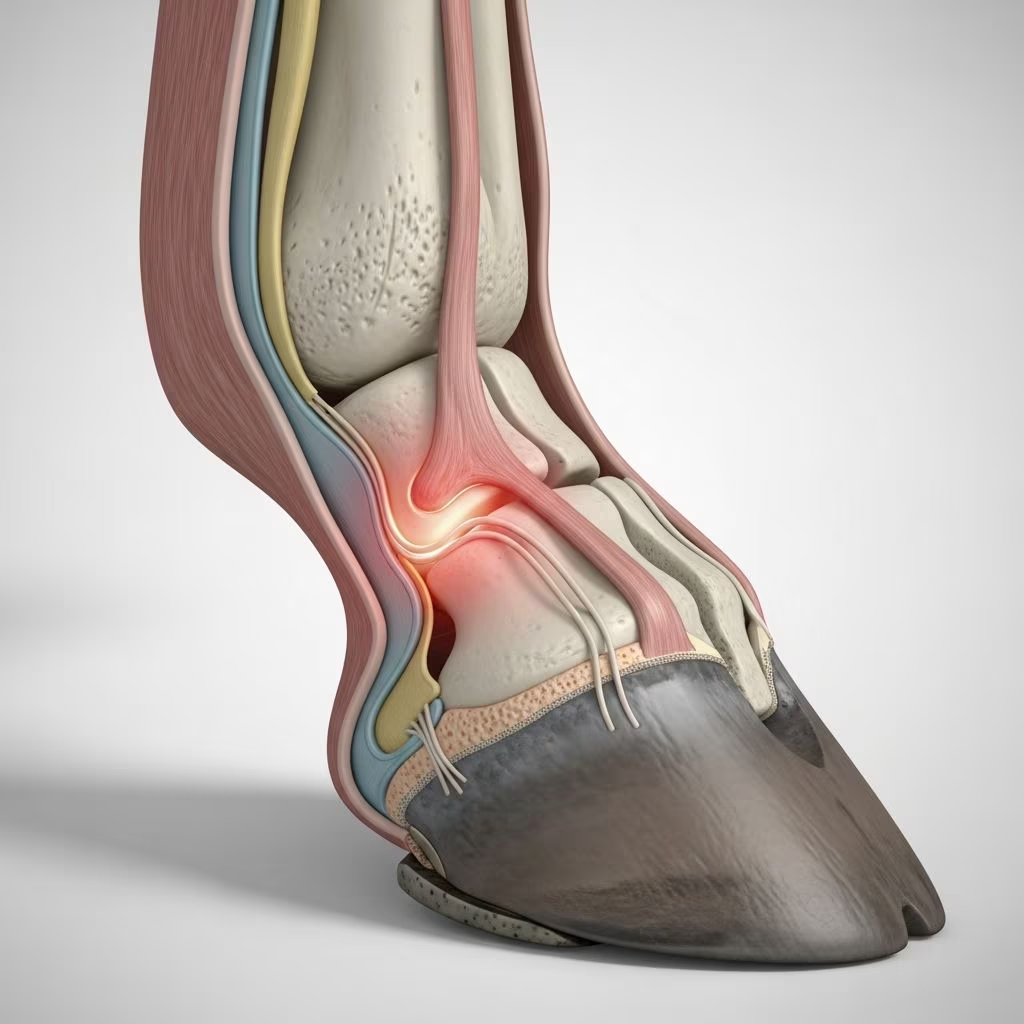
The distal interphalangeal joint, commonly called the coffin joint, plays a pivotal role in equine locomotion. Arthritis in this joint leads to significant discomfort and reduced performance in affected horses. This condition, also known as osteoarthritis of the DIP joint, impacts the joint between the middle and distal phalanges, often resulting in lameness that varies from subtle to severe.
Understanding the Anatomy of the Coffin Joint
The coffin joint is a saddle-type articulation situated deep within the hoof capsule, connecting the second (P2) and third (P3) phalanges. It is stabilized by medial and lateral collateral ligaments, with the distal sesamoid bone (navicular bone) tucking between these phalanges on the palmar or plantar surface. This joint’s synovial cavity exhibits a intricate design, forming cranial and caudal compartments around the collateral sesamoidean ligament (CSL) of the navicular bone.
Sensory innervation is extensive, with nerves distributed superficially across the dorsal and palmar aspects of the CSL, the distal sesamoidean impar ligament, and surrounding periarticular tissues. These nerves, identified through advanced staining techniques like peptide immunocytochemistry and axonal impregnation, highlight the joint’s sensitivity to surrounding structures. Collateral cartilages attach to the proximal edges of the coffin bone’s heels, providing flexibility but prone to ossification in some cases, forming sidebones.
- Key anatomical features: Saddle joint morphology for stability and motion.
- Navicular bone integration for load distribution.
- Complex synovial recesses influencing anesthetic spread.
- Dense sensory nerve network linking joint to foot pathologies.
Causes and Risk Factors Behind Coffin Joint Degeneration
Osteoarthritis in the coffin joint arises from repetitive stress, trauma, or conformational issues that overload the joint surfaces. High-impact activities like jumping or racing exacerbate wear on the articular cartilage, leading to subchondral bone changes and osteochondral lesions (OCLLs). These lesions often communicate with the joint space, accelerating degeneration.
Forelimbs are more frequently affected than hindlimbs, possibly due to greater weight-bearing demands. Bilateral involvement occurs but unilateral cases predominate. Factors such as poor hoof balance, excessive concussion from hard surfaces, and genetic predispositions contribute to onset. Aging horses and those with navicular syndrome show higher susceptibility, as the joint’s proximity to suspensory ligaments amplifies shared pathologies.
| Risk Factor | Description | Impact Level |
|---|---|---|
| High-Impact Work | Racing, jumping | High |
| Conformational Faults | Long toes, low heels | Moderate |
| Age | >10 years | Moderate |
| Forelimb Bias | Primary load bearers | High |
| Navicular Issues | Adjacent ligament strain | High |
Recognizing Clinical Signs of Coffin Joint Issues
Horses with coffin joint arthritis display a spectrum of lameness, from mild stride shortening and poor performance to grade 3-5 lameness at trot. Affected animals may resist flexion tests inconsistently, with some showing exacerbated pain post-flexion while others remain stoic. Palpable changes include dorsal thickening or fibrosis proximal to the coronary band and joint effusion, though these are not exclusive to this condition.
Owners often notice intermittent lameness worsening on circles or hard ground, with toe-first landing or heel pain evasion. Chronic cases lead to muscle atrophy and altered gait patterns. Early detection hinges on observing subtle declines in work capacity before overt limping emerges.
Diagnostic Approaches for Accurate Localization
Localizing pain to the coffin joint requires systematic nerve blocks and imaging. Palmar/plantar digital nerve blocks at the pastern or proximal sesamoid level, or direct intra-articular DIP injections, help isolate the source. However, anesthetic diffusion desensitizes adjacent foot regions, including navicular apparatus and proximal P3, necessitating cautious interpretation.
Radiography reveals joint margin proliferation, osseous fragments, synovial invaginations on the navicular bone’s distal edge, and subchondral lysis. Ultrasonography complements by visualizing soft tissue changes and effusion. Advanced modalities like MRI or CT provide detailed cartilage and bone marrow assessments when radiographs are inconclusive.
- Initial lameness grading and flexion response.
- Perineural blocks: Digital nerves first.
- Intra-articular confirmation: Dorsal pouch approach using extensor tendon landmarks.
- Imaging: Lateromedial, dorsopalmar, flexed views.
Management Strategies to Alleviate Pain and Preserve Function
Treatment focuses on reducing inflammation, correcting biomechanics, and supporting joint health. Corrective farriery is cornerstone: rolling toes, extending heels, and wedge pads redistribute forces away from the coffin joint. Regular hoof trimming maintains balance.
Intra-articular therapies include corticosteroids like triamcinolone or methylprednisolone for short-term relief, often combined with hyaluronic acid for viscosupplementation. Biologics such as platelet-rich plasma (PRP) or interleukin-1 receptor antagonist protein (IRAP) offer regenerative potential. Systemic NSAIDs like phenylbutazone manage chronic pain.
Rehabilitation incorporates controlled exercise, aquatic therapy, and shockwave therapy to promote cartilage repair. In severe cases, arthroscopic debridement removes fragments or proliferative bone. Prognosis varies: mild cases return to work 70-80% of the time with diligent management.
Preventive Measures for Long-Term Joint Health
Prevention emphasizes balanced hoof care, appropriate footing, and workload management. Routine radiographic screening in performance horses detects early changes. Nutritional support with omega-3 fatty acids, glucosamine, and chondroitin sulfate bolsters joint integrity. Avoiding conformational exaggerations through selective breeding aids resilience.
- Scheduled farrier visits every 4-6 weeks.
- Varied terrain training to minimize concussion.
- Weight monitoring to reduce joint stress.
- Early veterinary intervention for subtle lameness.
Advanced Insights into Navicular and Coffin Joint Interactions
The coffin joint’s anatomical ties to the navicular suspensory ligaments mean pathologies often overlap. Anesthetic studies confirm DIP injections affect navicular bone and impar ligament, explaining diagnostic challenges in foot pain syndromes. Functional anatomy underscores the lamellae’s role in suspending P3, where disruptions like laminitis compound arthritis.
Research highlights the CSL’s role in load transmission, with abaxial synovial compartments facilitating broad anesthetic effects useful for proximal P3 pain diagnosis.
Frequently Asked Questions (FAQs)
What is the most common sign of coffin joint arthritis?
Mild to moderate lameness, often worse on hard surfaces or circles, with possible joint effusion.
How reliable are nerve blocks for diagnosis?
Useful but non-specific due to diffusion; combine with imaging for confirmation.
Can horses recover fully from this condition?
Many return to work with multimodal therapy, though advanced cases may require retirement.
Is surgery ever needed?
Arthroscopy for fragment removal or debridement in select refractory cases.
How does farriery help?
Corrects breakover and heel support, unloading the joint effectively.
References
- Anatomy of the distal interphalangeal joint of the mature horse: relationships with navicular suspensory ligaments, sensory nerves and neurovascular bundle — Mad Barn Research. 1997-05-01. https://madbarn.com/research/anatomy-of-the-distal-interphalangeal-joint-of-the-mature-horse-relationships-with-navicular-suspensory-ligaments-sensory-nerves-and-neurovascular-bundle/
- Anatomy of the distal interphalangeal joint of the mature horse — PubMed (Equine Vet J). 1997-05. https://pubmed.ncbi.nlm.nih.gov/9104562/
- Distal Limb – CVM Large Animal Anatomy — University of Minnesota Pressbooks (.edu). Accessed 2026. https://pressbooks.umn.edu/largeanimalanatomy/chapter/distal-limb/
- Osteoarthritis of the Distal Interphalangeal (Coffin) Joint in Horses — Merck Veterinary Manual (.com official vet resource). Accessed 2026. https://www.merckvetmanual.com/musculoskeletal-system/disorders-of-the-foot-in-horses/osteoarthritis-of-the-distal-interphalangeal-coffin-joint-in-horses
- Aspects of Functional Anatomy of the Distal Limb — EquiPodiatry. Accessed 2026. http://equipodiatry.com/news/AspectsofFunctionalAnatomyoftheDistalLimb.html



