

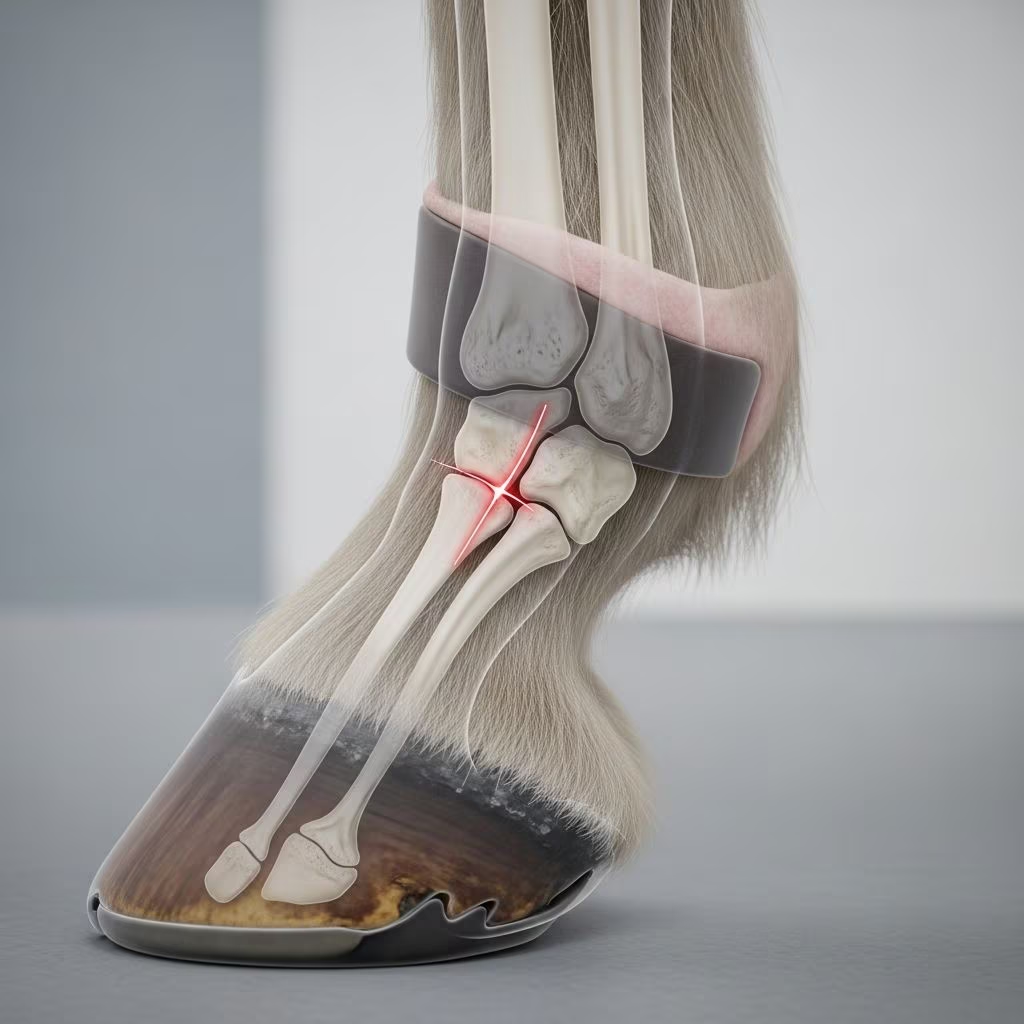
The coffin bone, or distal phalanx, serves as a critical weight-bearing structure within the equine hoof, anchoring tendons and ligaments while protecting vital tissues. Fractures here disrupt normal locomotion, often leading to sudden lameness that demands prompt veterinary attention. These injuries arise from high-impact trauma or underlying pathologies, affecting horses across disciplines from racing to pasture turnout.
Understanding the Anatomy of the Equine Coffin Bone
Positioned at the hoof’s core, the coffin bone forms the foundation of the foot, articulating with the short pastern bone via the distal interphalangeal (DIP) joint, also called the coffin joint. Its solar surface interfaces directly with the hoof wall and sole, distributing forces during movement. The bone features palmar/plantar processes for deep digital flexor tendon attachment and an extensor process dorsally for the common digital extensor tendon. Blood supply and innervation make it susceptible to trauma-induced ischemia or infection.
Variations in bone density occur regionally: the solar margin is thinnest and fracture-prone, while articular surfaces bear synovial fluid lubrication. Foals exhibit immature ossification centers, predisposing certain fracture types. Breeds like Standardbreds and Thoroughbreds face elevated risks due to track surfaces and speeds.
Primary Causes and Risk Factors
Traumatic forces dominate coffin bone fracture etiology. High-velocity impacts during racing—especially turns—or kicks against rigid objects like walls or rocks generate shear stresses exceeding bone strength. Hindlimb fractures often stem from striking solid structures, while forelimbs suffer from ground concussions.
Secondary factors include laminitis-induced remodeling, weakening the solar border and promoting type VI fractures. Pedal osteitis or subchondral cysts erode bone integrity, facilitating cracks. In foals, excessive heel trimming or DDFT overload during early weight-bearing triggers type VII breaks. Nutritional shortfalls in calcium or vitamins A/D compromise density, particularly in growing horses. Racehorses on hard, dry tracks and pasture ponies represent high-risk groups.
- Trauma: Direct blows or slips (types I, II, III, VI).
- Pathologic: Laminitis sequelae (type VI), osteomyelitis (type V).
- Developmental: Extensor process avulsion or ossification flaws (type IV).
- Predispositions: Speed sports, hard footing, young age.
Recognizing Clinical Signs
Horses typically present with abrupt, grade 3-5 lameness, more prevalent in forelimbs. Initial non-weight-bearing pain may ease over 2-4 weeks as fibrous tissue stabilizes the fragment, masking severity. Heat, bounding digital pulses, and hoof tester sensitivity pinpoint the foot. Articular involvement yields DIP joint effusion and flexion pain.
Chronic cases show circling lameness worsening on turns. Foals display transient, low-grade gait deficits. Differential diagnoses encompass abscesses, laminitis flares, or solar penetrations, all mimicking signs. Pastern swelling or pastern heat signals severe cases.
| Sign | Acute Presentation | Chronic Presentation |
|---|---|---|
| Lameness | Severe, sudden (forelimb common) | Mild-moderate, turn-related |
| Hoof Feel | Heat, strong pulse | Variable sensitivity |
| Joint | DIP effusion if articular | Stiffness on flexion |
| Testers | Positive focal pain | Inconsistent response |
Classification of Fracture Types
Veterinarians classify distal phalanx fractures by configuration, articular status, and location to guide therapy. Seven types exist, each with distinct mechanics and implications.
Non-Articular Fractures
Type I (Wing Fractures): Oblique cracks in palmar/plantar processes from solar margin, sparing the DIP joint. Common in UK; trauma-induced. Stable, good healers with rest.
Type VI (Solar Margin): Forelimb-predominant, quarter-toe span. Often laminitis-linked; incidental in sound horses on radiographs. US prevalent on arid tracks.
Type VII (Foal-Specific): Palmar/plantar solar involvement from DDFT strain or over-trimming. Self-resolves quickly.
Articular Fractures
Type II: Sagittal dorsal splits entering DIP joint; racing trauma.
Type III: Extensor process avulsion; hyperextension or pull-off.
Type IV: Extensor process articular chips; may link to osteochondrosis or cysts. Variable lameness; larger in Friesians.
Type V: Comminuted, shattered patterns from infection or repeat trauma. Joint effusion; poorest prognosis.
Diagnostic Approaches
Localize pain via palmar/plantar digital nerve blocks or abaxial sesamoid blocks, confirming foot origin. Hoof testers elicit focal discomfort. Radiography remains primary: lateromedial, dorsopalmar, 65° oblique, and flexed views reveal lines, displacement. Hairline fractures may lag visibility by 7-10 days.
CT excels for comminution, intra-articular extent, or subtle cases with walk lameness. Scintigraphy highlights hot spots in chronic ambiguity. Differentials like abscesses require serial imaging.
- Initial: Lameness exam, nerve blocks, testers.
- Imaging: X-rays (multi-view), CT for complexity.
- Advanced: Nuclear scan if occult.
Treatment Strategies
Management hinges on type, displacement, and joint involvement. Non-articular fractures favor conservatism: 4-6 months stall rest, NSAIDs for pain/inflammation. Hoof support via bar shoes, rim clips, or casts prevents expansion, promoting fibrous union. Radiographic remodeling persists post-soundness.
Articular types benefit from intervention. Arthroscopic debridement removes small extensor fragments (types III/IV). Lag screw fixation stabilizes displaced sagittal (type II) or larger articular lines. Comminuted type V defies fixation, risking instability; euthanasia considered for intractable pain.
Supportive care includes deep bedding, hand-walking post-immobilization, and farrier coordination for sole packing or wedge shoes to offload heels.
| Type | Approach | Support |
|---|---|---|
| I, VI, VII | Conservative rest | Bar shoe/cast |
| II, III, IV | Surgical fixation/debride | Stall confinement |
| V | Palliative; Euthanasia if severe | Immobilization trial |
Prognosis and Long-Term Outcomes
Non-articular fractures yield 70-90% return to soundness with compliance. Racehorses may regain competitive form. Articular repairs vary: undisplaced type II excellent; comminuted dismal, <20% success. Foal type VII near-100% resolution. Factors worsening outlook: displacement, infection, laminitis history.
Monitoring via sequential radiographs tracks healing. Persistent lameness signals non-union or arthritis. Performance horses risk re-injury sans footing management.
Prevention Tactics for Horse Owners
Mitigate risks through arena footing softness, regular farrier hoof balance, and laminitis surveillance. Nutritional profiling ensures mineral adequacy. Avoid over-trimming foal heels; monitor turnout on rocky pastures. Early lameness checks prevent progression.
Frequently Asked Questions (FAQs)
Can my horse recover fully from a coffin bone fracture?
Many do, especially non-articular types with proper rest and support. Prognosis depends on fracture specifics and treatment adherence.
How soon after injury should I call the vet?
Immediately for sudden severe lameness with heat/pulse to rule out fracture vs. abscess.
Is surgery always necessary?
No; conservative management suffices for stable, non-articular breaks. Surgery targets articular instability.
What does a positive hoof tester mean?
Focal sole pain, common in fractures but also abscesses or bruises—imaging confirms.
Can these fractures heal without visible lines on X-rays?
Fibrous unions often leave traces, but clinical soundness is the goal.
References
- Distal phalanx: fractures in Horses (Equis) — Vetlexicon. 2023. https://www.vetlexicon.com/equis/surgery-orthopedic/articles/distal-phalanx-fractures/
- Fractures of the Distal Phalanx in Horses — Merck Veterinary Manual. 2023. https://www.merckvetmanual.com/musculoskeletal-system/disorders-of-the-foot-in-horses/fractures-of-the-distal-phalanx-in-horses
- Pedal Bone Fracture — Baker McVeigh International. 2022. https://www.bakermcveigh.com/blog2/baker-mcveigh/equine-hospital/vet/blog-post-title-one-ag4se
- Understanding Pedal Bone Fractures in Horses — The Farrier. 2023. https://www.thefarrier.co.uk/post/understanding-pedal-bone-fractures-in-horses
- The Breaking Point: Equine Coffin Bone Fractures — The Horse. 2021-12-01. https://thehorse.com/1118022/the-breaking-point-equine-coffin-bone-fractures/
- Diagnosing and Treating Coffin Bone Fractures in Horses — Kentucky Equine Research. 2023. https://ker.com/equinews/diagnosing-treating-coffin-bone-fractures-horses/



