
Cockatoo: Personality, Food & Care Guide
Complete guide to cockatoo care, behavior, nutrition, and what to expect as a pet owner.
What Is A Cockatoo?
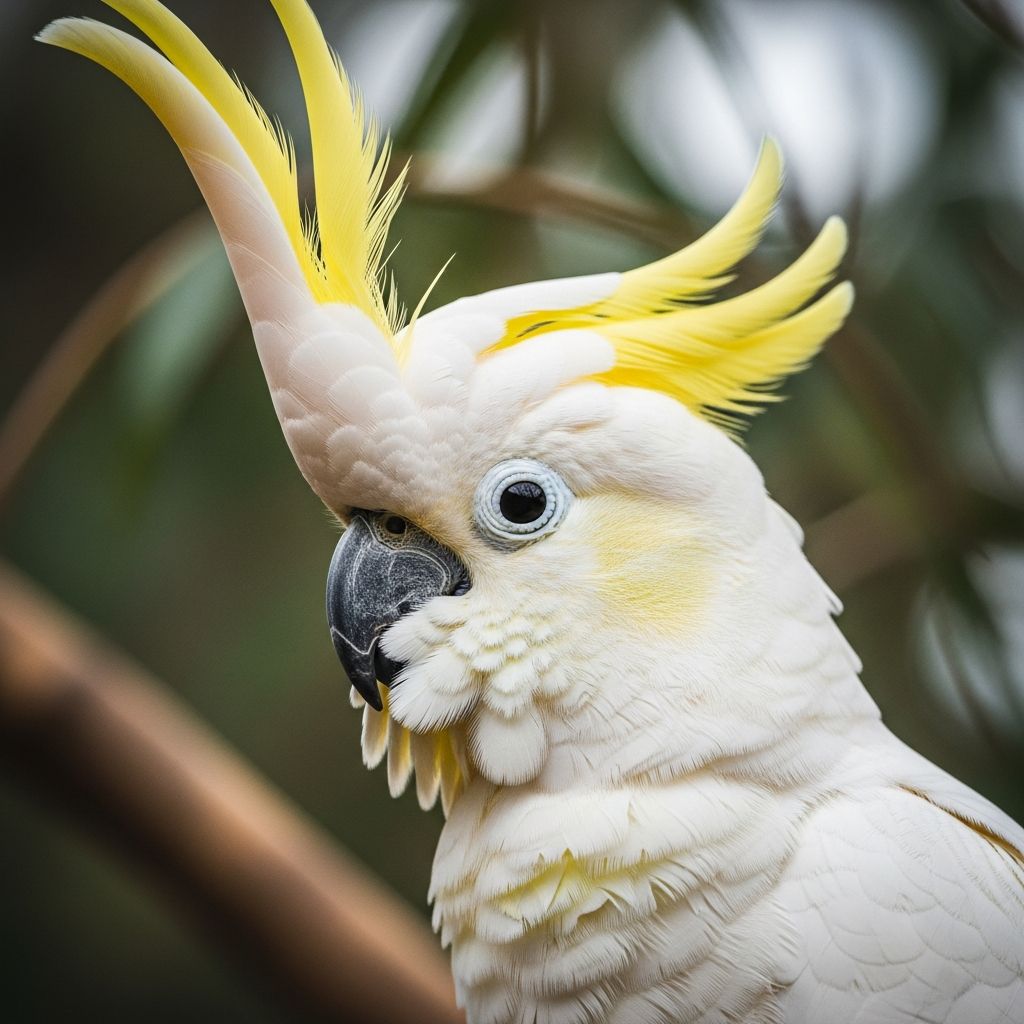
Cockatoos stand out distinctly from other parrot species with their dramatic crest feathers, dusty plumage, and varying shades of white, pink, gray, and black. These large, slender-bodied parrots belong to the family Cacatuidae and are instantly recognizable by their prominent, erectile crests that stand upright when the birds are alarmed or emotionally aroused. Pet cockatoos are often affectionately referred to as “velcro” birds because of their highly sociable nature and their borderline obsessive need to be around the people in their lives. Cockatoos range in size from medium to large, with some species being significantly larger than most other parrot species.
These remarkable birds possess sharp, curved beaks capable of prying open doors and claws typical of flying birds. Interestingly, just as humans are right- or left-handed, cockatoos have a “footedness,” meaning they prefer one foot over the other to perform specific tasks. Unlike humans, however, most cockatoos are left-footed. Their dusty feathers, combined with their distinctive crest display and curved bills, make them instantly identifiable in any setting.
Cockatoo Characteristics & Physical Traits
Cockatoos are recognizable by several key physical characteristics that distinguish them from other parrot species. Their plumage is generally less colorful than that of other parrots, being mainly white, gray, or black, though many species feature colored accents in the crest, cheeks, or tail. The most striking feature of all cockatoos is their movable headcrest, which is present in every cockatoo species and is particularly spectacular in many species. This crest is raised when the bird lands from flying or when it becomes aroused or alarmed.
On average, cockatoos are larger than other parrot species, with the notable exception of the Cockatiel, which is the smallest cockatoo species and remains a small bird compared to its relatives. Cockatoos share many features with other parrots, including the characteristic curved beak shape and a zygodactyl foot arrangement, where the two middle toes face forward and the two outer toes face backward. However, cockatoos differ from other parrots in the presence of an erectile crest and their lack of the Dyck texture feather composition, which creates the bright blues and greens seen in true parrots.
Like other parrots, cockatoos have short legs, strong claws, a waddling gait, and often use their strong bill as a third limb when climbing through branches. They generally have long, broad wings used in rapid flight, with speeds up to 70 km/h (43 mph) being recorded for galahs. Members of larger species such as the sulphur-crested cockatoo and the pink cockatoo have shorter, rounder wings and a more leisurely flight pattern compared to their smaller relatives.
Cockatoo Personality & Behavior
Cockatoos are known for their emotionally complex and highly intelligent personalities. They are playful, cuddly, loyal, and incredibly affectionate toward humans, making them excellent companion animals when properly socialized and cared for. However, their demanding nature requires owners to understand their behavioral needs and emotional requirements.
In the wild, cockatoos are diurnal creatures and require daylight to find their food. They are not early risers, instead waiting until the sun has warmed their roosting sites before beginning their feeding activities. All species are generally highly social and roost, forage, and travel in colorful and noisy flocks. These flocks vary in size depending on the availability of food; in times of plenty, flocks are small and may number a hundred birds or less, while during droughts or other times of adversity, they may swell to contain thousands or even tens of thousands of birds. One record from the Kimberley documented a flock of 32,000 Little Corellas.
As pets, cockatoos require a well-ordered and stable environment to thrive. They are inquisitive birds who appreciate structure and consistency in their daily routines. The highly social nature of cockatoos means they thrive best when given adequate interaction and mental stimulation. Pet cockatoos described as “velcro” birds will seek constant companionship from their owners and may develop behavioral issues if left alone for extended periods.
Cockatoo Diet & Nutrition
Proper nutrition is essential for maintaining the health and vitality of cockatoos. In their natural habitat, cockatoos prefer to eat seeds, tubers, corms, fruit, flowers, and insects. They often feed in large flocks, particularly when ground-feeding, which is a social and efficient feeding strategy in the wild.
For pet cockatoos, a comprehensive diet should include high-quality parrot food formulations specifically designed to meet their nutritional requirements. The diet should incorporate:
- A variety of seeds and nuts for essential fats and proteins
- Fresh fruits and vegetables daily for vitamins and minerals
- High-quality pellets formulated for large parrots
- Occasional treats such as safe nuts and seeds in moderation
- Fresh, clean water available at all times
Ground-feeding species, such as the western and long-billed corellas, have elongated bills specifically adapted to excavate tubers and roots from the ground. Pet owners should provide environmental enrichment that allows for natural foraging behaviors, which can improve psychological well-being and encourage healthy eating habits.
Lifespan & Health Considerations
One of the most important factors to consider before acquiring a cockatoo as a pet is their exceptionally long lifespan. Cockatoos typically live 30 or more years in captivity, with some individuals living well into their 50s or 60s. This extended lifespan means that owning a cockatoo is a long-term commitment that may span decades.
The longevity of cockatoos requires owners to be prepared for a multi-generational pet relationship. Proper care, nutrition, veterinary attention, and environmental enrichment are crucial for maintaining health throughout their lives. Cockatoos are prone to behavioral and psychological issues if their social and mental stimulation needs are not adequately met, which can impact their overall health and longevity.
Cockatoo Species Variety
Cockatoos come in different varieties, each with unique characteristics and care requirements. Common species kept as pets include:
- Sulphur-crested Cockatoo: A large white cockatoo with a distinctive yellow crest
- Umbrella Cockatoo: An all-white medium-sized cockatoo known for its gentle temperament
- Moluccan Cockatoo: A large salmon-pink cockatoo with a tall crest
- Cockatiel: The smallest cockatoo species with a pointed tail and distinctive facial markings
- Goffin’s Cockatoo: A small white cockatoo popular in the pet trade
- Palm Cockatoo: A large black cockatoo with prominent red cheek patches
- Red-tailed Black Cockatoo: A large black cockatoo with distinctive red or orange tail panels
Physical Characteristics Overview
| Characteristic | Details |
|---|---|
| Color | Black, Gray, Pink, White |
| Size | Large, Medium |
| Lifespan | 30+ years |
| Sounds | Vocal communicator |
| Interaction Level | Highly social |
| Emotional Complexity | Sometimes described as emotional |
| Diet Type | Parrot food with fruits, vegetables, and nuts |
Cockatoo Care Requirements
Proper care for cockatoos involves meeting their physical, social, and psychological needs. These birds require spacious cages with room for movement and exercise, as well as out-of-cage time for flight and social interaction. Regular veterinary check-ups are essential to monitor their health and address any potential issues early.
Cockatoos are highly vocal birds and communicate extensively with their flock members and human companions. They require substantial mental stimulation through toys, puzzles, training exercises, and social interaction. Without adequate enrichment, cockatoos may develop destructive behaviors, including feather plucking, aggression, or other behavioral problems.
Environmental factors such as lighting, temperature, and humidity should be carefully controlled to replicate natural conditions as closely as possible. Cockatoos benefit from a consistent daily routine that provides structure and predictability, which helps reduce stress and anxiety.
Social Needs & Bonding
Cockatoos are exceptionally social birds that form strong emotional bonds with their human companions. The “velcro” bird description reflects their tendency to want to be involved in all aspects of their owner’s daily life. This social dependency means that cockatoos require significant daily interaction and attention from their owners.
In the wild, cockatoos maintain social structures within their flocks, and pet cockatoos translate this need for social connection to their human family. They thrive best in homes where they can be part of the family activities and receive consistent, positive interaction. Isolation or neglect can lead to serious behavioral and psychological problems in these highly intelligent and emotionally aware birds.
Frequently Asked Questions About Cockatoos
Q: Are cockatoos good pets for first-time bird owners?
A: Cockatoos can be challenging pets for first-time bird owners due to their demanding social needs, longevity, and potential for behavioral issues. They require experienced handling and substantial daily commitment.
Q: How long can a cockatoo live?
A: Cockatoos typically live 30 or more years in captivity, with many living into their 50s or 60s. This makes them a lifelong commitment for pet owners.
Q: What is the best diet for a pet cockatoo?
A: A balanced diet should include high-quality pellets formulated for large parrots, fresh fruits and vegetables daily, nuts and seeds in moderation, and constant access to fresh water.
Q: Why are cockatoos called “velcro” birds?
A: Cockatoos are called “velcro” birds because of their highly sociable nature and obsessive need to be around the people in their lives, adhering closely to their owners like velcro.
Q: How much space does a cockatoo need?
A: Cockatoos require large, spacious cages with room for movement and should have substantial out-of-cage time for flight and social interaction daily.
Q: Are cockatoos loud?
A: Yes, cockatoos are vocal communicators and can be quite loud. They vocalize frequently and may not be suitable for apartments or noise-sensitive environments.
Q: Can cockatoos be trained?
A: Yes, cockatoos are highly intelligent and can be trained to perform tricks, follow commands, and learn various behaviors through positive reinforcement methods.
References
- Cockatoo — Wikipedia. Accessed November 2025. https://en.wikipedia.org/wiki/Cockatoo
- Bird Cacatuidae – Cockatoos — Fat Birder. Accessed November 2025. https://fatbirder.com/ornithology/cacatuidae-cockatoos/
- Cockatoo | Personality, Food & Care – Pet Birds by Lafeber Co. — Lafeber Company. Accessed November 2025. https://lafeber.com/pet-birds/species/cockatoo/
- What to Know About the Cockatoo — WebMD. Accessed November 2025. https://www.webmd.com/pets/what-to-know-about-the-cockatoo
- Cockatoo Bird Species: Types, Lifespan, and Care — PetMD. Accessed November 2025. https://www.petmd.com/bird/general-health/cockatoo-bird-species-types-lifespan-care
- Understanding Cockatoo Personality — AFA Watchbird. Accessed November 2025. https://watchbird-ojs-tamu.tdl.org/watchbird/article/view/2655
- Cockatoos – General Information — VCA Animal Hospitals. Accessed November 2025. https://vcahospitals.com/know-your-pet/cockatoos—general-information
Similar Articles








Read full bio of Sneha Tete


