
Cockatiel: Personality, Care & Species Guide
Discover the charm, care, and unique traits of cockatiels as beloved pet birds.
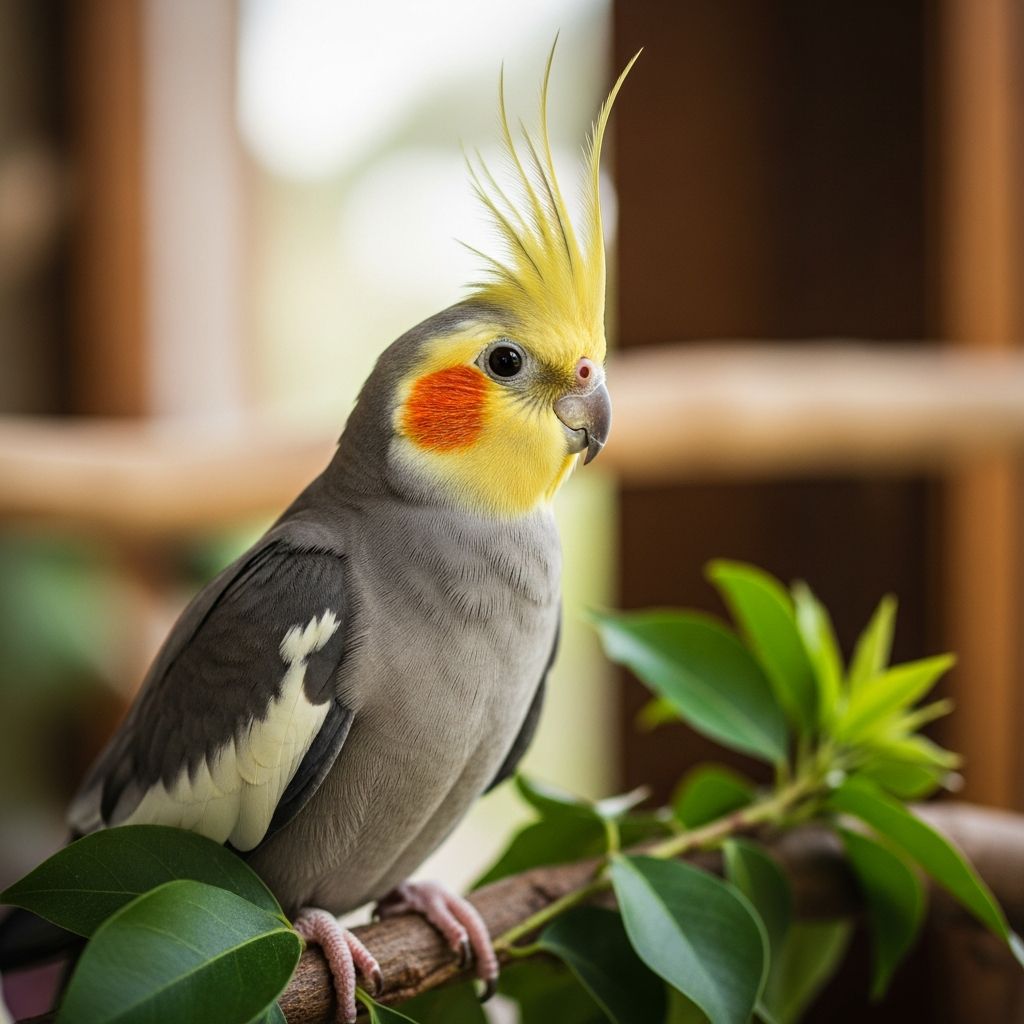
The cockatiel is one of the most popular companion birds worldwide, cherished for its gentle demeanor, playful personality, and striking appearance. Native to Australia, cockatiels are small parrots that belong to the cockatoo family, yet they are the smallest members of this group. Their unique traits, adaptability, and affectionate nature make them ideal pets for both novice and experienced bird owners. This guide covers all aspects of cockatiel care, personality, habitat, and species information, providing a comprehensive resource for anyone interested in these delightful birds.
Native Region & Natural Habitat
Cockatiels are native to the semi-arid regions of Australia, where they thrive in open environments such as scrublands, bushlands, and wetlands. Unlike parrots from dense rainforests, cockatiels do not have the ear-piercing screech typical of many parrot species. Instead, their calls are softer and more melodic, which is likely due to their open habitat.
In the wild, cockatiels are highly social birds, often seen in pairs or small flocks. They fly to the ground to forage for food, primarily seeds, grasses, and fruits. Their natural habitat provides ample space for flying and social interaction, which is essential for their well-being. Cockatiels readily breed in the wild, and their adaptability has made them easy to breed in captivity, contributing to their widespread availability as pets.
Personality & Behavior
Cockatiels are known for their affectionate and curious personalities. They are excellent fliers and require regular wing clipping to prevent accidents in the home. Their behavior is highly expressive, and their mood can be easily read by observing the position of their crest feathers.
- Relaxed: Slightly held back crest feathers, fluffed cheek feathers, and content beak grinding.
- Startled or Curious: Crest feathers held straight up.
- Defensive or Stressed: Crest feathers flattened close to the head, possibly accompanied by hissing.
Cockatiels are also known for their vocalizations, which include a repertoire of chirps and whistles. They can be cuddly and bold, curious and, at times, feisty. Their social nature means they thrive on interaction with humans and other birds.
Appearance & Sexual Dimorphism
The cockatiel’s appearance is distinctive, with a prominent crest that expresses its emotional state. The crest is vertical when startled or excited, oblique when relaxed, and flattened when angry or defensive. Cockatiels have long tail feathers that make up about half of their total length, distinguishing them from other cockatoos.
The most common coloration is the “normal grey” or “wild-type,” which features a grey body with white flashes on the outer edges of the wings. Males have a yellow or white face, while females have a grey or light grey face. Both sexes have a round orange area on their cheeks, often referred to as “cheddar cheeks.” The orange coloration is more vibrant in adult males and muted in females.
Sexual dimorphism is evident after the first moulting, which occurs around six to nine months after hatching. Males lose the white or yellow barring and spots on the underside of their tail feathers and wings, and their grey feathers on the cheeks and crest are replaced by bright yellow feathers. Females typically retain the horizontal barring on the underside of their tail feathers and have a less vibrant orange cheek patch.
Color Mutations
Cockatiels are known for their wide variety of color mutations, which have been developed through selective breeding. Some of the most popular mutations include:
- Gray: Dark gray body with white wing bars, yellow face (in mature males), and vibrant orange cheek patches.
- Cinnamon: Light brown tone, softer than the classic gray.
- Fallow: Muted version of the classic gray bird.
- Silver: Another muted version of the classic gray bird.
- Lutino: Bright, bold, all-yellow bird with flashy orange cheeks.
- Pearl: White speckles on the back and wings.
- Pied: Patches of yellow and white randomly mixed with larger areas of gray.
Some cockatiels can have multiple color mutations, such as a yellow lutino with pearling or a cinnamon cockatiel with yellowface coloring, pearling, and pied markings.
Life Span & Breeding
Cockatiels have a relatively long life span, often living 15 to 20 years with proper care. They are the only cockatoo species that may reproduce by the end of their first year. Breeding is triggered by seasonal rainfall, and cockatiels nest in tree hollows near a source of fresh water, often choosing eucalyptus or gum trees.
The hen lays 4-7 eggs, one every other day, which she incubates for 17–23 days. The chicks fledge after 5 weeks. Cockatiels are monogamous and form strong pair bonds, which is why they are often seen in pairs or small flocks in the wild.
Care & Housing
Providing a suitable environment is crucial for the health and happiness of cockatiels. They require a spacious cage with plenty of room for flying and climbing. The cage should be equipped with perches, toys, and food and water dishes. Regular cleaning is essential to maintain hygiene.
Cockatiels need daily interaction and mental stimulation to prevent boredom. They enjoy playing with toys, exploring their environment, and interacting with their owners. Providing a variety of toys and rotating them regularly can help keep your cockatiel engaged.
Diet & Nutrition
A balanced diet is essential for the health of cockatiels. Their diet should include a mix of seeds, pellets, fresh fruits, and vegetables. Avoid feeding them foods that are toxic to birds, such as avocado, chocolate, and caffeine.
Here is a sample diet for a cockatiel:
| Food Type | Examples |
|---|---|
| Seeds | Sunflower, millet, safflower |
| Pellets | High-quality bird pellets |
| Fruits | Apple, banana, berries |
| Vegetables | Carrot, broccoli, spinach |
Frequently Asked Questions (FAQs)
Q: How long do cockatiels live?
A: With proper care, cockatiels can live 15 to 20 years.
Q: What is the best diet for a cockatiel?
A: A balanced diet of seeds, pellets, fresh fruits, and vegetables is ideal for cockatiels.
Q: How can I tell the difference between male and female cockatiels?
A: After the first moulting, males have brighter yellow faces and lose the barring on their tail feathers, while females retain the barring and have a less vibrant orange cheek patch.
Q: Do cockatiels need a lot of attention?
A: Yes, cockatiels are social birds and thrive on interaction with humans and other birds.
Q: Can cockatiels talk?
A: Cockatiels can learn to whistle and mimic sounds, but they are not known for their talking ability like some other parrot species.
References
- Cockatiel – Wikipedia — Wikipedia. 2023-04-01. https://en.wikipedia.org/wiki/Cockatiel
- What to Know About the Cockatiel – WebMD — WebMD. 2023-04-01. https://www.webmd.com/pets/what-to-know-about-the-cockatiel
- Cockatiel Personality, Food & Care – Pet Birds by Lafeber Co. — Lafeber Co. 2023-04-01. https://lafeber.com/pet-birds/species/cockatiel/
Similar Articles








Read full bio of medha deb


