Cockatiel Night Frights: Causes, Prevention & Safety
Understanding why cockatiels panic at night and how to protect your feathered friend.
Understanding Cockatiel Night Frights
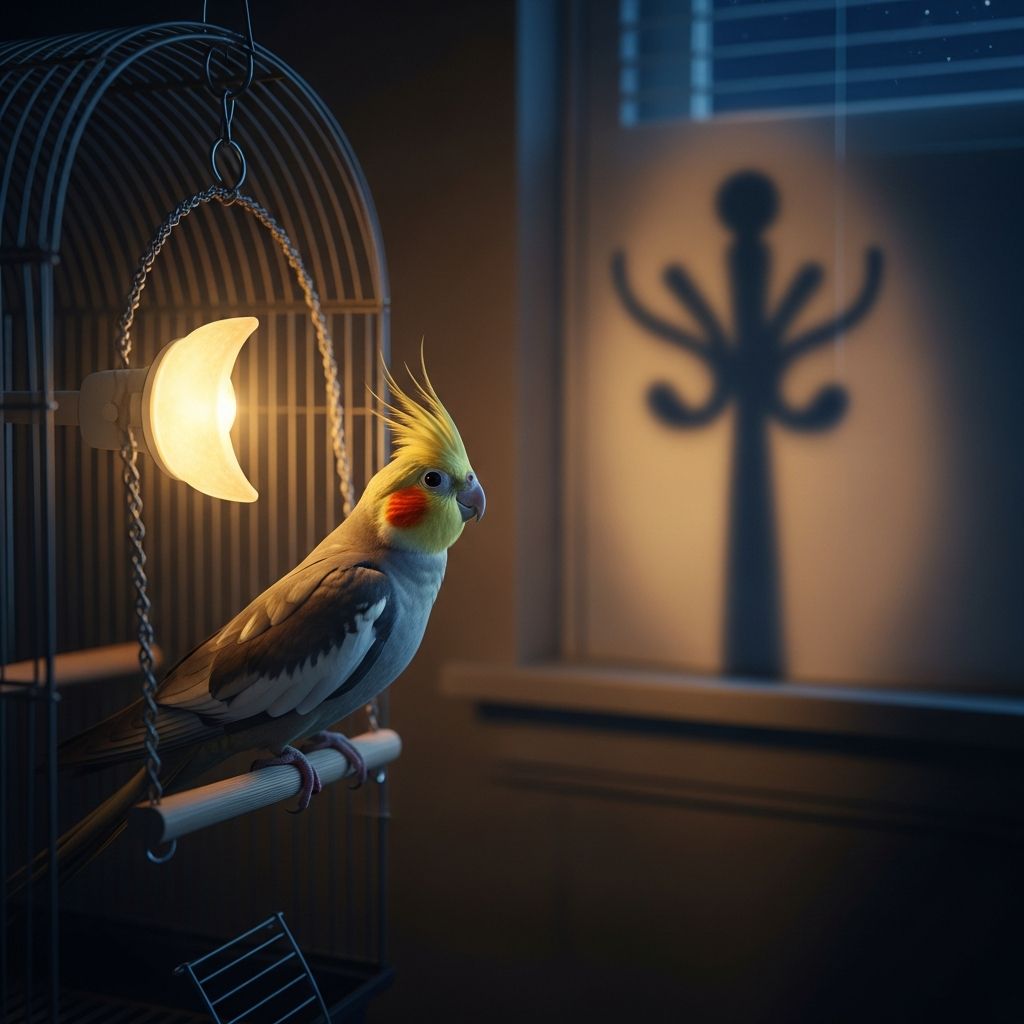
Cockatiels seem to suffer from ”night frights” more than any other species of bird kept in captivity. By ”night fright,” we mean that these birds become easily spooked or unnerved in the darkness and quiet of the night. Any sort of disturbance—whether it is a shadow, a noise, a bright light, or a sudden waft of cool air—can send a single cockatiel or an entire aviary of cockatiels into a mad frenzy. This phenomenon is not only distressing and potentially dangerous for the pet birds themselves, but it can be equally upsetting for the owner. Understanding the psychology behind these frightening episodes is essential for any cockatiel owner who wants to provide a safe and comfortable environment for their feathered companion.
The Natural Instincts Behind Night Frights
To understand why cockatiels are so prone to night frights, we must examine their behavior in the wild. Wild cockatiel flocks spend a good portion of the day on the ground foraging for food. Because of this potentially hazardous practice, nature has provided them with the perfect survival technique to enable them to get airborne quickly and escape predators. Cockatiels possess ultra-quick reactions and a super-efficient capability for rapid and powerful vertical flight, making them well-equipped to react to and flee the clutches of predators stalking them on the ground.
In their natural habitat, even during the night, a certain level of noise is maintained by the other inhabitants of forests, which offers a degree of comfort to a dozing cockatiel flock. The muted lighting provided by the moon and stars adds to this reassurance. However, on occasions when a ”blanket of silence” descends over the area, it often indicates acute danger to these birds. A flock of cockatiels will instantly become fearful and anxious, as their responses become intensely heightened. It is not surprising, therefore, that darkness and silence, followed by a sudden disturbance, can seriously spook a cockatiel in captivity.
This reaction is compounded by the fact that pet cockatiels housed in bird cages might feel especially panicky and tormented because they cannot ”escape” this perceived threatening situation, thus sending them into frenzies. Unlike their wild counterparts who can fly away to safety, captive cockatiels are confined to their cages, triggering extreme panic.
What Happens During a Night Fright
Cockatiels that become spooked are simply responding to their deep-rooted natural instinct to fly upward in an effort to get airborne. But as a consequence, they often crash into the cage bars at the top and then flap around wildly, knocking into the perches and sides of the cage in total panic. A cockatiel can see very little in the dark and, while in this state of panic, is likely to do itself much damage.
The sight of a cockatiel in shock can be quite alarming to its owner. Its chest heaves up and down as its heart beats out of control. Its feathers are noticeably fluffed-up, and the bird’s eyes are wide open. A bird in this state should not be handled or let out of its cage, as it may injure itself further or the owner.
Common Triggers for Night Frights
The problem lies in the bird not understanding the source of a sudden movement, noise, or light. Night fright happens to most cockatiels at some time or another. Understanding the most common triggers can help you prevent these frightening episodes. Here are the top causes reported by cockatiel owners:
- Nocturnal animals, rodents, and insects flitting about in the darkness
- Cats and dogs moving around or suddenly meowing or barking close by
- Shadows moving over the cage or aviary
- A draft or a sudden stream of cool air
- Thunder and lightning
- Fireworks
- Flashing lights, such as those from car headlights
- A member of the household coming in late after everyone else is in bed
- Unexplained phenomena such as birds thrashing moments before an earthquake
Research has shown that movement can play a larger role than sound in triggering night frights. Some cockatiel owners report that storms, loud neighbors, or even fireworks have not frightened their birds into flight at night, while simple movements or shadows have caused severe panic.
The Dangers of Night Frights
If injuries are incurred during a night fright, they will serve to intensify the cockatiel’s anxiety and sometimes can even prove to be fatal. If other cockatiels are housed nearby, either indoors or outside, they can suffer from the domino effect—all quickly become panic-stricken, thrashing around in their cages or aviaries, not even knowing the source of the scare.
Potential injuries from night frights include:
- Breaking wings or blood feathers during frantic thrashing
- Colliding with cage bars, toys, and perches
- Falling from perches onto the cage floor
- Feather loss due to violent movements
- Forced wings through cage bars causing injury
The loss of primary flight feathers during a night fright can be particularly serious, as it may render the bird unable to fly properly until new feathers grow in, a process that can take several months.
Biological Factors Contributing to Night Frights
Birds sleep differently than humans do. As prey animals, they do not fall into the deep sleep that humans are known to experience. Instead, they experience unihemispheric sleep—they can rest one side of their brain at a time while keeping the other alert as needed, perhaps determined by what predators may be lurking about.
Cockatiels cannot see in complete darkness and are literally blind when in total darkness. When they are startled and awakened from a sound sleep, they panic. Without visual orientation, they thrash into the cage in an attempt to escape the perceived threat. This combination of limited night vision, the startled awakening, and their natural flight instinct creates the perfect storm for a night fright episode.
Prevention Strategies for Night Frights
The best approach to managing night frights is to put in place as many preventative measures as possible. The more prepared the owner is for such an event, the greater the chance that the bird’s suffering will be minimized and its recovery will be rapid.
Environmental Modifications
Creating a safe sleeping environment is the first step in preventing night frights. Consider implementing these environmental changes:
- Install a dim nightlight in the room where your cockatiel sleeps, allowing the bird to see its surroundings if startled
- Use a cage cover that is breathable but provides visual protection from shadows and sudden movements
- Ensure the cage is placed away from windows where headlights or moonlight might create moving shadows
- Eliminate drafts by positioning the cage away from air conditioning vents and open windows
- Secure loose cage covers so they cannot move with air currents
- Keep the area around the cage clear of obstacles
Behavioral Management
Beyond environmental changes, several behavioral strategies can help reduce the frequency and severity of night frights:
- Maintain a consistent bedtime routine to help your cockatiel relax before sleep
- Avoid sudden movements or loud noises in the evening hours
- Keep household pets away from the cockatiel’s sleeping area
- Close doors to prevent drafts from other rooms
- Use heavy curtains to block external light sources like car headlights
- Address stress factors in your cockatiel’s environment, as stressed birds are more prone to night frights
What to Do When a Night Fright Occurs
Despite your best efforts at prevention, night frights may still happen. Knowing how to respond appropriately can minimize injury to your bird. When a night fright occurs:
- Stay calm—your anxiety will only heighten your bird’s panic
- Turn on a soft light to help orient the bird
- Do not attempt to handle the bird immediately
- Speak in a calm, reassuring voice
- Allow the bird to calm down naturally before checking for injuries
- Once the bird has settled, carefully inspect for wounds or broken feathers
- If injuries are present, consult an avian veterinarian
It is crucial never to handle a bird in shock, as this can cause additional stress and potential harm.
Differences Between Cockatiels and Other Birds
While night frights can affect other bird species such as finches or budgerigars, they are not affected to the same degree and regularity as cockatiels seem to suffer. This heightened susceptibility in cockatiels appears to be related to their strong natural flight instinct and their sensitivity to environmental disturbances. Understanding this species-specific behavior is important for cockatiel owners who may have other bird species in their home.
Frequently Asked Questions
Q: What exactly is a night fright?
A: A night fright is when a cockatiel becomes спooked during the night and starts flapping around in panic, often crashing into cage bars and toys. It occurs when the sleeping bird is suddenly startled by a disturbance it cannot clearly see or understand.
Q: Can night frights be fatal?
A: While most night frights are not fatal, they can result in serious injuries that, if left untreated, could become life-threatening. Broken wings, damaged blood feathers, and internal injuries are possible complications that require veterinary attention.
Q: Why are cockatiels more prone to night frights than other birds?
A: Cockatiels have a strong natural instinct to flee predators quickly by flying upward. Their evolutionary history of foraging on the ground has made them extremely sensitive to perceived threats. Additionally, their brain structure allows for unihemispheric sleep, keeping them partially alert during rest.
Q: Should I use a nightlight for my cockatiel?
A: A soft, dim nightlight can be helpful as it allows your cockatiel to orient itself if startled. However, avoid bright lights, as they can disrupt sleep patterns. The goal is to provide just enough light for the bird to see its surroundings without fully stimulating the bird.
Q: How long does recovery take after a night fright?
A: Recovery time varies depending on the severity of injuries. Once the immediate panic subsides, the bird typically calms down within a few minutes. However, physical injuries like broken feathers may take weeks to months to fully heal.
Q: Can stress cause more frequent night frights?
A: Yes, stress is a significant factor in causing more frequent night frights. If your cockatiel has recently come home, experienced changes in its environment, or is showing signs of stress, it may be more susceptible to night frights.
References
- Cockatiel Night Frights — Chewy Editors. https://www.chewy.com/education/bird/cockatiel/cockatiel-night-frights
- Night Frights in Cockatiels — BirdTricks. https://birdtricksstore.com/blogs/birdtricks-blog/night-frights-in-cockatiels
- Understanding Cockatiel Sleep and Behavior — Cockatiel Cottage. https://www.cockatielcottage.net/questions2.html
- Night Frights and Associated Perils — Northern Parrots. https://www.northernparrots.com/blog/night-frights-and-associated-perils/
Similar Articles







Read full bio of Sneha Tete