

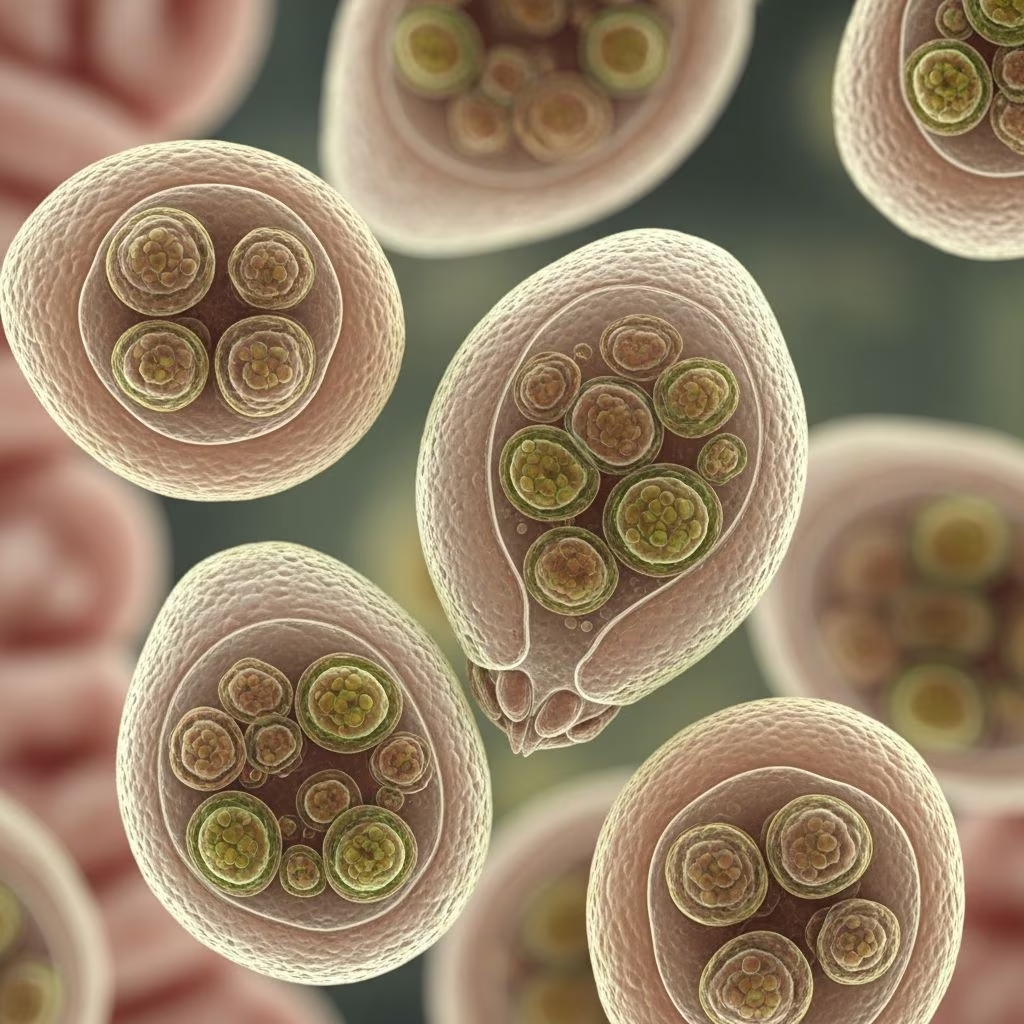
Coccidiosis stands as one of the most prevalent parasitic diseases impacting sheep, particularly vulnerable young lambs. This intestinal condition arises from protozoan parasites that invade the gut lining, leading to severe diarrhea, dehydration, and stunted growth. Farmers encounter significant economic losses due to reduced weight gains and higher mortality rates in affected flocks. Early recognition and proactive management are crucial for minimizing these impacts and ensuring flock vitality.
The Parasite Behind the Problem: Understanding Eimeria Species
The primary culprits are various species of Eimeria protozoa, which thrive in the sheep’s digestive tract. These single-celled organisms complete their complex life cycle within the host’s intestines. Lambs ingest resilient oocysts from contaminated environments like soil, feed, or water. Once inside, the oocysts release sporozoites that penetrate intestinal cells, multiplying rapidly and causing tissue damage as they burst forth to infect more cells. This cycle culminates in the shedding of new oocysts in feces, perpetuating contamination in pastures or housing areas.
Unlike worms, these parasites target specific epithelial cells, leading to inflammation and impaired nutrient absorption. Immunity develops gradually with age, explaining why lambs aged 4-8 weeks are most susceptible before natural resistance kicks in.
Risk Factors Fueling Outbreaks in Flocks
Several environmental and management factors heighten the risk of coccidiosis outbreaks. High stocking densities in intensive systems promote rapid oocyst buildup. Stressors such as inadequate colostrum intake, harsh weather, or prolonged indoor confinement weaken lambs’ defenses, making them prime targets.
- Overcrowding: Confined spaces accelerate fecal-oral transmission.
- Poor Nutrition: Deficiencies in energy, protein, vitamins, or minerals lower resilience.
- Stress Events: Weaning, transport, castration, or sudden feed changes exacerbate vulnerability.
- Weather Extremes: Wet, muddy paddocks harbor oocysts longer.
Lambs under these conditions face amplified challenges, with subclinical infections silently hindering growth even without overt illness.
Recognizing the Signs: From Subtle to Severe Symptoms
Clinical manifestations vary from mild to fatal. The hallmark is profuse diarrhea, often watery or blood-tinged, stemming from extensive damage to the small intestine, cecum, and colon. Affected lambs exhibit straining, abdominal discomfort, lethargy, and rapid dehydration. Weight loss is pronounced, with pale mucous membranes and rough coats signaling progression.
| Symptom | Description | Severity Level |
|---|---|---|
| Diarrhea | Watery, mucousy, or bloody stools | Primary, often first sign |
| Weight Loss | Failure to thrive, emaciation | Common in acute cases |
| Lethargy | Dullness, weakness, open fleeced appearance | Moderate to severe |
| Dehydration | Sunken eyes, dry mouth, tenesmus | Advanced, life-threatening |
| Mortality | Sudden death without prior signs | Rare but possible in outbreaks |
Subclinical cases, more insidious, result in poor feed efficiency and long-term growth setbacks as the gut heals slowly. Fever is uncommon, distinguishing it from bacterial enteritis.
Accurate Diagnosis: Beyond Visual Inspection
Confirming coccidiosis requires fecal analysis for oocyst counts, as symptoms overlap with worms or bacteria. Veterinary flotation tests quantify Eimeria levels; counts exceeding 5,000-10,000 per gram indicate heavy burdens. Post-mortem exams reveal characteristic intestinal thickening, hemorrhages, and white spots from meront stages.
Differentiate from other diarrheas via history: recent housing, group morbidity in uniform-aged lambs points to coccidia. PCR tests offer species identification for precise management.
Treatment Strategies: Drugs and Supportive Care
Prompt group treatment curbs outbreaks, as individuals aren’t targeted. Licensed options include diclazuril (Vecoxan) and toltrazuril (Baycox), which halt oocyst shedding and allow immunity buildup. Toltrazuril edges out in reducing environmental contamination.
In the US, sulfa drugs (e.g., sulfadimethoxine at 247.5 mg/kg day 1, then 124 mg/kg for 3 days), amprolium (Corid), tetracyclines, and ionophores like monensin or lasalocid serve as alternatives. Administer via water, feed, or drench; all-group dosing is essential.
- Diclazuril/Toltrazuril: Preventative at 3-4 weeks, reduce diarrhea and boost growth.
- Sulfa Drugs: Effective for clinical cases, monitor water intake.
- Amprolium: Targets late stages, useful post-damage.
Support with fluids, electrolytes, and nutrition to combat dehydration. Isolate severe cases; diarrhea may persist during gut repair.
Prevention: Building Resilient Flocks
Proactive measures outperform crisis response. Rotate pastures to dilute oocysts, which survive months in cool, moist conditions. Provide clean, elevated feed/water stations to avoid fecal soiling.
Incorporate coccidiostats in feed: decoquinate (Deccox) offers broad activity, ionophores like lasalocid (Bovatec) target multiple stages while permitting immunity. Start at 2-3 weeks, continue through risk periods.
- Clean housing frequently, especially creep areas.
- Ensure robust colostrum and balanced diets.
- Gradual weaning minimizes stress.
Vaccines are unavailable; rely on management for low-challenge environments fostering natural immunity.
Long-Term Impacts and Economic Considerations
Even survivors suffer: scarred intestines impair lifelong nutrient uptake, curbing productivity. Outbreaks slash flock performance, inflating vet costs and culling. Studies show treated lambs gain weight faster, shedding fewer oocysts and breaking transmission cycles.
Farmers should monitor via fecal egg counts seasonally, adjusting strategies per risk profile.
FAQs on Managing Coccidiosis in Sheep
What age groups are most at risk?
Lambs 4-8 weeks old in contaminated settings face peak danger before immunity develops.
Can coccidiosis spread to adult sheep?
Adults are resistant but shed oocysts, contaminating lamb areas.
Is dewormer effective against coccidia?
No; anthelmintics target worms, not protozoa—use specific coccidiostats.
How long do oocysts survive outdoors?
Up to a year in cool, shaded, moist spots; heat and dryness kill them.
When should I treat preventatively?
From 3-4 weeks in high-risk flocks to preempt clinical disease.
Best Practices Table for Flock Owners
| Practice | Benefit | Implementation Tip |
|---|---|---|
| Pasture Rotation | Reduces oocyst load | Move every 2-4 weeks |
| Coccidiostat Feed | Prevents outbreaks | Start early, follow labels |
| Sanitation | Breaks cycle | Daily creep area cleaning |
| Nutrition Boost | Enhances immunity | High-protein creep feed |
| Monitoring | Early detection | Weekly fecal checks |
Implementing these integrated approaches sustains healthy flocks, curbing coccidiosis as a persistent foe.
References
- Coccidiosis in Sheep | NADIS Forecasts — NADIS. Accessed 2026. https://clients.nadis.org.uk/planner-articles/coccidiosis-in-sheep/
- Coccidiosis in lambs: clinical signs, diagnosis, prognosis and treatment — Vet Times. 2017. https://www.vettimes.com/news/vets/livestock/coccidiosis-in-lambs-clinical-signs-diagnosis-prognosis-and-treatment
- Coccidiosis in Goats and Sheep: Treatment and Prevention — Alabama Cooperative Extension System (ACES). Accessed 2026. https://www.aces.edu/blog/topics/animals-urban/coccidiosis-in-goats-and-sheep-treatment-and-prevention/
- Coccidiosis: Diagnosis, Treatment, and Control — Ohio State University Extension. 2019-02-12. https://u.osu.edu/sheep/2019/02/12/coccidiosis-diagnosis-treatment-and-control/
- Coccidiosis of Sheep – Digestive System — Merck Veterinary Manual. Accessed 2026. https://www.merckvetmanual.com/digestive-system/coccidiosis/coccidiosis-of-sheep
- Coccidiosis in lambs and kids — American Consortium for Small Ruminant Parasite Control (ACSRPC). Accessed 2026. https://www.wormx.info/mobini-cocci



