

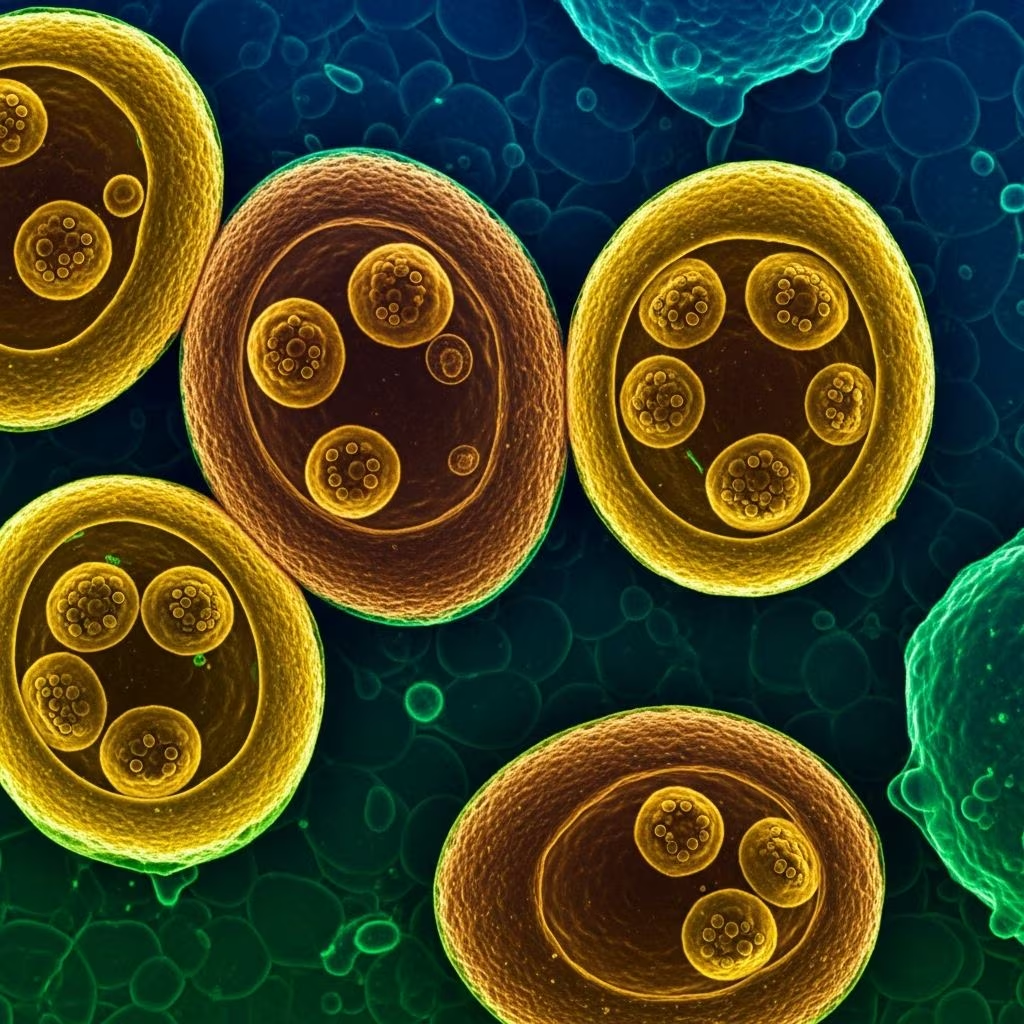
Coccidiosis stands as one of the most prevalent parasitic diseases affecting cattle, particularly young calves in intensive farming systems. Caused by protozoan parasites of the genus Eimeria, this condition damages the intestinal lining, leading to significant economic losses through reduced growth rates, treatment costs, and occasional mortality. While many infections remain subclinical, severe cases can manifest as bloody diarrhea and dehydration, demanding prompt intervention.
Understanding the Parasites Behind the Disease
The primary culprits are species like Eimeria bovis, E. zuernii, and E. alabamensis, which target the gastrointestinal tract. These single-celled organisms shed resilient oocysts in feces, capable of surviving harsh environmental conditions for months. Ingestion of contaminated feed, water, or bedding initiates infection, with the lifecycle involving rapid multiplication in intestinal cells, causing tissue destruction.
Immunity develops specifically against the infecting strain, leaving calves vulnerable to reinfection by other species. Initial exposures can suppress the immune system, impairing neutrophil function and heightening susceptibility to secondary bacterial infections.
Risk Factors and Transmission Dynamics
Young cattle aged 2-12 months are most at risk, especially during weaning or stressful periods like transport to feedlots. Overcrowding, poor hygiene, and wet conditions accelerate oocyst buildup in pens or pastures. Winter outbreaks, termed “winter coccidiosis,” often coincide with confinement housing and cold stress.
- High-risk environments: Confined feedlots, calf hutches with inadequate cleaning.
- Seasonal peaks: Late fall to early spring in temperate regions.
- Management triggers: Sudden diet changes, commingling of age groups.
Subclinical infections, the most frequent outcome, subtly erode performance by impairing nutrient absorption without overt signs.
Recognizing Clinical Manifestations
Infections range from asymptomatic to fatal. Most calves shed oocysts without illness, but heavy burdens trigger progressive severity.
Subclinical Effects
Animals appear normal yet exhibit oocysts in feces and stunted growth that persists into grazing seasons. This silent impact accounts for substantial herd productivity losses.
Subacute Symptoms
Expect soft, mucousy feces 16-23 days post-infection for E. bovis and E. zuernii, or 3-4 days for E. alabamensis. Calves seem dull, with rough coats and reduced feed intake.
Acute and Severe Cases
Profuse, foul-smelling diarrhea with blood, mucus, and intestinal shreds marks acute disease. Dehydration, tenesmus (straining), abdominal pain, weakness, and gauntness follow. Perineal staining and rectal prolapse occur in extremes. Neurologic signs like tremors or ataxia appear in “winter” variants, with mortality despite care.
| Severity Level | Key Signs | Timeline | Impact |
|---|---|---|---|
| Subclinical | Oocysts in feces, no diarrhea | Variable | Poor weight gain |
| Subacute | Soft feces, dullness | 2-4 weeks | Reduced growth |
| Acute | Bloody diarrhea, dehydration | 3 weeks peak | High morbidity |
| Chronic | Wasting, poor coat | Months | Persistent debility |
Diagnostic Approaches for Accurate Identification
Fecal flotation reveals oocysts, but speciation requires microscopy due to varying pathogenicity. Quantitative counts gauge infection intensity. Necropsy in fatalities shows hemorrhagic enteritis, confirming diagnosis. Differentiate from salmonellosis or cryptosporidiosis via history and lab tests.
- Fecal exam: Gold standard for oocyst detection.
- Clinical correlation: Age, signs, environment.
- Post-mortem: Cecal/colon lesions in severe cases.
Effective Treatment Strategies
As a self-limiting illness, mild cases resolve without intervention once parasite multiplication ceases. However, clinical animals demand isolation, supportive care, and targeted therapy to curb oocyst shedding and aid recovery.
Separate affected calves to clean pens with ample bedding, fresh water, and palatable feed. Administer treatments individually if intake is poor, as group medications may fail.
Anticoccidials and Supportive Drugs
- Diclazuril: 1 mg/kg orally once; reduces oocysts effectively.
- Toltrazuril: 15 mg/kg orally once; treats and prevents.
- Sulfaquinoxaline: 13 mg/kg in water or drench for 3-5 days; FDA-approved, ideal for feedlot dysentery.
- Amprolium: 10 mg/kg/day for 5 days; common for clinical cases.
- Monensin: 0.3-0.9 mg/kg in feed for 31 days; promotes growth too.
- Decoquinate: In feed; prevents buildup.
Sulfonamides combat secondary bacteria. Fluids, electrolytes, and transfusions address dehydration/anemia. Avoid corticosteroids, as they boost oocyst output.
Treatment Outcomes Table
| Drug | Dosage/Route | Duration | Notes |
|---|---|---|---|
| Diclazuril | 1 mg/kg PO | Once | Group treatment viable |
| Toltrazuril | 15 mg/kg PO | Once | Lowers counts rapidly |
| Sulfaquinoxaline | 13 mg/kg water/drench | 3-5 days | For bloody diarrhea |
| Monensin | 16.5-30 g/ton feed | 31 days | Growth promotant |
Prevention: Proactive Management Essentials
Control hinges on breaking the oocyst lifecycle through hygiene and strategic medications. Limit young stock exposure while fostering immunity.
- Sanitation: Daily manure removal, disinfect pens (ammonia effective), avoid overcrowding.
- Feed additives: Ionophores like lasalocid/monensin in minerals for 28+ days.
- Rotation: Rest pastures 6-12 months; use medicated feeds pre-weaning.
- Monitoring: Routine fecal checks in high-risk groups.
Hormones like estradiol/progesterone may bolster immunity against E. bovis.
Economic Implications and Long-Term Impacts
Even subclinical cases slash average daily gains by 20-30%, inflating rearing costs. Severe outbreaks amplify losses via deaths and vet bills. Integrated control preserves profitability.[10]
FAQs on Coccidiosis in Cattle
What causes coccidiosis in cattle?
Eimeria species ingested via contaminated environments.
Can coccidiosis be fatal in calves?
Yes, in untreated severe cases with dehydration and secondary infections.
Is treatment always necessary?
No, for subclinical; yes, for clinical signs to limit spread.
What are the best preventive measures?
Clean housing, coccidiostats in feed, calf isolation.
How long does immunity last?
Species-specific, potentially lifelong but wanes without challenge.
References
- Treatment and management of coccidiosis in cattle — Elanco. Accessed 2026. https://farmanimal.elanco.com/za/cattle/cattle-coccidiosis/coccidiosis-treatment-options
- Coccidiosis of Cattle – Digestive System — Merck Veterinary Manual. Accessed 2026. https://www.merckvetmanual.com/digestive-system/coccidiosis/coccidiosis-of-cattle
- Coccidiosis of Cattle – Digestive System — MSD Veterinary Manual. Accessed 2026. https://www.msdvetmanual.com/digestive-system/coccidiosis/coccidiosis-of-cattle
- Coccidiosis Treatment and Prevention in Cattle — Oklahoma State University Extension. 2023. https://extension.okstate.edu/fact-sheets/coccidiosis-treatment-and-prevention-in-cattle.html
- Bovine Coccidiosis – Frequently Asked Questions — Ohio State University Beef Team. 2024-05-15. https://u.osu.edu/beef/2024/05/15/bovine-coccidiosis-frequently-asked-questions/



