

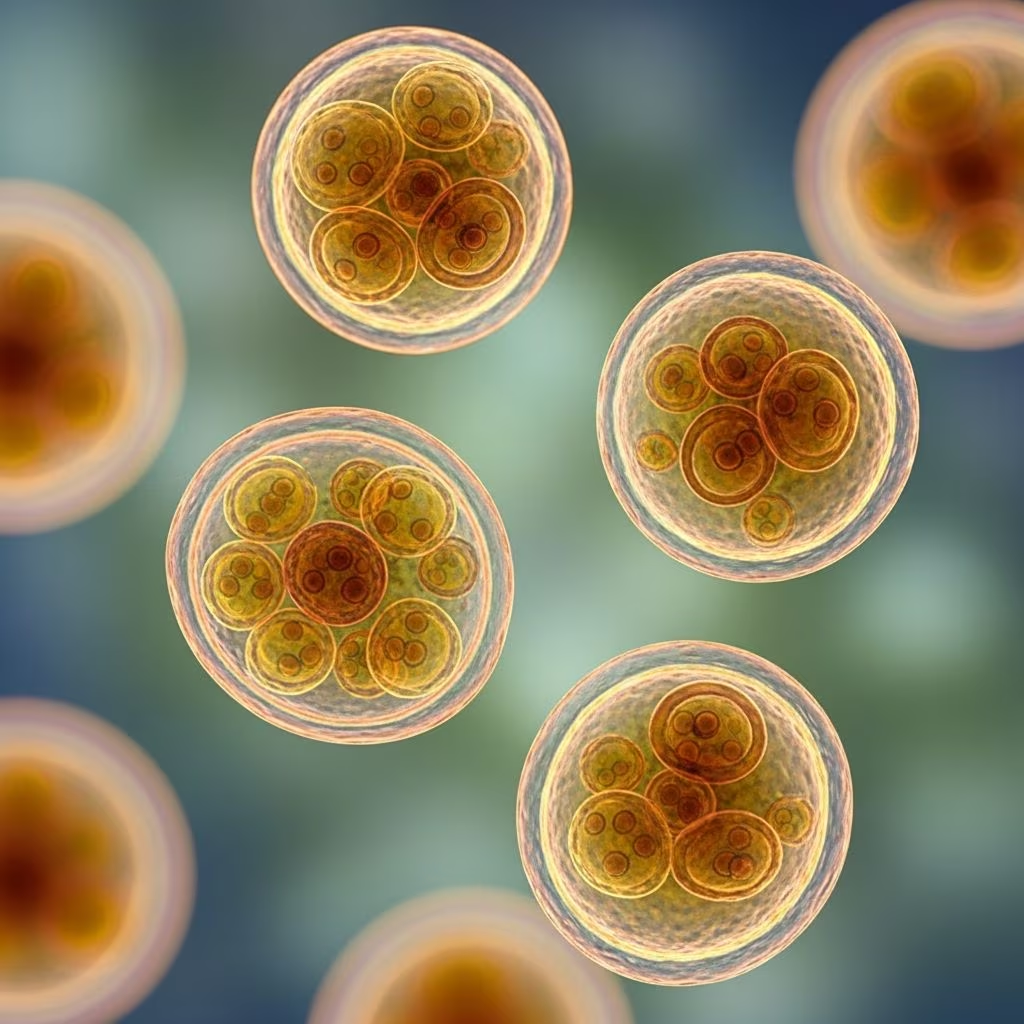
Coccidiosis represents a significant parasitic challenge in veterinary practice, primarily driven by protozoan organisms from genera like Eimeria and Isospora (also known as Cystoisospora). These intracellular parasites target the intestinal epithelium, leading to inflammation, tissue damage, and disrupted nutrient absorption. While many infections remain subclinical, severe cases can result in substantial morbidity, economic losses in production animals, and occasional mortality, particularly in young or stressed individuals.
The Biological Basis of Coccidiosis
At its core, coccidiosis arises from single-celled eukaryotes that complete a complex life cycle within the host. The environmentally resistant oocyst stage is shed in feces and requires specific conditions—typically warmth and moisture—to sporulate and become infectious. Ingestion of these sporulated oocysts by a susceptible host initiates invasion of gut cells, where asexual and sexual reproduction occurs, culminating in new oocysts.
This direct life cycle emphasizes fecal-oral transmission, with contaminated feed, water, bedding, or soil serving as primary vectors. Indirect transmission via paratenic hosts, such as rodents, adds complexity in species like dogs. Host specificity is notable; for instance, bovine Eimeria strains rarely affect other species, limiting cross-infection risks but necessitating species-tailored management.
Species-Specific Manifestations and Risks
Coccidiosis impacts a broad spectrum of animals, with variations in prevalence, severity, and affected sites.
Ruminants: Focus on Calves and Lambs
In cattle, particularly calves aged 7-21 days post-weaning, Eimeria zuernii and Eimeria bovis dominate, causing cecal and colonic damage. Clinical outbreaks feature acute, bloody diarrhea, straining, dehydration, and rapid weight loss, often triggered by stress like transport or dietary shifts. Adult cattle cases are rarer but occur in immunocompromised individuals, presenting with foul-smelling, blood-tinged feces, fever (103-105°F), tachycardia, and reduced milk production.
Sheep and goats face similar threats from Eimeria ovinoidalis and Eimeria crandallis, with peak incidence in weaned lambs. Symptoms mirror those in calves, including mucoid, hemorrhagic enteritis and tenesmus.
Poultry: A Major Production Concern
Chickens and turkeys suffer from multiple Eimeria species (e.g., Eimeria tenella in ceca, Eimeria necatrix in midgut), leading to lesions, reduced feed efficiency, and flock-wide losses. Subclinical infections erode performance, while clinical ones cause depression, ruffled feathers, and bloody droppings.
Companion Animals: Dogs, Cats, and Others
Puppies and kittens are prime targets for Cystoisospora canis/felis, with watery diarrhea, vomiting, and dehydration in severe puppy cases. Adults often shed oocysts asymptomatically. Horses and pigs experience milder, sporadic issues.
| Species | Key Pathogens | Peak Age | Common Sites |
|---|---|---|---|
| Cattle | E. zuernii, E. bovis | 1-6 months | Cecum, colon |
| Sheep/Goats | E. ovinoidalis | Weaning | Small/large intestine |
| Poultry | E. tenella, E. maxima | 3-6 weeks | Intestine, ceca |
| Dogs/Cats | Cystoisospora spp. | Puppies/kittens | Small intestine |
Recognizing Clinical and Subclinical Signs
- Acute Phase: Profuse, foul-smelling diarrhea with mucus, blood flecks, or frank dysentery; perianal staining; tenesmus with rectal prolapse risk.
- Systemic Effects: Anorexia, lethargy, gaunt appearance, dehydration (sunken eyes, weak pulse), fever, abdominal pain.
- Chronic/Subclinical: Poor weight gain, unthriftiness, variable group growth, pasty feces, dull coat.
Mortality is low (<5%) but rises with secondary bacterial invasion or concurrent stressors. Economic impacts include treatment costs, growth setbacks, and culling in herds/flocks.
Accurate Diagnosis: Laboratory and Field Approaches
Diagnosis integrates history (age, grouping, stressors), clinical signs, and parasitological confirmation. Fecal flotation via centrifugation detects oocysts, but speciation is crucial as non-pathogenic species abound.
- Quantitative Fecal Analysis: >5,000-50,000 oocysts/gram signals pathogenicity, though pre-patent phases yield negatives.
- Advanced Methods: PCR for speciation, histopathology on necropsies revealing epithelial destruction, schizonts, and gamonts.
- Differentials: Salmonellosis, cryptosporidiosis, helminths—ruled out via culture or ELISA.
Early detection in outbreaks hinges on group sampling and veterinary input.
Treatment Protocols: Drugs and Supportive Care
Anticoccidials target asexual stages; sulfa drugs like sulfadimidine (33% w/v) resolve clinical signs in 3-7 days, clearing oocysts. Ionophores (monensin, lasalocid) and toltrazuril suit prophylaxis/treatment in ruminants/poultry.
- Ruminants: Sulfas + fluids/electrolytes; monitor for resistance.
- Pets: Trimethoprim-sulfa or ponazuril for symptomatic cases.
- Supportive: Rehydration (IV/oral), anti-inflammatories, probiotics.
Treatment response confirms diagnosis; negatives post-therapy affirm success.
Prevention and Control Strategies
Integrated management curbs outbreaks:
- Husbandry: Clean, dry bedding; avoid overcrowding; sanitize waterers/feeders.
- Chemoprophylaxis: Feed additives (e.g., decoquinate) during high-risk periods.
- Rotation/Vaccination: Live oocyst vaccines for poultry build immunity.
- Immunity Boost: Gradual exposure fosters natural resistance post-weaning.
Quarantine new stock and monitor via fecal surveillance.
Emerging Challenges and Research Directions
Anticoccidial resistance, climate-driven oocyst survival, and intensive farming heighten risks. Recent studies advocate genomic surveillance of Eimeria for virulence tracking and novel therapeutics like probiotics or plant extracts.
Frequently Asked Questions (FAQs)
What causes coccidiosis in farm animals?
Protozoan parasites like Eimeria species, transmitted via contaminated environments.
Is coccidiosis contagious between species?
Generally no, due to high host specificity.
How do I know if my calf has coccidiosis?
Look for bloody diarrhea, dehydration; confirm with fecal oocyst counts.
Can adult animals get coccidiosis?
Yes, though rare; stress predisposes them.
What’s the best prevention for poultry coccidiosis?
Medication rotation, vaccination, and biosecurity.
References
- Clinical coccidiosis in adult cattle — PMC – PubMed Central – NIH. 2015. https://pmc.ncbi.nlm.nih.gov/articles/PMC4554573/
- Coccidia — Companion Animal Parasite Council. Accessed 2026. https://capcvet.org/guidelines/coccidia/
- Coccidiosis in Cattle — NADIS. Accessed 2026. https://www.nadis.org.uk/disease-a-z/cattle/coccidiosis-in-cattle/
- Overview of coccidiosis — Veterinary Ireland Journal. Accessed 2026. https://www.veterinaryirelandjournal.com/large-animal/162-overview-of-coccidiosis
- Overview of Coccidiosis in Animals — Merck Veterinary Manual. Accessed 2026. https://www.merckvetmanual.com/digestive-system/coccidiosis/overview-of-coccidiosis-in-animals
- Coccidiosis in Dogs — VCA Animal Hospitals. Accessed 2026. https://vcahospitals.com/know-your-pet/coccidiosis-in-dogs



