

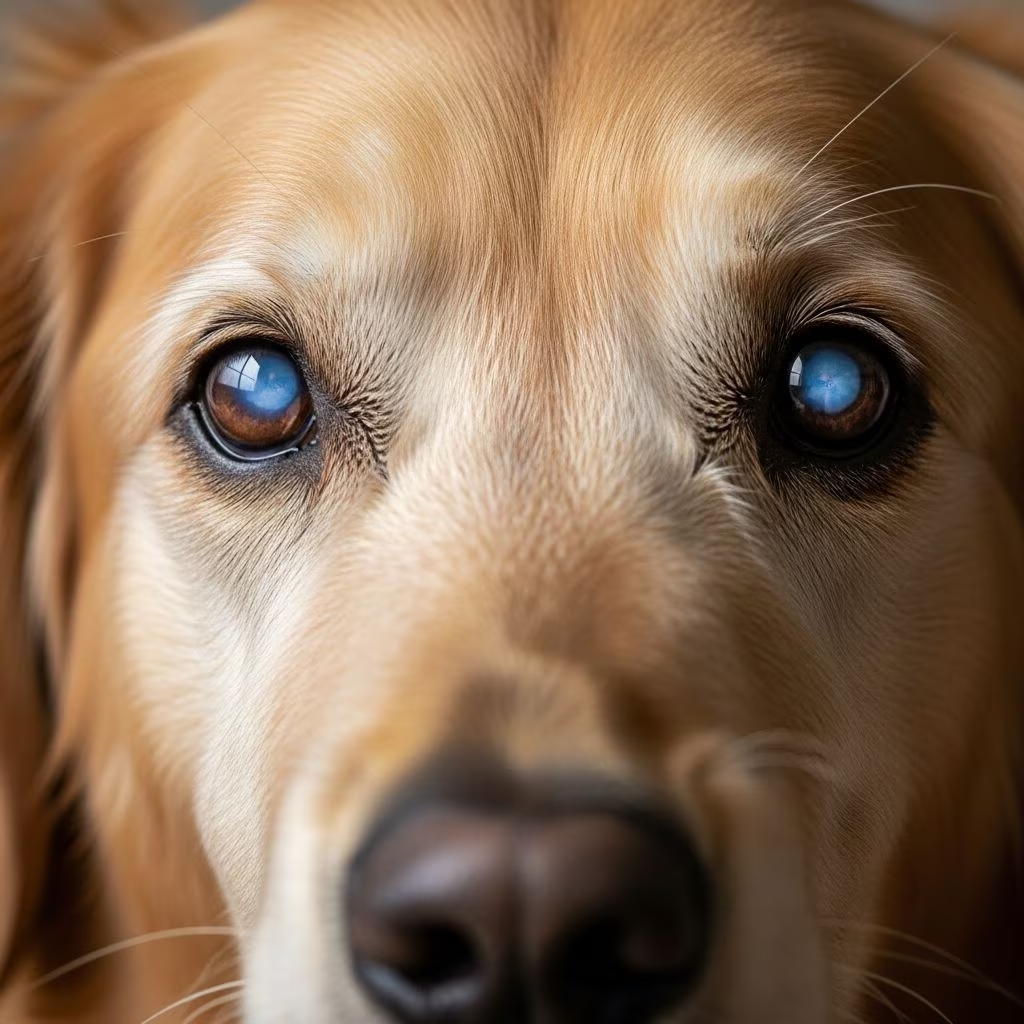
Observing a hazy or foggy appearance in your dog’s eyes can spark immediate concern. This visual change often signals underlying issues ranging from benign age-related shifts to serious diseases threatening vision. Understanding the spectrum of possibilities empowers owners to act swiftly, potentially preserving their pet’s sight and comfort. While some forms resolve naturally, others demand prompt veterinary intervention to prevent irreversible damage.
Recognizing the Signs of Ocular Opacity
Cloudiness manifests differently depending on its origin. It might appear as a subtle blue-gray tint in the lens center, a diffuse corneal haze, or a pronounced milky film across the entire eye. Accompanying symptoms heighten urgency: excessive tearing, redness, squinting, pawing at the face, light sensitivity, or behavioral shifts like bumping into objects.
- Sudden onset: Often linked to trauma, infection, or acute inflammation, requiring same-day vet evaluation.
- Gradual development: Typically points to chronic processes like aging or cataracts, though still merits monitoring.
- Bilateral vs. unilateral: Both eyes affected suggests systemic causes; one eye may indicate local injury or disease.
Early detection hinges on routine eye checks during grooming or play. Note any discharge color—clear suggests allergies, yellow-green signals infection, rusty-brown hints at dry eye complications.
Primary Culprits Behind the Haze
Several conditions top the list for canine ocular clouding. Each alters eye structures uniquely, from the transparent cornea to the light-focusing lens.
Nuclear Sclerosis: The Harmless Age Marker
In senior dogs, the lens nucleus compresses over time, creating a central opacity resembling a bluish sheen. Unlike vision-impairing disorders, this change minimally affects sight, often causing only mild farsightedness. Common after age six, it spares treatment as it’s a natural progression.
Cataracts: The Vision Thief
Protein clumps opacify the lens, blocking light to the retina. Inherited in breeds like Poodles, Labs, and Terriers, or secondary to diabetes, trauma, or inflammation. Progression leads to total blindness if untreated. Puppies may develop them congenitally.
Glaucoma: Pressure-Induced Peril
Elevated intraocular pressure damages the optic nerve, causing corneal edema and clouding. Primary (breed-related, e.g., Cocker Spaniels, Basset Hounds) or secondary to uveitis/lens luxation. Symptoms include bulging eyes, pain, and dilated pupils. Untreated, it culminates in blindness.
| Condition | Appearance | Vision Impact | Treatment Needed |
|---|---|---|---|
| Nuclear Sclerosis | Central lens blue-gray | Minimal | None |
| Cataracts | White/milky lens | Progressive blindness | Surgery |
| Glaucoma | Corneal haze, enlarged eye | Rapid loss | Medications/Surgery |
| Dry Eye (KCS) | Dull, pigmented cornea | Ulcers/scarring | Drops/Surgery |
| Uveitis | Diffuse haze, redness | Painful, variable | Anti-inflammatories |
Dry Eye (Keratoconjunctivitis Sicca): Lubrication Loss
Immune-mediated destruction of tear glands leaves the cornea dry, dull, and prone to ulcers/scars. Breeds like Bulldogs, Westies prone. Thick mucus discharge and constant blinking hallmark it.
Other Contributors
- Corneal Issues: Ulcers from scratches erode transparency; dystrophy causes lipid deposits.
- Uveitis: Iris inflammation from infection, cancer, or autoimmunity swells tissues.
- Infections/Allergies: Viral (adenovirus ‘blue eye’), bacterial, or allergen-induced conjunctivitis.
Diagnostic Approaches for Clarity
Vets employ targeted tests to pinpoint causes. A thorough ophthalmic exam includes:
- Schirmer Tear Test: Measures tear production; under 15mm/min flags KCS.
- Fluorescein Stain: Highlights ulcers as green defects.
- Tonometry: Gauges pressure; over 25mmHg suggests glaucoma.
- Gonioscopy/Ophthalmoscopy: Views drainage angles and retina.
- Bloodwork/Imaging: Rules out systemic drivers like diabetes.
Referral to a veterinary ophthalmologist follows for complex cases, wielding advanced tools like ultrasound.
Treatment Strategies: From Drops to Scalpels
Therapy tailors to diagnosis, aiming to restore clarity and function.
- Topical Meds: Artificial tears for KCS; cyclosporine immunosuppressants regenerate glands. Antibiotics/steroids combat infection/inflammation. Glaucoma drops (e.g., latanoprost) lower pressure.
- Systemic Drugs: Oral anti-inflammatories or antibiotics for uveitis.
- Surgical Options: Cataract phacoemulsification (90% success); glaucoma laser/valve implants; KCS parotid duct transposition redirects saliva.
- Supportive Care: Antioxidants (vitamins C/E, omega-3s) bolster healing.
Post-treatment monitoring prevents recurrence; lifelong meds manage chronic conditions like KCS.
Prevention: Proactive Eye Wellness
Shield eyes from hazards: trim facial hair, supervise play, protect during meds/outdoors. Annual vet exams catch issues early. Manage predisposing diseases (diabetes, hypothyroidism). Antioxidant-rich diets support lens health.
When to Rush to the Vet
Act immediately if cloudiness pairs with pain signs (squinting, redness), sudden vision loss, or trauma. Delays exacerbate damage in glaucoma/uveitis. Benign sclerosis notwithstanding, professional diagnosis trumps guesswork.
Frequently Asked Questions
Do cloudy eyes always mean blindness?
No. Nuclear sclerosis rarely impairs vision significantly, unlike cataracts or glaucoma.
Can allergies trigger cloudiness?
Yes, via conjunctivitis leading to corneal damage from rubbing.
Are home remedies safe?
Avoid them; they risk worsening. Cold compresses may soothe only vet-approved.
Will it resolve alone?
Rarely, except adenovirus cases. Most need intervention.
Which breeds are at risk?
Cataracts: Labs, Poodles; Glaucoma: Spaniels; KCS: Bulldogs.
Long-Term Management and Prognosis
Outcomes vary: cataracts surgery restores near-normal sight; glaucoma halts progression but rarely reverses loss. KCS stabilizes with compliance. Quality of life remains high with adaptation—blind dogs navigate via scent/memory. Regular check-ups ensure timely tweaks.
Empowering owners with knowledge transforms cloudy eyes from crisis to manageable reality. Vigilance and partnership with vets safeguard canine companions’ windows to the world.
References
- Cloudy Eyes in Dogs: Definition, Causes, and Treatments — Total.Vet. 2023. https://total.vet/dog-cloudy-eyes/
- Cloudy Eyes in Dogs: Causes, Symptoms, and Treatments — Wedgewood Pharmacy. 2023. https://www.wedgewood.com/blog/cloudy-eyes-in-dogs-causes-symptoms-and-treatments/
- Cloudy Eyes in Dogs: 7 Common Reasons — ToeGrips. 2023. https://toegrips.com/cloudy-eyes-in-dogs/
- Cloudy Eyes in Dogs: Why Are My Dog’s Eyes Cloudy? — PetMD. 2023. https://www.petmd.com/dog/symptoms/cloudy-eyes-in-dogs
- Cloudy Eyes in Dogs: What to Know — American Kennel Club. 2023. https://www.akc.org/expert-advice/health/cloudy-eyes-in-dogs/
- Conditions That Cause Cloudy Eyes In Dogs — Walkin’ Pets. 2023. https://walkinpets.com/blogs/blog/what-to-do-if-your-dog-has-cloudy-eyes



