

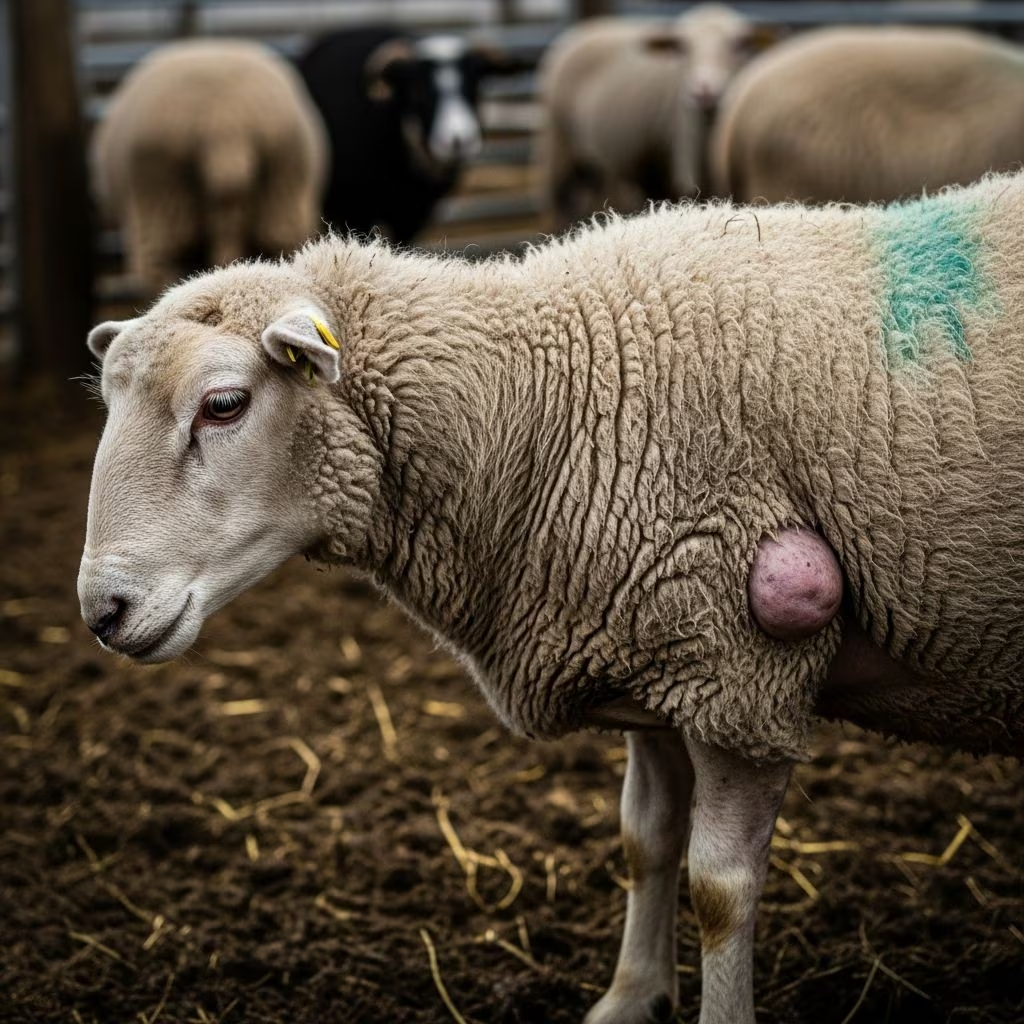
Malignant edema represents a critical veterinary challenge affecting diverse animal species worldwide. This acute, often fatal condition develops from bacterial contamination of wounds and has historically posed significant economic losses to livestock producers. The causative organism, Clostridium septicum, thrives in soil and intestinal environments, making infection a persistent occupational hazard in agricultural settings. Understanding the epidemiology, pathophysiology, and management strategies for this condition is essential for veterinary professionals and livestock managers seeking to minimize morbidity and mortality rates.
Microbiology and Environmental Occurrence
Clostridium septicum is a gram-positive, anaerobic bacterium ubiquitously distributed in terrestrial ecosystems and the gastrointestinal tracts of domestic and wild animals. The organism exists as dormant spores within soil, representing a persistent environmental contamination source. These spores demonstrate remarkable resilience, surviving extreme environmental conditions and remaining viable for extended periods. The presence of C. septicum in muscle tissues of cattle and horses indicates that infected animals may harbor latent infections capable of reactivation under specific physiological circumstances.
The bacterium produces potent exotoxins that generate severe tissue damage and systemic illness. Alpha toxin, the primary virulence factor, mediates the characteristic pathological changes observed in infected animals, including excessive inflammation, tissue necrosis, and gaseous distension within muscular and connective tissue compartments.
Transmission Pathways and Risk Factors
Infection occurs through multiple routes, primarily involving contamination of traumatic injuries with soil-contaminated materials or through penetrating wounds containing devitalized tissue. The organism preferentially colonizes areas of compromised vascularity and reduced oxygen tension, where anaerobic conditions favor proliferation.
Species-specific risk factors vary considerably:
- Equine populations: Intramuscular injections administered with improper aseptic technique represent the predominant risk factor. Routine vaccinations, therapeutic drug administrations, or performance-enhancing substance injections create portal entries for environmental bacteria.
- Ovine populations: Surgical procedures including castration, tail docking, and shearing create accessible wounds. Additionally, injuries sustained during aggressive social interactions between rams expose deeper tissue layers to contamination.
- Bovine populations: Parturition-associated trauma, castration procedures, dehorning practices, and contaminated injection sites facilitate bacterial entry. Female cattle experiencing traumatic parturition with vulvar lacerations face particularly severe disease manifestations.
Pathophysiological Mechanisms
Once bacterial establishment occurs at a wound site, toxin production initiates a cascade of tissue-destructive processes. Alpha toxin functions as a phospholipase C equivalent, degrading phosphatidylcholine within cell membranes and triggering uncontrolled inflammatory responses. This enzymatic activity results in:
- Massive vascular permeability increases leading to extensive fluid extravasation
- Myonecrosis characterized by muscle tissue darkening to brown or black coloration
- Progressive ischemia from vascular occlusion and increased tissue pressure
- Accumulation of gas within subcutaneous and intermuscular spaces, creating the characteristic crepitus or crackling sensation upon palpation
- Systemic absorption of bacterial endotoxins triggering fever, anorexia, and shock
The progression from localized infection to systemic toxemia occurs remarkably rapidly, often within hours of initial tissue contamination. The combination of local tissue destruction and systemic inflammatory responses creates a medical emergency requiring immediate intervention.
Clinical Presentation and Diagnostic Evaluation
Clinical manifestations typically emerge within 6 to 48 hours following predisposing injury or spore activation. The disease presentation includes both generalized and localized components that reflect the pathogenic mechanisms previously described.
General Clinical Signs
Affected animals exhibit marked constitutional disturbances including high fever, profound anorexia, lethargy, and depression. Equine patients may display signs consistent with severe colic or intestinal distress. Severely affected animals demonstrate signs of prostration, indicating overwhelming systemic toxemia.
Local Lesion Characteristics
The affected area manifests as soft, pitting edema that extends rapidly within hours of initial clinical recognition. The skin overlying the infection site becomes darkened, with hemorrhagic discoloration visible beneath the epidermis. Subcutaneous crepitation, representing gas production within tissue planes, may be detectable on careful palpation. As the condition progresses, extensive skin and tissue sloughing occurs, with purulent, foul-smelling discharge emanating from the lesion site.
Specific disease presentations vary by anatomical location and species:
- Ram infections following fight wounds present with severe head edema accompanied by dramatic facial swelling
- Parturition-related infections in cattle are characterized by vulvar edema, severe systemic toxemia, and typically fatal outcomes within 24 to 48 hours
- Muscle infections demonstrate extreme pain sensitivity, with affected animals displaying reluctance to move and severe lameness in affected limbs
Diagnostic Confirmation
Presumptive diagnosis relies on clinical presentation, epidemiological context, and gross lesion characteristics. Definitive confirmation requires laboratory isolation and identification of C. septicum from affected tissues. Bacteriological culture from aseptically collected tissue samples remains the gold standard diagnostic approach. Polymerase chain reaction (PCR) assays can provide rapid confirmation of bacterial identification, particularly in research or referral settings.
Necropsy findings reveal extensive dark-brown purulent fluid accumulation, necrotic muscle tissue, and characteristic odor. The presence of gas within tissue planes is often apparent upon postmortem examination.
Antimicrobial Treatment Protocols
Therapeutic success depends fundamentally on early treatment initiation. The narrow temporal window for effective intervention—often within the first 24 hours of clinical recognition—underscores the critical importance of rapid diagnosis and prompt antimicrobial administration.
Primary Antimicrobial Agents
High-dose parenteral penicillin represents the first-line antimicrobial therapy. Tetracycline antibiotics provide alternative coverage when penicillin sensitivity exists or in cases of documented penicillin allergy. Broad-spectrum antimicrobials covering multiple anaerobic and aerobic organisms may be utilized when specific organism susceptibilities remain unknown.
Parenteral administration is mandatory due to poor oral bioavailability and the necessity for rapid systemic drug achievement. Injectable formulations achieve therapeutic concentrations at infection sites more expeditiously than oral preparations. Some practitioners advocate perilesional penicillin injection to maximize local drug concentrations, though this approach does not prevent characteristic tissue sloughing.
Supportive Care Modalities
Antimicrobial monotherapy proves insufficient for optimal patient outcomes. Comprehensive supportive care addresses the systemic manifestations of severe toxemia. Nonsteroidal anti-inflammatory drugs, particularly flunixin meglumine in equine and bovine patients, reduce fever and attenuate inflammatory responses. Intravenous fluid administration maintains hydration and circulatory perfusion, particularly in animals demonstrating signs of hypovolemic shock.
Surgical Intervention
Surgical incision of affected skin and fascia facilitates drainage of purulent material and reduces local tissue pressure. This procedure may prevent progression of infection within deeper tissue planes and improves local antibiotic penetration. Nonetheless, extensive tissue necrosis necessitates debridement and ongoing wound management throughout the recovery period.
Prevention Through Immunization
Vaccination strategies represent the most cost-effective approach to disease prevention in endemic regions. Commercial vaccines containing C. septicum bacterin are typically formulated as multivalent products that also protect against blackleg (Clostridium chauvoei) and other clostridial diseases.
Vaccination Timing and Protocols
Calves should receive initial vaccination at approximately 2 months of age. A two-dose series separated by 2 to 3 weeks typically provides adequate protection lasting 12 months. In high-risk operations, annual revaccination is recommended, with additional booster doses administered following severe traumatic events or surgical procedures.
Vaccination should be completed prior to planned procedures such as castration, dehorning, tail docking, and parturition in endemic areas. For animals approaching surgical intervention without prior vaccination, urgent prophylactic immunization may reduce disease risk, though vaccine-induced protection requires several days to develop.
Herd-Level Prevention Strategies
Beyond immunization, management practices significantly influence disease occurrence. Rigorous aseptic technique during injectable drug administration, utilizing sterile needles and syringes for each animal, substantially reduces injection-site infections. Low-stress animal handling minimizes traumatic injuries and microabrasions that might serve as infection ports of entry.
Proper disposal of infected animal carcasses prevents environmental contamination and spore amplification. Animals dying from suspected clostridial disease should be buried deeply or incinerated rather than left accessible to scavenging species or environmental exposure.
Prognosis and Treatment Outcomes
The prognosis for malignant edema remains guarded to grave in most cases, despite aggressive antimicrobial and supportive interventions. Mortality rates approach 100% in untreated animals, with death typically occurring within 24 to 48 hours of clinical manifestation. Even with prompt, appropriate treatment, survival rates depend critically on treatment timing and disease severity at presentation.
Early-stage infections treated within 12 to 24 hours of symptom onset demonstrate higher survival rates, though permanent tissue damage at infection sites frequently occurs despite successful systemic infection control. Necrotic tissue damage and associated scarring represent persistent consequences of even successfully treated cases.
Frequently Asked Questions
Can animals recover from malignant edema?
While antimicrobial therapy can arrest systemic infection progression and prevent death when administered early, complete tissue recovery is unlikely. Necrotic tissue damage persists even after successful treatment, resulting in permanent scarring and functional impairment.
Is vaccination 100% effective?
Vaccination substantially reduces disease incidence but does not provide absolute protection. Vaccinated animals demonstrate improved survival rates if infection develops, and vaccination combined with good management practices provides the most reliable prevention strategy.
How quickly does malignant edema progress?
Clinical signs typically manifest within 6 to 48 hours of infection or spore activation. The disease progresses extremely rapidly once clinical signs appear, making early recognition and treatment critical for survival.
Are some animals more susceptible than others?
All animal species can develop malignant edema, though epidemiological patterns reflect species-specific risk factors. Animals undergoing surgical procedures or receiving injections face elevated risk, while those in endemic areas without vaccination face continuous exposure risk.
References
- Malignant Edema in Animals – Infectious Diseases — Merck Veterinary Manual. Accessed February 24, 2026. https://www.msdvetmanual.com/infectious-diseases/clostridial-diseases/malignant-edema-in-animals
- Malignant Edema in Some Sheep Flocks of Iran — PubMed Central, National Center for Biotechnology Information. 2024. https://pmc.ncbi.nlm.nih.gov/articles/PMC12426447/
- Malignant Edema in Horses — Merck Veterinary Manual. Accessed February 24, 2026. https://www.merckvetmanual.com/horse-owners/infectious-diseases-of-horses/malignant-edema-in-horses
- Clostridial Disease in Cattle — NADIS (National Animal Disease Information System). Accessed February 24, 2026. https://www.nadis.org.uk/disease-a-z/cattle/clostridial-disease-in-cattle/



