

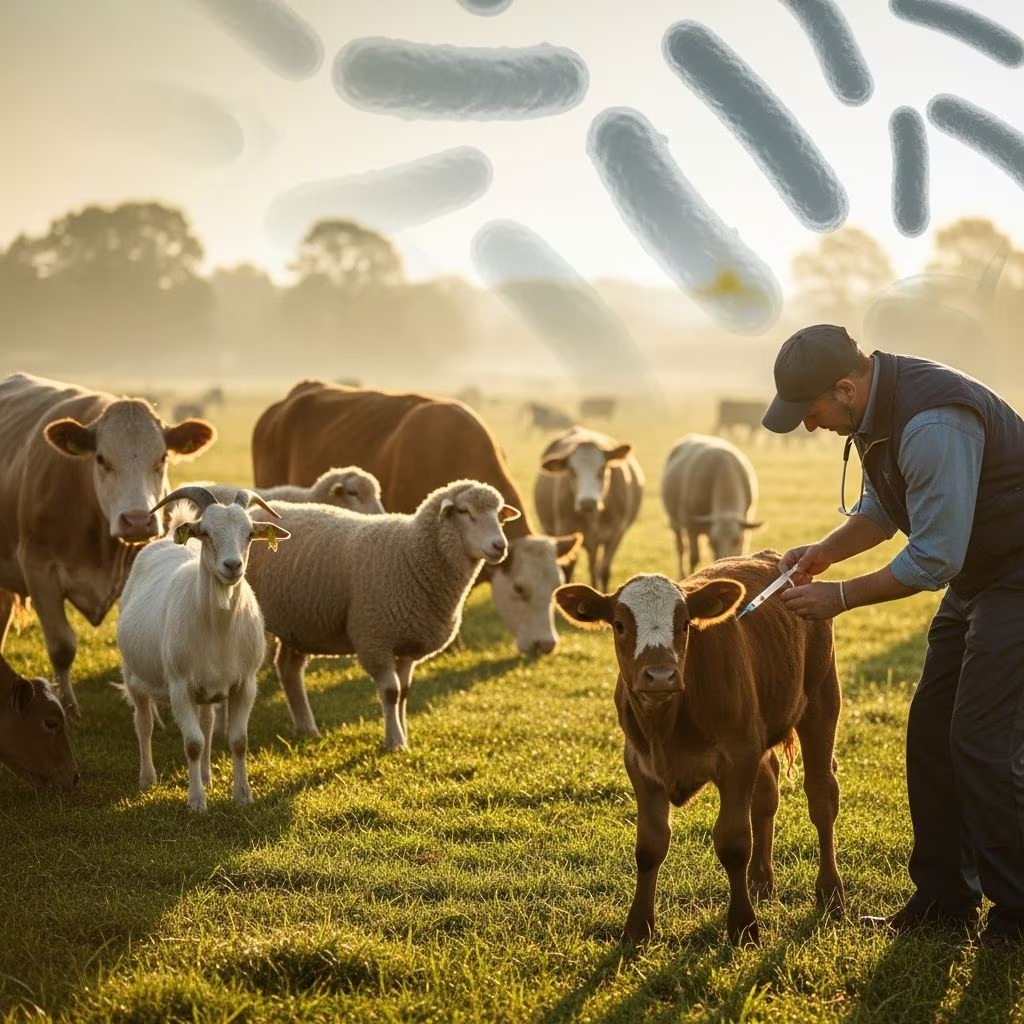
Clostridial vaccines play a critical role in preventing devastating diseases in livestock caused by toxin-producing Clostridium bacteria. These vaccines, primarily bacterin-toxoids, stimulate immunity without causing illness, protecting animals like cattle, sheep, and goats from rapid-onset conditions that can lead to sudden death.
The Hidden Danger of Clostridial Pathogens in Animals
Clostridium species are spore-forming, anaerobic bacteria ubiquitous in soil, water, and animal intestines. Under favorable conditions, such as wounds, digestive disruptions, or tissue damage, they germinate, multiply explosively, and release potent exotoxins. These toxins target vital organs, causing diseases like enterotoxemia (pulpy kidney), blackleg, malignant edema, tetanus, and black disease. In unvaccinated herds, mortality rates can exceed 50%, with deaths occurring within hours due to toxin overload.
- Key Pathogens: Clostridium perfringens (types C, D), C. chauvoei (blackleg), C. novyi (black disease), C. septicum (malignant edema), C. tetani (tetanus), C. haemolyticum, and C. sordellii.
- Sheep and goats are particularly vulnerable to C. perfringens type D, causing overeating disease from rapid grain intake or lush pasture.
- Cattle face threats from blackleg in young stock on improved pastures.
These infections thrive in high-risk environments: overstocked pens, sudden feed changes, castration wounds, or dystocia. Early recognition is rare, as symptoms like convulsions, diarrhea, or lameness appear terminally.
Types of Clostridial Vaccines: From Traditional to Cutting-Edge
Clostridial vaccines have evolved from crude culture filtrates to sophisticated recombinant formulations. All target bacterial toxins, neutralizing them before cellular damage occurs.
Conventional Bacterin-Toxoid Vaccines
These are the cornerstone of clostridial prevention, made by growing Clostridium strains, harvesting toxin-rich supernatants, inactivating with formaldehyde, and adjuvating with aluminum salts. Common products offer 3-way (C. perfringens C&D + tetanus), 7-way, 8-way, or 10-way protection, including tetanus coverage unique to some brands.
| Vaccine Type | Coverage | Primary Use |
|---|---|---|
| 3-Way (CD&T) | C. perfringens C/D, C. tetani | Sheep/goats core protection |
| 7-Way | Adds blackleg, malignant edema, etc. | Cattle/sheep expanded |
| 8/10-Way | Includes tetanus, haemolyticum | Comprehensive for mixed herds |
These vaccines provoke strong antitoxin responses, reducing antibiotic needs and antimicrobial resistance risks.
Recombinant and Genetically Engineered Vaccines
Modern biotech produces non-toxic toxin mutants or subunits in hosts like E. coli or Lactobacillus. Examples include NetB mutants for necrotic enteritis in poultry, ETX mutants against enterotoxemia, and multivalent fusions like CPA, CPB, ETX, NetB. Studies in mice, rabbits, and guinea pigs show equal or superior protection to toxoids, with fewer side effects.
- Bivalent ETX-CPB fusions protected mice/rabbits.
- Trivalent CPA-NetB-TpeL elicited high titers.
- Tetravalent CPA-CPB-ETX-NetB matched traditional efficacy.
Recombinant CctA targets blackleg, while nanovaccines with chitosan nanoparticles boost humoral responses 2-3 fold in rabbits and chickens.
Vaccination Protocols Tailored to Species and Age
Effective programs require precise timing, as naive animals need priming doses. Always consult labels and vets for slaughter withdrawals (e.g., 21 days).
Sheep and Lambs
Pregnant ewes receive boosters 4-6 weeks pre-lambing for colostral immunity. Lambs get two doses from 10 days old (maternal antibodies don’t interfere) or at 3-4 months pre-weaning. Annual ewes boosters ensure lamb protection; naive lambs need two shots 4-6 weeks apart.

Cattle
Calves: Initial two doses at 2-3 months, booster at weaning, annual thereafter. Cows: Pre-breeding or pre-calving. In feedlots, 23% receive multiple clostridial shots for high-risk entrants.
Goats: Special Considerations
Goats process vaccines differently; focus on C. perfringens D. Use sheep protocols but monitor for type C rarity. Two initial doses for naives over 2 weeks.
Dosage: Subcutaneous in neck; two initials 4-6 weeks apart, then annual.
Booster Strategies and Maternal Immunity
Primary series builds base immunity; boosters maintain it. Ewes vaccinated pre-lambing pass IgG via colostrum, protecting lambs 4-5 months until maternal fade. Figure 1 data shows vaccinated ewes have 5-10x higher epsilon antitoxins.
- Naive adults/lambs: Dose 1, Dose 2 (4-6w), Booster (6m).
- Colostrum-fed lambs: Vaccinate at 10d or 3m.
- High-risk (e.g., feedlots): Extra doses.
Administration Best Practices and Safety
Inject subcutaneously high on neck to avoid carcass blemishes. Use sterile 18-20G needles, shake vials, avoid mixing unless approved. Side effects: transient swelling (resolves 3-7d); rare anaphylaxis—keep epinephrine handy.
Contraindications: Sick animals, pregnancy first third (unless core like tetanus).
Monitoring Efficacy and Disease Surveillance
Test serum antitoxin levels pre/post-vaccination. Post-mortem: Necropsy confirms (e.g., kidney edema in type D). Track herd outbreaks to adjust protocols—e.g., add blackleg in endemic areas.
Emerging Innovations in Clostridial Protection
Nanoparticles enhance delivery; chitosan boosts responses. DNA vaccines and plant-expressed toxoids are in trials. Multivalent recombinants promise broader, safer coverage, potentially replacing toxoids in intensive farming.
Frequently Asked Questions (FAQs)
What is the best clostridial vaccine for sheep?
A 3-way CD&T for basics; 7/8-way for expanded risks. Vaccinate ewes pre-lambing.
Can I vaccinate pregnant goats?
Yes, after first trimester, focusing on type D.
How soon after vaccination can I slaughter?
Follow label; typically 21 days.
Do clostridial vaccines prevent all cases?
No—90-95% efficacy; hygiene and management essential.
What’s new in clostridial vaccines?
Recombinant multivalents and nanotech for stronger, targeted immunity.
Conclusion
Clostridial vaccines are indispensable for livestock health, blending proven toxoids with biotech advances. Implement species-specific schedules, integrate with biosecurity, and consult vets for optimal protection. Proactive vaccination averts catastrophic losses, ensuring sustainable farming.
References
- Vaccination against pathogenic clostridia in animals: a review — PMC/NCBI. 2021-04-26. https://pmc.ncbi.nlm.nih.gov/articles/PMC8062623/
- Clostridial vaccine — Wikipedia. Accessed 2026. https://en.wikipedia.org/wiki/Clostridial_vaccine
- BOVILIS® Clostridial Vaccines – Cattle — Merck Animal Health Canada. Accessed 2026. https://www.merck-animal-health.ca/products/cattle/bovilis-cattle-vaccines/clostridial/
- Clostridial Disease Management and Vaccines for Sheep and Goats — Ohio State University. 2023-02-14. https://u.osu.edu/sheep/2023/02/14/clostridial-disease-management-and-vaccines-for-sheep-and-goats/
- Clostridia and Pasteurella Vaccination — NADIS. Accessed 2026. https://www.nadis.org.uk/disease-a-z/sheep/clostridia-and-pasteurella-vaccination/
- Use of Clostridial Vaccines — USDA APHIS. Accessed 2026. https://www.aphis.usda.gov/sites/default/files/cofe_is_clostridialvacc.pdf
- VISION® vaccines lead the way in clostridial protection — Merck Animal Health USA. Accessed 2026. https://www.merck-animal-health-usa.com/producers/cattle/cattle-insights/beef/cattle-blackleg-prevention-vaccines/



