

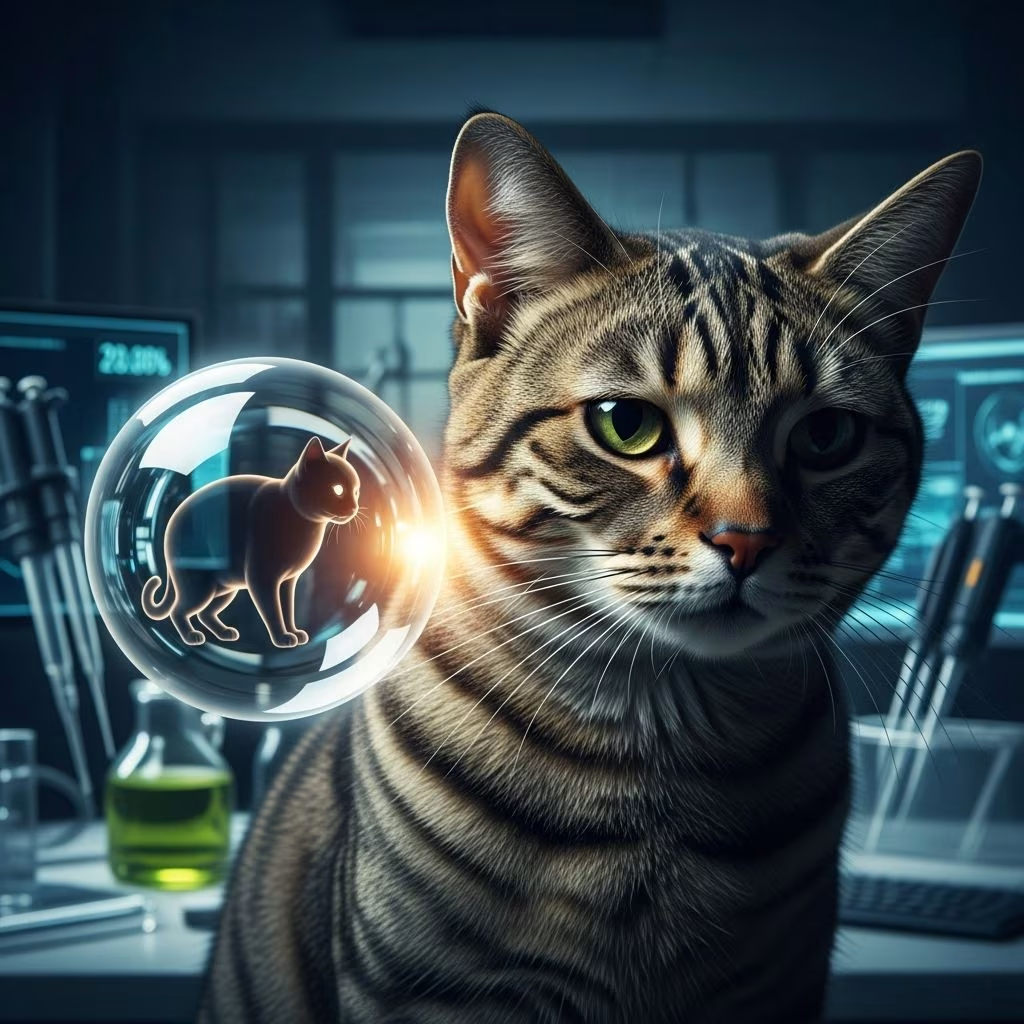
Cat cloning involves creating genetic duplicates of feline companions through somatic cell nuclear transfer, sparking intense ethical debates among scientists, veterinarians, and pet owners. While proponents highlight the emotional solace for grieving owners, critics emphasize profound welfare issues, genetic limitations, and societal implications.
The Science Behind Feline Replication
Cloning cats starts with extracting a nucleus from a donor cat’s cell, typically skin, and inserting it into an enucleated egg cell from a surrogate. Electrical or chemical stimuli trigger division, forming an embryo implanted into a host mother. The first successful cat clone, named Cc (short for CopyCat), emerged in 2001 from Texas A&M University labs, demonstrating feasibility but revealing inefficiencies.
Success rates remain dismal: most embryos fail to develop, and viable births often involve oversized fetuses or organ defects. Clones inherit the donor’s exact DNA, including hidden mutations accumulated over the donor’s life, lacking the genetic diversity from natural mating that provides resilience. Unlike sexual reproduction, where offspring blend parental genes for backups against defects, clones amplify vulnerabilities.
Health Risks to Cloned Cats and Surrogates
Cloned animals face elevated mortality and morbidity. Fetuses may grow abnormally large—up to twice normal size—leading to difficult births and lung immaturity. Post-birth, survivors often suffer immune deficiencies, organ failures, or shortened lifespans. The Oct4 gene, vital for embryonic development, frequently reprograms incorrectly, accounting for up to 90% of failures.
Surrogate mothers endure repeated implantations, with many pregnancies failing or yielding deformed kittens. To produce one healthy clone, dozens of surrogates may be needed, imposing physical strain including uterine infections and exhaustion. This process mirrors broader animal cloning challenges, where half of clones die at or soon after birth, exhibiting deformities and suffering.
| Aspect | Cloned Cats | Naturally Bred Cats |
|---|---|---|
| Birth Weight | Often 1.5-2x normal (e.g., 160lb calf equivalent) | Standard size |
| Survival Rate | Low; high neonatal mortality | High |
| Genetic Defects | Inherited + amplified (no backups) | Diverse; backups present |
| Longevity | Often shortened | Normal lifespan |
This table illustrates stark contrasts, underscoring welfare deficits.
Financial Barriers and Accessibility
Commercial pet cloning costs $50,000+, covering cell preservation, lab work, and surrogates. Only affluent owners access it, raising equity concerns: why prioritize elite replication amid shelter overflows? Millions of cats await adoption annually, yet cloning diverts resources from broader welfare efforts.
- Preservation Fees: $1,600-$2,500 annually for tissue storage.
- Cloning Procedure: $25,000-$50,000 base, plus veterinary care.
- Hidden Costs: Failed pregnancies, health treatments for survivors.
Such expenses question if cloning serves genuine need or indulges vanity, especially given imperfect outcomes.
Psychological Dimensions: Grief and Expectations
Pet loss devastates owners, fostering desires to “resurrect” companions. Cloning promises continuity, yet fails: clones share genetics but not memories, personality, or experiences shaped by environment. A cloned cat may resemble its donor visually but exhibit different behaviors due to epigenetics and upbringing.
Public surveys reveal discomfort; 64% of Americans oppose animal cloning, associating it with unnatural commodification. Ethicists like Paul Thompson note perceptions of animals as “things,” eroding respect. Grieving owners risk disillusionment, mistaking genetic similarity for identical souls.
Broader Societal and Environmental Concerns
Cloning narrows genetic pools, heightening disease susceptibility. In livestock, monocultures invite pandemics; feline applications could parallel this for breeds. Environmentally, labs consume resources for low-yield results, diverting from conservation where cloning preserves endangered species but doesn’t enhance diversity.
Regulatory gaps persist. The FDA deems clone progeny safe for food chains, but pet cloning lacks oversight, amplifying risks. Coalitions urge moratoriums, citing welfare parallels to assisted reproduction harms.
Arguments in Favor of Cat Cloning
Advocates argue cloning advances science, potentially yielding disease-resistant lines or aiding research. For pets, it offers emotional relief, replicating traits like temperament in show cats or service animals. ViaMeow and others market it as preserving legacies, with Cc’s success proving viability.
Future tech like chromatin transfer might mitigate reprogramming flaws, improving efficiency. Proponents stress education to counter fears, positioning cloning as a tool for noble goals beyond profit.
Regulatory Landscape and Future Outlook
No federal bans exist for pet cloning in the U.S., though some nations restrict it. AVMA debates ethics, noting qualitative similarities to natural risks but higher frequencies. As tech evolves, calls grow for mandatory welfare standards and impact assessments.
Ethical frameworks from sources like the University of Pennsylvania classify issues as consequentialist (harms to animals/environment) and intrinsic (dignity violations). Balancing innovation with compassion remains pivotal.
Frequently Asked Questions
Is a cloned cat truly identical to the original?
No. Genetics match, but personality, coat patterns (e.g., calico randomness), and health vary due to epigenetics and environment.
How successful is cat cloning?
Extremely low; numerous failures precede rare successes, with high surrogate tolls.
Does cloning help animal welfare?
Often not; it burdens surrogates and produces suffering clones, ignoring adoption options.
Can cloning save endangered felines?
It preserves genes but doesn’t boost diversity, limiting long-term viability.
What’s the cost of cloning a cat?
Around $50,000, plus ongoing care for potential health issues.
Navigating Personal Choices
Owners contemplating cloning should weigh science against ethics: consult vets, explore counseling for grief, and consider shelters. Alternatives like photos, memorials, or similar breeds honor bonds without harm. As Bernard Rollin warns, unknown defects in “superior” donors risk propagating flaws.
Cloning embodies biotechnology’s double edge—promise laced with peril. Informed discourse ensures progress respects all lives involved.
References
- Pros and Cons of Cloning Cats — Messybeast. Accessed 2026. http://messybeast.com/clonecat.htm
- The Ethics Debate Over Animal Cloning — AVMA (javma-news). 2007-02-15. https://www.avma.org/javma-news/2007-02-15/ethics-debate-over-animal-cloning
- The False Promise of Cloning Your Pet — BBC News (YouTube). Accessed 2026. https://www.youtube.com/watch?v=3khko0p_548
- Ethical Issues in Animal Cloning — University of Pennsylvania Repository. Accessed 2026. https://repository.upenn.edu/bitstreams/03b6b4f3-e742-44ea-bc34-8e5509bf6f0f/download
- Benefits and Problems with Cloning Animals — PMC/NIH. 2007. https://pmc.ncbi.nlm.nih.gov/articles/PMC1476349/



