

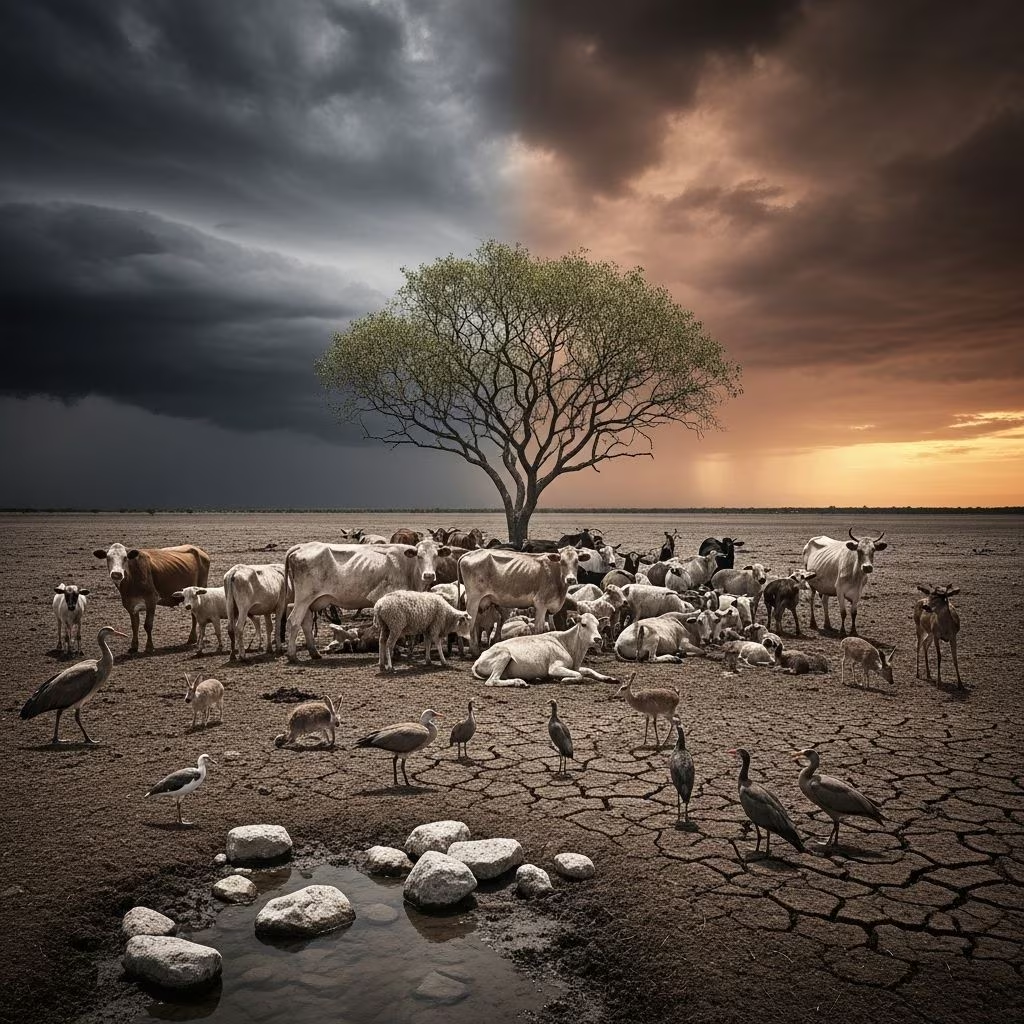
Australia’s agricultural sector, a cornerstone of national food security, faces mounting pressures from climate change. Rising temperatures, erratic rainfall, and intensified extreme weather events are altering ecosystems, affecting both domesticated livestock like cattle and native wildlife such as kangaroos. These shifts not only reduce farm productivity but also exacerbate competition for scarce resources, posing risks to sustainable food production.
Understanding Climate-Driven Changes in Australian Agriculture
Over recent decades, Australia has witnessed significant climatic shifts, including higher average temperatures and reduced winter rainfall. According to government assessments, these changes have already diminished annual farm profits by 23% between 2001 and 2020 due to altered seasonal conditions. The agricultural sector, responsible for over 90% of domestic fresh produce including meat and dairy, is particularly vulnerable. Productivity losses stem from diminished water availability, soil degradation, and increased prevalence of pests and diseases.
Climate models predict further declines, with food production potentially dropping by 15-30% without adaptive measures. Shorter growing seasons, land degradation, and rising ocean temperatures compound these issues, impacting crop nutrition and livestock feed quality. For livestock farmers, this translates to lower pasture yields and heightened animal stress, directly threatening meat supply chains.
Challenges Facing Cattle Production Amid Warming Trends
Cattle farming, a key pillar of Australia’s red meat industry, is increasingly strained by heat stress and nutritional deficits. Elevated temperatures reduce cattle feed intake and weight gain, while droughts limit forage availability. Studies indicate that prolonged dry spells have led to widespread pasture die-off, forcing farmers to supplement feeds at higher costs.
Heatwaves exacerbate metabolic disorders and lower reproductive rates in herds. In arid zones, where much of the cattle population grazes, water scarcity further impairs animal health and milk production in dairy operations. These factors contribute to a cascade of economic pressures, including elevated operational costs and reduced market competitiveness.
- Reduced pasture growth: Droughts shorten viable grazing periods, cutting biomass by up to 30% in affected regions.
- Heat stress effects: Cattle experience diminished fertility and higher mortality during extreme events.
- Water limitations: Declining groundwater and river flows restrict herd sizes and watering infrastructure.
Rise of Kangaroo Populations and Resource Competition
Native kangaroos, adapted to Australia’s variable climate, exhibit boom-and-bust population cycles tied to rainfall. Wetter periods trigger rapid breeding surges, leading to higher densities that compete directly with cattle for forage. In pastoral zones, kangaroo numbers have reportedly increased, intensifying grazing pressure on already stressed rangelands.
This competition is most acute during droughts, when vegetation is sparse. Kangaroos’ selective browsing depletes preferred grasses, leaving less for livestock and accelerating land degradation. Farmers observe that kangaroo impacts mimic overgrazing, reducing carrying capacity and long-term pasture resilience.
| Factor | Cattle Impact | Kangaroo Impact |
|---|---|---|
| Grazing Pressure | High during dry seasons due to herd concentration | Intensifies post-rainfall booms, depleting regrowth |
| Adaptation to Drought | Poor; requires supplementary feeding | Excellent; mobs disperse or reduce activity |
| Population Response | Declines with poor nutrition | Surges after favorable conditions |
Broader Implications for Food Security
Climate-induced disruptions ripple through food systems, affecting availability, access, and affordability. Globally, between 720 and 811 million people faced hunger as of 2020, with climate variability worsening the trend. In Australia, reliance on domestic meat production heightens vulnerability, as extreme events disrupt supply chains and inflate prices.
Vulnerable populations, including rural communities and indigenous groups, bear the brunt. Remote areas suffer from limited transport infrastructure, amplifying shortages during floods or bushfires. Imported seafood, comprising 70% of consumption, faces risks from Indo-Pacific climate vulnerabilities, underscoring the need for diversified resilience strategies.
Adaptive Strategies for Livestock Farmers
To counter these threats, farmers are adopting innovative practices. Water-efficient irrigation, drought-resistant forage varieties, and rotational grazing help mitigate resource competition. Genetic selection for heat-tolerant cattle breeds shows promise in maintaining productivity.
Government initiatives, like the National Climate Risk Assessment, guide adaptation through risk mapping and investment in sustainable technologies. The agriculture sector’s role in emissions reduction—via low-emission production methods—further supports long-term viability. Collaborative culls of excess kangaroos in high-conflict areas provide short-term relief, balanced with biodiversity considerations.
- Implement precision agriculture tools for optimized water and feed use.
- Diversify income through agroforestry or mixed farming systems.
- Engage in carbon farming to access offset markets and incentives.
Policy Frameworks and International Responses
Australia’s National Adaptation Plan prioritizes food and fiber production risks, advocating for resilient infrastructure and research into climate-smart agriculture. Internationally, the World Bank’s Climate Change Action Plan (2021-2025) emphasizes productivity gains and emissions cuts per food unit.
Domestic policies urge emissions targets aligned with 1.5°C warming limits, alongside protections for supply chains against disruptions. Public health advocates call for national nutrition strategies integrating climate resilience, ensuring equitable access amid population growth projections.
Future Projections and Mitigation Imperatives
Without intervention, intensified climate events could render parts of Australia’s rangelands unsuitable for cattle, shifting production southward. Kangaroo dynamics may evolve with prolonged droughts, potentially stabilizing populations but at the cost of biodiversity losses. Integrated modeling suggests that adaptive farming could offset 10-20% of projected yield losses.
Research into ecosystem-based management, combining livestock and wildlife controls, offers pathways to balance food security with environmental health. Urgent policy action on emissions and adaptation is essential to safeguard Australia’s agricultural legacy.
Frequently Asked Questions (FAQs)
What are the main climate threats to Australian cattle farming?
Primary threats include heat stress, droughts reducing pasture, and increased pest outbreaks, leading to lower productivity and higher costs.
How do kangaroos affect livestock during climate shifts?
Kangaroo population booms post-rain compete for forage, exacerbating shortages for cattle in dry periods.
Can farmers adapt to these changes effectively?
Yes, through heat-tolerant breeds, efficient watering, and government-supported practices like rotational grazing.
Is Australia’s food security at risk from climate change?
Yes, with potential 15-30% production declines and supply chain disruptions threatening availability and prices.
What role does policy play in mitigation?
Policies like the National Adaptation Plan fund resilience measures and emissions reductions to protect agriculture.
References
- The Impact of Climate Change on Food Security — Emergency Action. 2023. https://emergencyaction.org.au/the-impact-of-climate-change-on-food-security/
- Climate change and the agricultural sector — Department of Agriculture, Fisheries and Forestry (DAFF). 2024. https://www.agriculture.gov.au/agriculture-land/farm-food-drought/climatechange
- Climate Disruption, the Food System and Food Security — Public Health Association of Australia (PHAA). 2024-05-06. https://www.phaa.net.au/common/Uploaded%20files/SIG%20documents/FAN%20SIG/PPS%202024/0605_-_FAN_-_Climate_Disruption…_and_Food_Security_-_2024.pdf
- Food Insecurity and Climate Change — National Center for Biotechnology Information (PMC). 2012. https://pmc.ncbi.nlm.nih.gov/articles/PMC3518329/



