

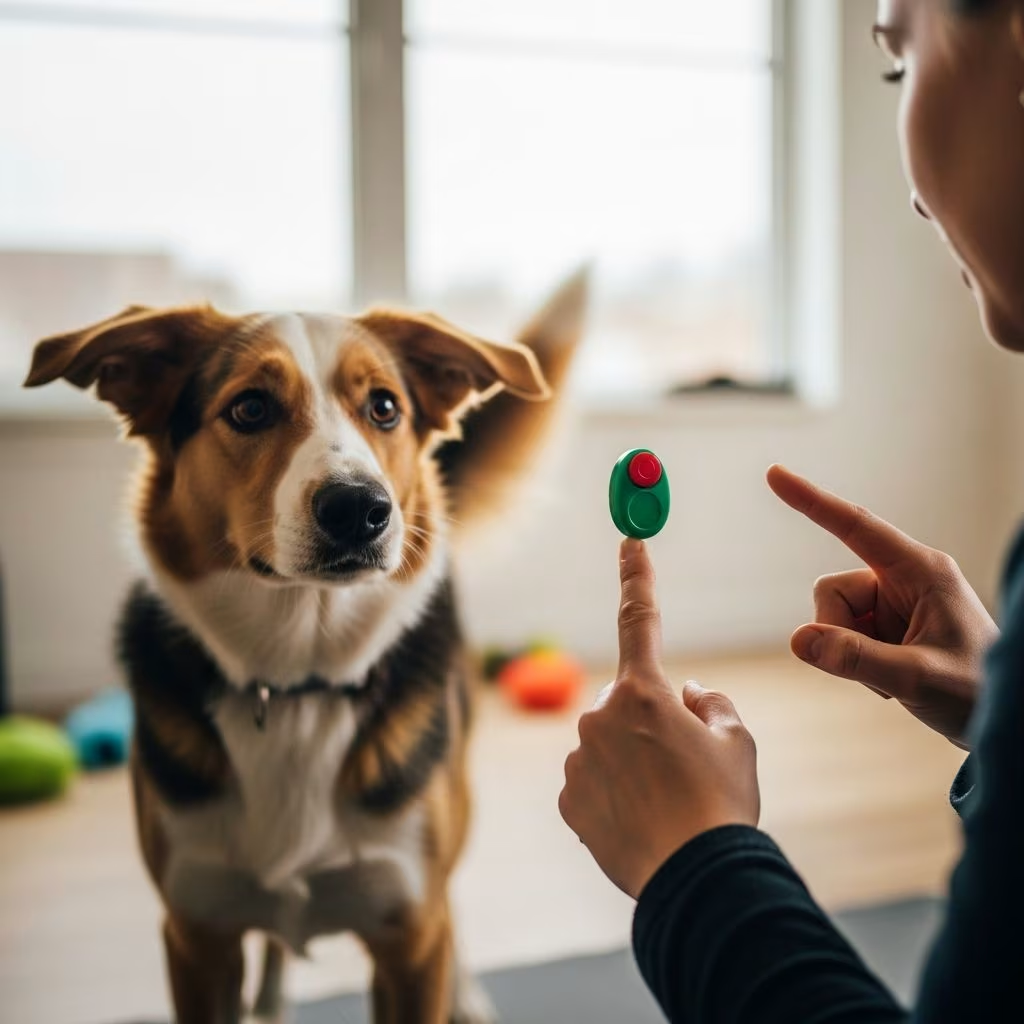
What Is Clicker Training for Dogs?
Clicker training is a highly effective, science-backed method of positive reinforcement training that uses a simple mechanical device to mark the exact moment your dog performs a desired behavior. The clicker serves as a communication tool, allowing you to precisely signal to your dog that they’ve done something right and a reward is coming. This training method bridges the gap between the moment your dog completes the correct behavior and when they receive their treat, eliminating confusion about what behavior earned the reward.
At its core, clicker training is based on principles of operant conditioning and behavioral psychology. When you click at the exact moment your dog sits, lies down, or comes to you, you’re creating a clear association between that specific action and a positive outcome. Unlike verbal praise or hand signals that can be delayed or inconsistent, the click provides immediate, precise feedback that dogs understand instantly.
The beauty of clicker training lies in its clarity and simplicity. Your dog doesn’t have to guess what they did right—the click marks the exact moment of correct behavior, making the learning process faster and more efficient than traditional training methods. This approach has been used successfully with dogs of all ages and temperaments, from puppies just beginning their training journey to adult dogs learning new behaviors.
How Does the Clicker Work?
The clicker itself is a small, handheld mechanical device that produces a distinctive two-toned sound when you push and release the springy metal tab inside. This sound is unique enough that your dog won’t confuse it with everyday noises in their environment. The consistent, mechanical nature of the click is what makes it so effective—it sounds the same every single time, unlike human voices which can vary in tone and inflection.
Before you can use the clicker for training, your dog must learn what the sound means. This process, called “loading the clicker,” is the foundation of all clicker training. During this phase, you repeatedly click the device and immediately follow it with a treat. After about 10 to 20 repetitions, your dog will begin to understand that the click predicts something good is coming. Once your dog makes this connection, the click becomes a powerful tool for shaping behavior.
The clicker works because it provides what behaviorists call “marker training.” The sound marks the precise moment your dog does something right, creating a clear cause-and-effect relationship in their mind. This is more effective than delayed rewards because dogs live in the present moment and respond best to immediate feedback.
Getting Started: Step-by-Step Clicker Training Guide
Step 1: Choose Your Training Location
Select a quiet, low-distraction environment where your dog can focus entirely on you. Background noise, other pets, or exciting stimuli can divert your dog’s attention and make training less effective. A quiet room in your home or a calm area indoors is ideal for initial training sessions. As your dog progresses and understands the clicker concept, you can gradually introduce training in different environments.
Step 2: Load the Clicker
Start by introducing your puppy to the clicker. Gather a few of your dog’s favorite small treats—these should be high-value rewards that your dog loves. Hold the clicker at your side and click it once, then immediately give your dog a treat. Repeat this process 10 to 20 times during short training sessions. Watch your dog’s reaction carefully. You’ll notice they begin to anticipate the treat when they hear the click. This is the “aha” moment when they’ve made the connection between the sound and the reward.
Keep treats small so your dog stays engaged and doesn’t fill up too quickly. If your dog is motivated by toys or play rather than food, you can use those as rewards instead. The key is finding what truly motivates your individual dog.
Step 3: Click at the Exact Right Moment
Timing is absolutely critical in clicker training. You must click during the behavior, not after it’s completed. If you’re teaching your dog to sit, click the moment their rear end touches the ground. If you’re teaching “down,” click when their elbows hit the floor. After you click, you have about three seconds to deliver the treat. The timing of the treat delivery is less critical than the timing of the click itself.
Many trainers make the mistake of clicking too late, which creates confusion about which behavior is being rewarded. Practice clicking at the exact moment the desired behavior occurs. If you’re working with someone else, have them observe and give you feedback on your timing. With practice, your timing will become second nature.
Step 4: Introduce Basic Commands
Once your dog understands the clicker-treat association, begin using it with simple commands. “Sit” and “down” are excellent starting points. Use a lure (a treat) to guide your dog into the desired position. The moment they complete the behavior, click immediately and reward. Repeat this process consistently until your dog reliably performs the behavior on cue.
Step 5: Practice Consistently
Clicker training requires regular, consistent practice. Short, frequent training sessions are more effective than long, infrequent ones. Five one-minute training sessions throughout the day will yield better results than a single hour-long session. Brief sessions keep your dog’s attention sharp and prevent boredom or fatigue.
Key Clicker Training Techniques
Luring
Luring involves using a treat to guide your dog into the desired position or behavior. Hold a treat close to your dog’s nose and move it to guide them. For example, move the treat over their head to encourage them to sit. As they follow the treat with their nose and naturally move into the sitting position, click the moment they sit and give them the treat. Luring is often the fastest way to teach new behaviors because you’re physically guiding your dog to success.
Shaping
Shaping involves rewarding small steps toward the final behavior, gradually building toward the complete action. This technique is particularly useful for complex behaviors or when your dog is struggling to understand what you want. For example, if you’re teaching “down,” you might initially click and treat when your dog simply lowers their front legs slightly. Gradually raise your criteria with each successful repetition until your dog performs the entire “down” command perfectly.
Capturing
Capturing involves clicking and rewarding your dog when they naturally perform the desired behavior without any luring or shaping. For example, if you’re teaching “down,” wait for a moment when your dog spontaneously lies down, click immediately, and treat. This technique teaches your dog to offer behaviors on their own and can be extremely effective for reinforcing natural behaviors you want to encourage.
Common Clicker Training Mistakes to Avoid
One of the most frequent mistakes is poor timing. Clicking too late, even by just a second, can create confusion about which behavior earned the reward. Practice your timing relentlessly until it becomes automatic. Another common error is delivering the treat too late after the click. While the click can happen during the behavior, the treat should follow within three seconds.
Trainers often make the mistake of using the clicker inconsistently or forgetting to reward after every click in the early stages. Remember: every single click must be followed by a reward. If you click without treating, you’ll confuse your dog and undermine the training process. Only after your dog has thoroughly learned a behavior can you begin to intermittently reward, gradually phasing out the clicker.
Another mistake is training in distracting environments too early. Wait until your dog reliably performs behaviors in quiet settings before introducing distractions. Progressing too quickly can cause your dog to regress in their training.
Advantages of Clicker Training
Clicker training offers numerous benefits compared to traditional training methods. The precision of the click eliminates ambiguity—your dog knows exactly which behavior earned the reward. This clarity accelerates the learning process significantly. Dogs trained with clickers often learn new behaviors faster than dogs trained with traditional methods.
Clicker training is based entirely on positive reinforcement, making it enjoyable for both you and your dog. There’s no punishment, correction, or negative associations. This approach builds a stronger bond between you and your dog and creates positive associations with training. Dogs are eager to train because they know something good is coming.
This method is also incredibly versatile. You can use it to teach basic obedience, advanced tricks, address behavioral problems, and even help shy or anxious dogs build confidence. It works with dogs of all ages, sizes, and temperaments.
Addressing Behavioral Issues with Clicker Training
Clicker training isn’t limited to teaching commands and tricks—it’s equally effective for addressing unwanted behaviors. The key principle is to click and reward desirable behavior instead of punishing undesirable behavior. If your dog jumps on visitors, click and reward them for keeping all four paws on the ground. If your dog barks excessively, click for moments of silence.
For loose-leash walking, click and treat when the leash naturally goes slack rather than when it’s tight. For housebreaking, click and treat when your puppy relieves itself in the appropriate spot. By consistently rewarding the behaviors you want and removing attention from unwanted behaviors, you teach your dog exactly what you expect.
Transitioning Away from the Clicker
The clicker is a teaching tool, not a permanent training crutch. Once your dog has thoroughly learned a behavior, you can gradually phase out the clicker. Continue using it occasionally to refine behaviors or teach new ones, but over time, transition to verbal praise and petting as primary rewards.
To fade the clicker, begin spacing out clicks while maintaining treats and praise. For example, click every third correct response instead of every response. Gradually increase the intervals until your dog responds reliably without the click. Many trainers find that keeping a clicker handy is useful for occasional refresher training or teaching new behaviors throughout your dog’s life.
Frequently Asked Questions
Q: At what age can I start clicker training my dog?
A: You can start clicker training puppies as early as 8 weeks old. The basic principles of loading the clicker and rewarding behaviors work with puppies just as effectively as with adult dogs. Young puppies may have shorter attention spans, so keep sessions very brief—just one to two minutes.
Q: What treats work best for clicker training?
A: Use small, soft, high-value treats that your dog loves and can eat quickly. Good options include small pieces of roasted chicken, cheese, hot dog, or commercial training treats. Avoid large, hard treats that take time to chew, as this breaks up your training flow. The best treats are often different from your dog’s regular kibble and exciting enough to motivate them during training.
Q: How long should clicker training sessions be?
A: Keep initial training sessions very short—one to five minutes. Multiple short sessions throughout the day are more effective than one long session. As your dog progresses and builds focus, you can gradually extend sessions to 10 to 15 minutes, but never push beyond what your dog can comfortably handle without losing interest.
Q: Can I use clicker training with multiple dogs?
A: Yes, but it’s typically easiest to train dogs individually. Each dog learns at their own pace and responds to different rewards. If you want to train multiple dogs simultaneously, they should be at similar training levels. Always train in a controlled environment where each dog can focus without competing for your attention.
Q: What if my dog doesn’t respond to the clicker?
A: This usually means the clicker hasn’t been properly “loaded” yet. Go back to the basics: click and immediately treat, repeating 10 to 20 times until your dog clearly anticipates the treat. Also, ensure you’re using a reward your dog genuinely loves. If food treats don’t motivate your dog, try play, toys, or praise as rewards.
Q: Can I use a different marker instead of a clicker?
A: Yes, any consistent, distinct sound can work. Some trainers use a whistle, a specific word like “yes,” or even a finger snap. However, a traditional clicker is ideal because it produces the same sound consistently and clearly marks the moment of correct behavior better than most alternatives.
Q: How do I handle mistakes during training?
A: If you accidentally click for the wrong behavior or click at the wrong time, simply move forward. Don’t click again or become frustrated. The occasional mistake won’t derail your training. Just continue with the next repetition. If you’re consistently making timing errors, slow down your training and focus on accuracy before speed.
Q: Can I use clicker training to address aggression?
A: Clicker training can be part of a behavior modification plan for mild behavioral issues, but serious aggression should be addressed by a professional certified animal behaviorist or trainer. Never attempt to train aggressive behavior on your own, as this requires specialized expertise and safety protocols.
References
- Puppy Clicker Training Step-By-Step — Purina. 2024. https://www.purina.com/articles/dog/puppy/training/puppy-clicker-training
- Clicker Training: Mark & Reward Dog Training Using Clickers — American Kennel Club. 2024. https://www.akc.org/expert-advice/training/clicker-training-your-dog-mark-and-reward/
- Fifteen Tips for Getting Started with the Clicker — Karen Pryor Clicker Training. 2024. https://clickertraining.com/15tips/
- Click, Treat, Repeat!: Easy Clicker Training For Your Dog — Austin Dog Alliance. 2024. https://adltexas.org/resources/click-treat-repeat-easy-clicker-training-for-your-dog/
- Clicker Training Basics — PAWS Chicago. 2019. https://www.pawschicago.org/fileadmin/media/images/News_Resources/Dog_Training_Protocols/DogResource_ClickerTraining_2019.pdf
- Clicker Techniques, Part One: The Power of the Click — Guide Dogs of America. 2024. https://www.guidedogs.com/resources/client-resources/guide-dog-class-lecture-materials/clicker-techniques-part-one
- A Guide to Clicker Training Pets — Best Friends Animal Society. 2024. https://bestfriends.org/pet-care-resources/guide-clicker-training-pets



